connector
Every Sumo Logic credit traced to the team behind it
Attribute every credit consumed to the team, application, or product behind it. Then decide what to keep ingesting, what to cut, and whether your observability spend is earning its keep.

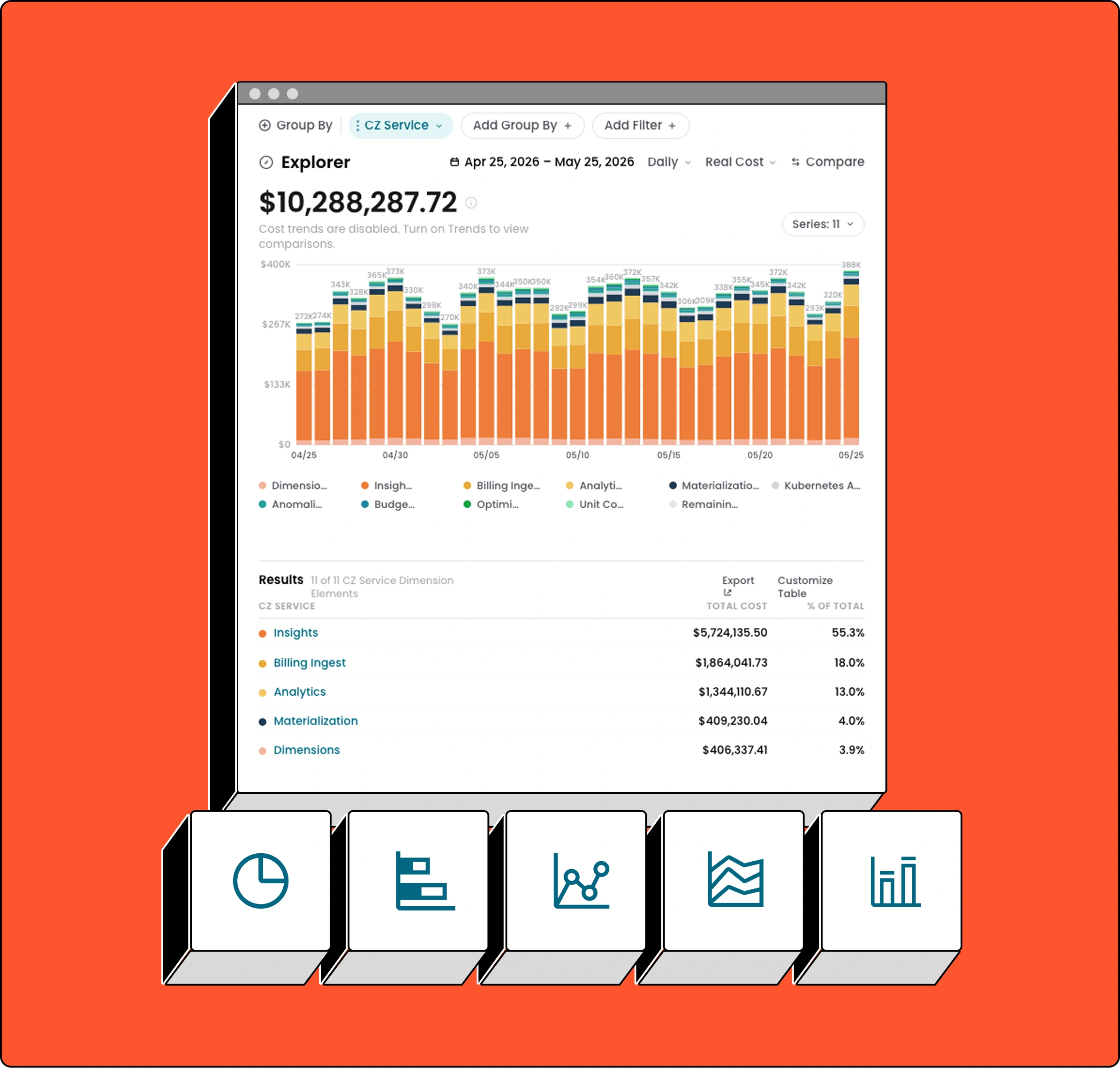
Credit pools with no owners have no ceiling
Sumo Logic bills by consumption, but most accounts can’t say which team consumed what. CloudZero breaks the shared pool into owned slices, so when ingest grows the right team gets the signal, not just the bill.
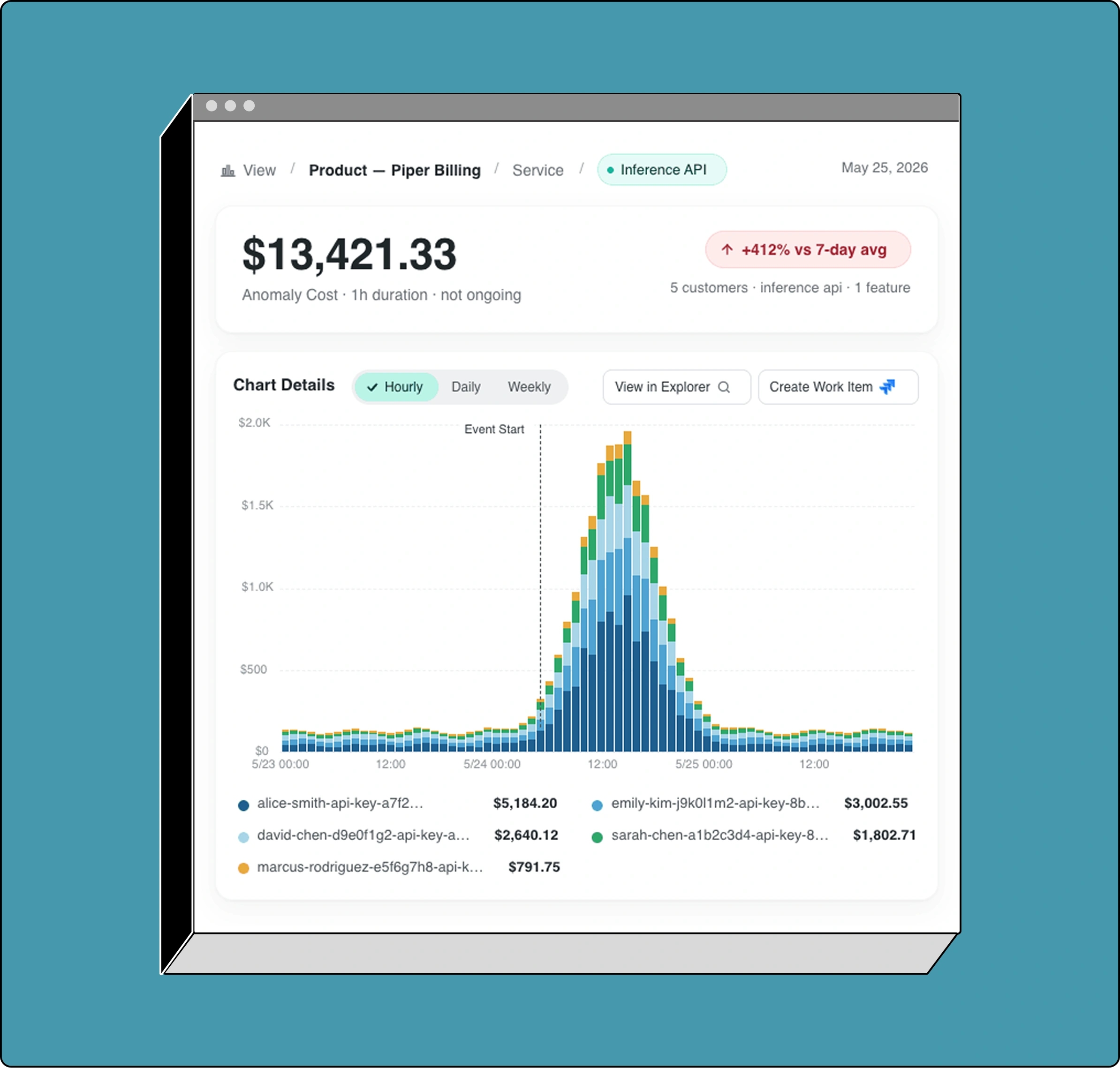
A single chatty service can burn a month of credits
A verbose application consuming Sumo Logic credits doesn’t announce itself. CloudZero flags the deviation the moment it starts and routes the alert to the team responsible, before the credits are gone.
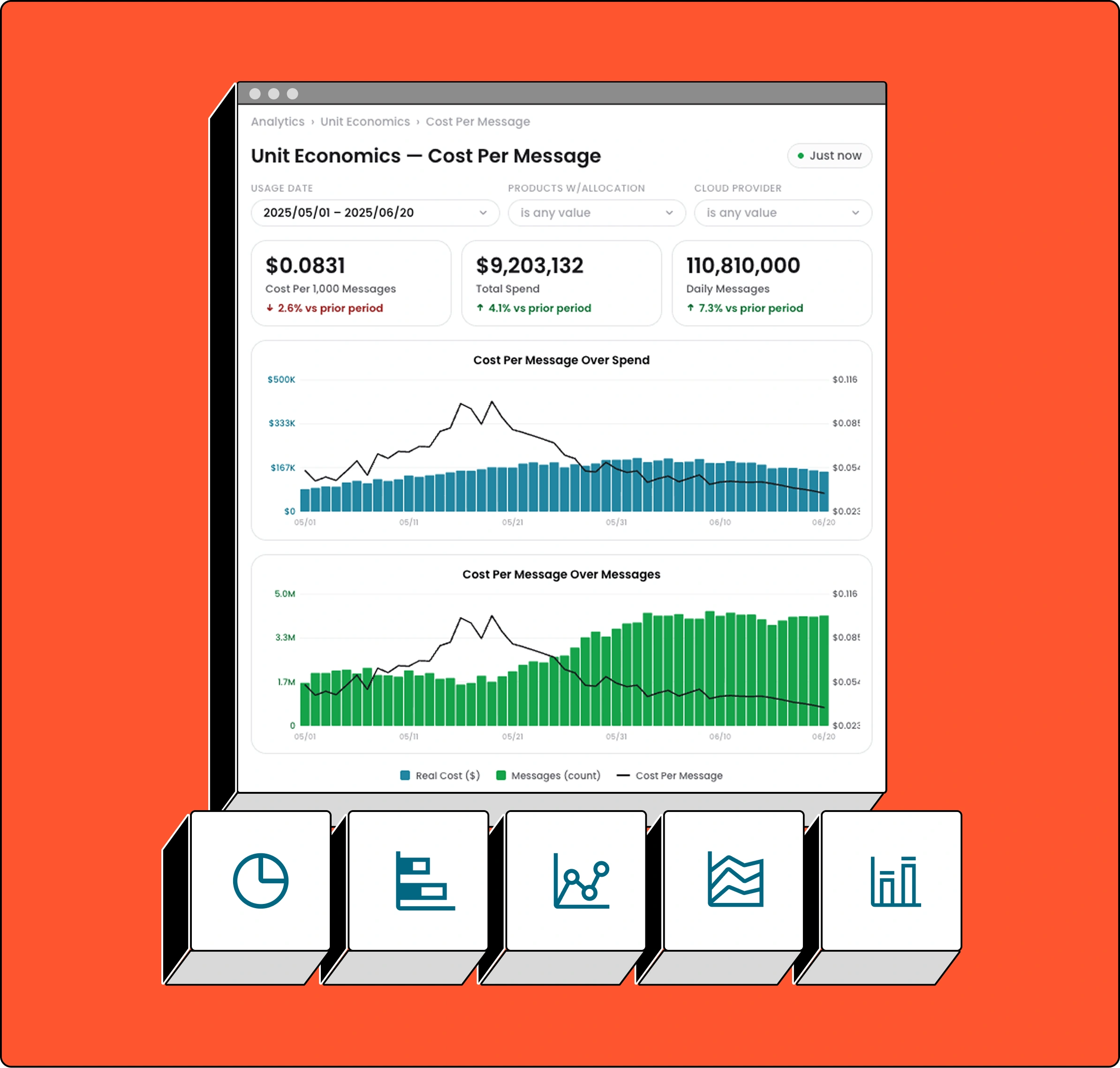
Connect observability spend to the products it actually covers
Most teams know what Sumo Logic costs in total. CloudZero breaks that down to cost per product, cost per customer, and cost per AI workload monitored, so observability becomes a line item you can defend to the business.
More from every Sumo Logic dollar
Allocation without rebuilding your taxonomy
CloudZero maps Sumo Logic credits to teams and applications using the structure you already have. No new schemas, no retroactive tagging.
Credit burn alerts that reach the right engineer
When CloudZero detects a Sumo Logic anomaly, the alert routes to the team responsible via Slack, email, or Jira with credit-level context attached.
Observability cost mapped to every product line
CloudZero connects Sumo Logic spend to the products and customers it covers, so observability becomes a line item with a business case behind it.

CloudZero has been instrumental in providing the granular visibility we need to optimize our AI infrastructure costs while maintaining our service quality.

Josh Collier
FinOps Lead at Superhuman (formerly Grammarly)

By providing deep visibility into our cloud spending and helping us optimize costs at a granular level, we can focus on scaling our AI solutions without worrying about runaway expenses. It’s not just about saving money.

Pete Rubio
SVP, Platform Engineering, at Rapid7
Scale AI solutions and enable innovation without runaway expenses.



Bring every cost, even the one nobody supports
If it has a bill, AnyCost can ingest it. CloudZero turns the long tail of cost sources into one allocated, normalized, intelligent view of where every dollar goes.