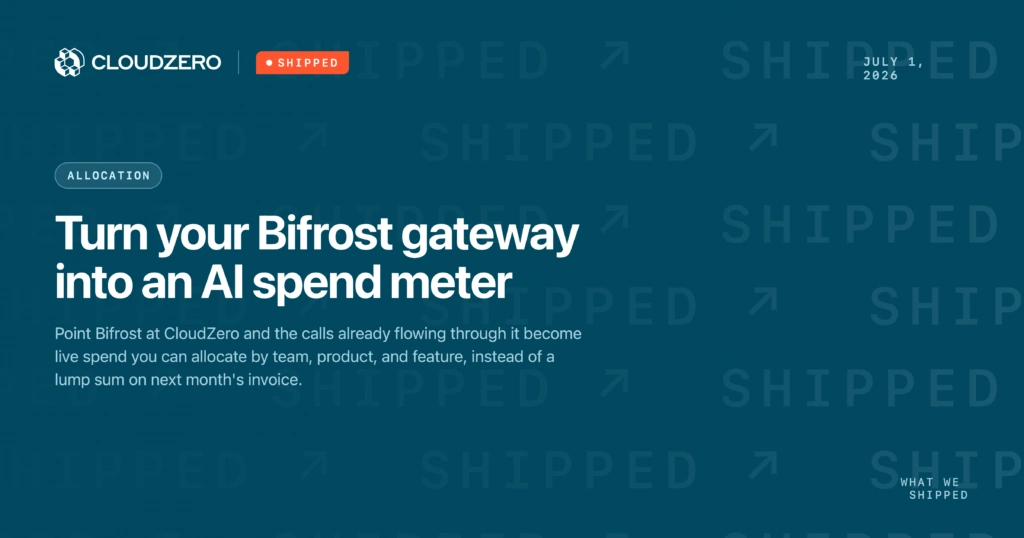
If you route model traffic through Bifrost, you already have the hard part: one place every AI call passes through, where the model, the tokens, and the cost are visible on the way past. It’s the cheapest spot in your stack to measure AI spend. What’s missing is everything downstream – today that usage only becomes “spend” weeks later, when the provider invoice lands as a lump sum you can’t break apart.
Why this matters
An invoice tells you what you spent, a month late, with no way to trace it to the team, product, or feature that drove it. The signal you actually want is already moving through your gateway – it just isn’t wired to anything. This wires it.
What we built
A Bifrost collector adapter for AI Signals. It reads the usage Bifrost already produces as it proxies your calls, normalizes it into the same shape as the rest of your AI telemetry, and lands model, tokens, provider, and cost for each request – so Bifrost takes its place alongside the macOS collector, LiteLLM, and OpenTelemetry as a way to stream AI usage into CloudZero. It’s in design partners’ hands now, and expanding.
How we built it
Bifrost sits in front of your model providers and sees every call. The adapter taps that stream and forwards the usage to CloudZero, where live spend shows up within a minute or two and reconciled cost settles against your actual provider bills within about a day. From there it flows into the same Dimensions you use for everything else, so Bifrost-routed AI usage allocates by team, product, or feature, right alongside your cloud and SaaS spend. No invoices to wait on, no separate dashboard to babysit.
AI Signals is in preview. Talk to your account manager about setting up a Bifrost connection.