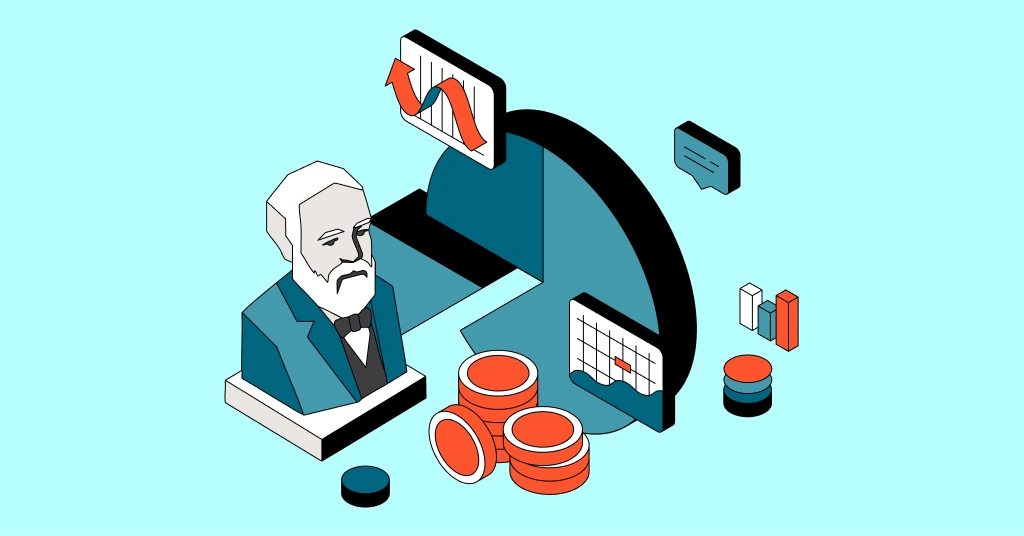
Point A: 1835. Andrew Carnegie is born in a weaver’s cottage in Dunfermline, Scotland. The cottage has one main room, which the Carnegies share with another family.
Point B: 1901. Andrew Carnegie becomes the richest man in the world when Carnegie Steel Company wins the Iron vs. Steel industrialists’ war, and he sells the company to J.P. Morgan for the modern equivalent of $450 billion.
How did Carnegie get from Point A to Point B?
The conventional story goes: In 1872, iron and steel were deadlocked in the race to become the skeleton of American industrialism. Having patiently accumulated capital in the railroad, oil, and ironworks trades, Carnegie traveled to England and glimpsed the Bessemer converter, which dramatically reduced the time and resources it took to purify steel. Controlling it enabled Carnegie to slash steel prices, crowd out wrought-iron producers, win the war, and amass a world-conquering fortune (much of which he devoted to philanthropic projects).
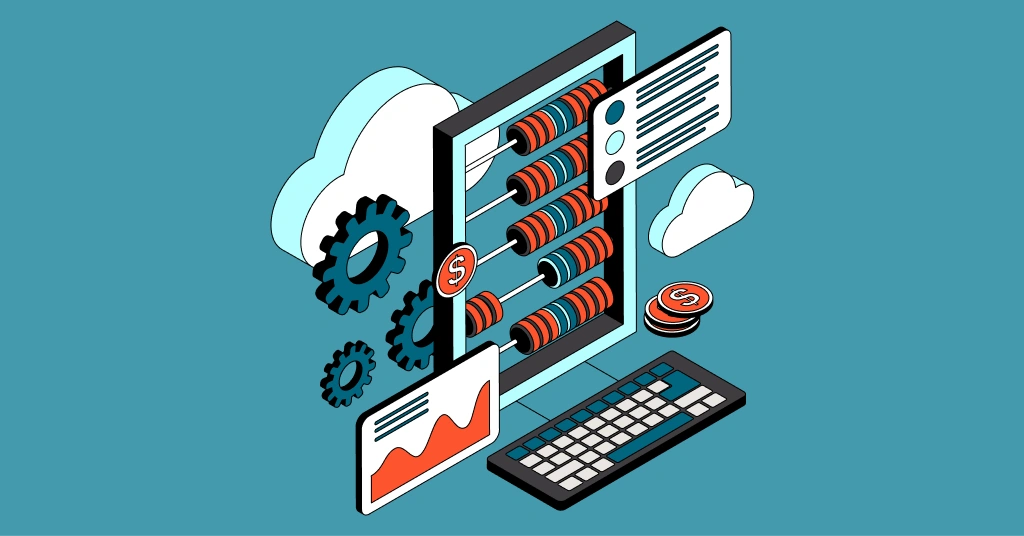
Though sexy, this story of insight and technological transformation is only half the tale. The other half centers around something much less sexy: accounting.
Against his mill managers’ preference, Carnegie hired professional accountants and installed weighing stations at every transfer point in his mills: blast furnace, converter, rolling stand, and loading dock. A clerk logged every ton of ore, coke, limestone, pig iron, and finished rail, and every clerk’s slip flowed up into monthly, and eventually daily, cost reports.
“I insisted upon such a system of weighing and accounting,” Carnegie wrote in his autobiography, because “[It] would enable us to know what our cost was for each process and especially what each man was doing, who saved material, who wasted it, and who produced the best results.”
Such granular understanding of his cost per ton of steel powered Carnegie’s decades-long cost-cutting crusade. In 1873, steel rails sold for about $100 a ton. By 1875, when Carnegie’s Edgar Thomson Works came online, they sold for $50. By the 1890s, $18. By 1900, Carnegie sold steel rails for $11.50 per ton, a 79% reduction in twenty-seven years. Every cut in the price meant another competitor could no longer survive.
Carnegie wasn’t the first or only one to use the Bessemer system. So, why did Carnegie win? Because, to use a modern expression, the math mathed. Carnegie had the transformative tech, and he could see every penny of his costs, connected to every stage of his production process, in real time.
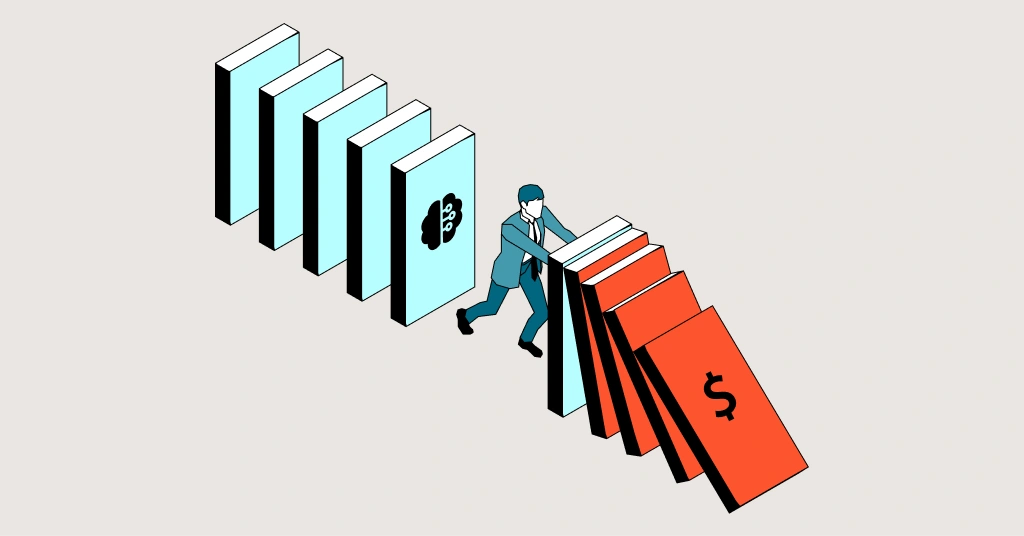
Transformative tech doesn’t win without exhaustive accounting. And, of course, vice versa.
By now, this should sound familiar.
The financial control plane for AI
The twin halves of sexy, transformative tech and unsexy, exhaustive accounting has played out again and again across the generations. Andy Grove used it to pivot Intel from memory chips to microprocessors as Japanese DRAM producers cut the knees out from under Intel’s memory chip profits. Jeff Bezos used it to make ecommerce less expensive than brick-and-mortar retail. Grove’s principle of constructive confrontation and Bezos’s famous six-page memo and weekly business reviews all promoted uncompromising commitment to metrical clarity and strength.
As AI reshapes the human universe, the names and metrics will change. But the fundamental pattern will remain the same.
| Era | Executive | What they tracked that competitors didn’t | What they got |
|---|---|---|---|
| Industrial Revolution | Andrew Carnegie | Cost per ton, daily | Steel market dominance |
| PC / Microprocessor | Andy Grove | Profit per chip line, in real time | Semiconductor market dominance |
| Internet / Ecommerce | Jeff Bezos | Every metric, every week, named owners | Ecommerce dominance |
| AI Transition | The next winner | Every AI dollar connected to every outcome | AI dominance |
The winners of the AI era will be the ones with the most transformative tech, and the ones who sell it at an unbeatable price. To do the former, you need savvy innovators; to do the latter, you need a bleeding-edge system for measuring and maximizing your AI ROI.
That’s where CloudZero comes in. Like Carnegie’s clerks recorded tonnage at every transfer point, CloudZero’s AI signals agent captures every AI event the moment it happens — before your AI provider delivers the bill — correlates it with model prices, and logs it as cost data in the platform. CloudZero’s AI outcome attribution connects AI spend to the business value it generates, giving finance, operations, and engineering a defensible view of holistic AI ROI. Finally, multi-dimensional allocation lets those leaders dig into those outcomes, understanding how each production juncture contributed to, or detracted from, that ROI.
The technology changes. The pattern doesn’t. The ones who generate the best product at the most affordable price will win. For the second half of that equation, you need a financial control plane, a system that shows you your cost to produce, in real time, at the broadest and most granular levels, in a form that’s digestible for leaders and ICs alike.
As was the case for the industrial and internet revolutions, there will be winners across the sub-industries spawned by the fundamental technological shift. All of them will base their strategic decisions on clear, accurate metrics. CloudZero is the financial control plane for AI economics, the metrical engine — the unsexy side — under the hood of the vehicles powering the AI-driven future.