Quick Answer
The best Turbonomic alternative depends on what the renewal has to prove. If it must show what cloud and AI spend returned, look at CloudZero, IBM Cloudability, Datadog, Finout or Vantage. If it must keep automating clusters and GPUs, look at Kubex, Cast AI, ScaleOps, StormForge, PerfectScale or Sedai. VMware estates fit VCF Operations.
LawnStarter, a 500-person online marketplace for lawn care, split its AWS and Google Cloud spend by department in CloudZero and found a sales workflow forwarding calls across accounts that didn’t need it. Switching it off saved $30,000 to $40,000 a year, and overall cloud costs fell 20%. A resizing tool had nothing to flag, because nothing was the wrong size.
| Tool | What sets it apart | Acts on your infrastructure? | What it meters |
|---|---|---|---|
| IBM Turbonomic (baseline) | Automated resizing and placement across cloud, Kubernetes and data centers | Yes | Managed virtual servers, in blocks of 200 |
| CloudZero | Every saving has an owner, and realized savings are measured | No, it recommends | By quote |
| IBM Cloudability | The stay-with-IBM route | No | Annual cloud spend bands |
| Datadog Cloud Cost Management | Cost beside the telemetry engineers already read | No | $5 or $10 per $1,000 of spend a month |
| Finout | Cloud, Kubernetes and AI bills in one dataset | No | Flat annual fee by spend tier |
| Vantage | A public price list | No | Tracked spend, free to $200 a month, then by quote |
| Kubex (formerly Densify) | Rebuilt around Kubernetes, GPU and AI workloads | Yes | By quote |
| Cast AI | Finds GPU capacity across clouds | Yes | Managed CPUs |
| ScaleOps | Manages GPUs for self-hosted AI models | Yes | By quote |
| StormForge by CloudBolt | Allocates the billed cost of shared GPUs | Yes | By quote |
| PerfectScale by DoiT | Rightsizing that comes with a cloud reseller | Yes | vCPUs; free to 300 a month |
| Sedai | Removes GPU reservations nobody is using | Yes | By quote |
| VMware VCF Operations | Already in the VMware Cloud Foundation bundle | Yes, on vSphere | Bundled |
| Flexera (Spot) | Spot instances and commitments | Yes | $1.415 per 100 vCPU-hours |
| Harness | Shuts down idle non-production resources | Yes | Free, Essentials and Enterprise; paid tiers by quote |
| nOps | Buys and manages cloud commitments | Yes | Share of savings realized |
Why are teams shopping for Turbonomic alternatives now?
Two things put Turbonomic alternatives on the agenda: two Cisco support deadlines, and a question from leadership that resizing doesn’t answer.
The deadline is close. Cisco sold Turbonomic under two of its own names. It stopped selling both on November 15, 2024, and support for Cisco Intersight Workload Optimizer ends on November 30, 2026. Cisco Workload Optimization Manager follows on November 30, 2029. Cisco’s bulletins tell customers to buy new IBM Turbonomic licenses from IBM or a reseller. For a Cisco customer, that is a fresh purchase order rather than a renewal, and it goes through procurement as one.
The question matters more. Turbonomic reports efficiency: resized machines, freed capacity, fewer performance incidents. Leadership now asks what the spend produced. As AI budgets grow, at the pace the AI statistics CloudZero tracks show, “is it the right size?” gives way to “was it worth it?”
2026 State of AI Spend Report
Why Finance Caps What It Can’t See
Learn how finance leaders are managing AI spend, and how they’re approaching FY2027
How much does IBM Turbonomic cost?
Turbonomic pricing is by quote, but IBM’s AWS Marketplace listings publish list prices. Turbonomic SaaS is $37,909.82 a year for each block of 200 managed virtual servers, about $190 a server. The on-premises edition is $50,760 a year per block, about $254 a server, with no partial blocks.
| Managed virtual servers | SaaS, per year | On-premises, per year |
|---|---|---|
| 200 | $37,909.82 | $50,760 |
| 1,000 | $189,549 | $253,800 |
| 2,000 | $379,098 | $507,600 |
These are list prices for 12-month terms, before negotiation. The SaaS listing adds overage at $22.60 a unit, and both listings say orders are non-cancelable and non-refundable. IBM also offers a 30-day free trial and a Parking Edition built only to park idle workloads on a schedule.
What the license counts is the point for finance. The price rises with the number of servers, whatever those servers earn. A model API bill has no servers in it at all. Spend on OpenAI, Anthropic or Amazon Bedrock tokens sits outside the license and outside the tool.
Before a new term is signed, book a CloudZero demo and bring the Turbonomic quote and last month’s cloud and AI bills. You’ll see how much of that spend the license covers, and who owns the rest.
Is a rightsized estate a profitable one?
Not necessarily. A rightsized estate is an efficient one, not a profitable one. Rightsizing proves each workload runs at the lowest cost for the resources it needs; it says nothing about whether the workload is worth running at all. That gap mattered less when cloud spend was mostly steady infrastructure. GPUs and model APIs are now the fastest-moving lines, and they’re judged on what they return.
IBM’s own case study shows the gap. An IBM Research team running more than 100 NVIDIA A100 GPUs used Turbonomic to take its free GPUs from 3 to 16, a 5.3x increase in capacity released for other workloads, while doubling throughput. That is a real efficiency gain. The case study gives no dollar saving, only a projection that 13 fewer GPUs would be needed under full automation, and for a reason finance will recognize: a freed GPU saves nothing until someone stops paying for it or puts earning work on it.
That is the difference between projected and realized savings. An automation tool reports what it changed. A budget review needs what landed on the invoice, and whose decision it was. Rightsizing creates the opportunity. Ownership and measurement collect it.
The choice turns on two things: the estate Turbonomic was managing, and whether the renewal has to prove efficiency or return.
Which Turbonomic alternatives show what cloud and AI spend returns?
Five tools report on spend without acting on infrastructure. They suit a renewal where finance is in the room.
1. CloudZero

CloudZero ties cloud and AI spend to the customers, products and teams behind it, then holds each saving to an owner. CloudZero Optimize assigns every recommendation an owner, syncs its status both ways with Jira, and tracks realized savings by team, recalculated daily.
That is how LawnStarter found its call-forwarding waste, and how a database move took its monthly RDS bill from $33,084 to $15,020. Alberto Silveira, its head of engineering, tied that back to the software itself: unless you optimize inefficient software, “any savings you find won’t survive your next stage of growth.”
For spend the license can’t see, AI Signals tracks AI spend by person, team and the work it paid for, across more than $14 billion of cloud and AI spend on the platform.
It doesn’t move workloads or resize machines. If you want automated placement, keep an automation tool from the next two groups, and use CloudZero to show whether its actions paid off.
2. IBM Cloudability
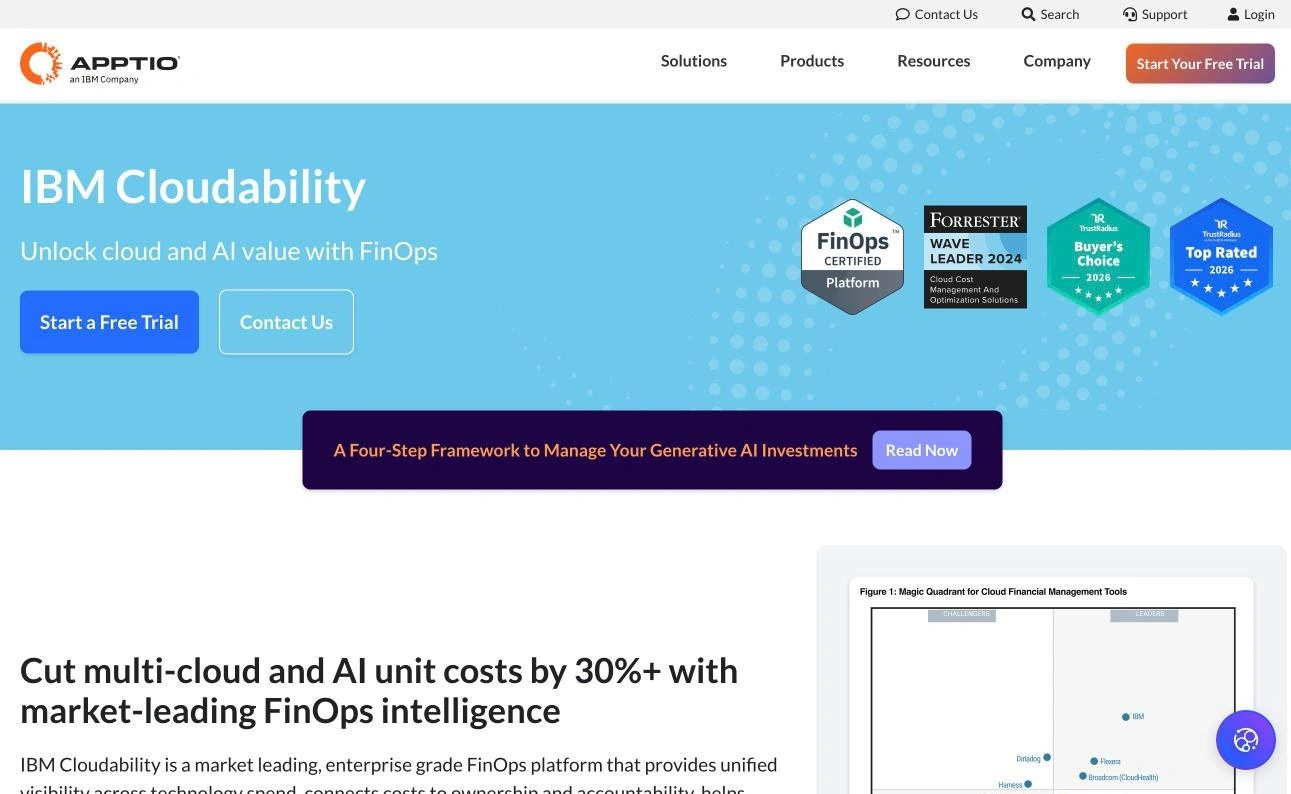
Cloudability is the stay-with-IBM route: cloud cost reporting from the same vendor, sold beside Turbonomic, Apptio and Kubecost. Its AWS Marketplace listing shows annual bands starting at $30,000 for up to $1 million of annual cloud spend. The Cloudability alternatives guide covers the trade-offs.
3. Datadog Cloud Cost Management
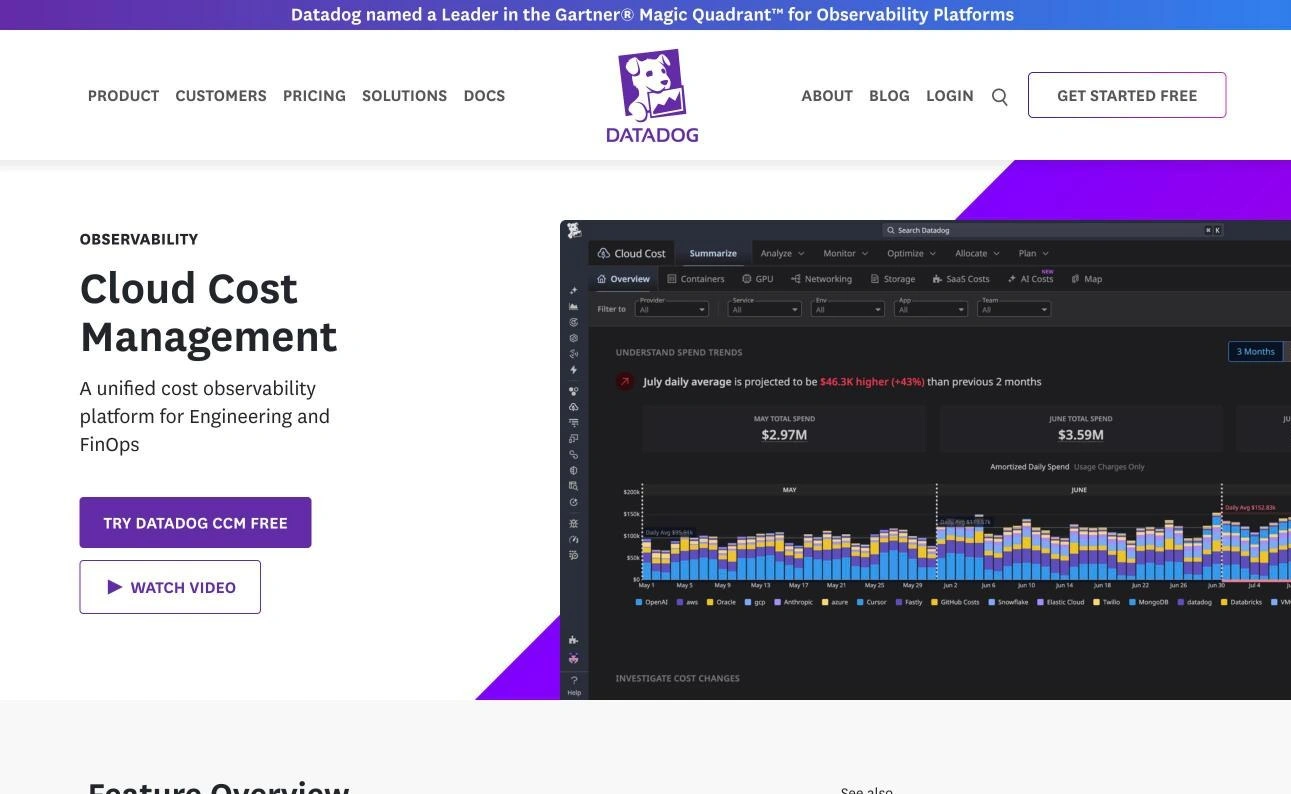
Datadog puts cost in the console engineers already use. It starts at $5 (Pro) or $10 (Enterprise) per $1,000 of cloud and SaaS spend a month, billed annually, on top of the observability bill.
4. Finout
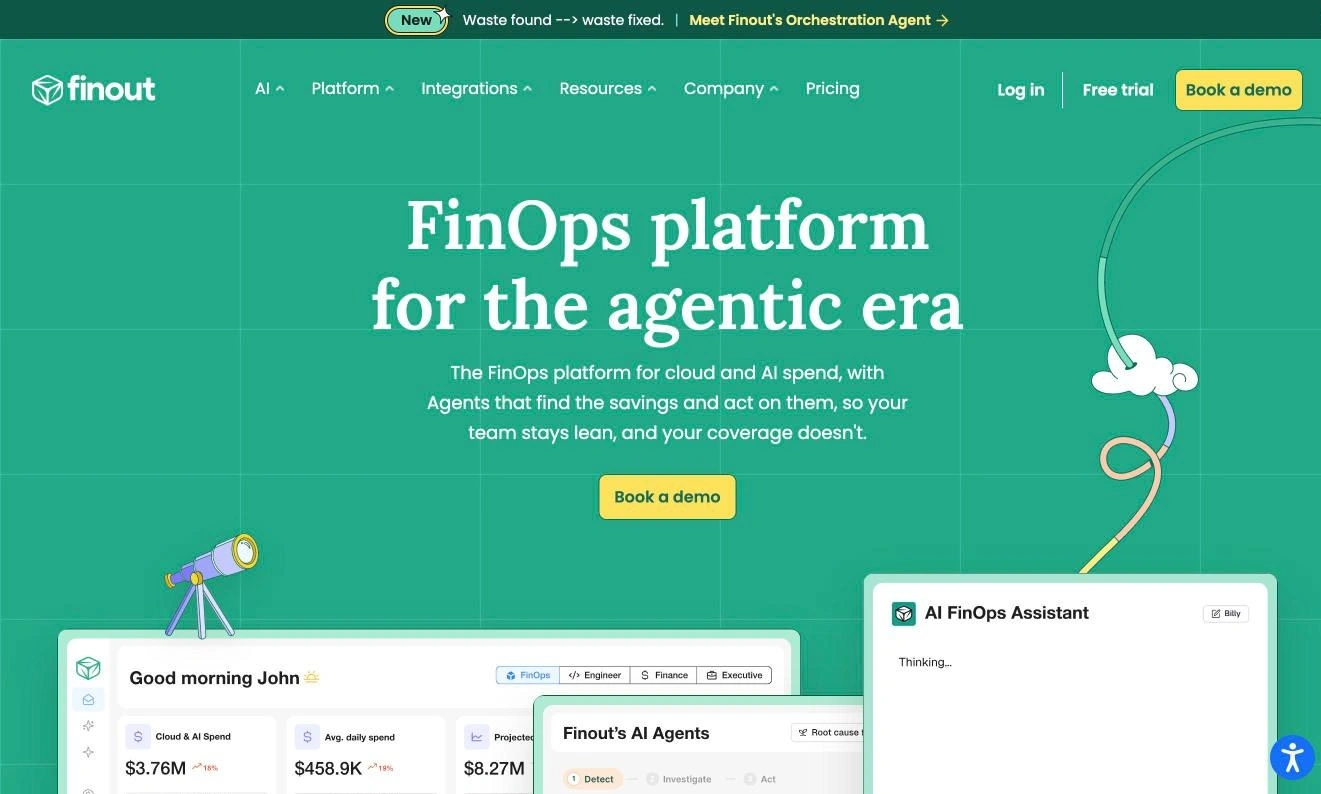
Finout combines cloud, Kubernetes and AI provider bills in one dataset and groups costs with rules, so nothing needs retagging. It charges a flat annual fee by committed-spend tier, and Kubernetes adds 25% on two of its plans. See the Finout alternatives guide.
5. Vantage
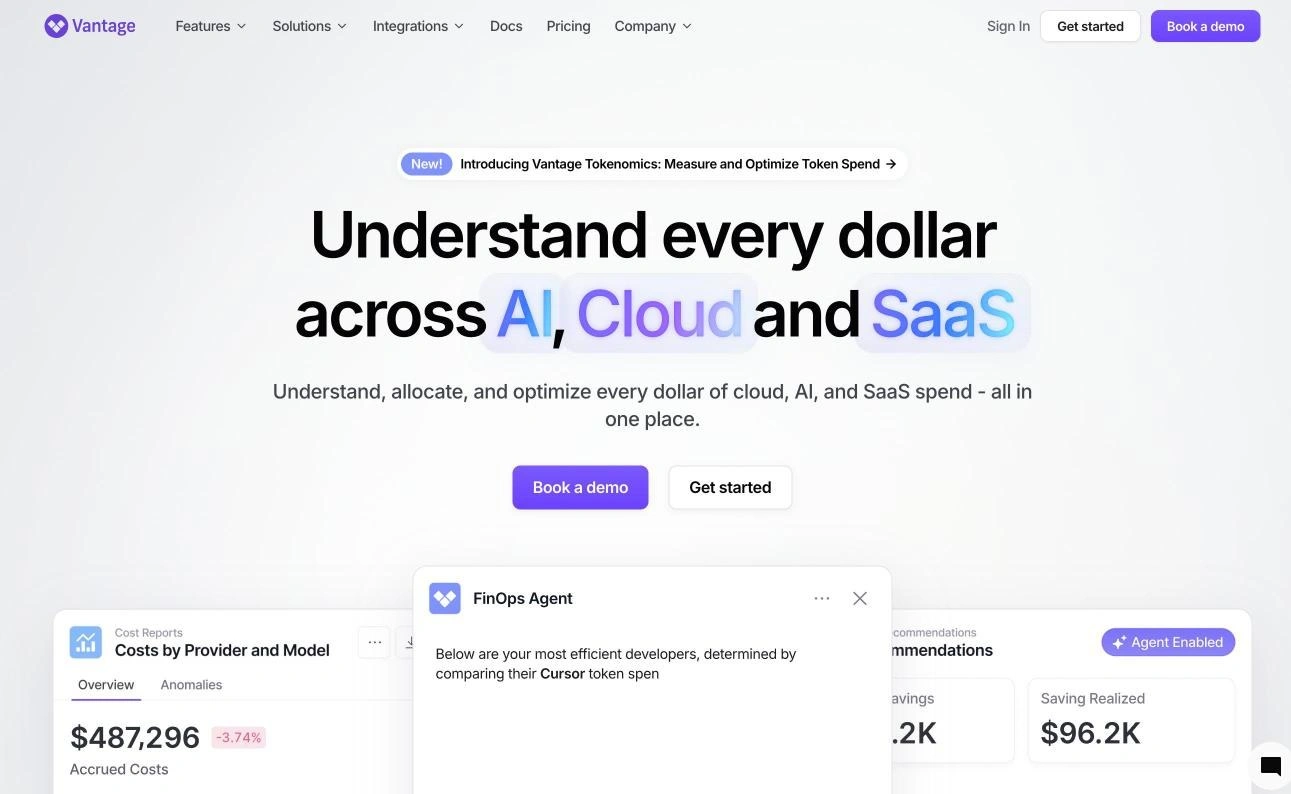
Vantage publishes its own entry tiers: free up to $2,500 of tracked spend a month, $30 up to $7,500, and $200 up to $20,000. An estate large enough to run Turbonomic will be past all three and on its quoted Enterprise tier.
Which Turbonomic alternatives automate Kubernetes and GPU clusters?
Six tools replace Turbonomic’s resizing and scaling for containers, and most have added GPU features since late 2025. CloudZero’s guides to Cast AI alternatives and Kubecost alternatives compare this group in depth.
6. Kubex (formerly Densify)
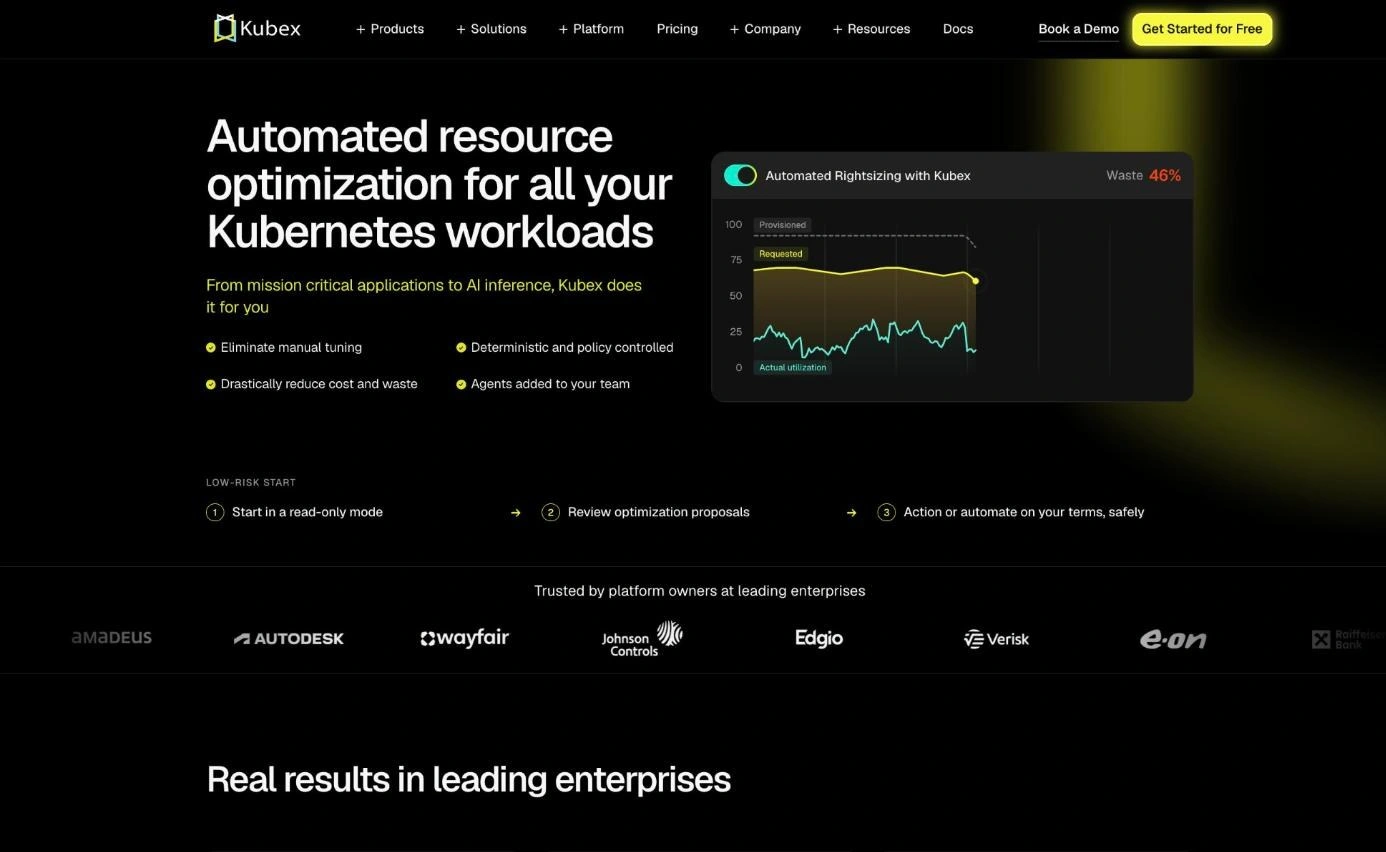
Kubex is the closest match in kind: analytics-driven rightsizing under a new name. Densify renamed itself Kubex on January 1, 2026 to mark a focus on Kubernetes, GPU and AI workloads. Pricing is by quote.
7. Cast AI
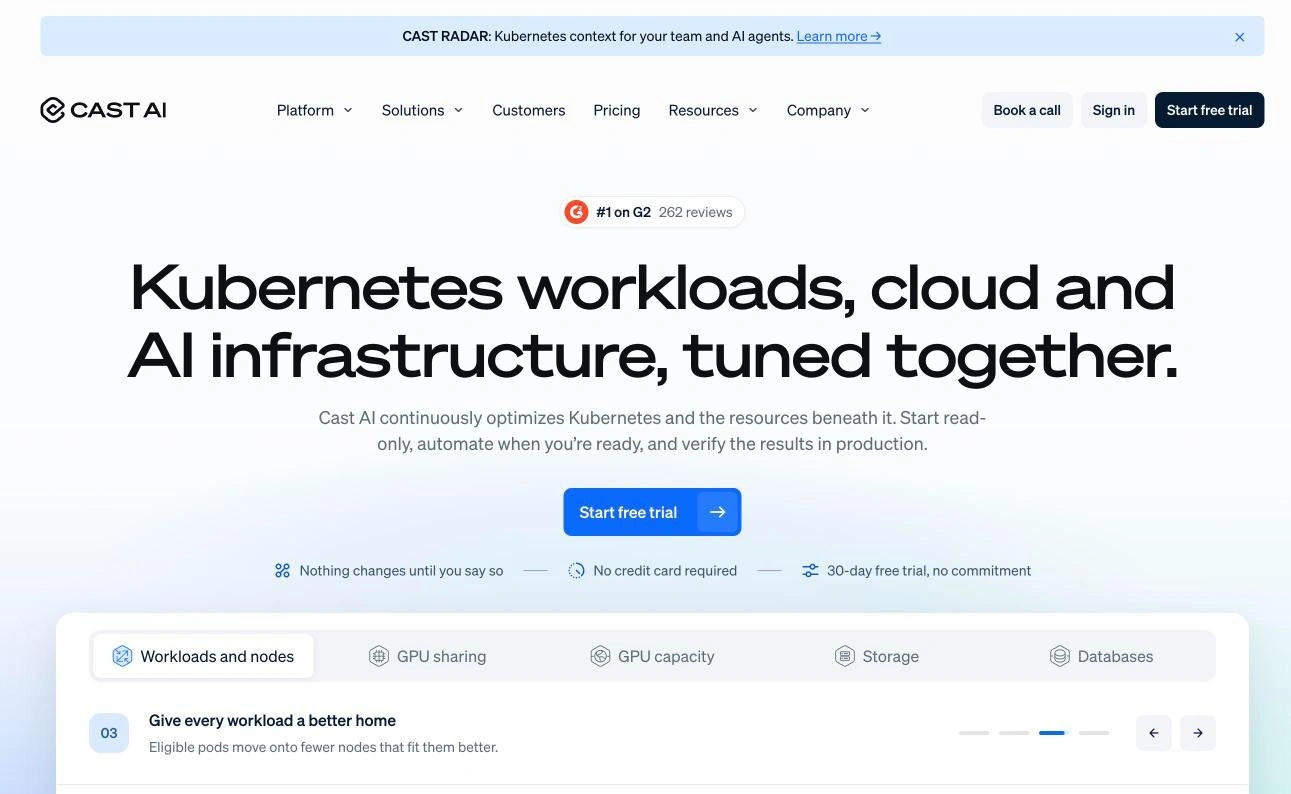
Cast AI automates nodes and workloads and, since January 12, 2026, finds GPU capacity across cloud providers through OMNI Compute. It meters on managed CPUs.
8. ScaleOps
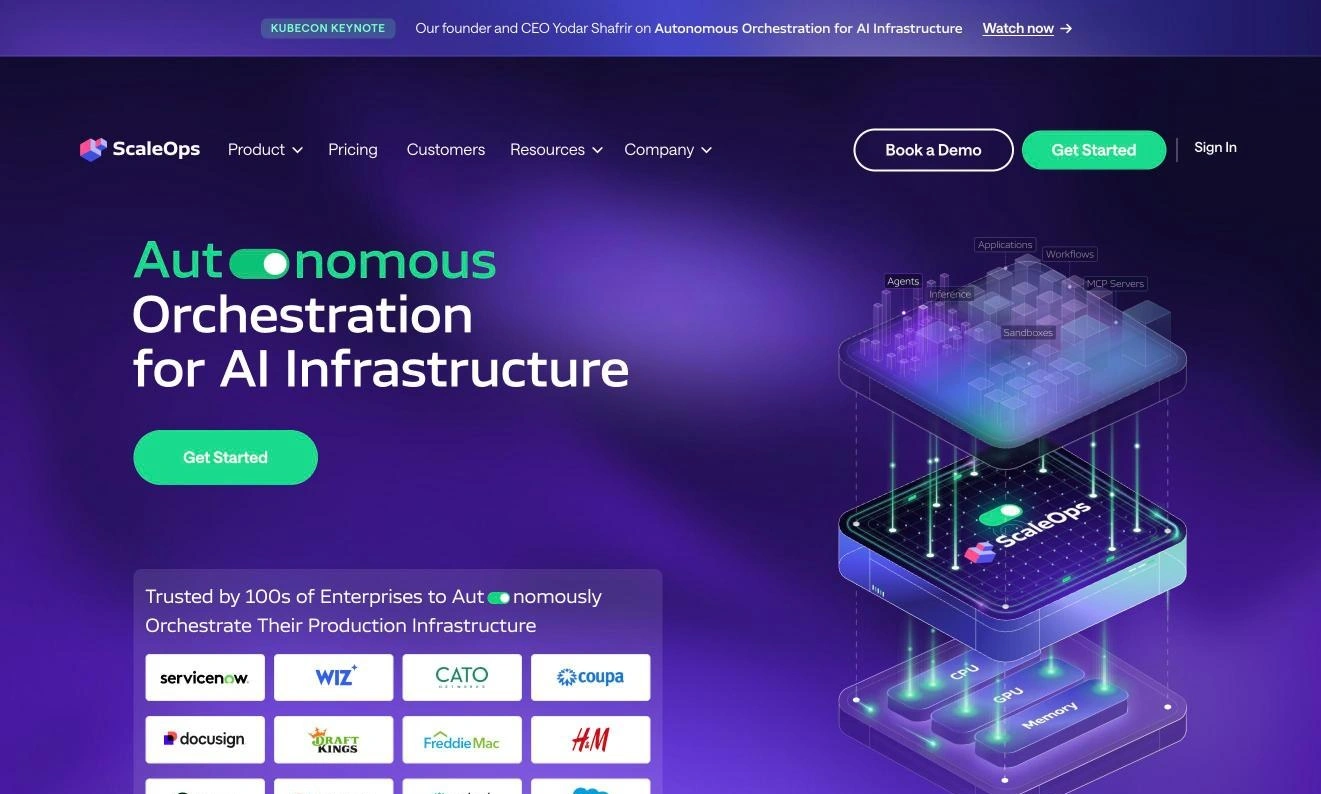
ScaleOps optimizes CPU, memory and GPU allocation without human intervention. On November 20, 2025 it launched a product that allocates and scales GPUs for self-hosted AI models, and it raised a $130 million Series C on March 30, 2026.
9. StormForge by CloudBolt
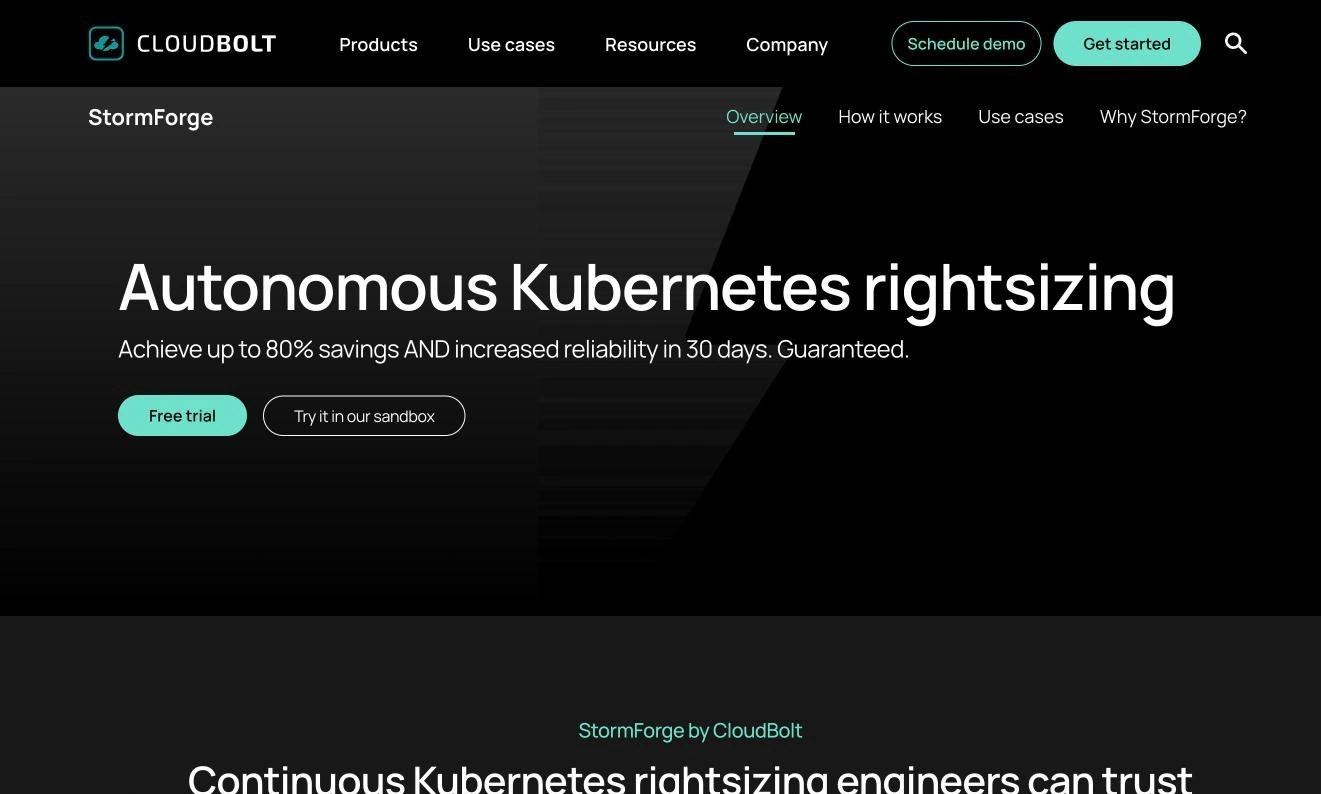
StormForge sets container requests and limits with machine learning. On November 10, 2026 CloudBolt made its GPU optimization generally available. It attributes the GPU cost on the cloud bill to namespaces and workloads, shared and time-sliced GPUs included.
10. PerfectScale by DoiT
PerfectScale is Kubernetes rightsizing from a cloud reseller. DoiT announced the acquisition on February 4, 2025. It’s free up to 300 vCPUs a month and runs on any Kubernetes distribution.
11. Sedai
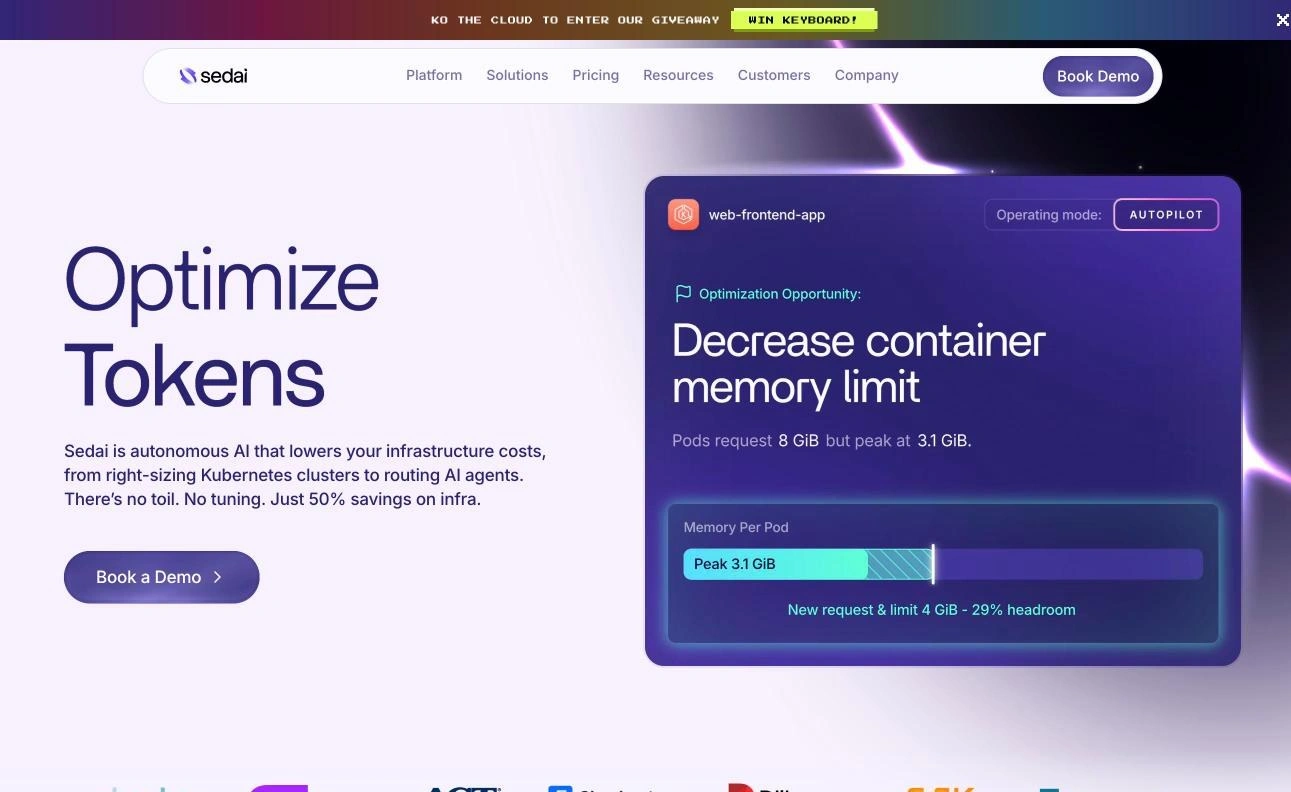
Sedai made GPU optimization generally available on March 17, 2026. It finds Kubernetes workloads that reserve GPUs without using them and removes the reservation, and it packs workloads onto GPU slices.
Which Turbonomic alternatives cover VM estates, spot instances and commitments?
Four tools cover the rest of what Turbonomic did: virtual machines, spot capacity, idle shutdown and commitments.
12. VMware VCF Operations
VCF Operations is VMware’s own capacity and performance tool, formerly vRealize Operations and then Aria Operations, now shipped by Broadcom inside VMware Cloud Foundation. For an estate that runs on vSphere, it’s the default comparison, and it’s already in the bundle.
13. Flexera (Spot)
Flexera completed its purchase of NetApp’s Spot portfolio on March 3, 2025: Elastigroup for workloads on spot instances, Eco for commitments, Ocean for Kubernetes and CloudCheckr for reporting. It suits teams that used Turbonomic mainly to cut cloud VM spend.
14. Harness
Harness AutoStopping shuts down idle non-production resources, which is the job of Turbonomic’s Parking Edition. Its Cluster Orchestrator adds node automation on Amazon EKS.
15. nOps
nOps buys and manages cloud commitments automatically and charges a share of the savings it realizes. The nOps alternatives guide has the wider field.
Outside the 15, the cloud providers’ own tools, AWS Compute Optimizer, Azure Advisor, and Google’s Recommender, are the free floor for rightsizing recommendations.
How does Turbonomic handle AI workload optimization and GPUs?
Turbonomic does optimize AI workloads, as long as you run the infrastructure they sit on. IBM says it rightsizes GPU instances on AWS and Azure, scales LLM inference services on Kubernetes and Red Hat OpenShift against service-level objectives, and places GPU-backed virtual machines in the data center.
Release 8.19.6, described in an IBM post on May 22, 2026, added a setup wizard that pulls GPU and LLM inference metrics from Prometheus. IBM says it “shrinks this initial setup from weeks to minutes.”
All of that answers whether each GPU is busy. IBM’s AI workload page says nothing about token or API spend from model providers, and nothing about which customer or feature a busy GPU served. Those questions are the subject of AI cost management.
When should you stay on Turbonomic?
Stay if you run a large data center estate, want automated placement with little human review, or standardize procurement on IBM. Few alternatives match its reach across hypervisors, public cloud and Kubernetes in one engine.
If you stay, add a layer that shows what the spend returned, so the efficiency Turbonomic creates reaches the budget as a number with an owner. IBM sells its own version of that in Apptio and Cloudability; CloudZero’s Apptio alternatives guide covers that route.
What should you ask before a Turbonomic renewal?
Five questions separate a tool that looks busy from one finance can use.
- What is the renewal paying to prove? Efficiency or return. Pick the category before the vendor.
- What does the license count? Servers, CPUs or spend. That tells you what the vendor is paid to grow.
- Does it see model API spend? Token bills don’t run on servers you manage.
- Who owns each recommendation? One with an owner is a task. One without is a report.
- Can it show realized savings? Not projections. What appeared on a later invoice.
Frequently asked questions about IBM Turbonomic
What’s the next step before a Turbonomic renewal or a Cisco migration?
Put the quote next to last month’s cloud and AI bills. If you can’t say how much of that spend the license covers, who owns each open saving, or which savings showed up on an invoice, then the renewal is being approved on the same information that prompted this search.
Schedule a CloudZero demo with those documents. The CloudZero alternatives guide compares CloudZero itself.
Vendor facts here come from each vendor’s own release, documentation or pricing page, from AWS Marketplace listings, Cisco’s end-of-life bulletins and TechCrunch. Where another tool is the better choice, the entry says so.