Two-dimensional group-by improvements in Explorer
Why this matters
One dimension is rarely enough. You want cost by team and by service at once, then carry that view into a drill-down, an export, or a saved report without rebuilding it.
Two-dimensional group-by shipped last month. This release extends it to the places you actually do that work: drill-downs, exports, saved Views, and Kubernetes efficiency. These updates close gaps that appeared once people started using it on real analysis; we will keep collecting feedback and improving it.
What we built
Five improvements to two-dimensional group-by in Explorer:
- Expand All: A new button next to Export, shown when two or more group-bys are active, expands every top-level row at once so you can reveal the second dimension in a single click.
- Two group-bys in saved Views: Views now hold a primary and a secondary group-by, so you can save a two-dimensional analysis and return to it later.
- Exports keep both dimensions: Time-grouped exports for two-level group-bys now include both dimensions in the download, so the file matches what you were looking at on screen.
- Smarter drill-downs: Clicking a child row now filters to just the parent you clicked. Sibling parents no longer clutter the drill-down view.
- Kubernetes efficiency in 2D: Efficiency metrics now show up wherever a Kubernetes dimension is part of your two-dimensional group-by, so you don’t lose that context when you add a second dimension.
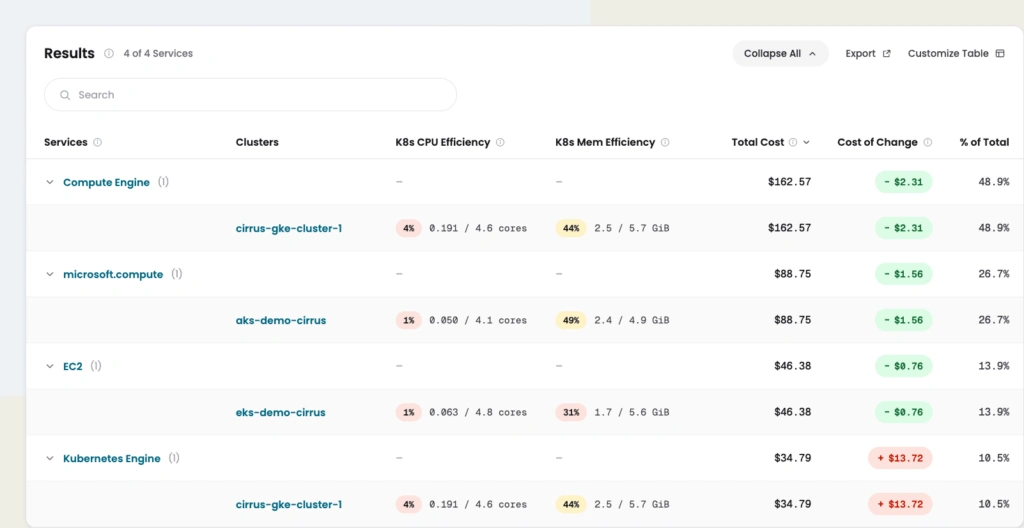
Image: Cost broken down by Service, then by Cluster, with K8s CPU and memory efficiency attached directly to each cluster’s row.
How it works
Set two group-bys in Explorer and the improvements apply automatically, no separate setup, no toggles. Expand All appears next to Export whenever two or more group-bys are active. Save a View and it keeps both the primary and secondary group-by, then restores both when you open it. Time-grouped exports carry both dimensions into the file. Drill-downs filter to the exact parent you select, and Kubernetes efficiency metrics render when a Kubernetes dimension is present.