One of the main reasons organizations migrate to the cloud is to avoid the high upfront costs of traditional IT infrastructure (CapEx). Yet, cloud computing is also an expense (OpEx). And surprisingly, one-third of that spend often goes to waste.
While the cloud can be cost-effective in the long run, realizing those savings requires a disciplined FinOps practice backed by the right tooling.
A platform like Finout can help, but its effectiveness depends on your organization’s specific needs, cloud footprint, and optimization goals.
In this guide, we explore what Finout offers, why you might look beyond it, and the 11 best Finout alternatives worth evaluating in 2026.
What Is FinOut?
FinOut offers cloud cost management and optimization solutions. It consolidates cloud costs from AWS, GCP, Azure, and Oracle Cloud into a single, detailed view using its MegaBill feature.
MegaBill tracks cloud spending by providing a clear overview of your daily, total usage, and monthly costs to help identify areas for cost optimization.
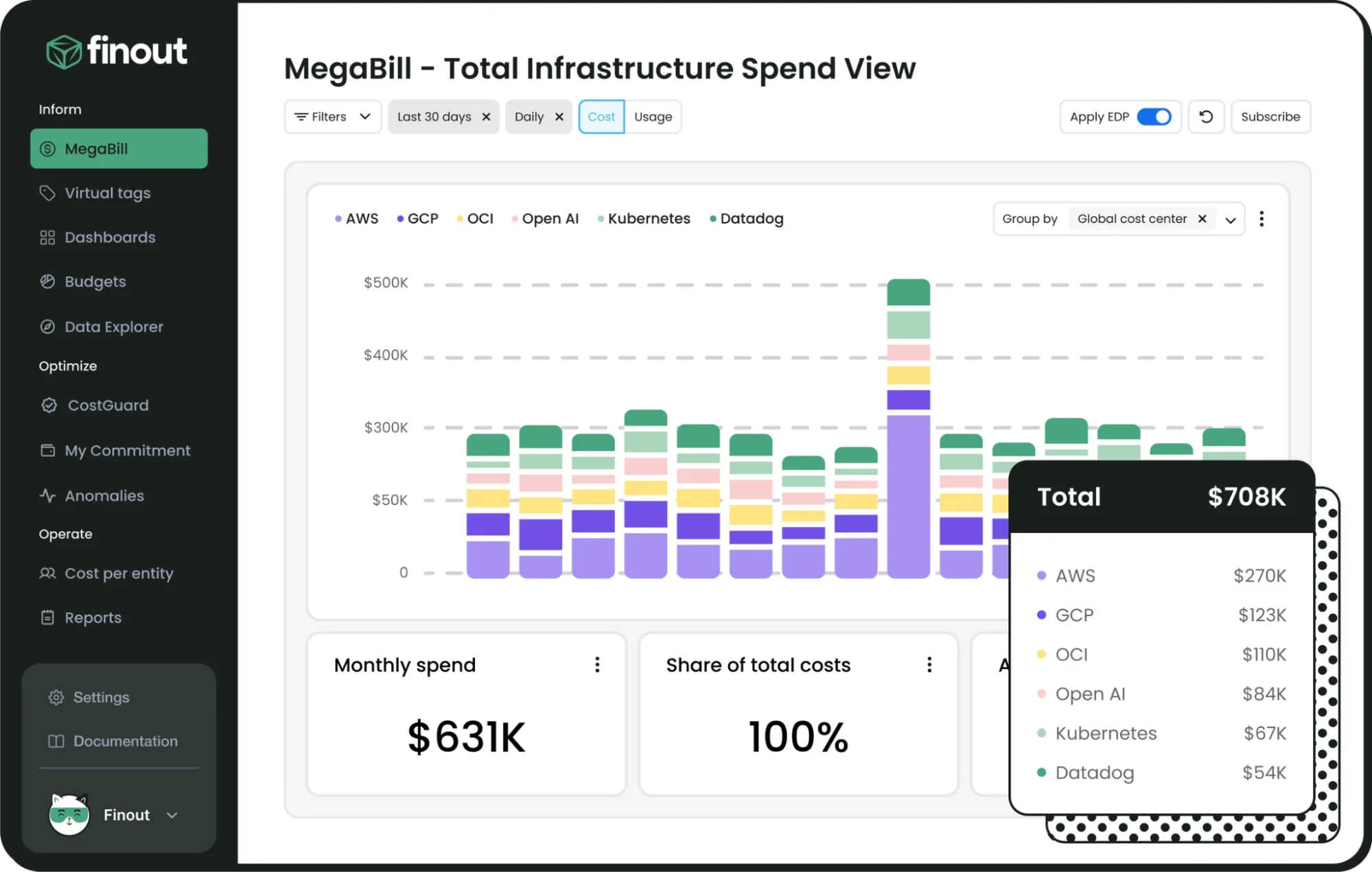
FinOut also supports FinOps through a virtual tagging feature that enables FinOps teams to allocate 100% of cloud spend to unit costs.
The platform now positions itself as delivering FinOps for the Agentic Era, reflecting a broader industry shift toward AI-assisted cost management.
Report
Finance needs to prove AI’s return: CloudZero report
260 senior finance leaders (more than half CFOs) told us why the speed of seeing AI spend, not the size of it, separates who pulls ahead on AI from who gets burned.
Why Consider FinOut Alternatives?
While FinOut’s virtual tagging simplifies cost management, it is only as effective as the resources it draws from. If resource tagging is incomplete or not updated in real-time, the effectiveness of virtual tagging in managing costs can be compromised. Additionally, like traditional tagging, not all resources can be tagged in different cloud environments, leading to incomplete cost tracking.
Finout is also primarily geared toward cost visibility and reporting. Teams that need active optimization—such as automated rightsizing, commitment management, or Kubernetes-native cost controls—often find they need additional tooling to act on the insights Finout surfaces.
Finally, Finout’s pricing model is designed for organizations with significant cloud spend. For smaller teams, both the cost and the feature set may be more than necessary.
So, what are the best FinOut alternatives to address the above limitations?
11 Best Finout Alternatives To Switch To
Consider the following.
1. CloudZero
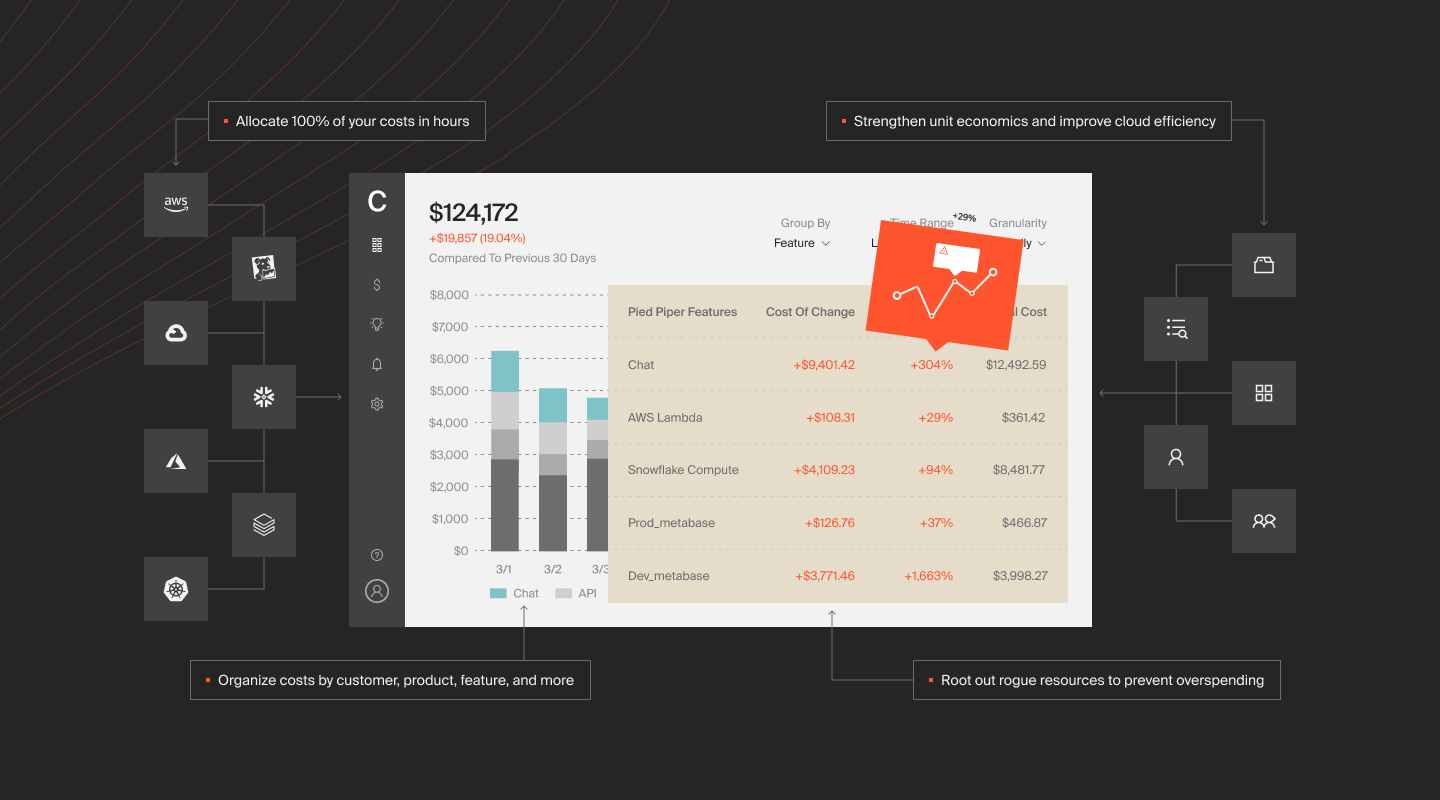
CloudZero is a cloud cost intelligence platform built for engineering, finance, product, and executive teams alike. The platform follows a clear four-step process—Ingest, Allocate, Analyze, and Engage—and pulls data from over 50 cloud, data, and AI providers, including AWS, Azure, GCP, Oracle, Snowflake, Datadog, New Relic, and MongoDB.
What sets CloudZero apart is CostFormation, its proprietary allocation engine that organizes 100% of cloud spend without requiring perfect tagging. Using a code-driven approach similar to Infrastructure as Code, teams define cost dimensions through code artifacts rather than manual resource tags. This means costs can be accurately allocated by customer, feature, product, or team—even in complex multi-cloud environments.
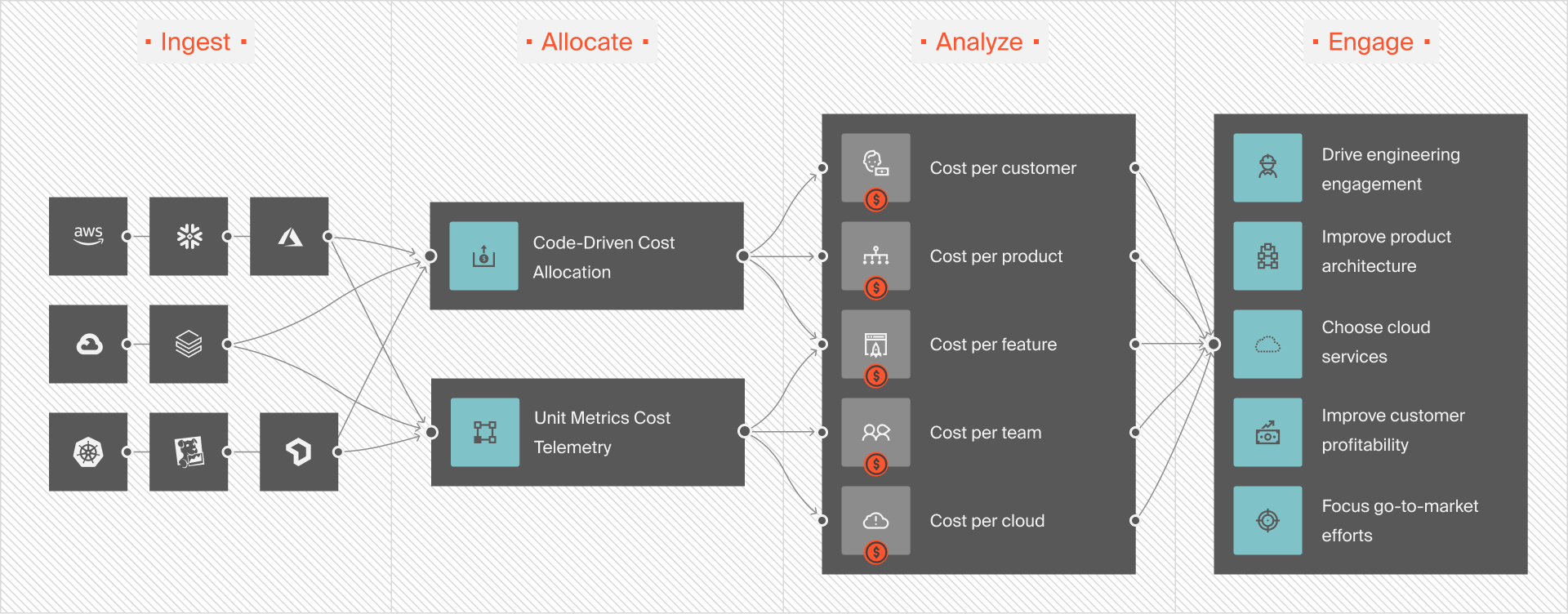
CloudZero provides hourly-granularity data with up to five years of historical access, offering significantly more detail than competitors limited to daily views. Its AI-powered anomaly detection compares hourly spend from the past 36 hours against 12 months of historical data, automatically alerting the right engineers when spending looks abnormal.
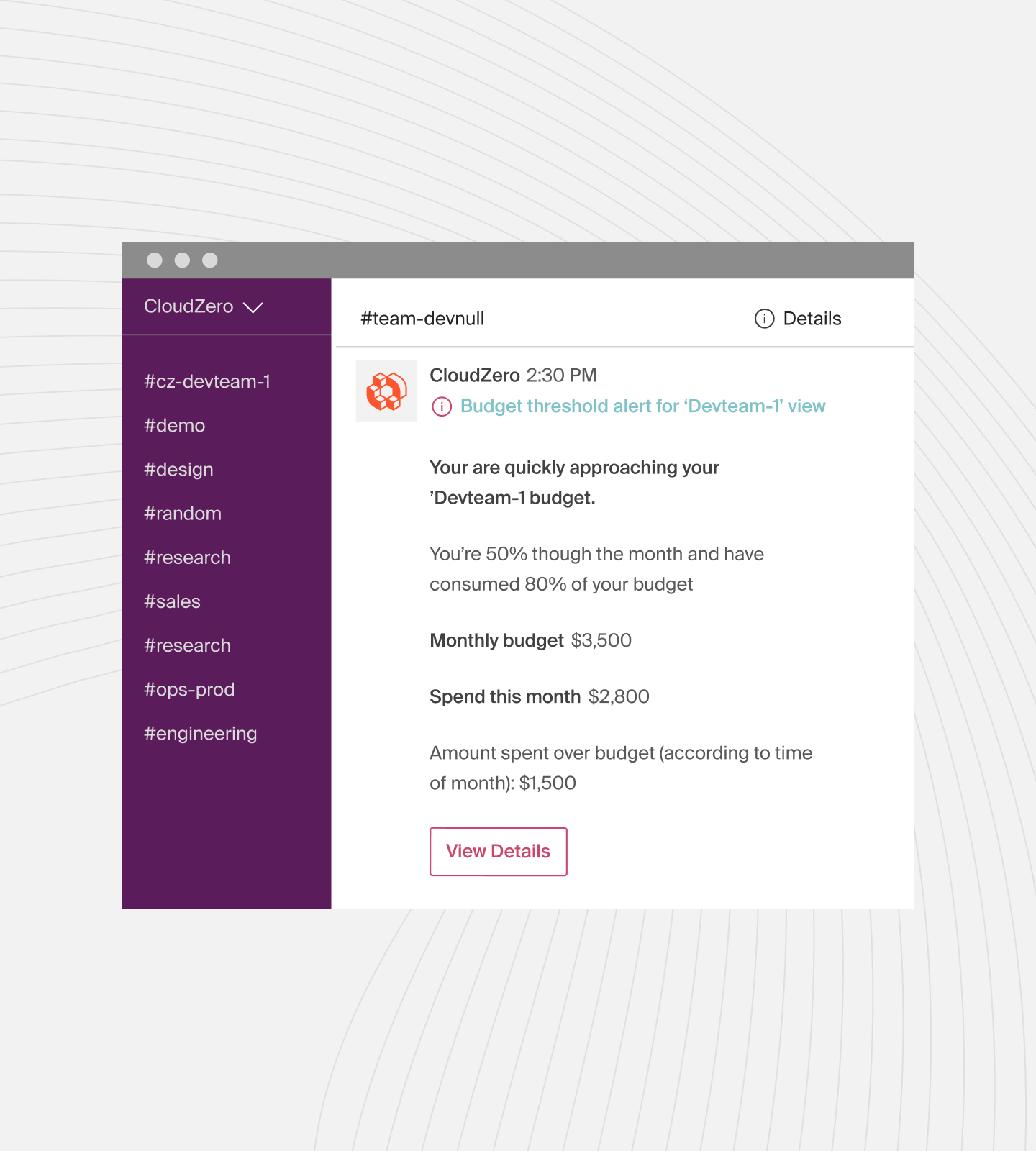
The platform also includes AI Hub, which lets engineers investigate spend, diagnose anomalies, and understand cost impact using natural language—directly inside agentic tools like Claude Code. Every subscription includes unlimited users, so organizations can extend cost intelligence across every team without per-seat pricing concerns.
2. Azure Cost Management + Billing
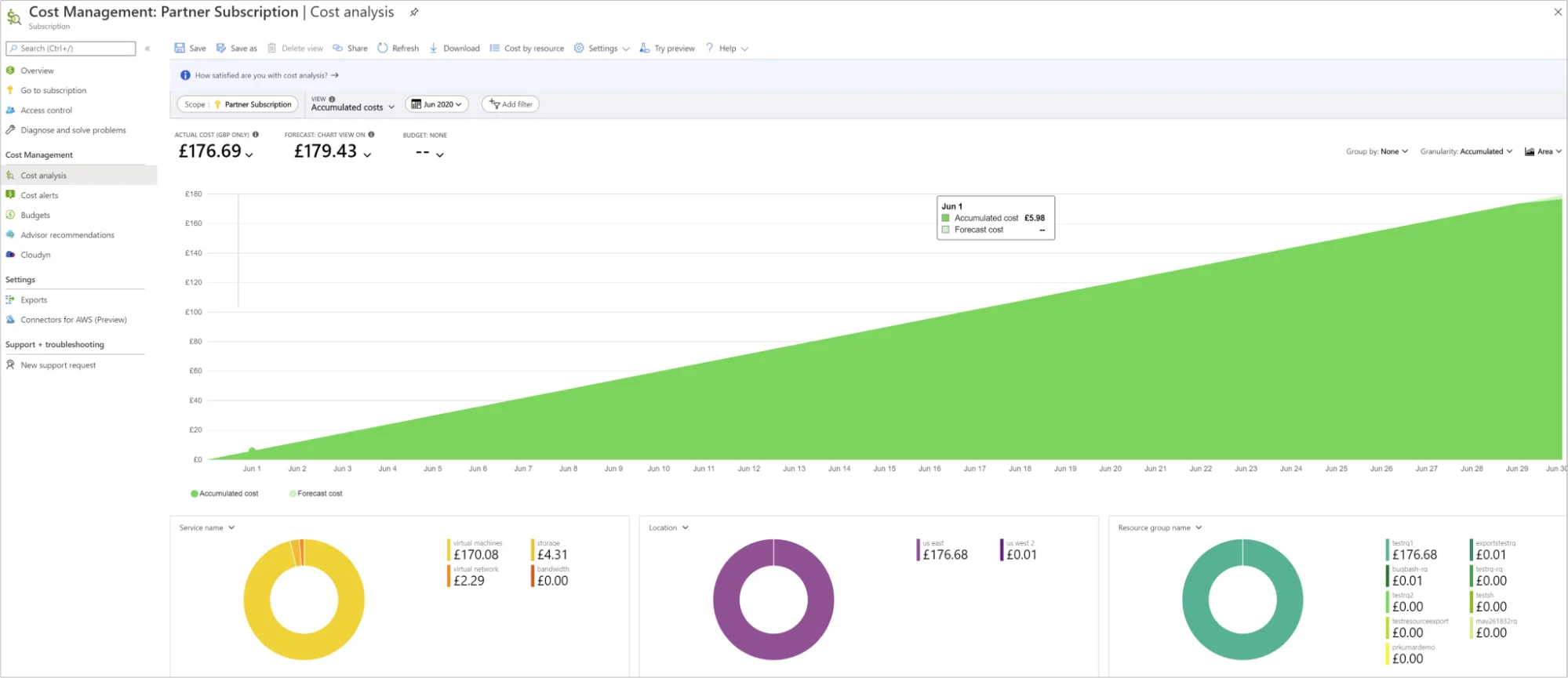
For organizations using Azure services, this is where to start. Azure Cost Management + Billing manages and optimizes costs directly within the Azure portal without needing third-party tools. Users can manage all aspects of their Azure billing, including viewing invoices, managing subscriptions, and handling payments, all from within the same platform.
Azure also offers connectors for AWS that allow users to import their AWS cost data into the Azure portal. This helps you manage both your Azure and AWS costs in one place. Once the connector is set up, it also enables additional features, such as setting budgets and scheduling alerts, to keep track of spending across both platforms.
3. Amazon CloudWatch
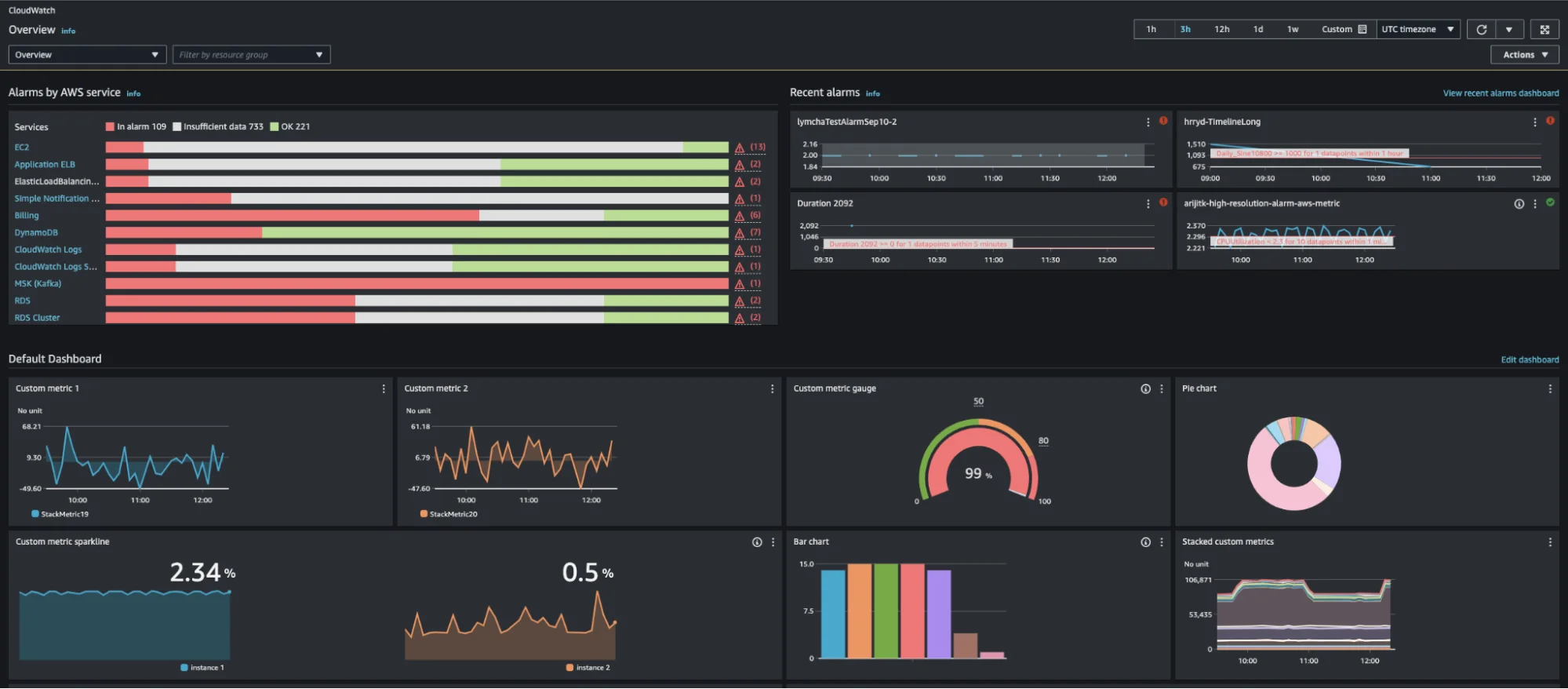
Amazon CloudWatch helps you manage your cloud resources and services within AWS. It collects and displays data on resource use, such as CPU, memory, and bandwidth consumption. This data helps you identify areas for overspending and allows you to take action to lower costs.
With CloudWatch, you can also set alarms to notify you when your usage exceeds a certain level.
Check out our guide for more Amazon CloudWatch use cases, benefits, and pricing.
4. Datadog
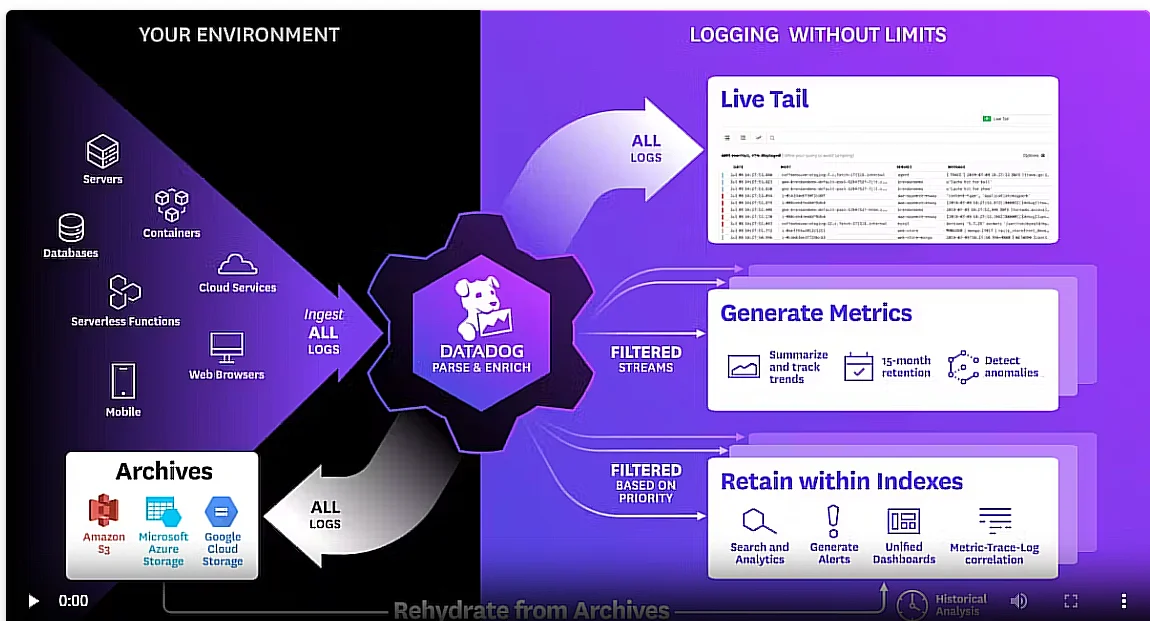
Datadog provides full-stack observability that enables organizations to monitor the health and performance of their infrastructure, applications, and services. It collects, visualizes, and analyzes data from various sources, including cloud providers, servers, databases, containers, and more.
Its customized dashboards help engineering teams spot inefficiencies and optimize resources. It also features automated alerts that notify teams of unusual costs, allowing quick action to avoid overspending.
Datadog offers a variety of services, making its pricing model complex. Here’s a breakdown of Datadog costs and tips on how to manage and optimize them.
5. nOps
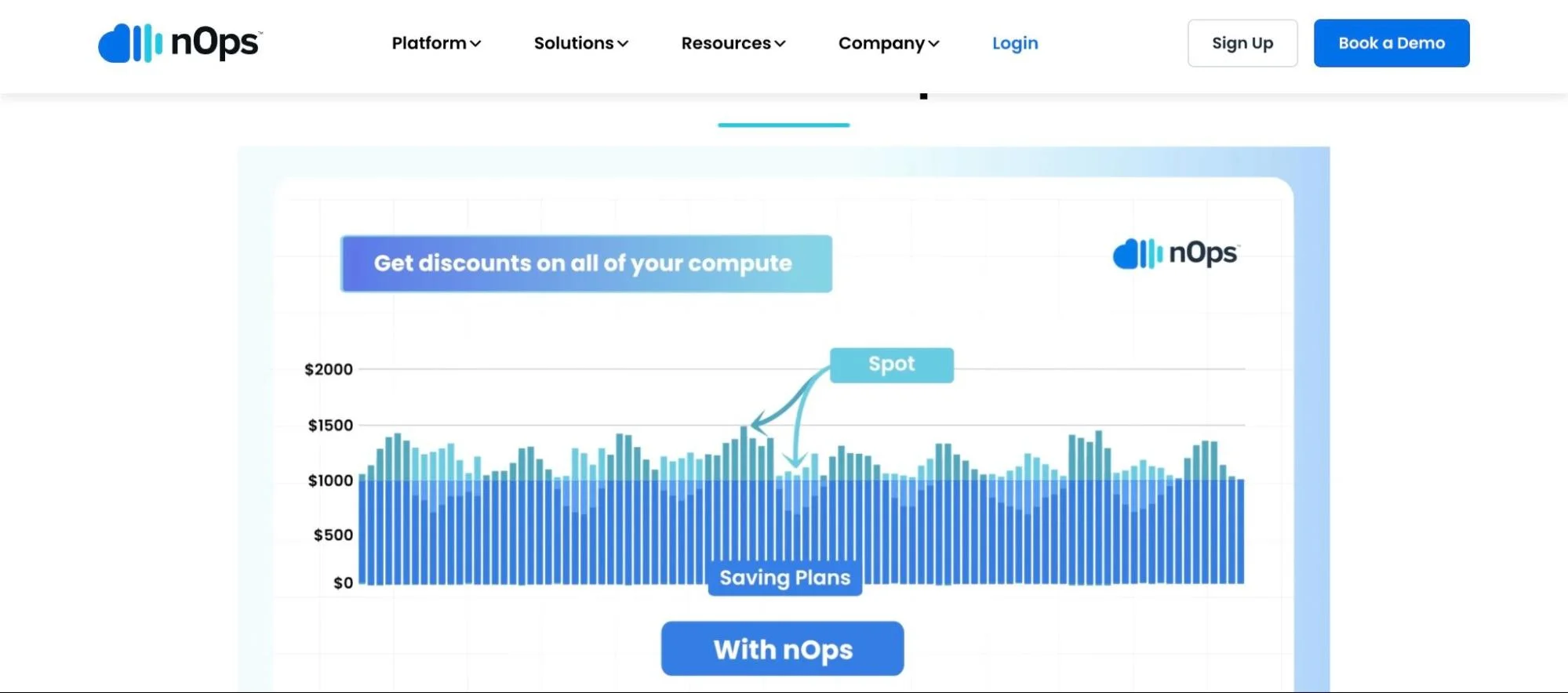
nOps is an automation-first FinOps platform that goes beyond visibility to actively reduce cloud costs. The platform continuously analyzes usage patterns across AWS, Azure, and GCP, then automates optimizations including commitment management, workload rightsizing, Spot Instance orchestration, and waste elimination across compute, storage, and containers.
nOps also offers a FinOps Agent—an AI trained on your cost data that answers questions and automates tasks like forecasting, anomaly detection, and budget reporting. Pricing for visibility features starts at around $149 per month, with optimization features billed as a percentage of realized savings.
6. CloudKeeper
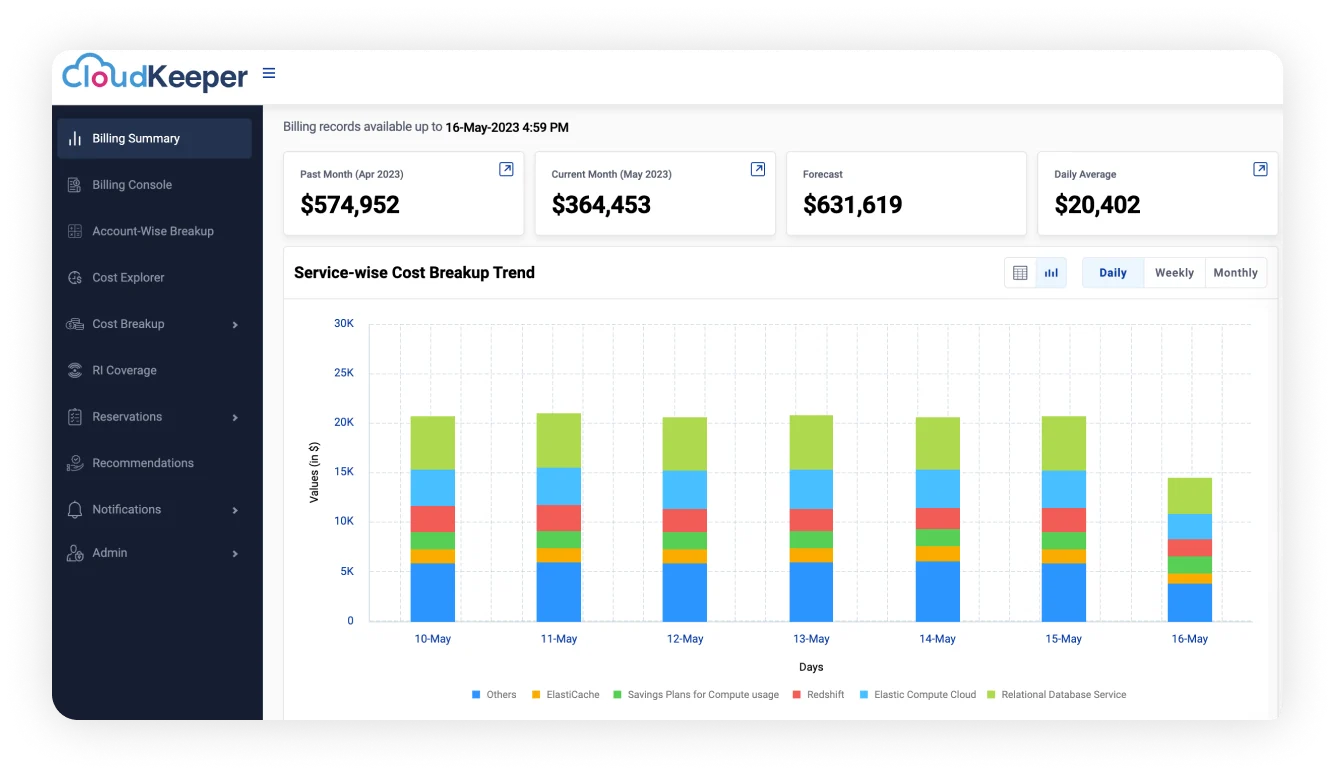
CloudKeeper’s main feature is its automated RIs and Savings Plans management on its CloudKeeper Auto platform. It also optimizes end-to-end cloud by tracking and managing costs across AWS services and providing actionable insight.
CloudKeeper also offers FinOps consulting services that help set and measure KPIs, conduct FinOps maturity assessments, ensure governance and compliance, and build a strong FinOps culture.
7. Zesty
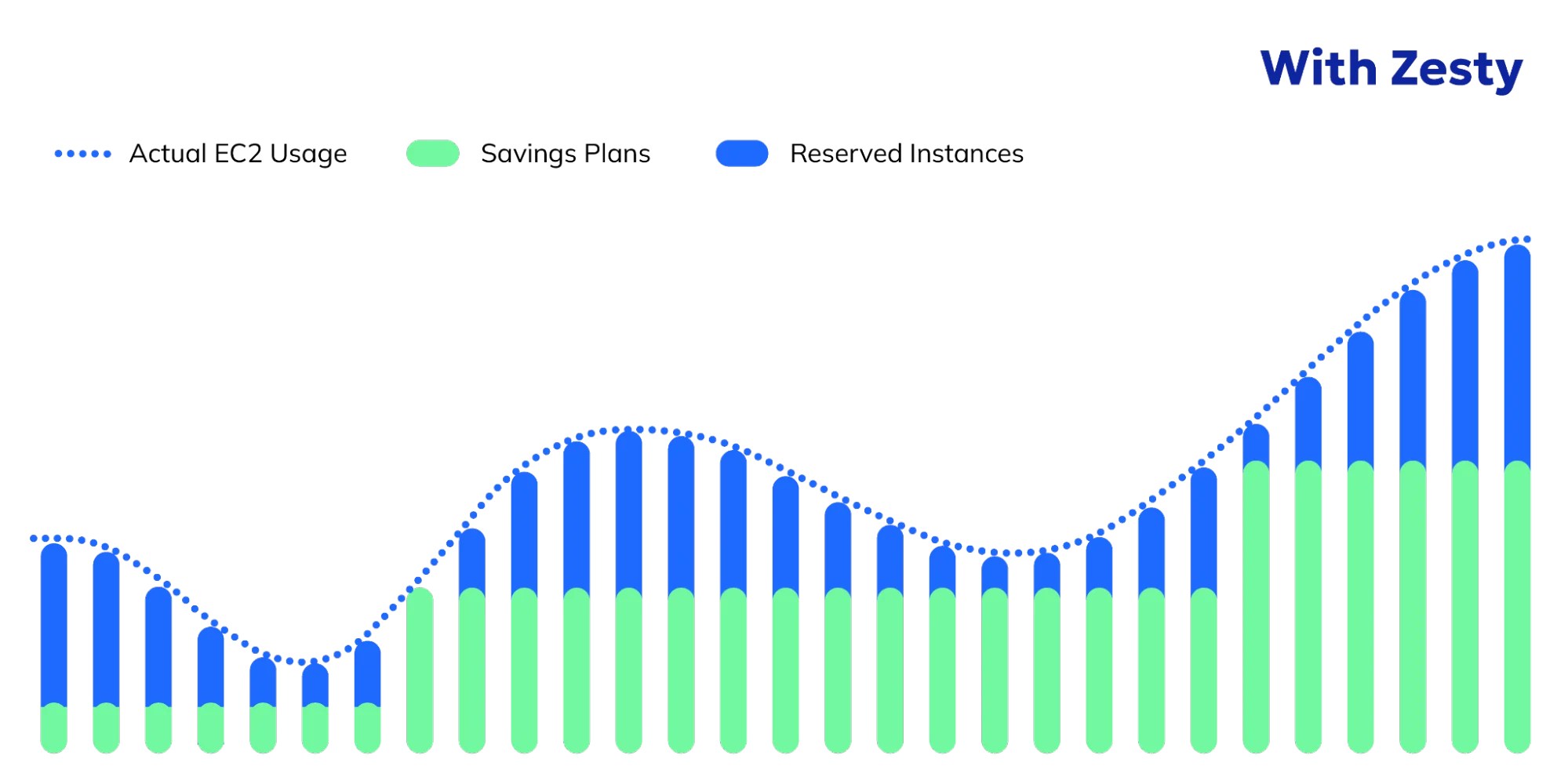
Zesty automates cloud resource management by scaling CPU and RAM in real-time to match application demand, reducing costs and maintaining high performance. This automation minimizes manual intervention, ensuring efficient cloud infrastructure management.
The platform also features tools like Commitment Manager, which automatically adjusts AWS Reserved Instances based on usage. Zesty Disk scales block storage dynamically, potentially saving up to 70% on storage costs.
In 2025, Zesty launched Kompass, a Kubernetes cost optimization product that handles pod rightsizing, persistent volume autoscaling, and node management. The platform now also supports Azure commitment management, broadening its multi-cloud capabilities. Zesty offers a freemium tier with paid plans starting from $99 per month.
8. IBM Turbonomic
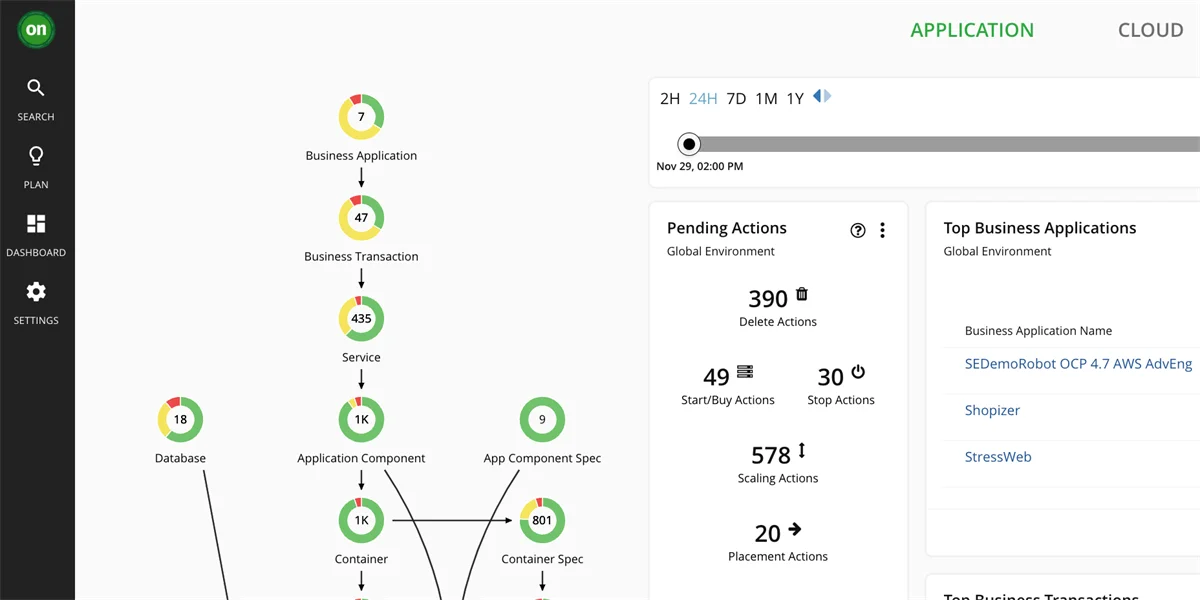
IBM Turbonomic automatically aligns application demand with infrastructure supply in real-time. This feature is especially useful in hybrid and multi-cloud environments, where resource allocation can be complex. By dynamically adjusting resources like virtual machines, storage, and databases, Turbonomic prevents over-provisioning and under-utilization, reducing unnecessary cloud costs.
Turbonomic now integrates with IBM Concert, IBM’s agentic operations platform, and has expanded to support Oracle Cloud Infrastructure (OCI) alongside AWS, Azure, and GCP. It also supports Kubernetes optimization and integrates with tools like GitHub, Slack, and Terraform.
9. Kubecost (an IBM Company)
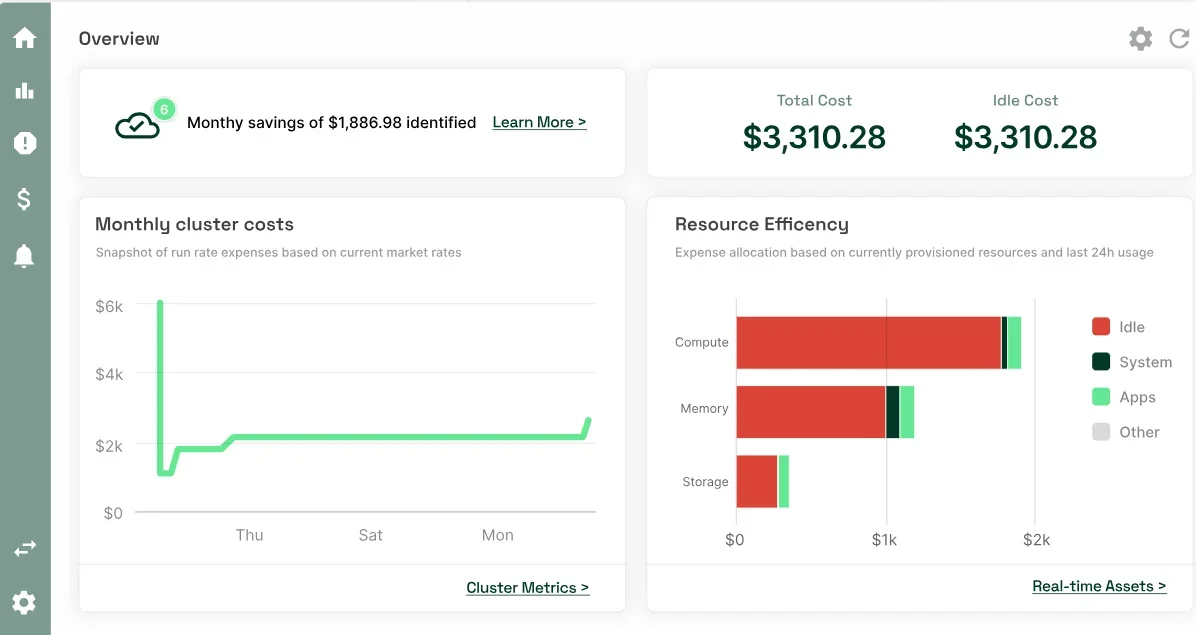
Kubecost provides Kubernetes-native cost monitoring by running directly inside your clusters and mapping spend down to the pod, namespace, deployment, and label level. It translates CPU, memory, and storage usage into actual cloud dollar costs, giving engineering teams clear visibility into what each microservice or workload costs.
IBM acquired Kubecost in 2024, integrating it into the IBM FinOps Suite alongside Cloudability and Turbonomic. The platform offers a free tier for single-cluster monitoring with unlimited nodes, a Business tier starting at $449 per month, and custom Enterprise pricing for large-scale deployments.
10. Flexera One (formerly CloudCheckr)
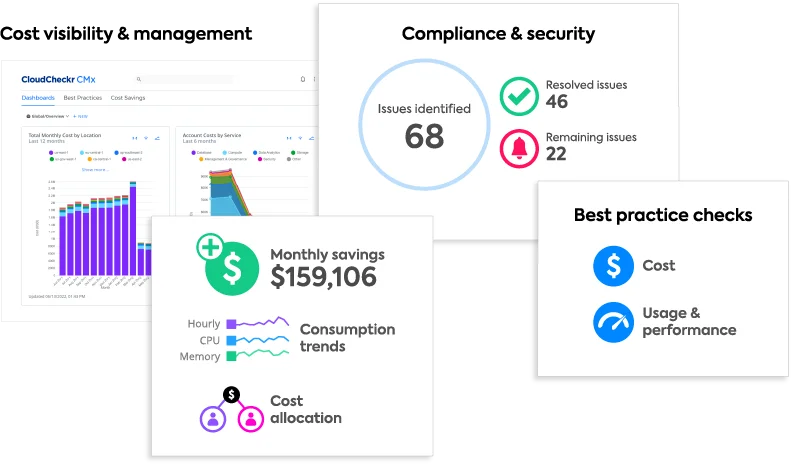
CloudCheckr automates cost optimization by identifying idle resources, shutting them down to reduce waste, and leveraging volume-based purchases for additional savings. This process includes automated rightsizing and rebalancing, continuously optimizing performance and costs.
CloudCheckr also features security visualization and management to detect and eliminate anomalies through automated remediation. This helps prevent malicious actors from exploiting infrastructure misconfigurations in your public cloud. Its compliance management uses over 35 cloud security frameworks to keep your environment audit-ready.
11. CAST AI
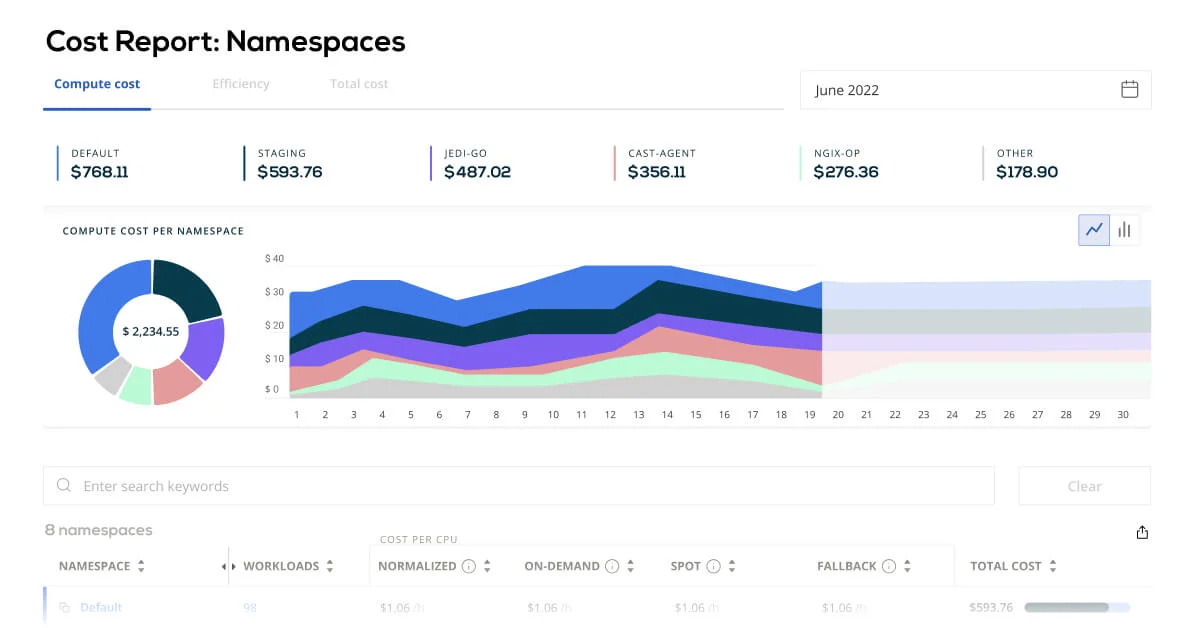
CAST AI is a Kubernetes optimization platform that automates cost reduction through workload rightsizing, autoscaling, and intelligent Spot Instance management. The platform can achieve 50–70% cost savings by automatically placing workloads on the most cost-effective infrastructure.
Recent updates include in-place pod rightsizing with zero downtime, cluster hibernation (now generally available) for scaling non-production environments to zero, and support for GCP Flexible Committed Use Discounts. CAST AI’s 2026 State of Kubernetes Optimization Report revealed that average GPU utilization sits at just 5%, highlighting the massive optimization opportunity in AI and ML workloads.
If you already use this tool and want a CAST AI alternative for Kubernetes cost optimization, check out our guide here.
How CloudZero’s Cost Per Customer Maximizes Your Business Profitability
Organizations invest in cloud cost management tools not just to reduce waste but to connect spending with business outcomes.
CloudZero’s Cost per Customer helps identify the most profitable customer segments.
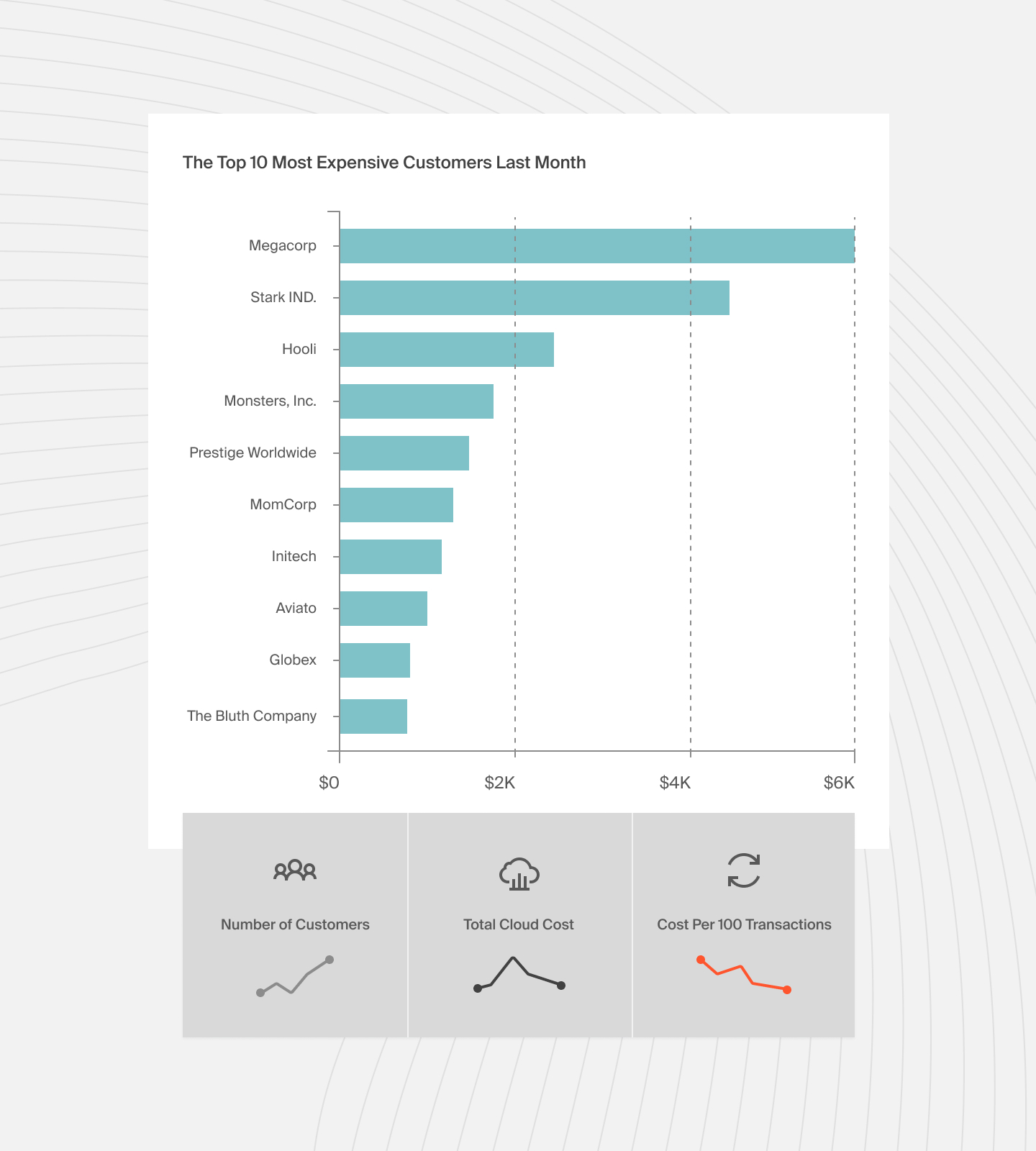
Unlike most platforms that rely on basic calculations, CloudZero uses billing and telemetry data to provide precise cost per customer insights. This approach goes beyond average metrics, revealing hidden savings opportunities. If troubling cost trends emerge within a specific customer or segment, CloudZero offers insights to help address them.
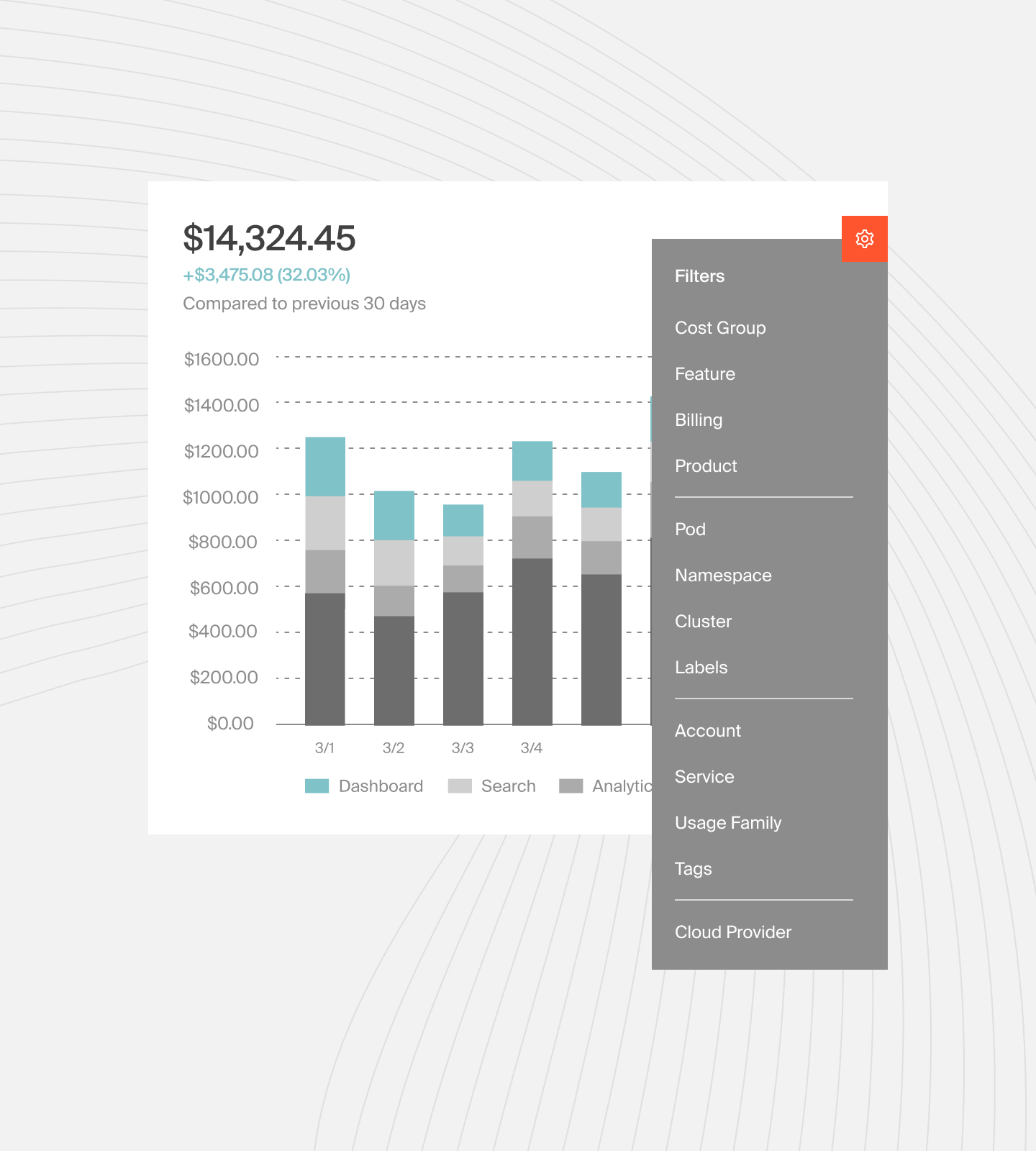
Additionally, CloudZero’s data allows businesses to assess customer profitability, helping refine their go-to-market (GTM) strategies. The largest customer is not always the most profitable. With CloudZero, businesses can evaluate and optimize their marketing, pricing, and renewal strategies to maximize customer profitability.
 to see how companies are saving millions of dollars with the help of CloudZero.
Software and pricing information last verified May 2026. Features, pricing, and availability may have changed. Please verify current details with vendors before making decisions.