Quick Answer
ChatGPT pricing ranges from $0 (Free) to $200/month (Pro), with Business at $20–$25 per seat and Enterprise custom. The Free tier offers GPT-5.3 Instant with a 10-message-per-5-hours cap. Plus costs $20/month and includes GPT-5.5, Deep Research, Sora, and Agent Mode. Pro splits into two tiers: $100/month (5x Plus limits) and $200/month (20x limits, 1M-token context). Business requires a 2-seat minimum and starts at $20/seat on annual billing. API access is billed separately — GPT-5.5 costs $5.00 per million input tokens and $30.00 per million output tokens. Subscriptions include zero API credits.
Two years ago, ChatGPT cost either $0 or $20. Today there are several tiers, a separate pay-per-token API, and ads on the cheapest plans. The last few months alone have rewritten the pricing chart: GPT-5.5 launched April 23, 2026 and began rolling out across paid ChatGPT tiers. A new ~$100/month mid-tier was introduced in early April, alongside existing higher-tier plans. Business pricing now sits around $20–$25 per seat depending on billing. Ads have also been introduced on Free and Go plans in the U.S., though rollout is still limited and in testing.
For anyone evaluating ChatGPT for business, or just deciding if their $20/month Plus subscription still makes sense, the sticker price tells only half the story. The cost of ChatGPT at enterprise scale, where seat sprawl meets API usage meets model-generation cost increases, is a FinOps problem that looks a lot like the early days of cloud computing.
This guide covers every ChatGPT pricing plan, real costs at scale, the full ChatGPT API pricing breakdown across every model in OpenAI’s lineup, and how GPT-5.5 changes the math. If you’re searching for OpenAI ChatGPT pricing, weighing the ChatGPT free vs. paid tradeoff, or building a business case for your CFO, every number here is verified against OpenAI’s published pricing.
CloudZero is a cloud and AI cost management platform that helps organizations track and optimize AI spend alongside cloud infrastructure costs. CloudZero’s OpenAI integration ingests both cost and usage data to deliver unit economics — cost per customer, per feature, per model, for every dollar spent on OpenAI.
ChatGPT Pricing Plans Compared: Free Through Enterprise
How much is ChatGPT? It depends entirely on the tier. Here are all the current ChatGPT pricing plans compared side by side:
| Plan | ChatGPT price/month | Model access | Key limits | Best for |
| Free | $0 | GPT-5.3 Instant → Mini fallback | 10 msgs/5 hrs, ads in US | Casual/occasional users |
| Go | $8 | GPT-5.3 Instant (unlimited) | 10x Free volume, ads in US, no Deep Research | Light daily users |
| Plus | $20 | GPT-5.5 | Deep Research (10/mo), Sora (720p/5s), Codex, Agent Mode, ad-free, ~320-page context | Individual professionals |
| Pro $100 | $100 | GPT-5.5 + GPT-5.5 Pro | 5x Plus limits, o1 Pro mode, 10x Codex promo through May 31, 2026 | Devs/analysts who hit Plus caps |
| Pro $200 | $200 | GPT-5.5 + GPT-5.5 Pro | 20x Plus limits, 250 Deep Research runs/mo, ~1M-token context (~680 pages) | Power users, parallel workloads |
| Business | $20–$25/seat | GPT-5.5 + GPT-5.5 Pro | SAML SSO, admin controls, 60+ integrations, SOC 2, no training on business data | Teams and startups (2-seat min) |
| Enterprise | Custom | GPT-5.5 + GPT-5.5 Pro | SCIM, EKM, data residency (7 regions), RBAC, 24/7 support + SLAs | Large organizations with compliance needs |
That table is the skeleton. The nuance, what’s actually worth paying for, where the traps are, and where the real costs hide is below.
Report
Finance needs to prove AI’s return: CloudZero report
260 senior finance leaders (more than half CFOs) told us why the speed of seeing AI spend, not the size of it, separates who pulls ahead on AI from who gets burned.
Free And Go: What $0 And $8 Actually Buy You
Does ChatGPT cost money? Technically, no. There’s a free tier. But the ChatGPT free tier limits tell a different story. Free users get GPT-5.3 Instant (not GPT-5.5) with a hard cap of 10 messages every five hours before the system either switches to GPT-5.3 Mini or asks you to wait. That ChatGPT message limit means one focused work session can exhaust your daily quota. Since February 9, 2026, the free plan also includes contextual ChatGPT ads in the US, OpenAI’s first step toward ad-subsidized AI.
Missing from Free: GPT-5.5, Sora video, Codex coding agent, Deep Research, Agent Mode, ChatGPT Images 2.0 Thinking Mode, Tasks, and any advanced reasoning. Is ChatGPT free? In the way that hotel lobby Wi-Fi is free. It exists, it works for checking email, and you’ll hit a wall the moment you try anything serious.
ChatGPT Go pricing sits at $8/month and launched globally in January 2026. The ChatGPT Go plan gives you 10x more messages, unlimited GPT-5.3 Instant, file uploads, and image creation. But ChatGPT Go still shows ads, still lacks GPT-5.5, and misses every feature that makes ChatGPT useful for professional work.
The ChatGPT Go vs. Plus gap isn’t about volume. It’s about capability. For $12 more per month (roughly the price of forgetting to cancel a free trial), ChatGPT Plus gives you the entire advanced feature suite.
Most practitioners CloudZero works with skip Go entirely. It’s OpenAI’s answer to price-sensitive markets, it launched in India at $4–$5 before going global, not a serious professional tool. As one cloud engineer put it: “Go is the plan you buy when you don’t know the other plans exist.”
How Much Does ChatGPT Plus Cost — And Is It Still Worth It?
Moving from “should I pay at all” to “should I pay $20,” the calculus changes completely.
ChatGPT Plus costs $20/month with no annual discount — a price that hasn’t changed since February 2023, through three years and several major model upgrades. That $20 now includes GPT-5.5, Deep Research, Sora video, Codex, and Agent Mode. In dollar-per-capability terms, Plus has gotten dramatically better while the price held flat.
For most professionals, Plus is the tier where you get the full model suite without paying for headroom you don’t need.
What Plus doesn’t give you: GPT-5.5 Pro (the higher-accuracy variant — Pro tiers and above only), the 1M-token context window (Pro $200 only), Light and Heavy thinking-time toggles (Pro only), team admin tools, or automatic training-data exclusion. On Plus, your conversations may train OpenAI models unless you manually opt out. The Deep Research cap at 10 runs/month is the practical ceiling, heavy analysts burn through that in a busy week.
OpenAI has publicly suggested ChatGPT Plus could reach $44/month by 2029 — more than double the current price. At $20/month, Plus remains one of the better value propositions in AI subscriptions, but multi-year budget models should account for the trajectory. The question isn’t if it’s worth it, it’s when you outgrow it.
ChatGPT Pro Pricing: $100 Vs. $200 And Who Needs Which
When you do outgrow Plus, OpenAI now offers two options instead of one gut-wrenching jump to $200.
ChatGPT Pro starts at $100/month and goes to $200/month, splitting into two distinct tiers.
Pro $100 launched April 9, 2026, deliberately positioned against Anthropic’s Claude Max at the same price. It includes GPT-5.5, GPT-5.5 Pro, o1 Pro mode, and 5x Plus usage limits. Through May 31, 2026, a launch promotion doubles Codex usage to 10x Plus, dropping to 5x after. This is the realistic upgrade path from Plus — same model suite as $200, at half the price, with 5x instead of 20x limits.
Pro $200 gives you GPT-5.5 Pro with 20x Plus limits, 250 Deep Research runs/month, and roughly 1M tokens of context (~680 pages). It only makes sense if you exhaust the $100 tier daily — parallel workloads, heavy Codex usage, or large-context analysis requiring the full 1M-token window.
Is Pro worth it? The $100 tier answers this better than $200 ever did. It comes down to one question: do you hit limits? If yes, $100 is $80 well spent. If no, stay on Plus and invest the extra $80/month in something that doesn’t auto-renew, like actual coffee.
Pro $200 gives you GPT-5.5 Pro with 20x Plus limits, 250 Deep Research runs/month, and roughly 1M tokens of context (~680 pages). The ChatGPT Pro cost at $200 only makes sense if you exhaust the $100 tier daily, parallel workloads, heavy Codex usage, or large-context analysis that requires the full 1M-token window.
Is ChatGPT Pro worth it? The $100 tier answers this better than $200 ever did. ChatGPT Pro vs. Plus comes down to one question: do you hit limits? If yes, $100 is $80 well spent. If no, stay on Plus and invest the extra $80/month in something that doesn’t auto-renew, like actual coffee.
ChatGPT Business and Enterprise: What Teams And Organizations Actually Pay
Individual plans are arithmetic. Organizational plans are where procurement headaches start, and where FinOps for AI conversations become unavoidable.
ChatGPT Business pricing dropped from $25 to $20/seat/month (annual billing) on April 2, 2026. Monthly billing runs $25–$30/seat with a two-seat minimum. The ChatGPT Business plan includes everything in Plus, plus shared workspaces, SAML SSO, admin controls, SOC 2 Type II compliance, 60+ app integrations (Slack, Google Drive, Salesforce), and default training-data exclusion for business data.
At five or more users, ChatGPT Business costs the same as Plus — $100/month on annual billing — and adds SSO, SOC 2 compliance, admin controls, and default training-data exclusion. The crossover point where Business becomes the obvious choice is lower than most teams realize.
ChatGPT Enterprise pricing is custom, negotiated with OpenAI sales, and requires annual commitment. Industry reports suggest $60–$100+ per seat per month depending on volume and features. Enterprise adds SCIM, EKM, data residency in several regions, RBAC, domain verification, user analytics, audit logs, 24/7 priority support with SLAs, and custom legal terms. ChatGPT Enterprise pricing per user typically decreases with larger commitments.
But the ChatGPT Enterprise cost on your books is never just the per-seat rate. It’s seats plus API plus Codex credits plus model-generation cost increases every quarter. That’s the part most vendor conversations skip, and it’s why organizations managing AI at scale need cloud cost management tools designed for this level of complexity.
ChatGPT API Pricing: Every Model, Every Cost
This is the section most pricing guides skip or oversimplify. ChatGPT API pricing is completely separate from ChatGPT subscription plans, and for engineering-heavy organizations, it’s often the larger expense.
Here’s the complete OpenAI API pricing table across every current model:
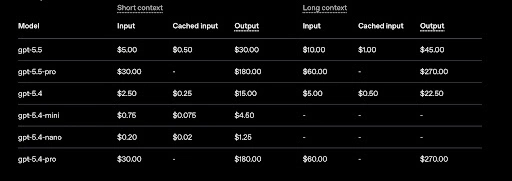
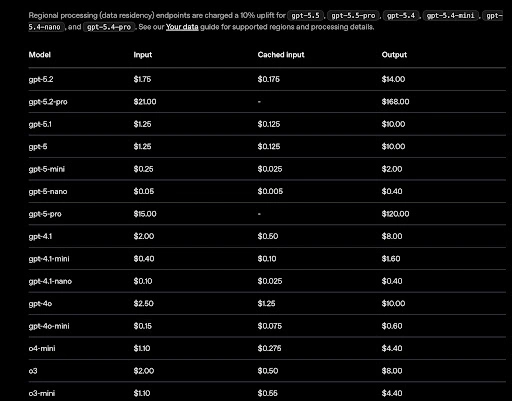
The OpenAI API cost per request depends entirely on which model you choose, which is why model choice is the single largest cost lever in any OpenAI deployment. AI cost optimization starts with model routing, not infrastructure tuning.
For a full model-by-model analysis with SaaS cost examples and six strategies to cut your bill, see CloudZero’s guide to OpenAI API pricing.
What GPT-5.5 Changes About ChatGPT Costs
GPT-5.5 deserves its own section because it fundamentally reshapes the cost conversation, and it’s the reason “ChatGPT pricing 2026” looks nothing like it did six months ago. For anyone asking “how much does ChatGPT cost per month,” the answer now depends on which model generation your plan or API defaults to.
GPT-5.5 pricing, also searched as ChatGPT 5 pricing, at $5.00 input / $30.00 output per million tokens is exactly 2x the GPT-5.4 rate. But zoom out eight months and the escalation is striking:
- August 2025: GPT-5 launches at $1.25/M input (standard tier)
- March 2026: GPT-5.4 arrives at $2.50/M input — 2x increase
- April 2026: GPT-5.5 ships at $5.00/M input — another 2x, just seven weeks later
GPT-5.5 input tokens cost 4x more than GPT-5 did at launch eight months ago — and half that increase happened in the seven weeks between GPT-5.4 and GPT-5.5. During the same period, NVIDIA CEO Jensen Huang reported that hardware costs per token dropped roughly 35x. OpenAI’s pricing is moving in the opposite direction of its cost basis.
OpenAI’s margin expansion on the GPT-5 series is unprecedented in the API market. It’s the kind of pricing trend that makes FinOps practitioners’ eyes twitch, and it’s why tracking inference costs per model has become non-negotiable.
For developers, this means API costs roughly double with every model generation. If workloads auto-adopt the latest model, OpenAI’s default, your AI costs double overnight with zero change in usage.
One important offset: Batch API and Flex processing both offer 50% off standard rates. At Batch pricing, GPT-5.5 costs $2.50/$15.00 per million tokens, identical to GPT-5.4 standard pricing. For offline workloads, the price doubling effectively disappears.
5 Hidden Costs Of ChatGPT That Most Pricing Guides Miss
Every competitor in the SERP gives you a plan-by-plan feature table. Useful, but it’s like reading the menu at a restaurant that charges for water, bread, and the privilege of sitting down.
1. API costs on top of subscriptions
Subscriptions and API are separate billing streams. An org paying $20/seat/month for Business AND building on the API pays both. A team of 10 on Business ($200/month in seats) running moderate GPT-5.5 API workloads can add $2,000–$5,000/month in token costs on top. Most pricing guides present subscriptions and API as either/or. They’re both.
2. Seat sprawl across tiers
Without governance, teams self-select. Marketing buys Plus. Engineering buys Pro $200. Finance stays on Free. The intern is on Go. The blended ChatGPT cost per month becomes impossible to track without centralized visibility.
3. The GPT-5.5 model cost escalation
Every model upgrade resets the cost baseline. If API workloads auto-adopt GPT-5.5, OpenAI’s default, costs double overnight with zero usage change. Organizations running multiple models need per-model cost tracking to avoid sticker shock.
4. Codex and agent overages
ChatGPT Codex pricing is tied to your plan tier, not billed per token like the API. Pro $100’s 10x Codex promotion expires May 31, 2026, then drops to 5x. After included limits, users buy credits, another line item that surprises finance teams quarterly.
5. No cost allocation by default
OpenAI billing doesn’t break costs by team, project, or feature. According toCloudZero’s FinOps in the AI Era report, 78% of organizations bundle AI costs into general cloud spend, and only 20% can forecast AI spend within ±10% accuracy.
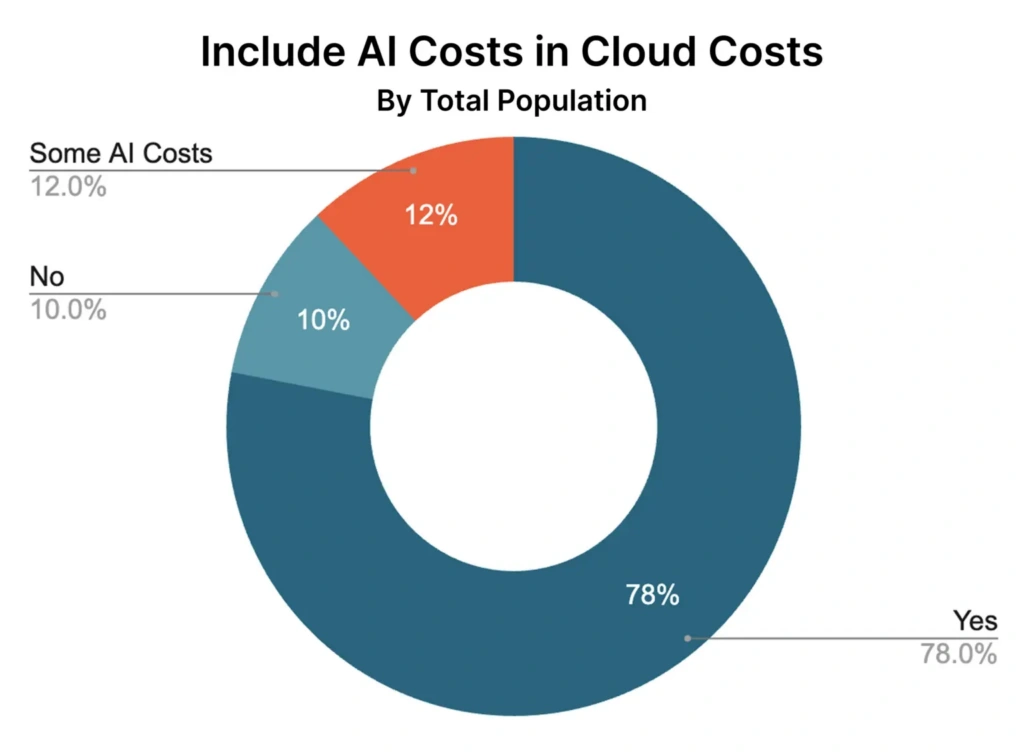
According to CloudZero data, [only 32% of companies allocate even half of their OpenAI bill. For orgs with 50+ seats, this is the AI equivalent of putting your entire cloud bill on a single credit card and hoping for the best.
How ChatGPT Pricing Compares To Claude, Gemini, And Copilot
AI subscription pricing has converged on remarkably similar price points, which makes the differences that actually matter harder to spot.
| ChatGPT Plus | Claude Pro | Gemini Advanced | Copilot Pro | |
| Monthly price | $20 | $20 | $19.99 | $20 |
| Top mode | GPT-5.5 | Sonnet 4.6 | Gemini 2.5 Pro | GPT-4o + custom |
| Context | 320 pages | 200K tokens | 1M tokens | Varies |
| Power tier | Pro $100/$200 | Max $100/$200 | Ultra ~$42–$250/mo | — |
The mid-tier convergence at ~$20/month isn’t coincidental. It’s the price ceiling most individual users will tolerate for a productivity tool. The power tier is where competition gets interesting: ChatGPT Pro $100 was explicitly positioned against Claude Max at the same price, launched weeks apart.
For API pricing, GPT-5.5 at $5/$30 per million tokens competes against Claude Sonnet 4.6 at ~$3/$15 and Gemini 3 Pro at ~$2/$12. What matters more than any single vendor’s price is total AI spend visibility across all the tools your organization uses.
Frequently Asked Questions About ChatGPT Pricing
How CloudZero Tracks And Optimizes ChatGPT And OpenAI Costs
This is the part where most pricing guides end with a generic “monitor your spend” recommendation and call it a day. The reality is more specific, and more consequential.
Most organizations track ChatGPT spend at the billing level: total tokens consumed, total dollars spent. That tells you what you spent. It doesn’t tell you why, where, or whether it was worth it.
CloudZero’s OpenAI integration ingests both cost and usage data from OpenAI’s APIs, then allocates that spend to the business dimensions that drive decisions: cost per customer, cost per feature, cost per AI model, cost per environment. This is the same unit economics approach CloudZero applies to AWS, Azure, GCP, Snowflake, New Relic, MongoDB, and Databricks spend.
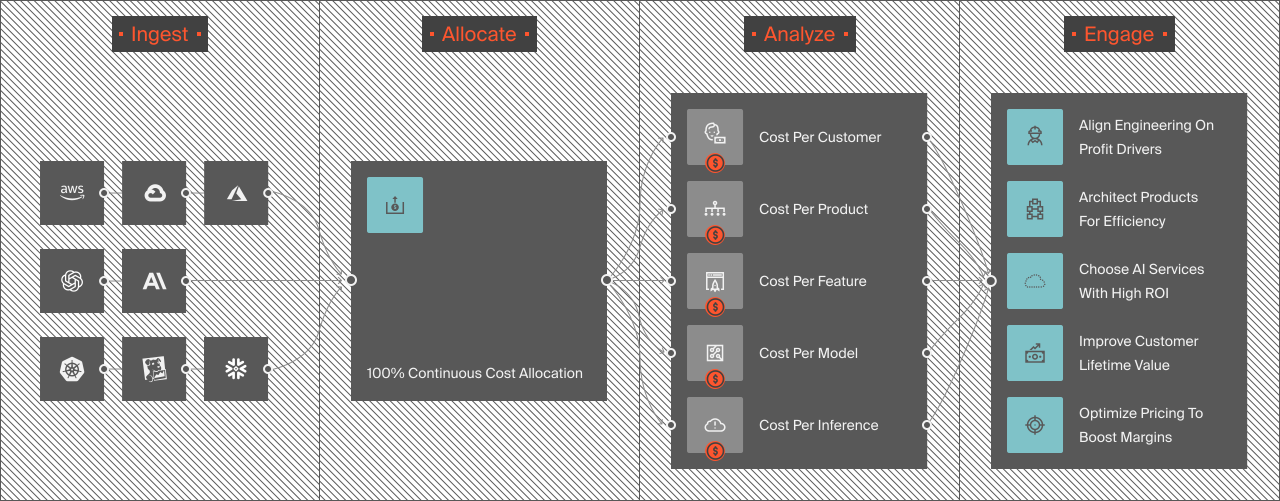
Setup takes minutes — share an API key with your CloudZero FinOps Account Manager, and the integration goes live. From there, CloudZero answers questions that OpenAI’s native billing cannot:
- How much does OpenAI cost for Customer X? Not the blended average — the actual cost tied to that specific customer’s AI feature usage.
- Which product feature consumes the most tokens per user? So product teams make margin-aware decisions, not just capability decisions.
- Is inference spend growing faster than revenue? The question that separates sustainable AI from expensive experiments.
CloudZero also detects anomalies in real time. When a model switch, a code deployment, or an agent loop spikes OpenAI spend, CloudZero alerts the responsible engineering team with hour-level detail, before a $50 incident becomes a $5,000 billing surprise.
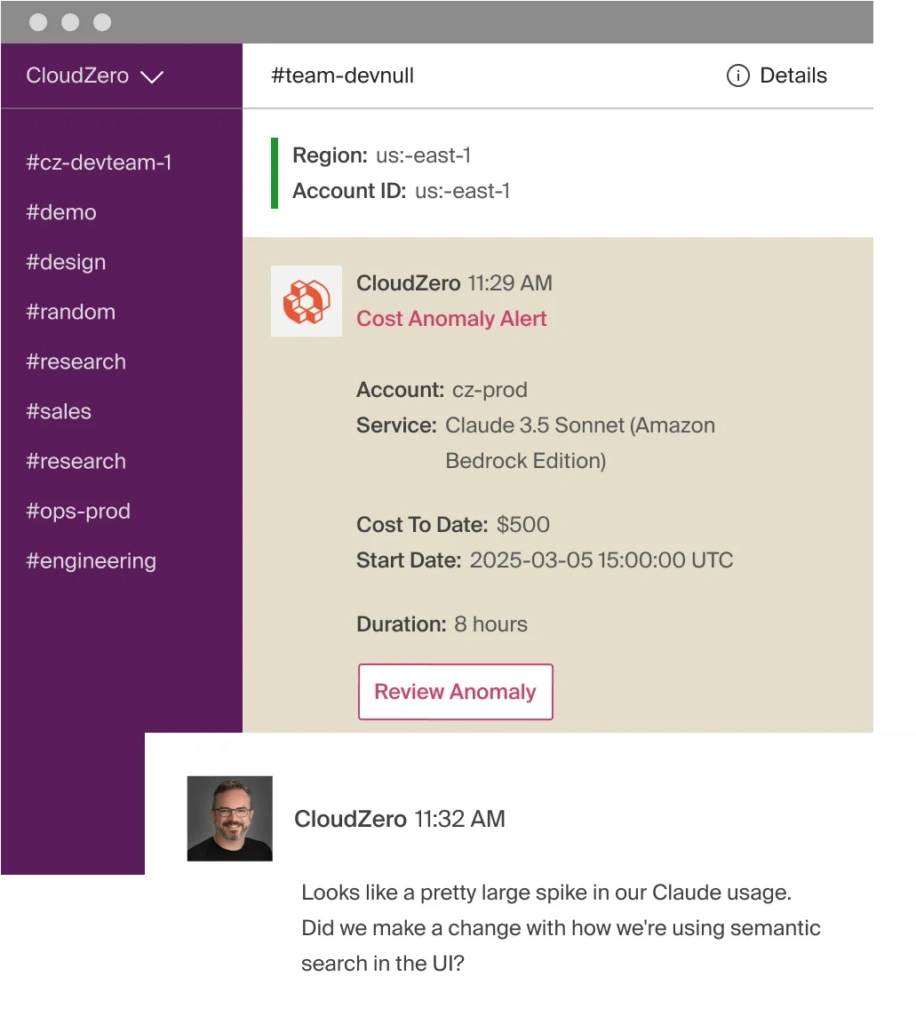
This matters because ChatGPT and OpenAI costs behave like cloud infrastructure costs, variable, usage-driven, and invisible without the right tooling.
CloudZero billing data shows AI spending averaged just 2.5% of total cloud spend in late 2025, even as organizations planned 36% AI budget growth. The gap isn’t dishonesty, it’s invisibility. Most AI cost is embedded in compute and storage, uncategorized and unmanaged.
Organizations like PicPay ($18.6M saved), Upstart ($20M saved), and a global SaaS platform managing 50+ LLMs ($1M+ in immediate inference savings) use CloudZero to turn AI cost chaos into margin control. CloudZero manages more than $15 billion in cloud and AI spend for organizations including Toyota, Duolingo, Grammarly, DraftKings, and Moody’s. Schedule a demo today to get started with CloudZero. You can also take this free cloud assessment to see where your ChatGPT costs currently stand.