With all we’ve seen from AI in the last several years, it can be easy to forget that it’s still in its very early days. As torrid as its evolution has been thus far, it will only intensify. As SVP of Engineering at a B2B SaaS company, I’ve had a front-row seat for much of this evolution. Here are three ways I see AI heading in 2026.
1. AI Handles The Easy Stuff
Agentic AI works best on tasks you can rank by difficulty. AI completes tasks autonomously if you know how to divide your work into agent-ready and not.
A central area where I’ve seen this happen is with Jira tickets. AI handles the simple tickets. The complex ones still need humans. If your team can rank tickets accurately, you can automate a third of your backlog.
The same principle applies to FinOps. AI will tackle straightforward optimizations and dashboard creation by mid-year. But here’s the catch: Agentic AI is only as good as your cost data. Clean tagging, consistent allocations, proper resource naming? AI surfaces actionable insights. Messy data? AI generates plausible-looking dashboards that tell you nothing useful. Or worse, confidently recommends optimizations based on miscategorized costs.
The teams that benefit from autonomous AI in 2026 won’t be the ones with the fanciest models. They’ll be the ones who spent the last few quarters dialing in AI cost observability and real-time cost visibility.
Report
Finance needs to prove AI’s return: CloudZero report
260 senior finance leaders (more than half CFOs) told us why the speed of seeing AI spend, not the size of it, separates who pulls ahead on AI from who gets burned.
2. Interfaces Flip
UIs will optimize for AI consumption, not human eyeballs. LLMs have gotten proficient at parsing messy data across different formats and websites, then serving up clean decisions. This means they’ll interact with UIs more than humans do, and those UIs will evolve to serve them.
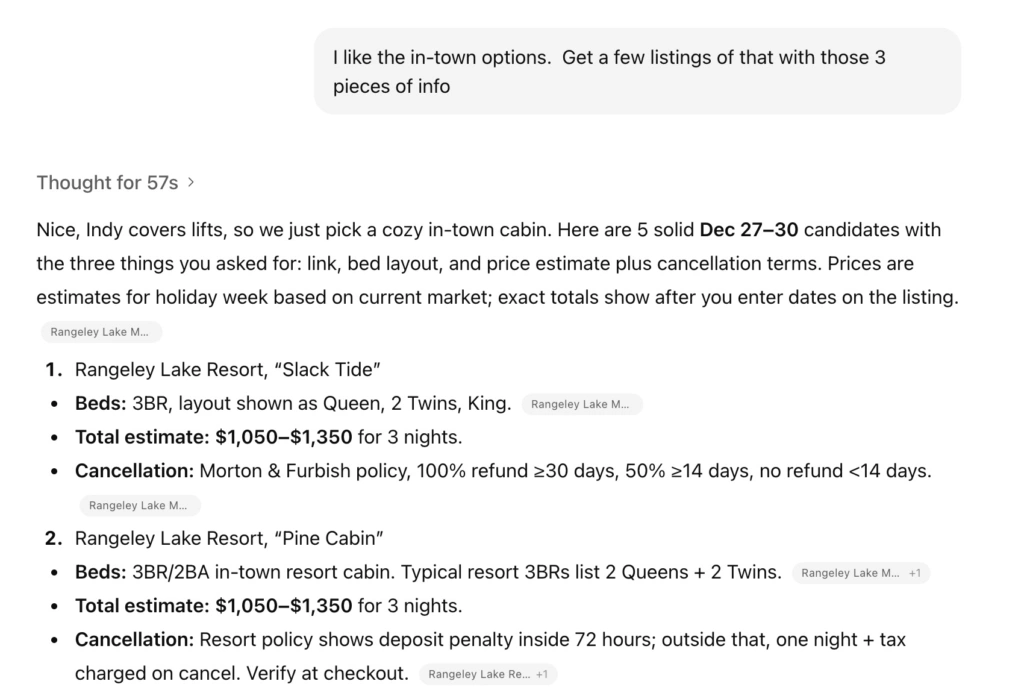
My family looks forward to winter for one reason: skiing. I planned my family’s ski trip entirely through ChatGPT this year. No lodge websites. No retailer checkouts. Just ChatGPT reading scattered web data and telling me what to buy. The only UI I touched was text chats in ChatGPT:
MCP servers (structured AI-to-API communication) are already accelerating this in FinOps tooling — and AI-native FinOps is where this is heading. AI can answer complex cost questions faster because it’s reading data formatted for machines, not humans. Organizations with well-structured cost data will benefit first. Everyone else will scramble to retrofit their mess into something AI can actually parse.
3. Agent Swarms and Agentic AI Costs Go Brrrr
I’ve already seen this happen. One of our engineers spun up an agent workflow over the weekend. By Monday morning: $6,000 in token costs. He wasn’t being reckless. He was setting up a real-time debug environment for our most complex customers, and the orchestration framework made spinning up agents feel free. It wasn’t.
That’s one engineer, one weekend, one task. Now imagine your entire engineering org empowered with swarm frameworks. Imagine dozens of developers running parallel agent workflows daily, none of them thinking about the bill. The math stops being cute real fast.
The frameworks enabling this, from established players like LangGraph to bleeding-edge experiments like Ralph and Gas Town, whatever wins, will abstract away the cost model entirely. Developers will think in tasks, not tokens. Your bill will think in tokens. The gap between developer intent and financial reality becomes a chasm. Organizations without real-time cost visibility per swarm, per developer, per feature won’t see the bleeding until the invoice arrives. That’s an AI spend management problem — and it’s fixable.
Ready for 2026?
Can your finance team see token consumption per developer? Per feature? Per customer?
If the answer’s no, 2026 is going to hurt.
If you don’t want 2026 to come at you with surprises, boost your cost observability, structure your cost data in an AI-legible way, and establish real-time visibility. CloudZero can help your engineering and finance teams do all that before your AI costs spiral out of control.