Choosing the right tool to manage your infrastructure can shape how fast your team moves and how reliable your systems become.
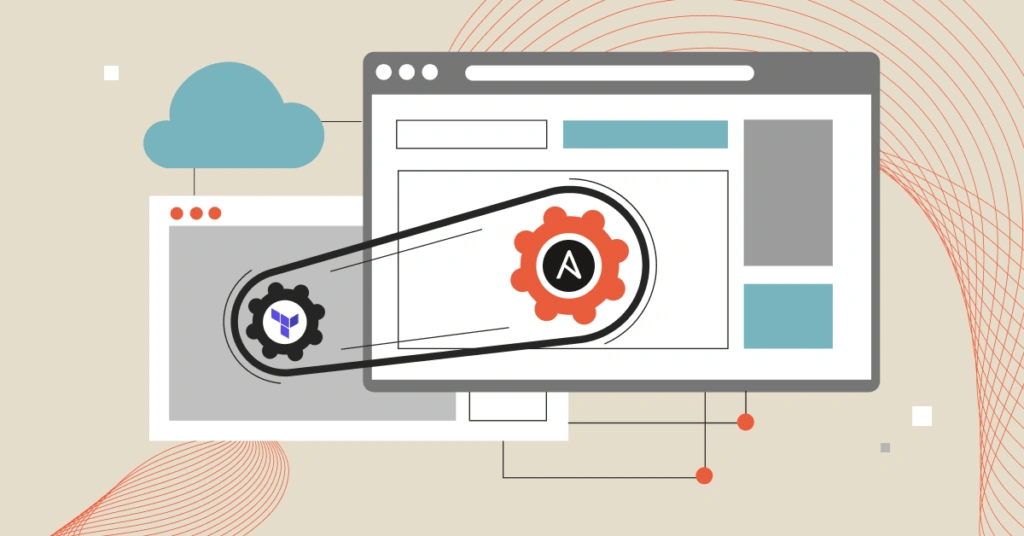
Two names appear in almost every conversation: Ansible and Terraform. Both help you define, manage, and scale your environment. But they solve different problems and work in very different ways.
One focuses on configuration. The other focuses on provisioning. Both are powerful. Both are widely used. And both can work together in the right stack.
This guide breaks down Ansible vs Terraform in simple, practical terms. You’ll learn what each tool does, how they differ, when to use them, and how teams combine them to build stable, automated infrastructure at scale.
What Is Terraform?
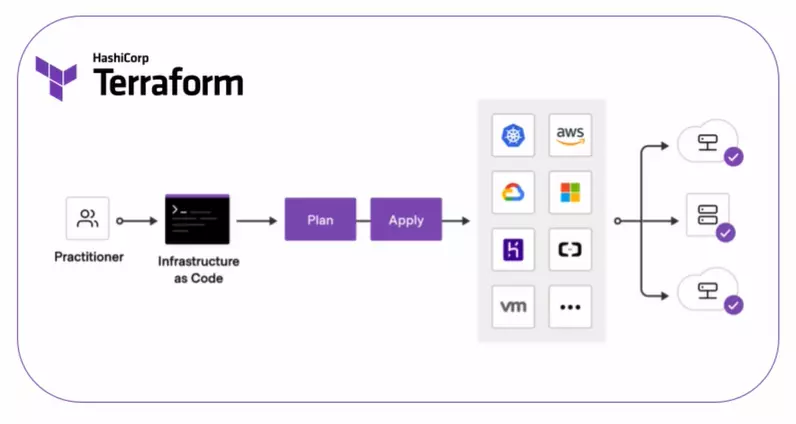
Terraform is an open-source Infrastructure-as-Code (IaC) tool used to provision, manage, and update cloud infrastructure.
Instead of creating resources manually, you define everything in declarative configuration files, and Terraform builds the environment for you consistently.
Terraform is most often used to create foundational infrastructure such as networks, compute instances, load balancers, storage, security groups, DNS, databases, and full multi-cloud environments. It integrates with major providers, including AWS, Azure, Google Cloud, Kubernetes, and hundreds of others.
Think of Terraform as the tool that builds the house. It handles the heavy lifting of:
- creating servers and virtual machines
- setting up networks
- applying security groups
- provisioning storage
- deploying cloud-native services
Report
Finance needs to prove AI’s return: CloudZero report
260 senior finance leaders (more than half CFOs) told us why the speed of seeing AI spend, not the size of it, separates who pulls ahead on AI from who gets burned.
Terraform Benefits: Best Terraform Features
Terraform delivers a set of features that make infrastructure consistent, scalable, and predictable across clouds. Here are the top capabilities teams rely on.
- Multi-cloud provisioning from one workflow. Write one set of IaC templates and deploy to AWS, Azure, GCP, Kubernetes, and more.
- Declarative desired-state model. Terraform understands the end state you want and calculates the steps to reach it, reducing errors and manual work.
- Complete infrastructure version control. All changes live in Git, enabling reviews, rollbacks, and an auditable history of cloud infrastructure decisions.
- Drift detection and state management. Terraform tracks what exists, detects when live resources don’t match code, and helps restore consistency.
- Reusable modules for standardization. Teams build shared modules (network, compute, security), improving consistency and speeding up delivery.
- Stable workflows for large-scale automation. Terraform handles dependencies, parallelization, and repeats processes reliably at any scale.
- Better collaboration between DevOps and FinOps. With infrastructure defined in code, cost allocation, ownership, and visibility become clearer, especially when paired with CloudZero.
- Predictable, repeatable deployments. Terraform eliminates console-based drift and guarantees the same infrastructure every time you deploy.
Terraform pros
- Works across all major clouds. One IaC tool for AWS, Azure, GCP, Kubernetes, and more.
- Reusable modules. Build once, reuse everywhere, faster configurations, and consistent patterns.
- Handles big, complex environments. Terraform manages dependencies, parallel tasks, and scaling safely.
- Robust ecosystem and documentation. Providers, community modules, and extensive documentation ensure Terraform is simpler to adopt and troubleshoot
- Enterprise governance is available. HCP Terraform adds policies, RBAC, drift detection, and team workflows.
Terraform cons
- Vendor lock-in around ecosystem and workflow. Once an organization builds multiple modules and workflows, switching IaC tools becomes a challenge.
- State file complexity and risk. Terraform’s state file is central but fragile. Local state makes collaboration difficult, and remote state needs careful configuration (S3, DynamoDB, Terraform Cloud) to avoid corruption or lost data. Mismanaging the state can break deployments. Here is a complete guide to the Terraform state file.
- Learning curve, at scale. Basic syntax is simple. But understanding providers, modules, workspaces, backends, and state workflows takes time in large, multi-team environments.
- Not a configuration management tool. Terraform can’t install software or configure servers. That’s where Ansible comes in.
What Is Ansible?
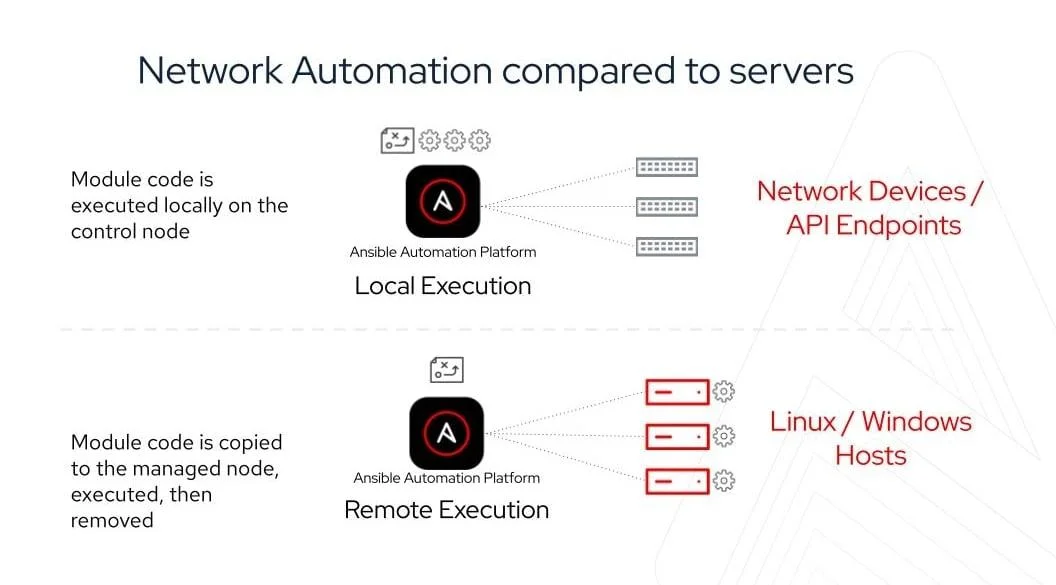
Ansible is an open-source automation and configuration management tool used to configure systems, install software, manage applications, and orchestrate routine tasks across servers.
Instead of logging into machines one by one, you write simple YAML playbooks that describe the desired configuration, and Ansible applies those tasks over SSH or WinRM.
Ansible is agentless, which means it doesn’t require any software running on your servers. This makes it easy to adopt, secure, and ideal for environments that mix Linux, Windows, containers, and cloud VMs.
Think of Ansible as the tool that sets up the inside of the house. After Terraform builds your servers, Ansible handles:
- installing NGINX, Docker, or app dependencies
- creating and configuring users
- applying application settings
- deploying releases
- running scripts and managing day-to-day automation
Ansible Benefits: Best Ansible Features
Here are reasons to use Ansible in your DevOps workflow:
- Simple, human-readable automation. Ansible uses easy YAML playbooks to install software, configure servers, and run tasks without complex scripting.
- Agentless and easy to adopt. No agents to install or maintain. It connects via SSH or WinRM, enabling fast, secure configurations.
- Works across any environment. Use the same playbooks for cloud servers, on-prem hosts, hybrid clusters, and containerized workloads.
- Powerful configuration management. Ansible handles package installs, user management, system updates, config files, app settings, and runtime tasks with clean, predictable workflows.
- Smooth application deployment. Teams use Ansible to deploy releases, roll out updates, manage rollbacks, and keep multi-node applications consistent.
- Extensible with thousands of modules. Ansible’s module ecosystem supports databases, networking, security hardening, cloud services, and CI/CD tasks.
- Ideal partner for Terraform. Terraform builds your infrastructure; Ansible configures what runs inside it. This gives teams full control from provisioning to runtime.
Ansible pros
- Backed by Red Hat with strong enterprise support. Red Hat’s stewardship gives Ansible a stable roadmap, security hardening, and reliable support options trusted by large organizations.
- Idempotent and predictable results. Tasks only make changes when needed, keeping systems consistent.
- Fast onboarding for DevOps teams. Teams can create usable playbooks fast with a minimal learning curve.
- Robust integration with CI/CD pipelines. Works well in automated deployment workflows. Discover the best CI/CD tools for your stack here.
Ansible cons
- Limited built-in state tracking. Doesn’t maintain dependencies or check whether a target state has already been achieved.
- Performance and scale challenges. In large infrastructures or complex workflows, execution can slow down.
- UI and enterprise features lag. The graphical interface and advanced governance are still weaker than those of some competitors, according to some users.
Ansible Vs Terraform: A Quick Glance
Here’s how they compare:
|
Feature |
Terraform |
Ansible |
|
Primary focus |
Provisioning infrastructure (IaC) |
Configuration, automation & orchestration |
|
State management |
Maintains the infrastructure state file |
No native state tracking |
|
Language/format |
HashiCorp Configuration Language (HCL) |
YAML playbooks |
|
Multi-cloud support |
Strong multi-cloud and provider support |
Works across multiple environments, but is less provider-focused |
|
Agent requirement |
Agentless with remote backends |
Completely agentless |
|
Collaboration and Dev/FinOps |
Tracks infra as code, audit history |
Automates configuration, links to deployment workflow |
|
Scaling multi-node configuration |
Ideal for large-scale infra changes |
Manages multiple nodes, but performance may vary at scale |
How To Choose Between Terraform Or Ansible
Choosing between Terraform and Ansible depends on what stage of your infrastructure workflow you’re solving. Each tool excels in a different layer and most teams end up using both.
When to use Terraform
Terraform is the right choice for:
- creating cloud resources (VMs, networks, storage)
- managing infrastructure lifecycle (create, update, destroy)
- enforcing standardised environments at scale
- multi-cloud deployments
- version-controlled infrastructure with clear audit trails
When to use Ansible
Ansible is ideal for:
- installing software and packages
- updating app settings or environment variables
- managing users, permissions, files, and services
- automating OS-level tasks
- deploying application releases
Note: Ansible shines inside the resources Terraform creates.
When to use both together
Most modern teams use Terraform and Ansible because they cover different layers in a simple workflow like this:
- Terraform provisions a complete cloud environment
- Terraform outputs the server IPs or host details
- Ansible connects to those hosts and configures everything inside them
- CI/CD pipelines tie both steps together for fully automated environments
How Terraform And Ansible Affect Cloud Cost
Terraform and Ansible influence almost every part of your cloud spend. Terraform provisions the resources that create spend. Ansible configures how those resources behave at runtime. Both tools drive cost, but neither provides any real cost visibility.
See more: Want the bigger picture? Read CloudZero’s guide on why IaC alone isn’t enough anymore.
Terraform can launch new EC2s, expand networks, deploy databases, or spin up full environments within minutes. Ansible can enable logging, scale applications, install agents, or change resource usage. These changes often increase cost immediately, yet the financial impact isn’t seen until days or weeks later.
This gap is why FinOps exists. Engineering moves fast with automation. Finance needs accurate numbers. But Terraform and Ansible don’t connect the two. They don’t show cost per deployment. They don’t warn you when a configuration change doubles spend. They don’t show which team, feature, or environment is driving usage.
To address this, organizations need more than automation. They need decision velocity. Fast feedback loops that connect engineering actions to financial outcomes.
CloudZero’s Cost Intelligence Can Help
CloudZero shows teams the real-time cost impact of infrastructure automation. When deployments or configuration changes happen in AWS, Azure, GCP, or Kubernetes, CloudZero maps the resulting spend to the exact services, environments, and teams involved. This ensures that engineers and finance can immediately see what changed.
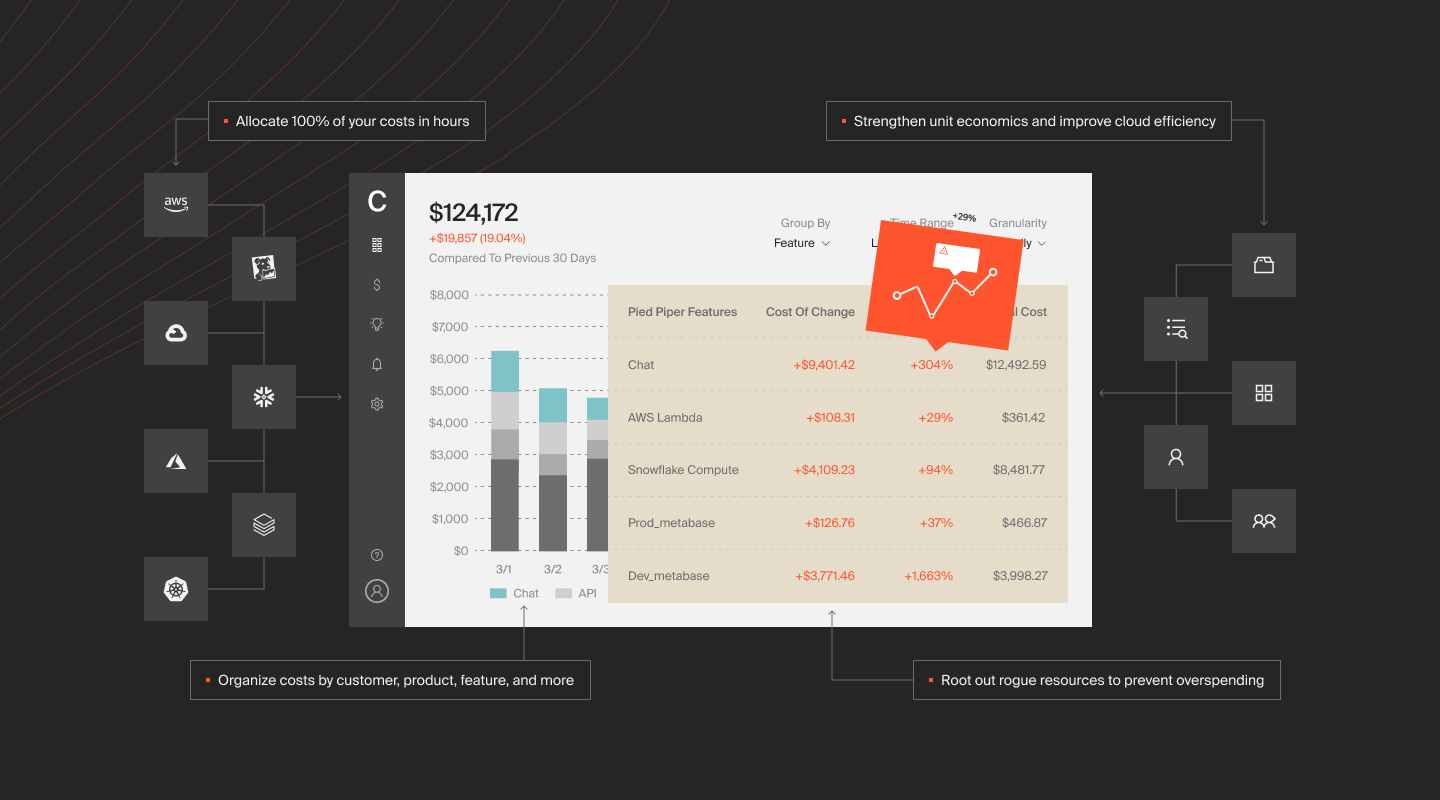
AI is now a major part of cloud infrastructure. Terraform deploys GPU clusters, training pipelines, and model-serving resources. Ansible configures the environment that enables AI workloads. These workloads spike costs, and even small automation changes can trigger sharp increases in spend.
CloudZero’s AI Advisor explains those changes in plain language while anomaly detection flags unexpected spend increases tied to recent deployments or configuration updates. Like this:
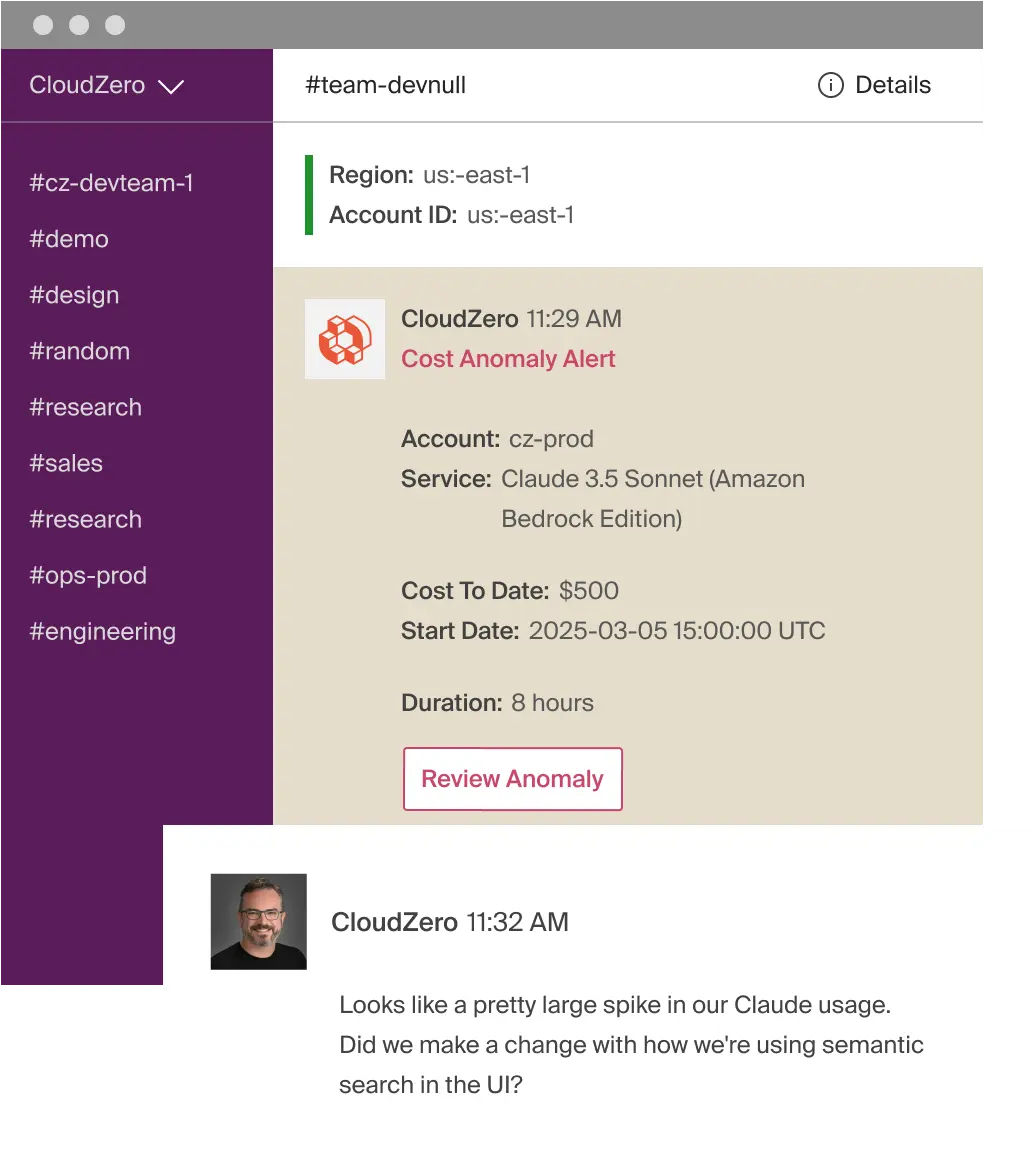
CloudZero features AI-driven filters that surface the most critical cost signals so teams don’t waste time searching.
CloudZero also provides organizations with true unit-cost intelligence, including cost per customer, environment, workload, or deployment. Instead of isolated resource prices, teams see how automation affects margins, performance, and product economics.
Want to see how CloudZero turns your infrastructure automation into clear unit economics insights?  and experience your cloud environment through CloudZero’s lens.
Frequently Asked Questions about Ansible vs. Terraform