As a SaaS leader, you balance competing priorities while protecting your bottom line. There’s no denying that putting some aspects of cloud cost management on autopilot is a useful strategy.
Most automated cost-optimization platforms use advanced algorithms to identify opportunities to secure provider discounts or lower-cost alternatives to the resources you’re using now. This approach immediately reduces monthly cloud costs.
However, you can’t stop there if you want to truly maximize your cost efficiency and keep your business profitable even when times get tough.
To achieve real results, you must dive deeply into your unit costs and use the information you find there to govern your future decisions. No automated platform can make these strategic decisions for you, but the effort required will pay off many times over in the long run.
Why You Need To Track Unit Costs — Not Just Rely On Automatic Cost Optimization
Unit cost management provides a foundation for engineering-led optimization. The core principle:
SaaS companies need to build better, with smart engineering choices, rather than simply buying better by finding discounts.
If you’ve been focused solely on the latter, you’re likely leaving a significant amount of money on the table.
That’s because many SaaS companies spend thousands of dollars (if not more) each hour due to resource waste and other build inefficiencies.
If only a handful of resources sit idle, or a single product creates unnecessary cost bloat, the company will have to pay for those inefficiencies every month, forever—or until those problems are identified and corrected.
Tracking unit costs is the key to identifying those inefficiencies before they snowball and cost your company millions.
For our purposes here, unit costs refer to the price you’ll pay for each unit in your business. You can monitor costs by customer, resource, geographic region, product, feature, or any other category that makes the most sense for your business.
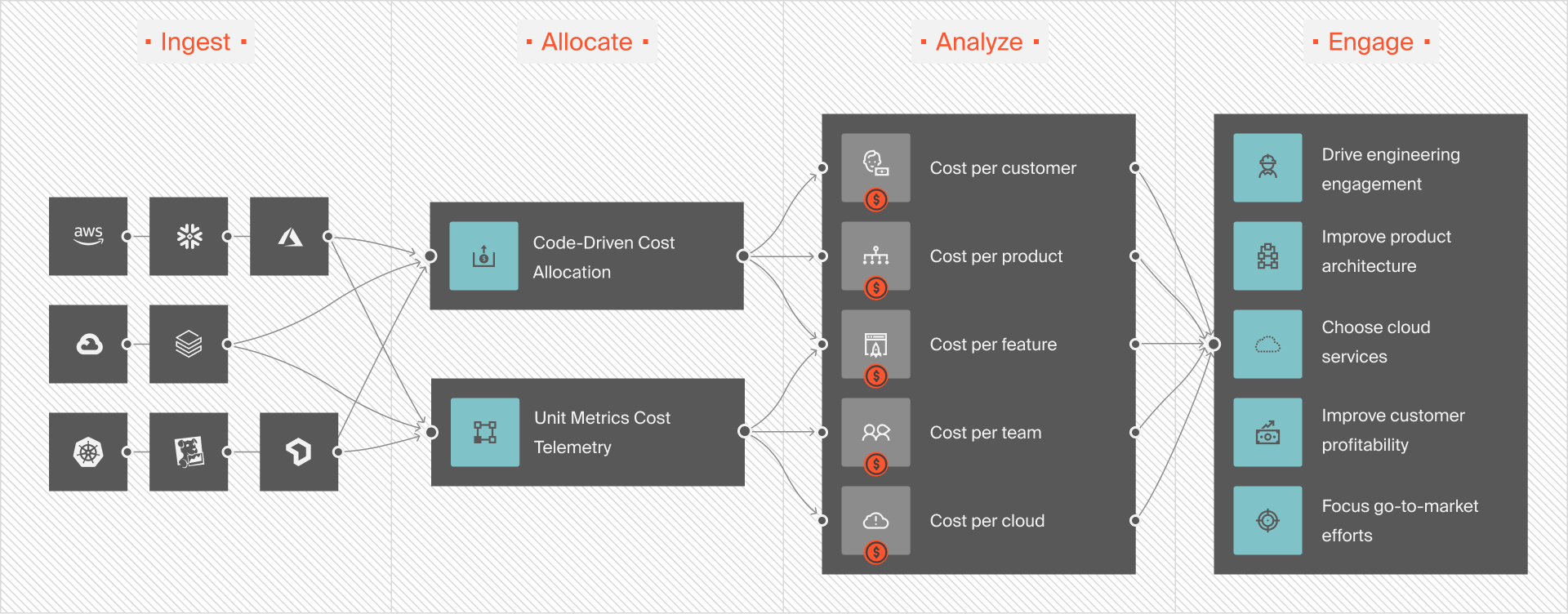
Example: $520K annual savings from unit cost visibility
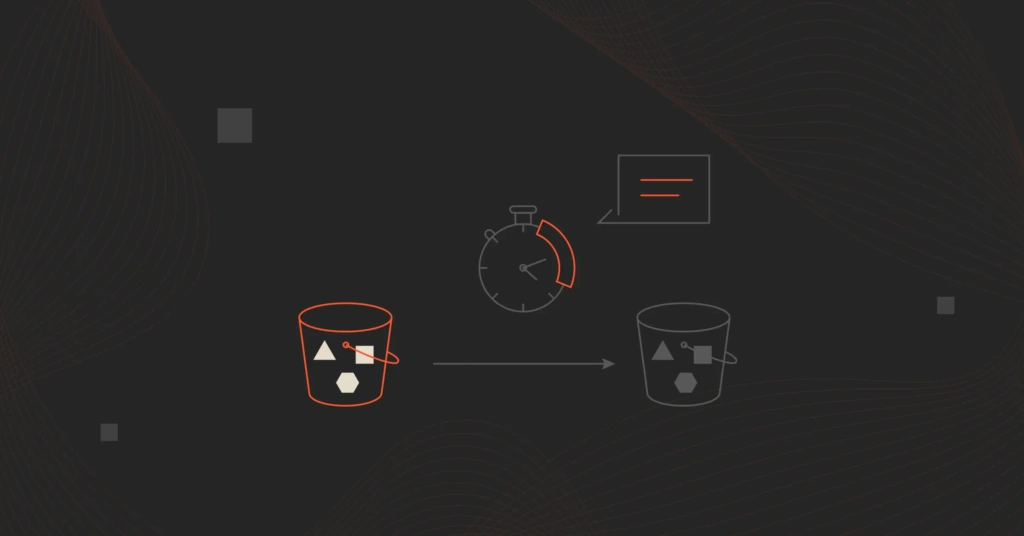
One CloudZero customer tracked unit costs across all resources and discovered a single unused S3 bucket costing $10,000 per week. They shut down that resource immediately, saving $520,000 annually.
Useful resource: A 2025 Guide To Amazon S3 Pricing
Remember, these savings came from fixing one single inefficiency within the customer’s system.
If you identify multiple areas for improvement, your total savings from building better could be orders of magnitude higher. And the only way you can identify those areas of inefficiency is if you’re keeping a close eye on per-unit cost metrics.
You can use unit costs to inform other business decisions as well
It’s not all about slashing costs. Sometimes, you can make savvy choices that widen your margins without sacrificing anything.
Consider a scenario where one high-usage customer accounts for a significant share of monthly costs but subscribes to a lower service tier. Revenue from this customer is far outweighed by the costs they generate.
Once you identify this pattern, you have several options: restructure pricing tiers to cover resource-intensive operations, or work with the customer to move them to a higher tier at contract renewal.
The conversation doesn’t need to be a difficult one, because you’ll have the complex data on hand to support your decision.
The information you glean from tracking per-unit cost metrics can be applied to almost any area where major business decisions must be made.
You could identify which products and features generate the most revenue at the lowest cost, for example, and model future releases on the same formula. You can even use your unit costs to build a forecast of your company’s financial future and then circle right around and use that prediction to help you commit to provider discounts and other savings plans.
In short, the sky is truly the limit when it comes to using unit costs to make positive changes to your bottom line.
2026 State of AI Spend Report
Why Finance Caps What It Can’t See
Learn how finance leaders are managing AI spend, and how they’re approaching FY2027
Frequently Asked Questions About Automatic Cost Optimization
CloudZero Provides A Window Into Your Unit Costs
The reason most companies don’t track unit costs, despite them being so incredibly useful, is that it’s a difficult thing to accomplish if you don’t have the right platform.
That’s why CloudZero focuses on helping SaaS companies just like yours dig deeply into your cloud cost data.
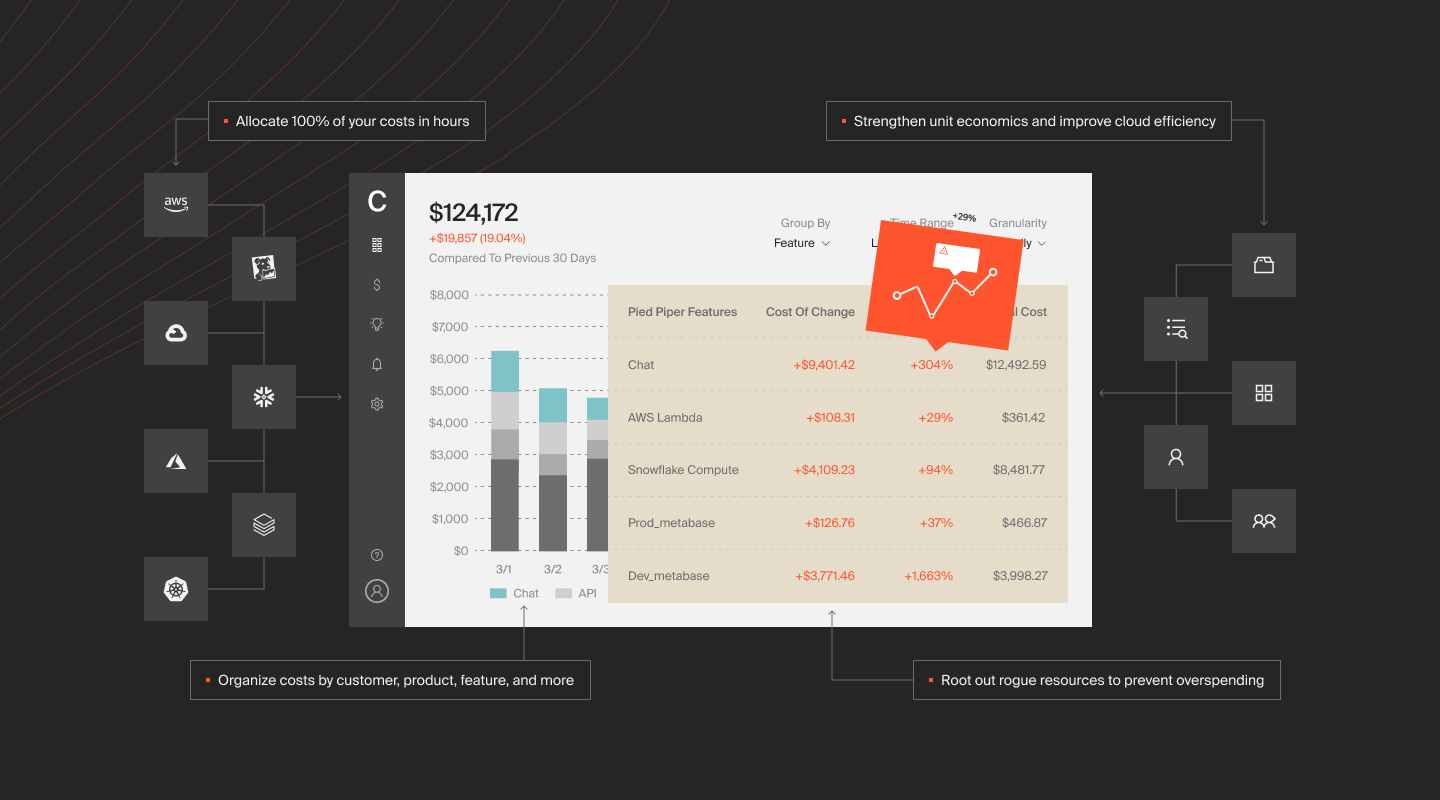
With our intuitive cloud cost intelligence platform — and our team of experts on standby, ready to help — you can break your costs down into any unit you wish to track and start identifying areas for improvement right away.
 to see CloudZero in action!