
There’s a question that every engineering leader running AI infrastructure eventually has to answer. Who’s asking the question? Probably a CFO, a board member, or a product leader who just saw the cloud bill: what does it actually cost to run this workload?
For most organizations, the honest answer has been: we are not sure.
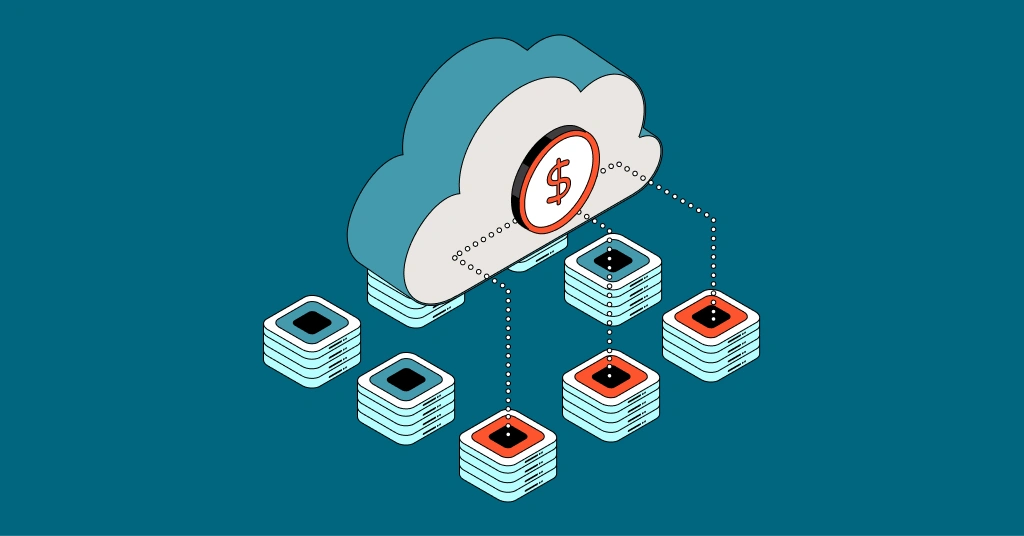
Not because the spend is hidden. The GPU bill is right there. It is just not connected to anything useful, not to the ML training job that ran last week, not to the inference endpoint serving your AI feature, not to the team responsible for the workload. The cost exists but attribution does not.
That changes with CloudZero’s GPU reservation attribution for Kubernetes, released last week. Here is what that means in practice and why it’s more important than it might initially seem.
The attribution problem in AI infrastructure
Kubernetes is the dominant platform for running GPU workloads at scale. It is flexible, powerful, and designed for the kind of dynamic, multi-workload environments that AI and ML teams operate in. It also makes cost attribution hard.
When multiple workloads share GPU-enabled nodes, the cost of those nodes has to be distributed somehow. The question is how, and whether the methodology reflects the economic reality of how GPUs are consumed.
CloudZero’s attribution model has long covered CPU and memory requests. GPU requests were not factored in. That meant a workload could request four GPUs on a high-end node, drive significant spend, and show up in CloudZero with only its CPU and memory costs accounted for. The GPU portion landed in the idle pool.
This is not a CloudZero-specific problem; it’s been an industry-wide gap. Most Kubernetes cost tools have either ignored GPU attribution or handled it inconsistently. The result is that organizations running some of the most expensive workloads in cloud infrastructure have had some of the least accurate cost data.
Research Report
FinOps In The AI Era: A Critical Recalibration
What 475 executives told us about AI and cloud efficiency.
What accurate GPU attribution actually enables
Let’s talk specifics about what becomes possible when GPU costs are properly attributed to workloads.
You can calculate the true cost of a training run. ML training jobs are often the single most expensive discrete event in an engineering organization’s cloud spend. A job that runs for 48 hours on a cluster of GPU nodes can cost tens of thousands of dollars. With GPU attribution, that cost is tied to the workload — and to the team, project, or experiment that initiated it. You can answer the question: was this training run worth it?
You can understand your inference serving costs. Inference is where GPU spend becomes continuous. Every request to an AI-powered feature hits an endpoint backed by GPU compute. That spend adds up fast, and it scales with usage in ways that can surprise organizations that have not modeled it carefully. GPU attribution gives product and engineering teams a real-time view of what it costs to serve AI features to customers, which is the foundation of sustainable AI product economics.
You can hold teams accountable for GPU spend. With GPU costs flowing into CloudZero’s custom dimensions, spend can be attributed by team, product, or any other business lens. Engineering leaders can see which teams are driving GPU consumption, whether that spend is growing, and whether it is proportional to the value being generated. This is the infrastructure for a cost-aware AI engineering culture.
You can identify optimization opportunities. Accurate attribution is the prerequisite for meaningful optimization. When GPU costs are pooled as idle or unattributed, you cannot tell whether you have an efficiency problem or a measurement problem. With workload-level GPU attribution, the signal is clean — and optimization decisions can be made with confidence.
The margin question every AI product team will face
There is a broader context worth acknowledging. As AI becomes a core part of how companies build and deliver products, GPU spend is shifting from a research budget line to a cost of goods sold question. The organizations that figure out how to attribute, monitor, and optimize that spend will have a structural advantage over the ones that do not.
The question “what does it cost to serve this AI feature to a customer?” is not an abstract FinOps exercise. It is a margin question. And margin questions need accurate inputs.
GPU reservation attribution in CloudZero is one part of that infrastructure. It ensures that the most expensive resource type in modern AI workloads is accounted for with the same precision as CPU and memory — and that the teams responsible for those workloads have the data they need to make smarter decisions.
Getting started
GPU reservation attribution is available now for all CloudZero customers running CZ-agent v1.2.0 or above. The change is automatic, with no configuration required. If you are on a compatible agent version and running GPU workloads on Kubernetes, your cost data already reflects GPU attribution as of last week.
To explore what your GPU costs look like with accurate attribution, or to understand how to build team-level and workload-level GPU cost views in CloudZero, reach out to your account team or visit cloudzero.com.


FinOps In The AI Era: A Critical Recalibration
What 475 executives told us about AI and cloud efficiency.