
As you’ve probably realized by now, cloud computing isn’t the future. It is here and now. Gartner projects global spending on public cloud services will exceed $1 trillion by 2027, with organizations spending well north of $700 billion annually as of 2025. The cloud market has more than doubled in five years, and every signal points to continued acceleration.
This rise in cloud computing is a great career opportunity for you. And what better way to immensely benefit from this shift than becoming a cloud engineer?
If becoming a good cloud engineer is what you want, here’s what you need to know, including info on what a cloud engineer does, salary, career prospects, and more.
What Is Cloud Engineering?
Cloud engineering is the practice of designing, building, and maintaining cloud computing systems. The discipline focuses on ensuring that cloud systems and cloud-based applications are reliable, scalable, and secure.
To achieve this, cloud engineering professionals use a variety of technologies, platforms, and tools to optimize cloud infrastructure. These include virtualization, storage, networking, and cloud security technologies.
The demand for cloud engineering talent remains strong heading into 2026 — and it’s being amplified by a force that wasn’t on most roadmaps three years ago. CIO’s 2026 ranking of the most in-demand tech jobs placed AI/ML Engineer at number one, which makes sense given the speed at which organizations are adopting generative AI and machine learning. But here’s what that means for cloud engineers: every AI model, every training pipeline, and every inference endpoint runs on cloud infrastructure. The AI boom doesn’t replace cloud engineering demand — it accelerates it.
So, where do you begin?
A Robert Half study found cloud engineers among the top 15% of in-demand technology roles in 2025, and the number of cloud-related job postings continues to outpace qualified candidates. Cloud engineers who can also manage the cost and performance of AI workloads are becoming especially valuable.
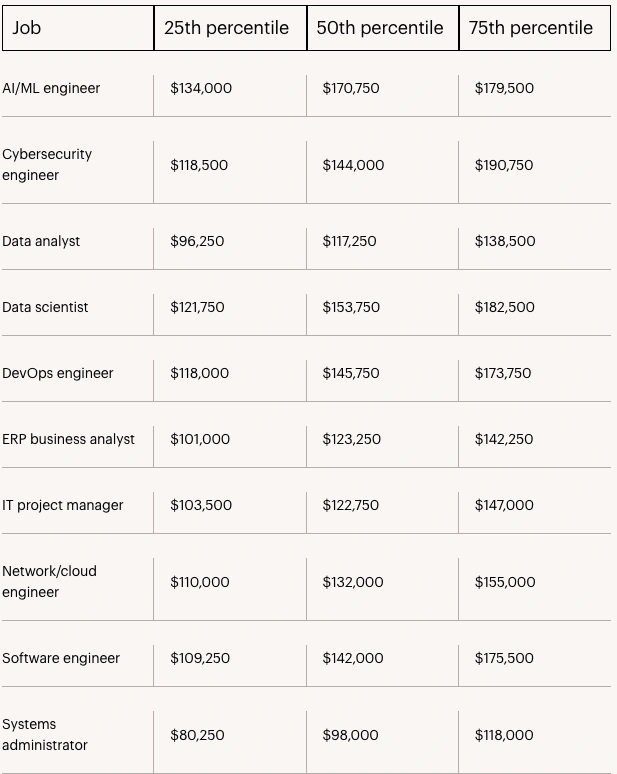
Credit: CIO
So, where do you begin?
Let’s start with a look at what a cloud engineer does on a day-to-day basis.

Research Report
FinOps In The AI Era: A Critical Recalibration
What 475 executives told us about AI and cloud efficiency.
What Is A Cloud Engineer And What Do They Do?
As a cloud engineer, you are responsible for ensuring your organization delivers or makes the most of cloud computing services. For example, cloud engineers prepare cloud infrastructure for an organization’s applications, implement a cloud computing strategy, and ensure the security of cloud systems.
The main responsibility of a cloud engineer is to ensure that his or her organization takes full advantage of cloud computing.
For example, we often see companies hire cloud engineers to achieve a certain price performance in the cloud, enabling them to maximize their return on investment.
Cloud engineers typically have a background in computer science or engineering. They also have working experience with cloud computing technologies and best practices.
What does a cloud engineer do on a day-to-day basis?
The typical cloud engineer job description will list responsibilities such as:
- Knowledgeable about how different cloud providers work, including Amazon Web Services (AWS), Microsoft Azure, and Google Cloud Platform (GCP).
- Design, prepare, and configure an optimal cloud environment for an organization’s existing applications, services, dependencies, and more.
- Plan and implement migrations to the cloud from an on-premises environment.
- Write scripts to automate and optimize cloud processes.
- Monitor and manage cloud-based systems once migrated to ensure optimal security, performance, and cost efficiency.
- Identify, analyze, and fix bugs in code to prevent service outages or cost overruns.
- Work with developers/Software Engineers, DevOps teams, Product Designers, and other professionals to create effective applications and web experiences.
- Train, recommend, and implement cloud policies for and with employees and customers.
- Identify, analyze, and optimize data security following the Shared Responsibility Model in the Cloud.
- Manage databases, including cloud data platforms such as Snowflake and Databricks, and services such as Amazon RDS or Redshift.
- Update, roll out, and maintain cloud systems in the desired state.
- Monitor, analyze, and optimize cloud costs to prevent budget overruns and maximize the value of every dollar spent on infrastructure — a responsibility that has grown significantly as organizations scale their cloud footprints and AI workloads.
This is a quick, general overview of the role and responsibilities of a cloud engineer. There are different types of cloud engineering roles, as we’ll discuss later.
To give you an idea, cloud architects, cloud security engineers, and cloud system administrators are all involved in cloud engineering.
And now you might be wondering…
What is the difference between a cloud engineer and a software engineer?
A software engineer designs, plans, builds, and delivers software applications and systems to meet a customer’s requirements. Meanwhile, a cloud engineer ensures such applications and systems work as required in a cloud environment.
While a software engineer often writes code to build apps for an on-premises data center, or end user, a cloud engineer focuses on cloud computing solutions.
Cloud engineers often use different automation tools, processes, and technologies to continuously integrate (CI/CD), automate (IaC), and optimize cloud resources and infrastructure components for specific use cases – instead of needing to write stuff from scratch.
Is a cloud engineer different from a DevOps engineer?
DevOps is not a specific engineering discipline. Instead, it is an efficiency-driven, holistic approach to building high-quality solutions in the cloud or on-premises. A cloud engineer can be a DevOps engineer, implementing DevOps best practices in a cloud environment or whatever their specific cloud engineering role.
What is the difference between SREs and cloud engineers?
A Site Reliability Engineering professional applies software engineering expertise to system administration and operations.
An SRE can be a cloud engineer who figures out how to scale a cloud-native system to accommodate more users, features, and use cases without compromising uptime and resilience, as one example. More SREs are learning to help their companies optimize cloud costs, too.
That said, here’s how you can become a good cloud engineer.
How To Become A Cloud Engineer
If you’re interested in becoming a cloud engineer, the path is more accessible than you might think — but it does require deliberate skill-building. Here’s a practical roadmap.
Step 1: Build a foundation in computer science and cloud fundamentals. You don’t necessarily need a four-year degree. Many cloud engineers break in through certification programs, bootcamps, or self-study. The key is gaining a solid understanding of networking, operating systems (especially Linux), and how distributed systems work.
Step 2: Learn a major cloud platform deeply. Rather than spreading yourself thin across AWS, Azure, and GCP, pick one and learn it well. Most cloud concepts transfer across platforms, so depth in one will serve you better than shallow familiarity with three. Sign up for a free-tier account and start building.
Step 3: Get hands-on experience. Personal projects, open-source contributions, and internships all count. Build and deploy real applications in the cloud. Spin up a VPC, configure load balancers, experiment with infrastructure-as-code tools like Terraform or CloudFormation. Hands-on practice is what separates candidates who can talk about the cloud from those who can actually work in it.
Step 4: Earn relevant certifications. Certifications validate your knowledge and signal to employers that you meet a professional baseline. Start with a foundational cert, then work toward associate and professional levels.
How do I become a cloud engineer with no experience?
Starting from scratch is one option. There are several ways to get experience with cloud computing systems.
You can work on personal projects, volunteer for open-source projects, or get a job as an intern cloud engineer. Once you have some experience, you can start applying for entry-level or more advanced cloud engineering jobs.
What Skills, Certifications, And Other Qualifications Do You Require to Become A Cloud Engineer?
A cloud engineer does not need a degree, but you should have a solid understanding of computer science, cloud infrastructure, and networking systems.
A competent cloud engineering professional will also need to have the following hard skills.
- Practical expertise in cloud computing technologies, such as IaaS, PaaS, and containers (Docker or Kubernetes), and best practices.
- Working knowledge of implementing cloud-based and cloud-native technologies, such as IaC, CI/CD, DBaaS, and more.
- Working knowledge of the major cloud platforms such as AWS, Azure, GCP, and Oracle Cloud and rising providers, such as Alibaba Cloud, DigitalOcean, Vultr, and Kamatera.
- Several programming skills in languages such as Python, Java, and R.
- A solid understanding of DevOps, APIs, and web services.
- Working knowledge of operating systems such as Linux, Ubuntu, and Windows.
- Good understanding of networking concepts, including Internet Protocol (IP), Virtual private network (VPN), Hypertext transfer protocol secure (HTTPS), and Domain name system (DNS).
- Good knowledge of open standards to integrate and manage Open-source programs.
We mentioned you don’t need a degree to get a cloud engineer job. You can instead train with these certifications and programs from some of the top cloud engineering companies.
AWS offers 12 certifications while Azure provides 24. Here are examples.
- AWS Certified Cloud Practitioner if you want to improve your working knowledge of the AWS cloud.
- Microsoft Certified: Azure Fundamentals to understand the basics of how the Microsoft Azure Cloud works.
- AWS Certified SysOps Administrator if you want to serve as system admin for Amazon Web Services or its customers
- Google Associate Cloud Engineer if you want to specialize as a Google Cloud Platform engineer
- Microsoft Azure Fundamentals should you want to become a cloud engineer for Microsoft Azure customers
- AWS Certified Solutions Architect helps you gain expertise on various aspects of the AWS ecosystem
Over 17 cloud engineering certifications, boot camps, and programs can help you get the knowledge you need to get started.
Different Career Paths For Cloud Engineers
Cloud engineering is a growing field with a lot of opportunities. If you’re interested in a career in cloud computing, becoming a cloud engineer is a great way to get started.
What jobs will you get as a cloud engineer?
Here are the different types of cloud engineering jobs you can learn and get hired for. Each role will have a varying cloud engineer job description, of course.
- A cloud architect manages cloud infrastructure components and how they work together. This cloud engineer oversees architecture, configuration, and deployment in cloud environments, including building a roadmap for setting up an organization’s cloud infrastructure.
- A cloud software developer is responsible for building and maintaining cloud-based software features, functions, databases, and applications. Also known as a cloud application developer, this is a software engineer who specializes in building, deploying, and optimizing cloud-based or cloud-native applications.
- A cloud security engineer builds, optimizes, and maintains security components to protect cloud-based platforms, applications, services, etc. An engineer should be familiar with the hardware, software, and compliance requirements of his or her organization’s industry.
- A cloud administrator or cloud admin oversees the software and hardware that run cloud-based applications. System administration, virtualization, and troubleshooting will need to be your strong skills as a cloud admin.
- A cloud network engineer manages the network infrastructure and software that connects clients and service providers. A good network engineer will also have network security skills to protect data in transit.
- A cloud automation engineer specializes in automating cloud processes, using various tools, orchestration methods, and integration technologies. This professional is also responsible for setting up and managing cloud services, as well as troubleshooting any issues that may arise.
A cloud engineering career can also include being a machine learning engineer, a DevOps engineer, or a cloud database management professional. New roles will certainly emerge as the discipline evolves.
In general, these cloud engineering responsibilities overlap in some aspects while maintaining a specialization in others. For example, all cloud engineers need to have a strong understanding of various cloud providers.
Are cloud engineering jobs going to be in-demand in the future?
The cloud engineer job outlook is exciting because cloud computing will continue to grow and evolve.
Despite automation reducing workloads, cloud engineers will still be needed to optimize and maintain cloud infrastructure.
Cloud engineers will also be needed to develop new cloud applications, manage complex cloud environments such as hybrid clouds, as well as troubleshoot and debug existing applications. So, Cloud engineers will be in high demand for the foreseeable future.
What’s The Average Salary For A Cloud Engineer?
Cloud engineer salaries have climbed steadily as demand outpaces supply. As of early 2026, the average total compensation for a cloud engineer in the US is approximately $145,000 per year, according to Glassdoor. That figure varies significantly depending on experience, location, and specialization.
Here’s a rough breakdown by experience level:
- Entry-level (0–2 years): around $90,000–$111,000 per year
- Mid-level (2–5 years): around $125,000–$140,000 per year
- Senior-level (5+ years): around $138,000–$170,000+ per year
Salaries also vary by cloud provider specialization. Engineers focused on Google Cloud and Microsoft Azure tend to command higher base pay than AWS-focused roles, though AWS roles are more numerous. Cisco, Google, AWS, Oracle, and VMWare remain among the best-paying companies for cloud engineering talent.
The salary range across the field runs from roughly $90,000 to $205,000+ per year depending on your experience, skills, location, employer, and industry. Finance, healthcare, and media organizations tend to pay cloud engineers on the higher end of that spectrum due to strict compliance requirements and the critical nature of their cloud infrastructure.
The best cloud engineers, though, are the ones who find solutions to challenges. Understanding, controlling, and optimizing cloud costs is the top challenge in cloud computing today — bigger than cloud security.
Want to be the most valuable cloud engineer in the room? Find out how CloudZero helps you keep cloud costs sustainable better than other cloud cost optimization platforms.
 to get firsthand experience.
Cloud Engineering FAQs
Can you become a cloud engineer without a degree?
A degree isn’t necessary to become a cloud engineer. Instead, you can learn through different certifications, boot camps, programs, internships, volunteer work, and mentorships.
How long does it take to learn cloud engineering?
In cloud engineering, each area will take a different amount of time to learn, as will each certification program. Other trainings are self-paced, so how quickly you finish depends on how much effort you put in.
What is the fastest way to become a cloud engineer?
As a cloud engineer, gaining hands-on experience through volunteer work, internships, and mentorship programs is the fastest way to gain working experience. Pairing that with a foundational cloud certification (like the AWS Cloud Practitioner or Google Associate Cloud Engineer) can get you job-ready in as little as six months.
How much do cloud engineers get paid?
The average salary for a cloud engineer ranges from approximately $90,000 to $205,000+ per year, depending on experience and specialization. Glassdoor reports average total compensation of around $145,000, while senior cloud engineers and those in high-cost-of-living areas can earn well above $170,000.
Do cloud engineers work from home?
Yes, you can work as a remote cloud engineer, depending on the company you want to work for.
Is cloud engineering a good career?
Typically, cloud engineer jobs offer hands-on experience, well-paying wages, and development opportunities. With cloud spending projected to exceed $1 trillion globally by 2027, the demand for skilled cloud engineers shows no signs of slowing down.


FinOps In The AI Era: A Critical Recalibration
What 475 executives told us about AI and cloud efficiency.