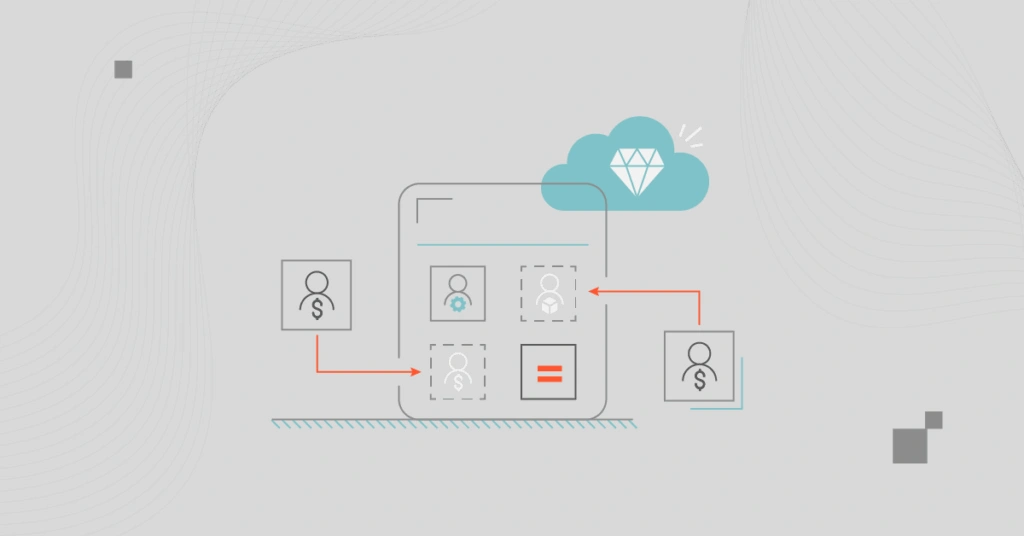
Imagine this. A product team rolls out a change to improve reliability. The deployment succeeds. Traffic grows. Weeks later, cloud costs increase, and the finance team asks what changed. No one can point to a single decision or owner.
This situation is common in cloud environments. Infrastructure scales automatically, and costs are shaped by technical choices made across engineering, data, and product teams.
Most organizations review cloud spending after it has already occurred. Ownership is unclear. Leaders struggle to explain how cloud costs relate to product decisions, revenue, or margin.
Cloud cost governance addresses this problem. It is built around ownership, decision rights, and measurement, so cloud spending is managed deliberately, not reactively.
What Is Cloud Cost Governance?
Cloud cost governance is the operating model that defines how cloud spending decisions are owned, reviewed, and enforced across an organization. It establishes who can create cloud costs, who is accountable for them, and how those costs are evaluated against business outcomes.
It exists to control how cloud spend happens, not just how much is spent. This includes decision rights, approval paths, guardrails, and review cycles that shape spending before costs appear on the bill.
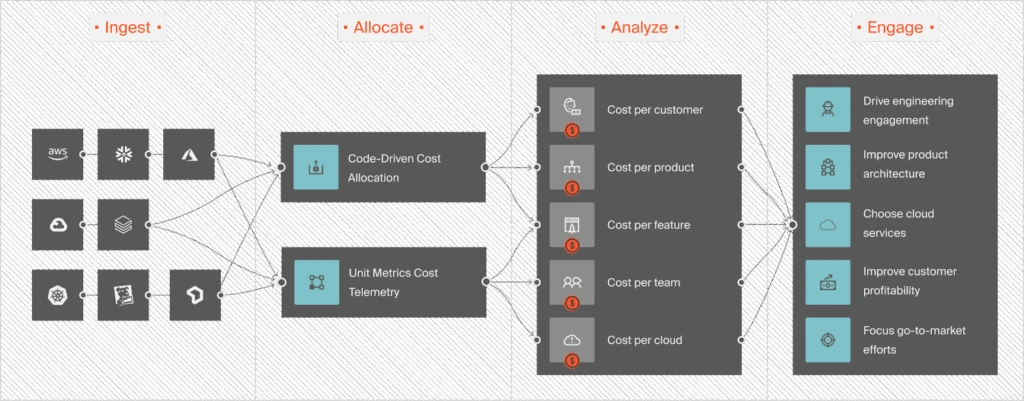
Cloud cost governance also defines how cloud costs are measured. Instead of treating spend as a single shared cost, it demands costs to be attributable to teams, services, features, or products so decisions can be evaluated in context.
Without cloud cost governance, organizations rely on after-the-fact reviews. Costs are discussed only after they have occurred, when options are limited, and accountability is unclear.
With cloud cost governance, spending becomes intentional. Teams understand the financial impact of their decisions as they make them, and leaders have a consistent way to assess trade-offs among cost, performance, and growth.
Report
Finance needs to prove AI’s return: CloudZero report
260 senior finance leaders (more than half CFOs) told us why the speed of seeing AI spend, not the size of it, separates who pulls ahead on AI from who gets burned.
Cloud Governance Vs. Cloud Cost Governance: Here’s The Difference
Cloud governance and cloud cost governance address different risks.
Cloud governance covers security, access control, compliance, and architectural standards. Its purpose is to ensure systems are safe, reliable, and compliant as cloud environments scale.
See our guide to the leading security, compliance, and governance tool here.
Cloud cost governance is a financial discipline focused on accountability for cloud spending decisions.
These two governance models often coexist, but they are not interchangeable. An organization can have robust security controls and still lack clarity on who owns rising cloud costs.
Cloud cost governance addresses this gap by ensuring cloud spend decisions are treated with the same rigor as technical and security decisions.
Who owns cloud cost governance?
Most cloud costs are created through engineering and product decisions. Think of instance sizes, deployment patterns, data retention, and scaling behavior. All these influences spend long before finance reviews the bill.
Finance teams play a critical role, but they see cloud costs after they occur. Without shared governance, finance can report on spend but cannot shape the decisions that caused it.
Executives can also define priorities, resolve conflicts, and ensure governance rules are applied consistently across teams.
The Elements Of Cloud Cost Governance
Below are the main elements that ensure cloud cost governance works in practice:
1. Clear ownership and accountability
The 2024 CloudZero State of Cloud Cost report shows that ownership is the missing link between visibility and control. Organizations where engineering teams share responsibility for cloud costs are more likely to say their spend is under control.
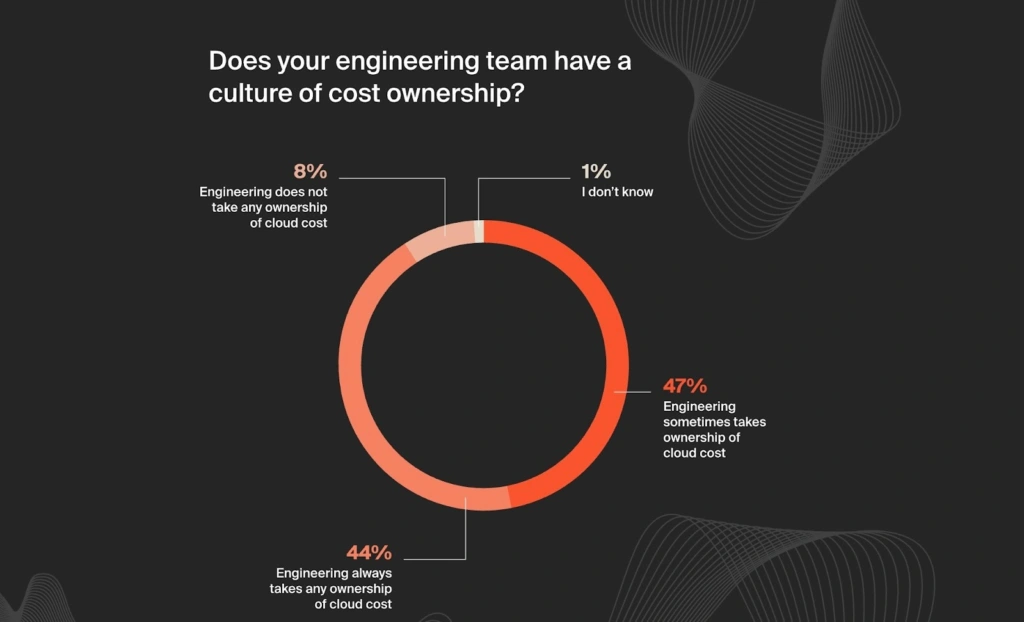
Yet, most respondents still report that poor visibility slows their work, and that investigating rising cloud costs disrupts both engineering and finance. The pattern is clear: dashboards alone don’t create accountability.
2. Defined decision rights
Cloud cost governance should clearly define who is allowed to make spending decisions and within what boundaries. This includes decisions around provisioning, scaling, architectural changes, and long-term commitments.
3. Cost attribution and allocation standards
If cloud costs cannot be tied to owners, services, or products, governance cannot function.
4. Guardrails, budgets, and policies
Cloud cost governance relies on guardrails that shape behavior before spend escalates. These include budgets, thresholds, and policies that define acceptable usage patterns.
When guardrails are missing, organizations rely on post-hoc analysis. By then, costs are already sunk, and corrective action is limited.
Learn more on how budget variance ties to business units.
5. Supporting data and tools
Cloud cost governance depends on timely, accurate data from billing systems, usage signals, and operational context.
Several tools exist to support this, including platforms that help teams tie cloud spend to owners, services, and business outcomes. CloudZero does all of this in a single platform.
Start Your Cloud Cost Governance Implementation With CloudZero
Cloud cost governance breaks down when ownership, measurement, and action live in separate places. CloudZero brings these signals together so governance can operate consistently across teams.
Centralized cost intelligence across cloud services
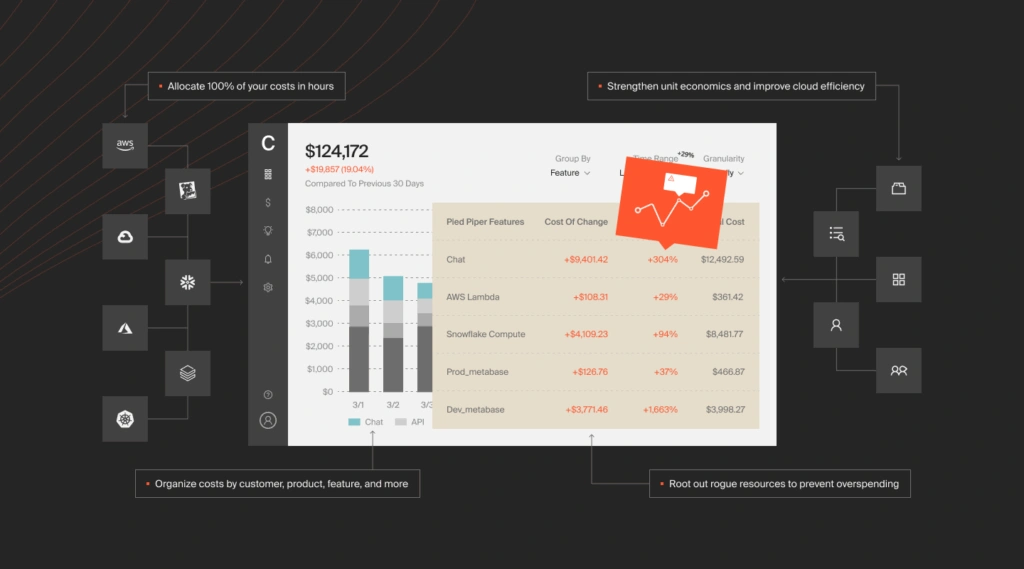
CloudZero aggregates cloud billing, usage, and operational data across services into a single platform. Teams no longer piece together governance insights from disconnected reports or accounts.
Clear team and service accountability
CloudZero maps cloud costs to teams, services, features, and business units. This makes ownership explicit and ensures every meaningful area of spend has a responsible owner.
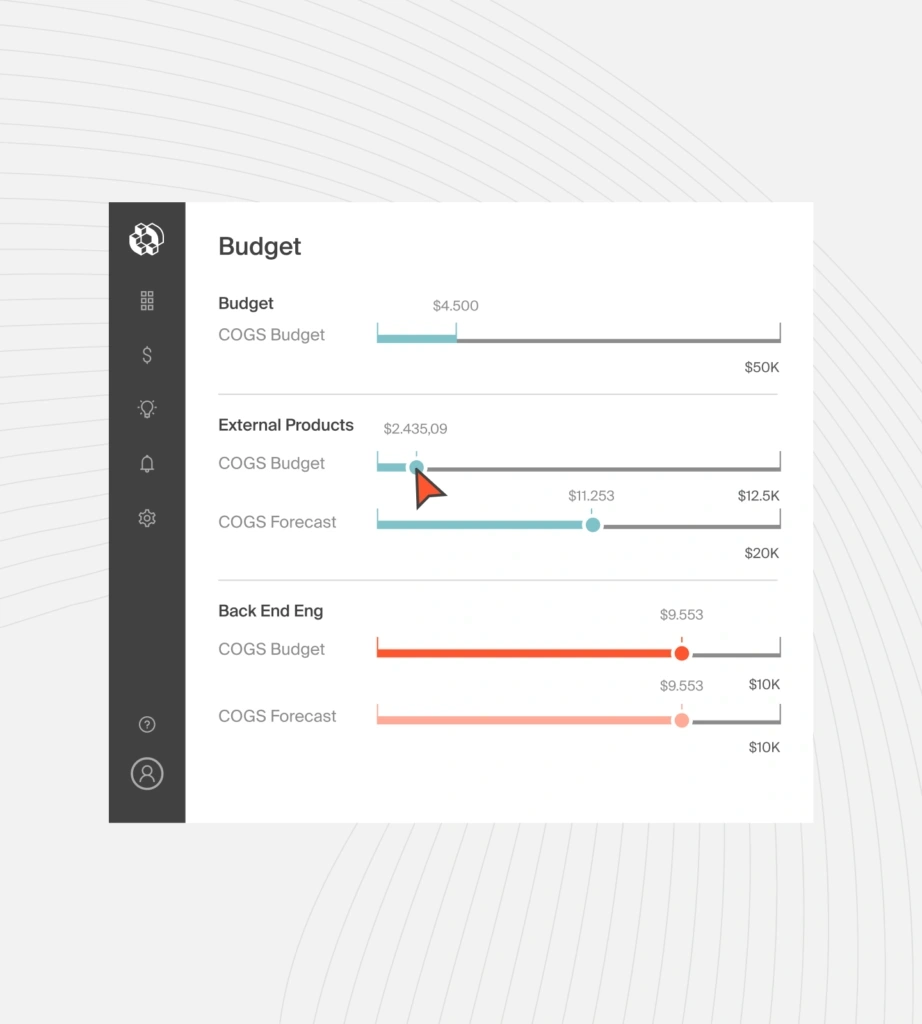
Budgets that reflect how the business operates
CloudZero budgets align with teams, products, or business units instead of raw accounts. Leaders can track performance against expectations using metrics that align with how decisions are made.
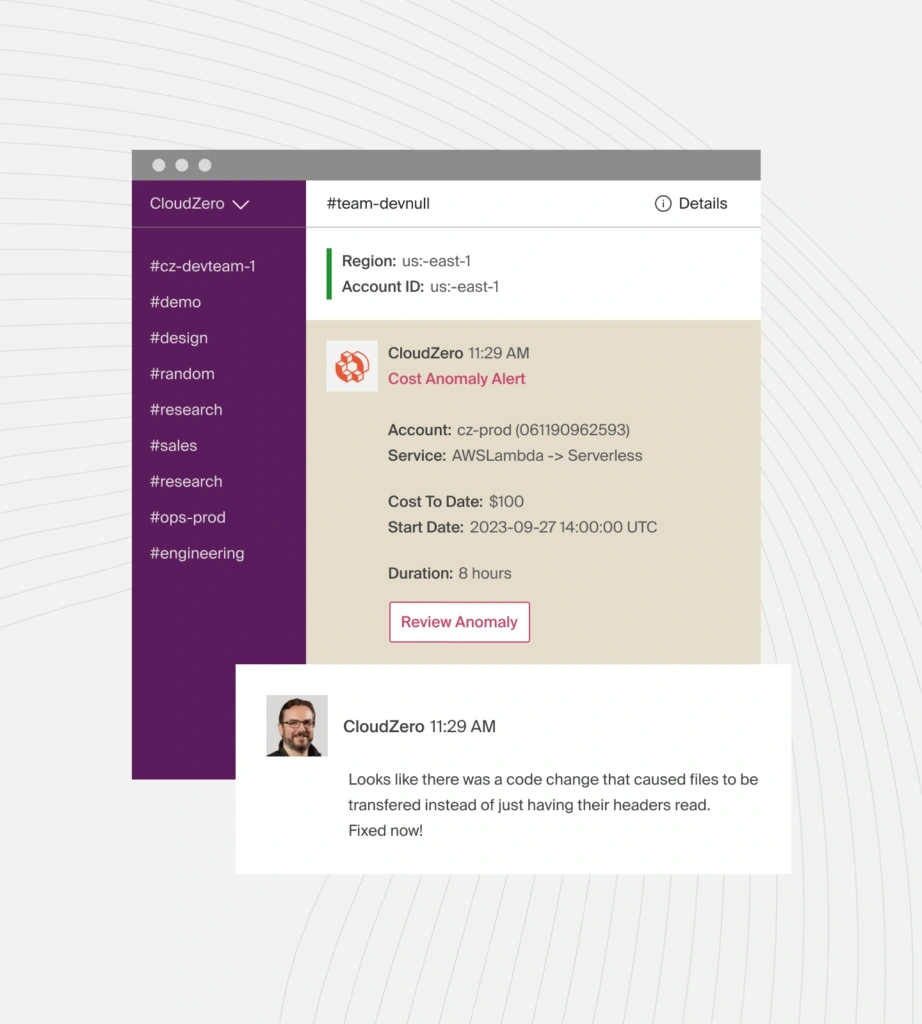
Early anomaly detection
CloudZero surfaces unexpected cost changes as they happen, not weeks later. Anomaly alerts highlight what changed, where it changed, and how large the impact is, so teams can act before overruns compound.
CloudZero helps organizations reduce unnecessary cloud spend by making ownership clear and tying costs back to teams and services. Schedule a demo to see how CloudZero can also help your team achieve these outcomes in their own environments.
Frequently Asked Questions about Cloud Governance and Cost Management