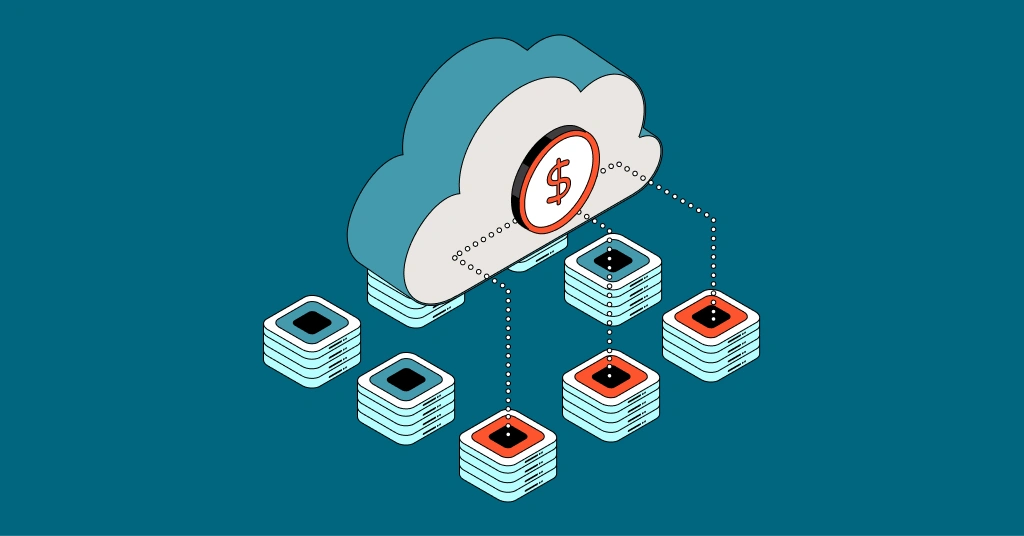
Cloud spending is rising and efficiency is falling. According to a 2025 Boston Consulting Group analysis, up to 30% of cloud spending is wasted due to inefficient usage and lack of cost control — and BCG notes cloud costs now account for up to 17% of IT budgets, with four in five companies expecting that number to climb.
At the same time, cloud environments are growing more complex. AI workloads, multi-cloud sprawl, and always-on service demands have made it harder for internal teams to track what’s running, what it costs, and whether the spend is justified.
FinOps as a Service (FaaS) is how many organizations are closing that gap — without waiting years to build the in-house expertise themselves.
What Is FinOps As A Service?
FinOps as a Service (FaaS) — sometimes called managed FinOps — is the practice of outsourcing cloud financial operations — including visibility, cost allocation, governance, and optimization — to a specialized provider. Rather than building FinOps capabilities internally from scratch, organizations partner with a FaaS provider that brings the tools, frameworks, and certified expertise to manage cloud spend effectively from day one.
FaaS should not be confused with Function as a Service, the serverless computing model that shares the same acronym.
FinOps itself — short for Financial Operations — is a framework that promotes collaboration between finance, engineering, and business teams to optimize cloud spending while maximizing value. It emphasizes financial accountability, data-driven decision-making, and continuous improvement across the cloud cost lifecycle.
The goal of a mature FinOps strategy is not simply to reduce costs. It’s to ensure every dollar of cloud spend is tied to a measurable business outcome — and that engineering velocity, user experience, and growth aren’t sacrificed in the process.
FaaS brings that discipline to organizations that need it now.
Report
Finance needs to prove AI’s return: CloudZero report
260 senior finance leaders (more than half CFOs) told us why the speed of seeing AI spend, not the size of it, separates who pulls ahead on AI from who gets burned.
Why Cloud Cost Management Is Harder Than It Looks
Before examining what FaaS provides, it helps to understand the specific challenges it’s designed to solve. Three issues consistently derail internal cloud cost management efforts.
Application and tool sprawl
Spinning up services in the cloud is fast and easy — which is precisely the problem. Teams deploy applications to complete a project, then move on without decommissioning them. Over time, forgotten instances and redundant tools accumulate into what amounts to a slow budget bleed.
Shadow IT compounds this. According to Microsoft’s 2024 Work Trend Index, 78% of employees now bring their own AI tools to work, but 52% are reluctant to disclose it. Every unsanctioned tool running in the cloud carries a cost that rarely appears in any budget line.
Lack of visibility
Limited visibility is the root cause of most cloud cost problems. Per CloudZero research, 66% of engineers say lack of visibility into cloud costs disrupts their workflows — and 56% of finance professionals say the same. Without clarity on what’s running, where it’s running, and what it costs, teams can’t prioritize optimization or justify spend to leadership.
AI cost complexity
AI has become the most disruptive variable in cloud financial management — and increasingly, the main reason organizations seek outside help with cloud financial management through FaaS. According to McKinsey’s 2024 State of AI report, 88% of businesses now use AI for at least one core function. Many are scaling into generative and agentic AI, which carry infrastructure costs that behave differently from traditional workloads — harder to forecast, harder to attribute, and harder to govern.
Data from CloudZero’s FinOps in the AI Era report finds that cloud efficiency rates have dropped from 80% to 65% as AI adoption scales. The result is a paradox: FinOps maturity is rising, but efficiency is falling. FaaS providers with AI cost expertise are increasingly critical to resolving it.
What FinOps As A Service Includes
Effective FaaS frameworks share a common set of components, though implementation varies by provider.
Visibility and reporting
Real-time insights into cloud usage and costs across every team, environment, and workload. The goal is full transparency — not just what’s being spent, but what’s driving it, and whether it’s justified.
Cost allocation and governance
Clear assignment of cloud costs to the teams, products, or features responsible for them. Strong governance frameworks define ownership, establish budgets, and create accountability at the team level rather than leaving cost management to a centralized finance function.
Optimization tools and recommendations
Identification and implementation of cost-saving opportunities: rightsizing underutilized resources, leveraging Reserved Instances and savings plans, auto-scaling instead of overprovisioning, and shutting down idle services. See our roundup of cloud cost management tools that support these workflows. The best FaaS providers don’t just surface recommendations — they help execute them.
Unit economics and cost-per-anything analysis
Cloud unit economics translates aggregate cloud spend into per-unit costs: cost per customer, cost per transaction, cost per feature, cost per AI inference call. This framing moves the conversation from “how much are we spending” to “was it worth it” — the question that ultimately matters to the business.
Centralized management
A dedicated provider or team that oversees governance, purchasing strategy, and cost allocation consistently across the organization — eliminating the silos that let waste accumulate undetected.
Why FinOps Maturity Alone Isn’t Enough
The FinOps Foundation’s State of FinOps survey consistently shows a “shift left” movement — organizations embedding financial context earlier in engineering decisions. FinOps maturity is measurably improving across the industry.
But maturity doesn’t automatically translate to efficiency. CloudZero’s research shows the two have decoupled: as organizations get better at FinOps processes, AI workloads and cloud complexity are driving efficiency down. Process improvement without the right tooling and expertise produces diminishing returns.
FaaS addresses this by pairing mature frameworks with hands-on expertise and purpose-built tooling — compressing years of internal capability-building into a faster path to measurable outcomes.
What To Look For In A FaaS Provider
Not all FaaS providers are equivalent. The following criteria separate providers that deliver durable results from those that deliver dashboards.
Up-front consulting, not just onboarding
Every cloud environment has blind spots. The best FaaS providers start by auditing what’s working, what isn’t, and what needs to change — then build an actionable plan before touching a single configuration. Be skeptical of providers that move straight to tooling without a diagnostic phase.
Unbiased optimization expertise
Strong FaaS providers give advice that serves your goals, not their margins. A common example: many organizations default to overprovisioning as insurance against demand spikes. In the cloud, that’s unnecessary and expensive. A good FaaS partner helps teams pivot to auto-scaling — dynamically adjusting resources to demand without carrying the cost of idle capacity.
FinOps maturity alignment
The FinOps maturity model — Crawl, Walk, Run — describes a progression from basic visibility to fully optimized, continuously improving cloud financial operations. A strong FaaS partner meets you where you are, maps a path forward, and doesn’t let early wins become the ceiling. The right provider keeps pushing toward Run even after the initial savings are realized.
Finance and engineering collaboration
Finance and engineering are often at odds over cloud spend: finance wants efficiency, engineering wants headroom. A qualified FaaS partner bridges that divide — translating cloud cost data into language both sides understand, facilitating trade-off conversations, and building the cross-functional workflows that make cost accountability stick. For more on this dynamic, see how FinOps can work with engineering to achieve cost intelligence maturity.
A path to in-house capability
The best FaaS relationships are designed to reduce your dependency on the provider over time, not increase it. Look for providers that invest in training your team, building internal champions, and transferring knowledge — not just managing costs on your behalf indefinitely.
Traditional Cost Management Vs. FinOps As A Service
Traditional cloud cost management focuses on averages rather than precision. It typically involves periodic reporting, reactive cost cuts, and limited attribution of spend to the teams or products responsible for it.
FinOps as a Service takes a different approach:
- Precise cost attribution — not just total spend, but cost by team, product, feature, and workload. This granularity is what makes optimization decisions defensible.
- Continuous optimization — not a quarterly review, but an ongoing cycle of inform, optimize, and operate aligned to the FinOps lifecycle.
- Real-time visibility — cloud cost optimization and anomaly detection within hours rather than discovery on the monthly bill. For a deeper look at how this works, see CloudZero’s approach to cloud cost anomaly detection.
- Business-aligned decision-making — spending decisions grounded in unit economics and ROI, not just line-item reduction.
The practical difference: traditional cost management tells you how much you spent. FaaS tells you whether it was worth it.
Key Takeaways
- FinOps as a Service outsources cloud financial operations — visibility, allocation, governance, and optimization — to specialized providers.
- The three core challenges FaaS solves are tool sprawl, limited visibility, and AI cost complexity.
- Effective FaaS goes beyond cost reduction — it ties cloud spend to business outcomes through unit economics and cost-per-anything analysis.
- FinOps maturity and cloud efficiency have decoupled; tooling and expertise now matter as much as process.
- The right FaaS provider meets you at your current maturity level, bridges finance and engineering, and builds internal capability over time.
Want to see how CloudZero’s FinOps platform and certified practitioners work together to reduce cloud costs and improve efficiency? Schedule a demo.