Quick Answer
The best AI governance tools in 2026 cover four categories: compliance and regulatory, security and access, model lifecycle, and financial cost governance. No single AI governance platform covers all four. 77% of organizations are actively building AI governance programs, but most conversations and most tools stop at compliance, ignoring security enforcement, cost accountability, and the growing gap between governance policies on paper and governance controls in production.
Here’s a number that should make every governance committee uncomfortable: 63% of organizations that suffered an AI-related breach didn’t have a governance policy, or were still writing one, according to IBM’s Cost of a Data Breach Report 2025. Shadow AI already causes 20% of all breaches, adding $670,000 per incident. And among those breached, 97% lacked proper AI access controls. Not advanced controls. Basic ones.
This guide covers the full AI governance category: what it means, which AI governance frameworks matter, which tools handle which problems, and the governance dimension that is rarely talked about, yet the most critical — cost.
What Is AI Governance, And Why Does It Have Four Pillars, Not Two?
What is AI governance? AI governance is the combination of policies, processes, and tools that ensure AI systems operate ethically, legally, securely, and within financial guardrails.
The AI governance definition most organizations operate from stops at “compliance and ethics.” That’s half the picture.
AI governance in 2026 has four pillars. Most conversations and most tools cover the first two. The third is catching up. The fourth barely registers in the market, despite being the dimension boards ask about most.
Pillar 1: Compliance and regulatory governance
Aligning AI systems with the EU AI Act, the NIST AI Risk Management Framework, and ISO 42001. This includes AI governance auditing, risk assessments, policy management, and the documentation that proves you’re governing, not just saying you are. AI governance compliance is where the market started, and it’s where most tools still live.
Pillar 2: Ethics and fairness governance
Bias detection, explainability, model transparency. AI ethics and governance used to be a philosophical conversation. The EU AI Act made it a legal one. Responsible AI governance now means demonstrable controls, not a page on your website.
Pillar 3: Security and access governance
Shadow AI discovery, data leakage prevention, identity controls. AI governance oversight at the security layer answers the question every CISO lost sleep over in 2025: “what AI tools are our employees feeding company data into that we don’t know about?” IBM’s data says 20% of breaches start there.
Pillar 4: Financial and cost governance
AI cost visibility, budget controls, cost allocation by team, project, and customer, model mix optimization, and anomaly detection on spend. This is the pillar the current market conversation ignores entirely.
Most of the AI governance tools in the market today cover pillars 1–3. Few cover pillar 4.
Most organizations still can’t answer “what did our AI initiatives cost last quarter, by team?”, a governance gap that compliance tools weren’t designed to close and security tools don’t attempt. The cost visibility problem is the section of this guide that follows the tool roundup.
This four-pillar model is the lens for evaluating every tool in this guide. If a tool covers one pillar brilliantly but ignores the other three, you should know that before you buy it.
Report
Finance needs to prove AI’s return: CloudZero report
260 senior finance leaders (more than half CFOs) told us why the speed of seeing AI spend, not the size of it, separates who pulls ahead on AI from who gets burned.
Which AI Governance Frameworks Matter In 2026?
Before evaluating AI governance tools, understand the AI governance frameworks your organization needs to comply with. Frameworks determine requirements. Requirements determine which tools make your shortlist.
- The EU AI Act is the most consequential AI governance regulation in force. Prohibited AI rules already apply. High-risk rules take effect August 2, 2026. Penalties reach €35 million or 7% of global turnover, whichever is higher. If you have EU customers, you’re in scope regardless of where your headquarters sits. Every AI governance framework adopted in 2026 needs EU AI Act alignment, full stop.
- The NIST AI Risk Management Framework is the most widely adopted voluntary structure in the US. Four core functions; Govern, Map, Measure, Manage, that most enterprise AI governance programs build on. NIST AI RMF doesn’t carry enforcement penalties, but increasingly it’s what procurement teams and auditors ask for.
- ISO 42001 (AI Management Systems) is the emerging certification standard. Microsoft certified early, which tells you where enterprise procurement requirements are heading. An AI governance strategy built around ISO 42001 positions you ahead of requirements that are still forming, a rare chance to get ahead of the compliance curve instead of chasing it.
- AI governance best practices in 2026 go beyond framework alignment: build an AI inventory (know what’s running and where), define ownership (who’s accountable when something goes wrong), enforce at runtime (not just on paper), and close the cost visibility gap. The organizations navigating AI governance challenges most effectively treat governance as an operating model, not an annual compliance review. AI governance principles should be embedded in development workflows, not filed in a SharePoint folder that nobody opens between audits.
For organizations assessing their current posture, an AI governance maturity model helps benchmark progress, from ad hoc (policies exist but aren’t enforced) through managed (runtime controls active) to optimized (governance data informs business decisions).
Most organizations in 2026 sit somewhere between ad hoc and managed. That’s not a failure. It’s a starting point.
With the frameworks mapped and your maturity assessed, the next question is practical: which tool handles which gap?
How To Choose the Right AI Governance Tool: 5 Criteria
These five criteria separate AI governance software that earns its license fee from tools that generate reports nobody reads.
1. Governance scope
Does the tool cover model governance, SaaS AI governance, or agentic AI governance? Enterprise AI governance in 2026 extends beyond custom models to Claude Code agents, Cursor sessions, Copilot usage, and embedded AI across SaaS products. An AI agent governance platform that only governs self-hosted models misses the majority of enterprise AI activity. Gen AI governance platform capabilities, tracking generative AI usage across the organization, are the 2026 minimum.
2. Framework coverage
Which AI governance regulations are supported natively? The best AI governance framework tools map your AI inventory against EU AI Act, NIST AI RMF, and ISO 42001 requirements and generate audit-ready documentation automatically. AI governance policy management should be structured and enforceable, not a Word document that gets updated quarterly.
3. Enforcement vs. observation
Can the tool enforce governance at runtime, or does it report violations after the fact? AI risk management tools that only observe aren’t managing risk, they’re documenting it. Governance is the difference between “we detected a data leakage incident last Tuesday” and “we blocked a data leakage attempt last Tuesday.” One of those sentences ends with a breach notification. The other doesn’t.
4. Integration breadth
Check: cloud providers (AWS, GCP, Azure), AI model providers (Anthropic, OpenAI, Google), development tools (Cursor, Claude Code, Copilot), and cloud cost management tools. A governance tool that can’t connect to your AI infrastructure is governing a theoretical environment, not your actual one.
5. Cost visibility
Can you see what your AI systems cost, allocated by team, project, and customer? AI compliance tools almost universally skip this dimension. But if you can’t answer “what did our AI initiatives cost last quarter, by department?” at the next board meeting, you have a governance gap, and it’s the gap most likely to generate uncomfortable questions from the CFO.
AI governance examples of mature programs always include financial accountability alongside regulatory compliance.
Those five criteria applied, here’s how the leading tools stack up, organized by the governance pillar each one covers.
Best AI Governance Tools In 2026: By Category
Here are the leading AI governance tools, organized by the pillar each one covers, with honest assessments of what they do well and where they stop. These are the AI governance companies building the category.
Compliance and regulatory governance
1. Credo AI
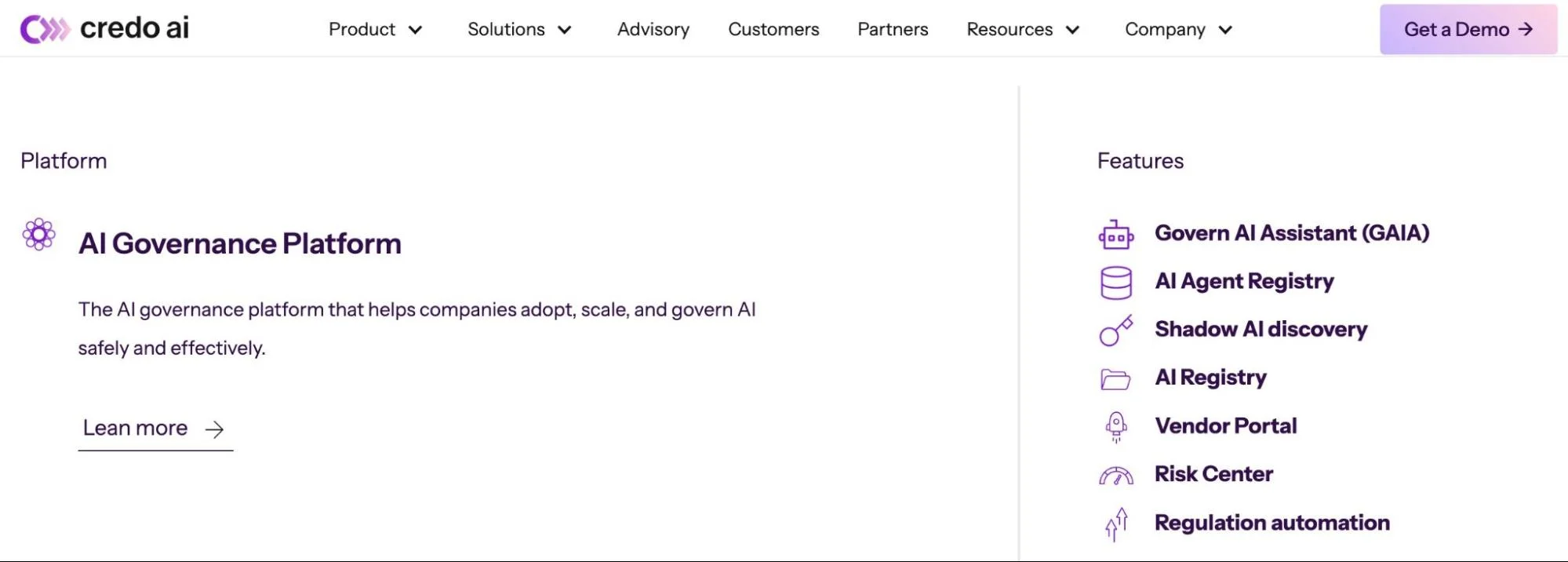
The purpose-built AI governance platform for policy management, risk assessment, and regulatory compliance. Credo AI supports EU AI Act, NIST AI RMF, ISO 42001, and SOC 2 natively, with a centralized AI inventory, automated compliance workflows, and audit-ready documentation. Named to Fast Company’s Most Innovative Companies 2026.
Where Credo AI earns its reputation is depth of compliance coverage, this isn’t a GRC tool with an AI tab bolted on. The platform was designed from the ground up for AI governance compliance, and it shows in the workflow design, the risk scoring methodology, and the documentation output that auditors actually accept without follow-up questions.
If your organization has a dedicated governance team and auditors who’ve already started asking about the EU AI Act, Credo AI is the first call.
Limitation: Credo AI doesn’t cover security enforcement, shadow AI discovery, or cost governance, but for pure compliance depth, nothing else on this list matches it.
2. OneTrust
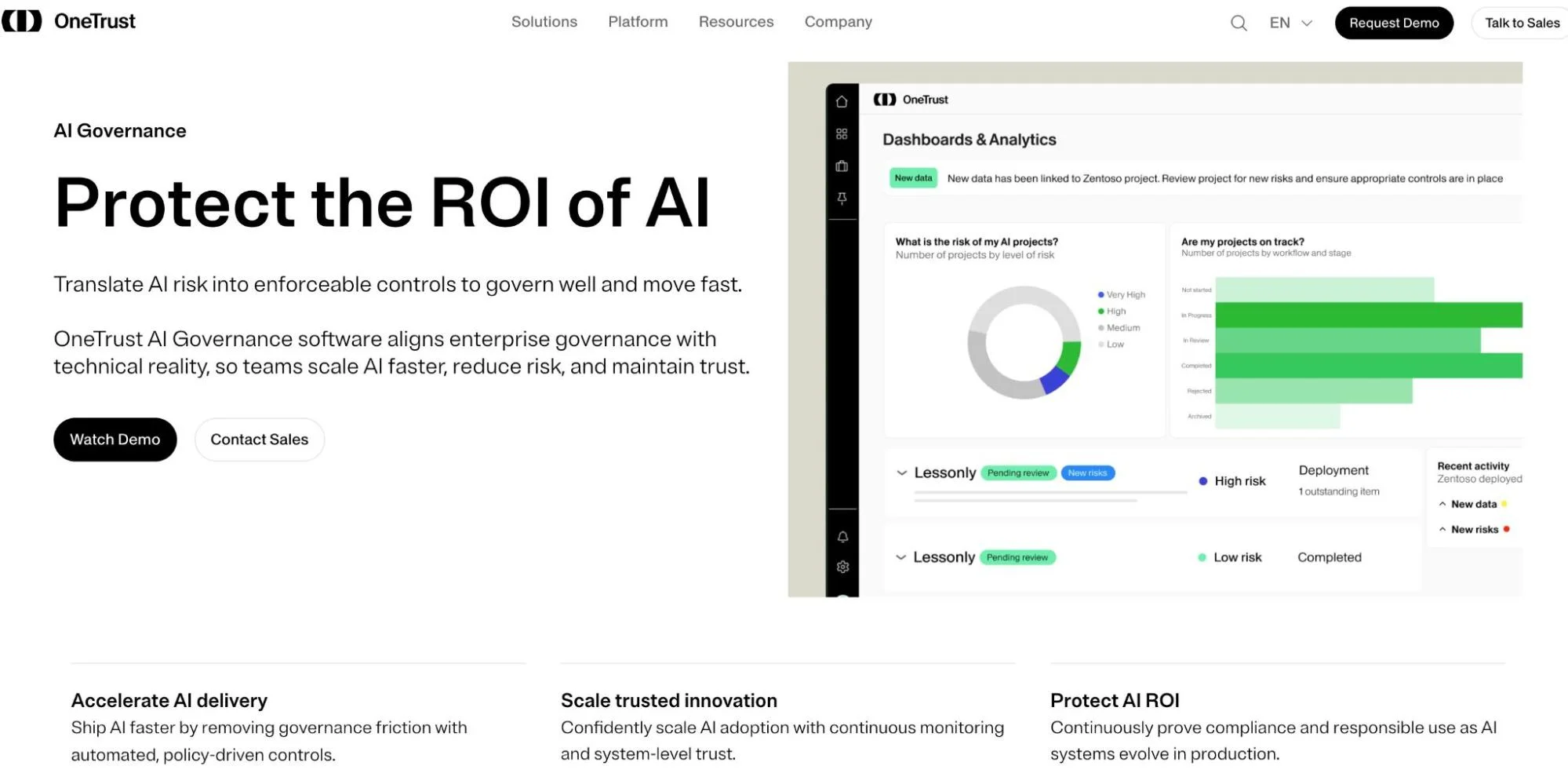
OneTrust extends its existing GRC platform — built for privacy and data governance — to cover AI systems. If your organization already runs OneTrust for GDPR or data privacy, AI governance becomes an extension of your current workflows instead of a new vendor relationship. The AI governance software integrates into existing risk and policy management structures.
Strongest choice for organizations already paying for OneTrust.
Limitation: OneTrust is a GRC platform with AI governance capabilities, not a purpose-built AI governance tool. The difference shows in AI-specific risk scoring depth.
3. Holistic AI
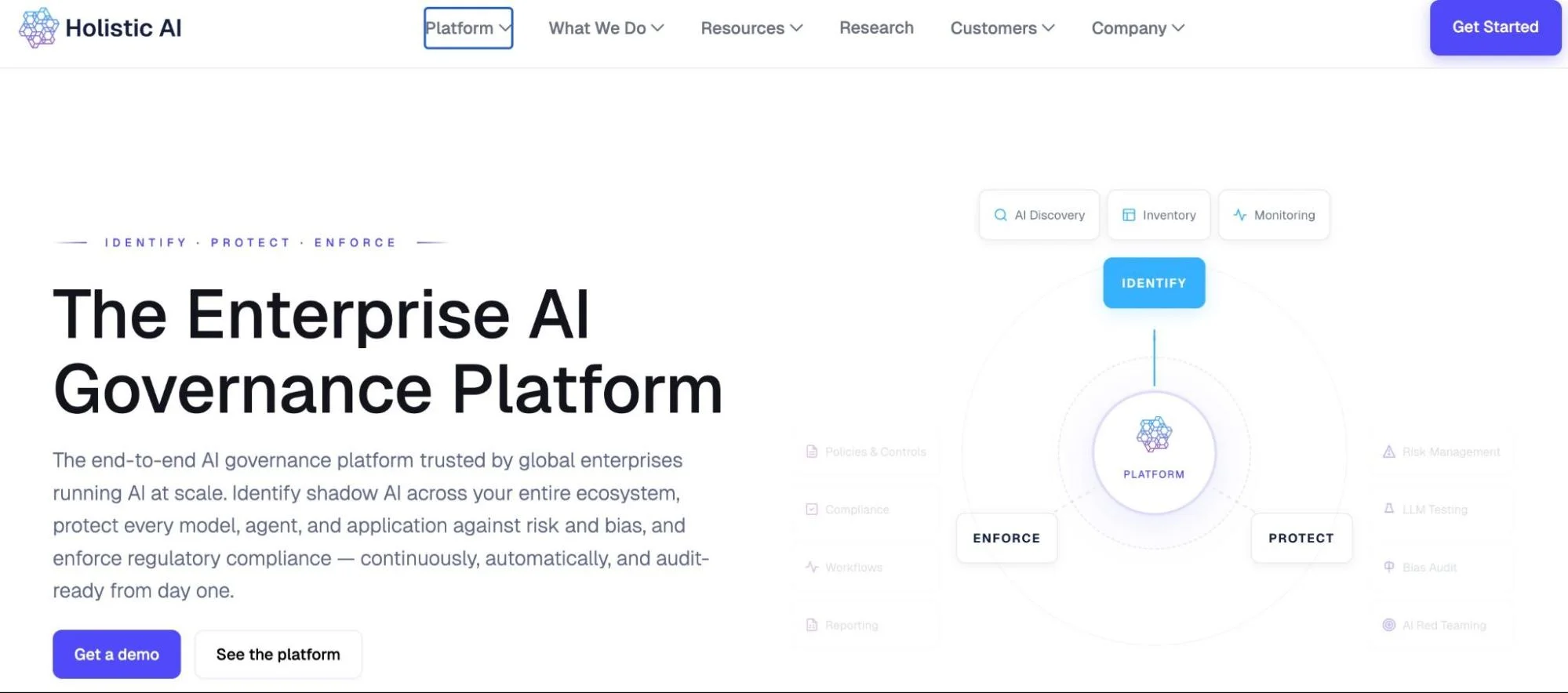
AI risk management tools with automated assessments, continuous monitoring, and a strong risk scoring methodology. Holistic AI excels at the EU AI Act readiness conversation, mapping your AI inventory against regulatory requirements and identifying gaps. AI governance auditing workflows are built into the platform.
Built for risk and compliance teams in financial services, healthcare, and government who need structured AI governance compliance documentation.
Limitation: Less coverage on security and cost governance, but if your primary concern is passing an EU AI Act audit, Holistic AI gets you there.
Security and access governance
4. Grip Security
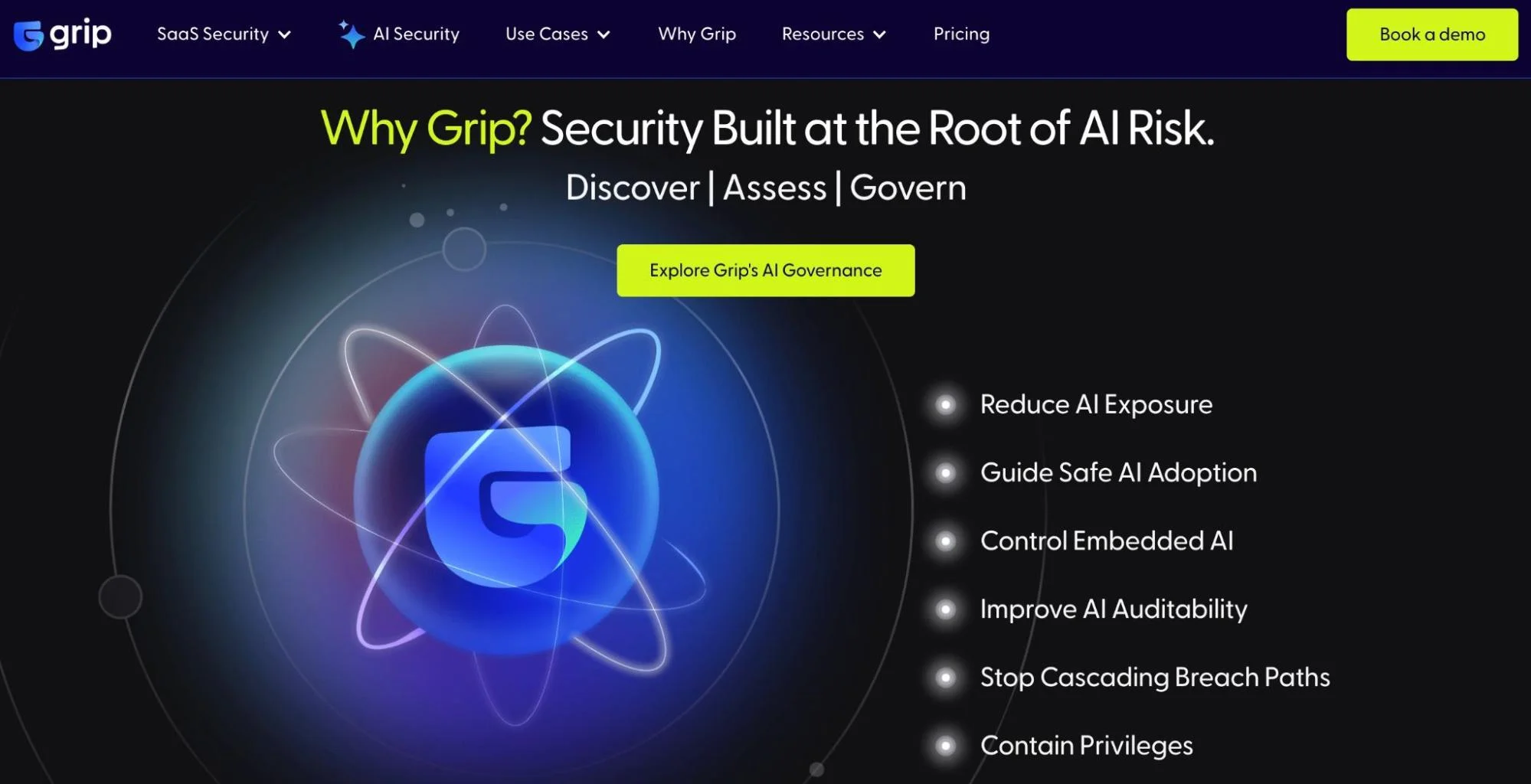
Grip operates at the integration layer where AI risk is most active; OAuth tokens, non-human identities, SaaS sprawl. When employees adopt AI tools without IT approval, Grip Security discovers them. The tool answers the question that keeps security teams up at night: “what AI tools are running in our environment that nobody approved?”
AI governance oversight at the SaaS layer is Grip’s core strength, identity-based governance for the AI tools your employees are already using, sanctioned or not.
Limitation: Security teams dealing with unauthorized AI adoption should evaluate Grip first. It won’t help with compliance reporting or cost tracking, but it will tell you what’s running in your environment before the breach report does.
5. Reco AI
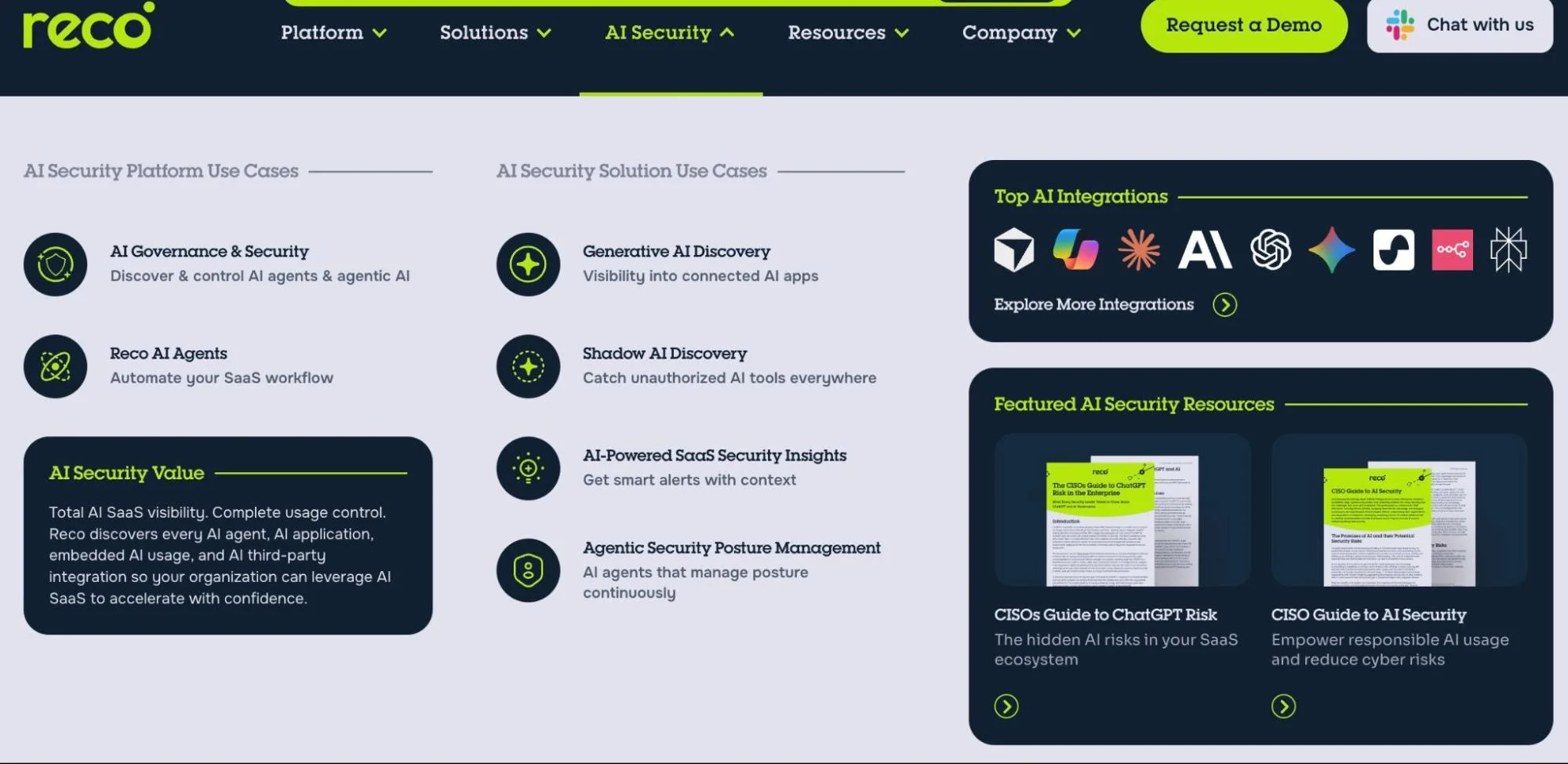
Reco AI provides SaaS security with AI governance capabilities: real-time oversight of AI tool usage, identity threat detection, and shadow AI visibility across the organization. Reco’s approach focuses on the user identity layer, tracking who’s accessing which AI tools and what data flows through them.
Organizations with shadow AI sprawl across SaaS applications is the governance gap that keeps the CISO reaching for the antacids. And they should start here.
Limitation: Reco complements compliance tools, it doesn’t replace them.
Model lifecycle governance
6. IBM watsonx.governance
IBM watsonx.governance is an enterprise AI lifecycle management that works across IBM and third-party platforms. Monitor, govern, and audit models and agents across OpenAI, AWS, Meta, and IBM ecosystems. The broadest integration scope of any AI model governance tools on the market, if you’re running models from five different providers, IBM watsonx.governance can see all of them.
Supports responsible AI governance workflows: bias detection, explainability, drift monitoring, and fairness analysis. Also covers AI governance policy enforcement at the model level. Enterprises running models from five different providers and needing a single governance layer should evaluate IBM first.
Limitation: The tradeoff is inevitable IBM-ecosystem gravity, and less depth on SaaS AI governance and cost.
7. Fiddler AI
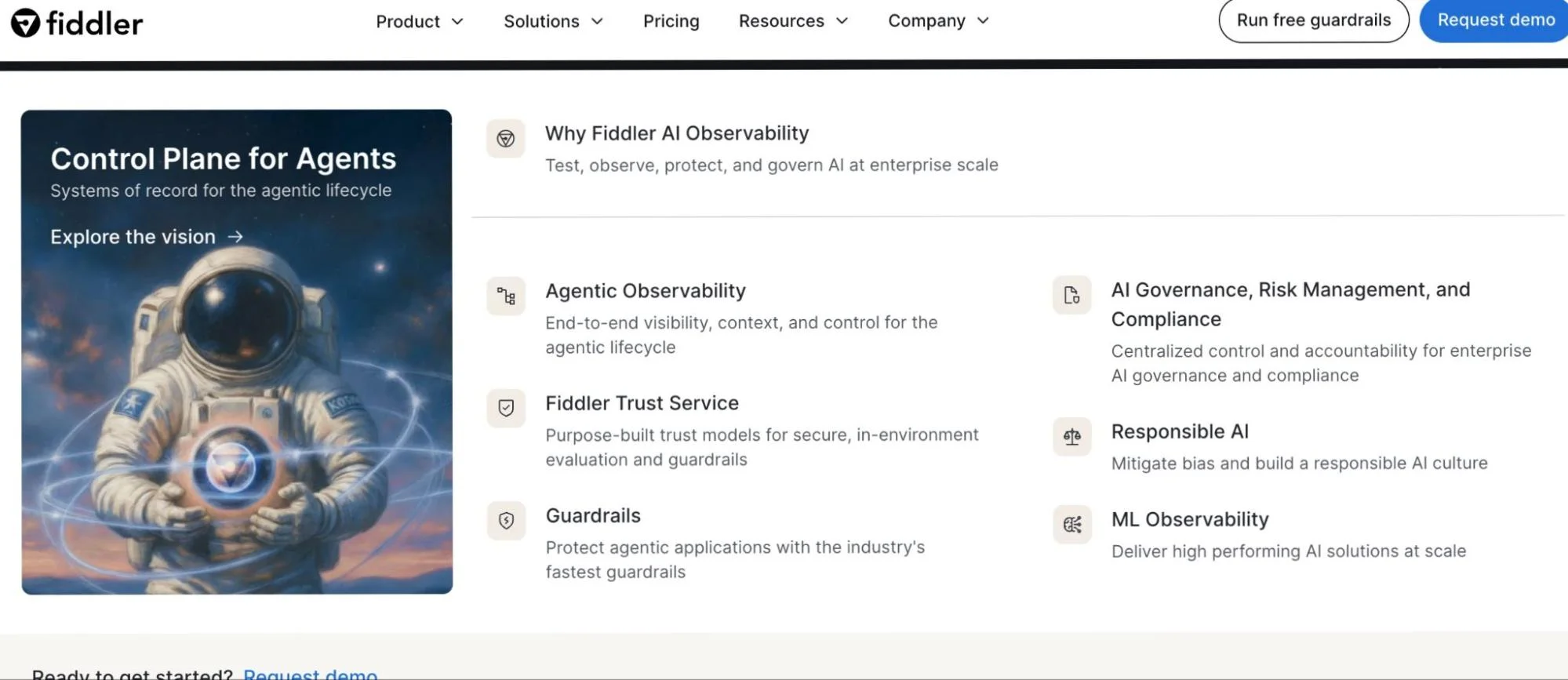
Fiddler AI provides ML monitoring, explainability, and governance at the model level; real-time bias detection, drift monitoring, and fairness analysis with deep technical depth.
Fiddler’s strength is the engineering depth of its model-level insights, not just “this model drifted” but “here’s why, here’s the impact, and here’s what to do about it.”
Data science and ML engineering teams that need model-level governance connecting AI ethics and governance requirements to technical implementation will find Fiddler’s depth unmatched.
Limitation: It doesn’t address SaaS AI governance, shadow AI, or cost, but for the teams building and monitoring models directly, that’s not what they’re looking for.
Financial and cost governance
8. CloudZero
The financial governance dimension, the pillar every other tool on this list skips. CloudZero tracks AI API costs across Anthropic, OpenAI, AWS, GCP, Azure and Oracle AI services, and embedded AI usage (Claude, Cursor, Copilot sessions), then allocates costs by team, project, feature, and customer through the CostFormation engine.
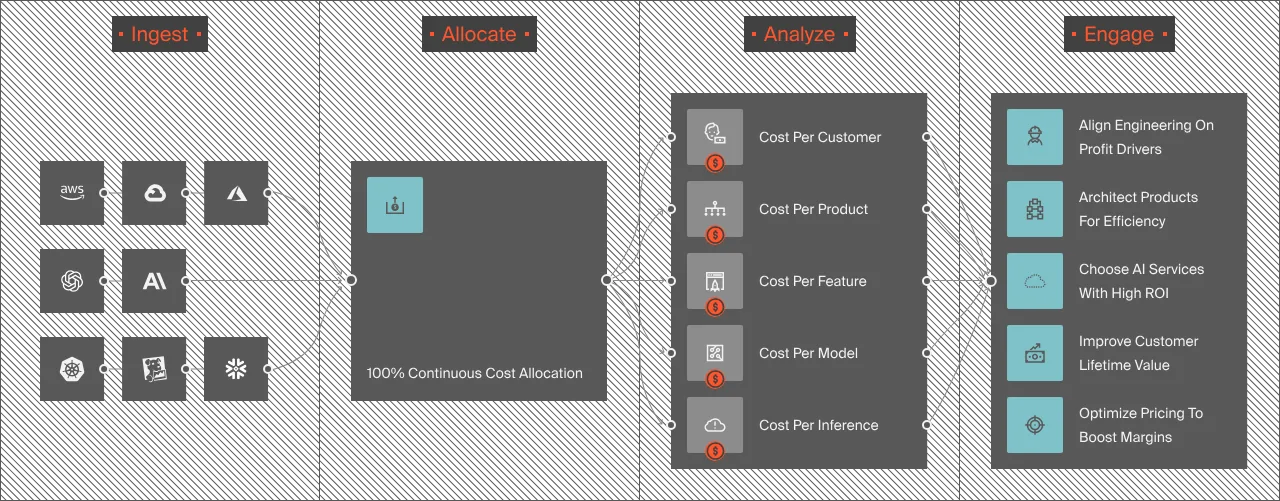
What makes CloudZero a governance tool and not just a cost dashboard: budget alerts that enforce spending limits before they’re exceeded. Anomaly detection that catches a department’s experimental agent burning through budget at 3 AM. Model-mix visibility that surfaces teams defaulting to expensive models when cheaper alternatives produce identical results. And cost governance that works without perfect tagging — critical for AI workloads where metadata is often incomplete.
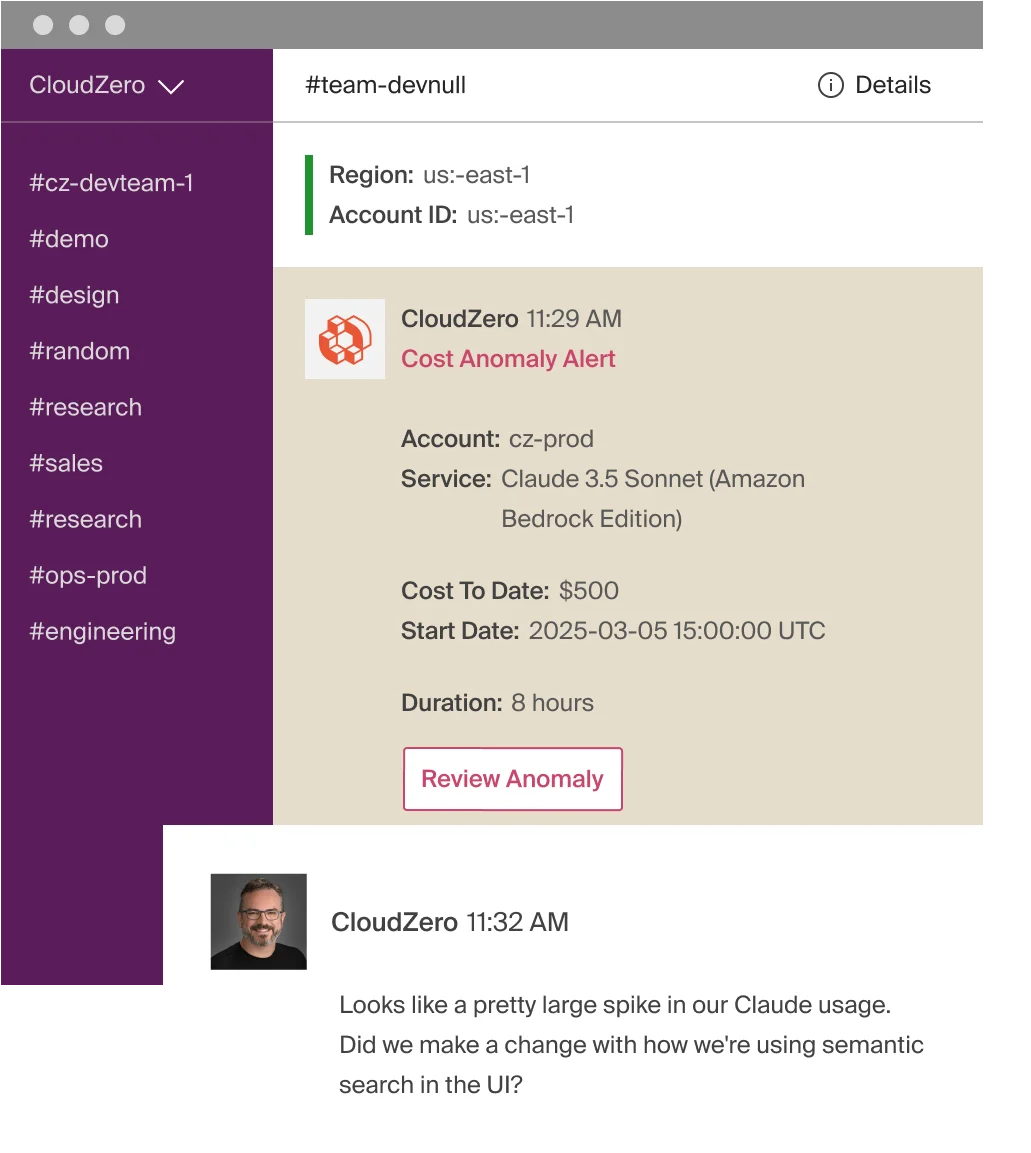
CloudZero’s FinOps in the AI Era 2026 report found the median Cloud Efficiency Rate collapsed from 80% to 65% even as FinOps maturity improved. Cost governance closes that gap.
Engineering and finance leaders who need to answer “what are our AI systems costing us, who’s driving the spend, and was it worth it?” are CloudZero’s primary audience.
Limitation: CloudZero covers financial governance. For compliance, ethics, or security, pair it with tools from the categories above.
Side-By-Side: What Each Tool Is Best For
|
Tool |
Compliance |
Security |
Model lifecycle |
Cost governance |
Best for |
|
Credo AI |
✅ |
— |
— |
— |
Regulated enterprises needing EU AI Act audit readiness |
|
OneTrust |
✅ |
— |
— |
— |
Organizations already using OneTrust for privacy/GRC |
|
Holistic AI |
✅ |
— |
— |
— |
Risk teams in financial services, healthcare, government |
|
Grip Security |
— |
✅ |
— |
— |
Shadow AI discovery and SaaS access control |
|
Reco AI |
— |
✅ |
— |
— |
SaaS AI visibility and identity-based governance |
|
IBM watsonx.gov |
Partial |
— |
✅ |
— |
Multi-provider model lifecycle governance |
|
Fiddler AI |
— |
— |
✅ |
— |
ML engineering teams needing model-level monitoring |
|
CloudZero |
— |
— |
— |
✅ |
AI cost allocation, budget enforcement, anomaly detection |
One thing: These tools are complementary, not competing. The strongest governance stack combines tools across multiple categories, because a compliance-approved, ethically-monitored, security-hardened AI system that costs 10x its budget is still a governance failure. Just a well-documented one.
Why Cost Is the Governance Pillar Everyone Skips
Compliance tools answer: “Is our AI legal?” Security tools answer: “Is our AI safe?” Cost governance answers: “Is our AI sustainable, and can we prove the investment was worth it?”
That last question is the one the board actually asks. And in most organizations, nobody can answer it with data.
The CFO can’t distinguish between “we spent $400K on AI” and “marketing spent $180K, engineering spent $150K, customer success spent $70K, and here’s what each department got for it.” Without that visibility, the governance committee is approving AI initiatives they can’t measure. That’s not governance. It’s faith.
Cost governance in practice means per-team AI spend visibility, budget guardrails that alert before overspend instead of after, several in use model optimization, and anomaly detection that catches unauthorized or runaway AI usage through spend patterns, the same patterns that security teams look for through access logs.
Over time, AI governance regulations will require cost tracking. Regulators already ask “what safeguards do you have?” The next question is “what did those safeguards cost, and what did the AI they govern produce?” Organizations with cost governance in place will answer that question with data. Organizations without it will answer with a spreadsheet they built the night before the audit.
For the broader cloud governance and cloud cost governance context, CloudZero’s guides cover the adjacent categories.
 to add cost governance to your AI oversight stack.
Frequently Asked Questions About AI Governance Tools