If you’ve already worked through cloud cost optimization strategies, the fundamentals aren’t new. CloudZero’s State of Cloud Cost report shows that cloud cost optimization is now a priority for most organizations.
We’ve also covered these foundations in depth, including how cloud cost optimization works in practice and how FinOps teams approach cost accountability.
What’s less discussed is what happens next.
Cloud environments don’t stand still. Architectures change. Teams reorganize. New services launch. Optimization gains achieved through one-time efforts often fade as ownership shifts and priorities move on.
This explains why businesses turn to cloud cost optimization services: not to replace tools or strategies, but to sustain cloud cost optimization as an ongoing operating model. Services provide ongoing expertise, governance support, and cross-team coordination that adapts as cloud usage evolves.
Rather than focusing on how to optimize cloud costs, this article explains how cloud cost optimization services help organizations sustain optimization as a long-term operating capability.
Why Cloud Cost Optimization Fails Without An Ongoing Operating Model
Cloud cost optimization is often treated as a phase. A project. A sprint with a beginning and an end.
Teams review spend, make adjustments, and move on. Once the immediate pressure eases, attention shifts back to delivery, growth, and new initiatives. Optimization becomes something to revisit later, rather than an ongoing responsibility embedded in the organization’s operations.
This approach works in static environments. But cloud environments are dynamic.
As usage grows, new teams are added, services expand, and priorities change. Optimization decisions made at one point in time lose relevance as the business evolves. Without a defined operating model to continuously revisit, reassess, and reapply optimization, earlier decisions quietly expire.
The pattern is consistent across organizations. Optimization succeeds when it’s treated as ongoing work with clear ownership. It fades when it’s handled as a temporary effort, regardless of how effective the initial changes were.
So the real question isn’t whether organizations know how to optimize cloud costs.
It’s whether they’ve built a way to sustain optimization.
Report
Finance needs to prove AI’s return: CloudZero report
260 senior finance leaders (more than half CFOs) told us why the speed of seeing AI spend, not the size of it, separates who pulls ahead on AI from who gets burned.
What Are Cloud Cost Optimization Services?
Cloud cost optimization services support day-to-day cloud cost optimization operations by maintaining ownership, accountability, and follow-through as usage evolves. They sit alongside engineering, finance, and FinOps teams to help maintain ownership and follow-through as cloud usage evolves.
Rather than introducing new optimization strategies, these services reinforce existing decisions. They provide structure for reviews, accountability, and decision-making, so optimization remains part of normal operations rather than an occasional initiative.
Think of cloud cost optimization services as operational support, not execution.
A cloud cost optimization tool can function as a service when paired with people, processes, and accountability. On its own, a tool provides visibility; it becomes service-like only when someone turns insights into repeatable action.
A cloud cost optimization tool can function as a service when paired with people, processes, and accountability. On its own, a tool provides visibility; it becomes service-like only when someone turns insights into repeatable action.
Related reads:
How Cloud Cost Optimization Services Support Engineering, Finance, And Leadership
Here is the thing. Cloud cost optimization services don’t change what teams are responsible for. They change how those responsibilities are supported as cloud usage grows and decisions multiply.
Engineering and DevOps teams
For engineering teams, optimization services provide context without friction. Cost signals are reviewed alongside architecture and deployment decisions, so engineers can adjust before issues escalate. This reduces surprise cost spikes without slowing delivery or forcing engineers into finance workflows.
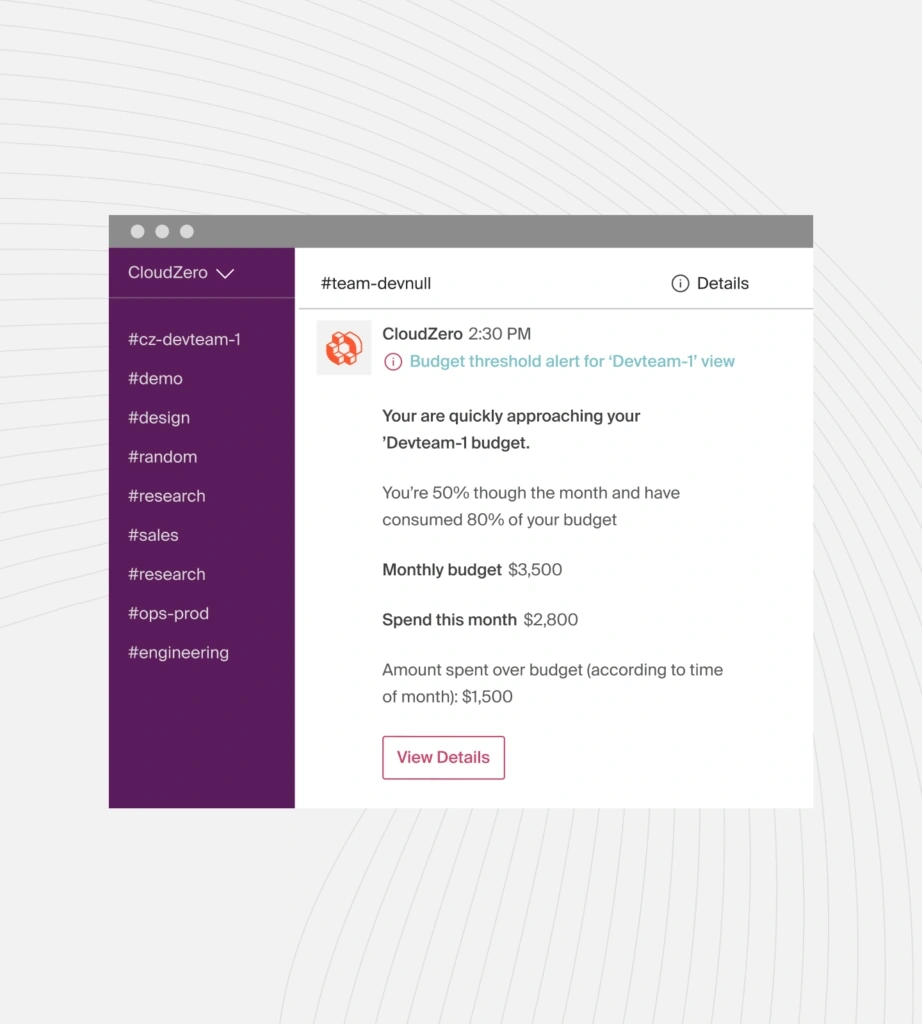
With CloudZero, engineers can see how their changes influence cloud costs shortly after deployment.
Finance teams
Finance teams benefit from more stable forecasts and clearer explanations when spend changes. Instead of reconciling unexpected variance after the fact, optimization services help finance understand why costs moved and if those changes align with business activity. That clarity reduces last-minute reviews and recurring fire drills.
C-Suite teams
At the executive level, services support confidence in cloud spend decisions. Leaders gain visibility into tradeoffs between cost, performance, and growth, rather than reacting to raw spend totals. This makes cloud investment discussions more deliberate and easier to tie back to business priorities.
Useful resources:
Security teams
Security teams often default to overprovisioning to reduce risk. Optimization services help balance that instinct with cost awareness, so security decisions account for financial impact without compromising protection. The result is tighter alignment between risk posture and actual usage.
FinOps teams
For FinOps teams, optimization services act as force multipliers. They extend influence beyond reporting by supporting regular decision cycles across engineering, finance, and leadership. This allows FinOps to guide behavior at scale instead of chasing explanations after costs rise.
See more:
Types of Cloud Cost Optimization Services Organizations Use
Here are the most common cloud cost optimization services:
Optimization assessments and benchmarking
These services are normally the entry point. Organizations use them to establish a baseline when cloud costs rise faster than expected or when internal teams lack a clear view of where inefficiencies exist.
The value isn’t the recommendations themselves. It’s creating shared understanding across engineering, finance, and leadership of what actually drives spend today and where intervention will have the greatest impact.
Ongoing optimization advisory
As a business scales, one-time guidance is no longer enough. Advisory services step in to support recurring decisions as usage patterns shift.
Businesses rely on this support to regularly revisit assumptions, interpret cost movements in context, and adjust plans before inefficiencies compound. The focus here is continuity, not corrective action.
FinOps-as-a-Service
FinOps-as-a-Service emerges when accountability exists in theory but not in execution. Engineering and finance may agree on shared ownership, yet lack the time or structure to sustain it consistently.
These services help operationalize budgeting, forecasting, reporting, and decision workflows across teams, enabling FinOps practices to scale without becoming a bottleneck or a side project.
Read more on: FinOps As A Service for cloud cost optimization and financial accountability
Managed governance and budget oversight
As cloud usage accelerates, informal controls break down. Managed governance services introduce clarity around ownership, limits, and exception handling before spend becomes reactive.
Organizations adopt this support when growth outpaces existing financial processes and cost decisions need guardrails that balance speed with accountability.
Continuous monitoring and investigation support
Cost surprises don’t come from a lack of data. They come from lack of timely explanation. These services help teams understand what changed, where it happened, and why, while decisions are still open for influence.
Instead of post-mortems after monthly overruns, organizations use this support to shorten investigation cycles and reduce repeated fire drills.
Read more:
Unit economics and cost modeling services
At higher maturity, organizations move beyond managing spend as a single total. Unit economics services translate cloud costs into business-level metrics such as cost per customer, feature, product, or team.
This shift allows leaders to integrate infrastructure decisions into pricing, margin, and growth strategy.
And here is the reality: most organizations do not adopt all of these services at once. They layer them over time as the business scales and financial accountability becomes more critical.
This progression is what separates cloud cost optimization as a set of strategies from cloud cost optimization as an operating capability.
And here is right where the need for a platform that can deliver it all comes in.
How CloudZero Supports Cloud Cost Optimization as an Operating Model
CloudZero is not just a visibility tool. It’s a cloud cost intelligence platform with features that support ongoing optimization across teams and services.
CloudZero automatically ingests and organizes cloud, AI, PaaS, and SaaS billing data from multiple sources. It allocates 100% of costs, even when tagging is incomplete, so teams have a full view of spend with no manual effort.
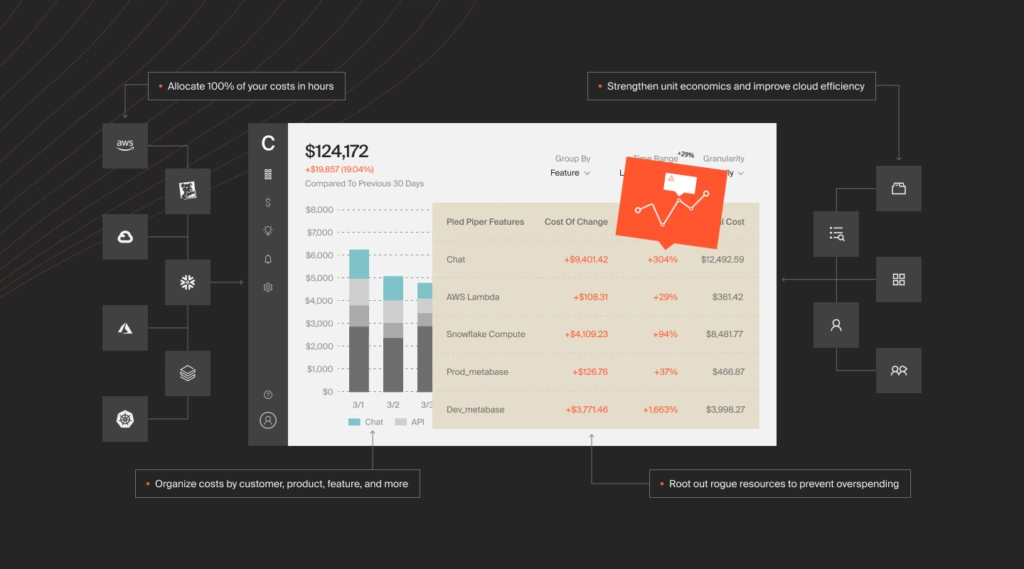
And instead of generic spend totals, CloudZero tracks costs in business terms, such as cost per customer, product, feature, team, etc. This helps turn cloud spend into meaningful unit economics that support pricing, margin, and product decisions.
Read how CloudZero helps companies build profitable pricing tiers.
CloudZero also supports continuous optimization by surfacing unusual cost changes as soon as they occur. Alerts flag unexpected shifts and point teams to the area responsible, reducing time spent hunting for answers after the fact.
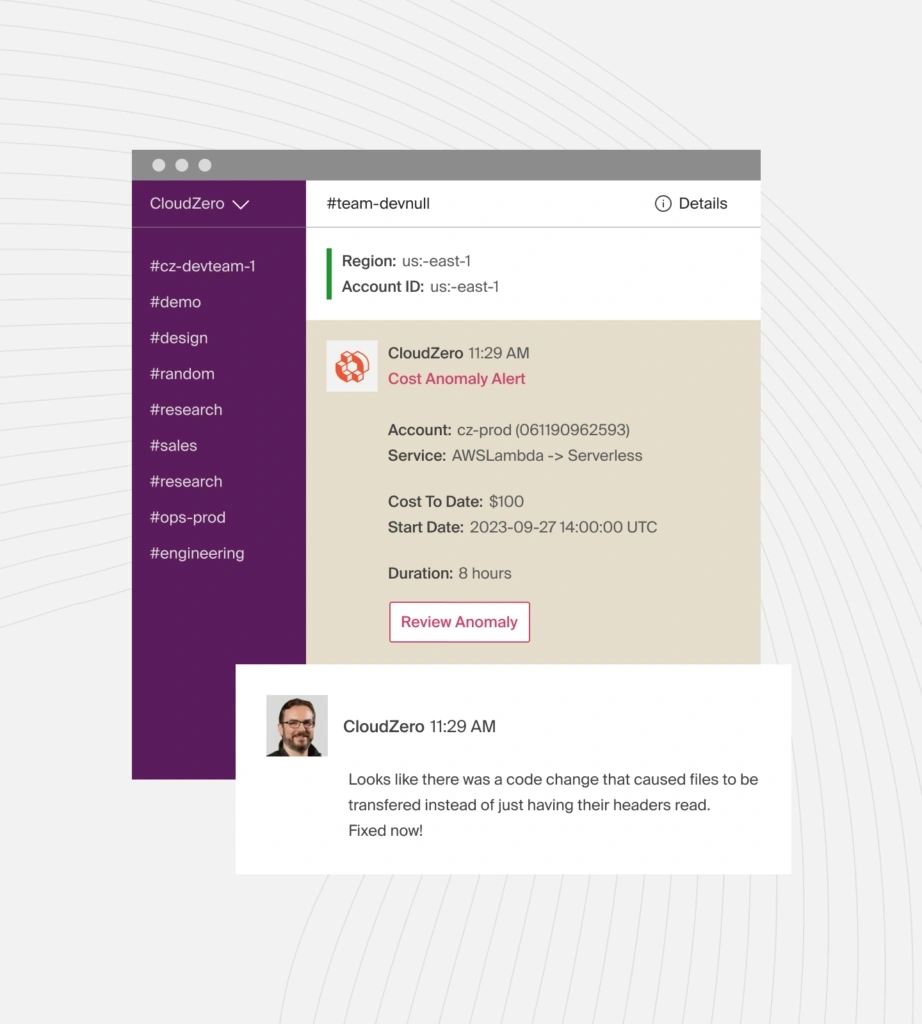
Still have questions about cloud cost optimization services? Read our frequently asked questions below.
Frequently Asked Questions about Cloud Cost Optimization Services