The AI landscape today feels a lot like the early days of the cloud: exciting, fast-moving, and completely fragmented.
Every week, engineering teams are experimenting with dozens of large language models (LLMs) from providers like OpenAI, Anthropic, Google, Mistral, Meta, and beyond. They’re tweaking prompts, testing model performance, swapping context windows, and even running multiple models in parallel to figure out which one works best for each unique use case.
This experimentation is necessary for innovation, but it also creates massive, fast-changing cost problems:
- Multiple teams sign up for different models with different pricing structures.
- Billing is scattered across separate APIs, invoices, and dashboards.
- Finance gets hit with a sprawl of AI spend they don’t understand and can’t predict.
- Engineering can’t see which workflows are worth the investment and which are quickly bleeding money.
It’s shadow IT on steroids, except instead of someone spinning up rogue single license on-prem tools, you now have uncontrolled access to high-cost, variable-priced infrastructure.
The result? Absolute chaos for FinOps, finance, and leadership alike. Nobody has a complete picture, and every conversation about AI ROI turns into a guessing game.
Bringing Order To The Chaos
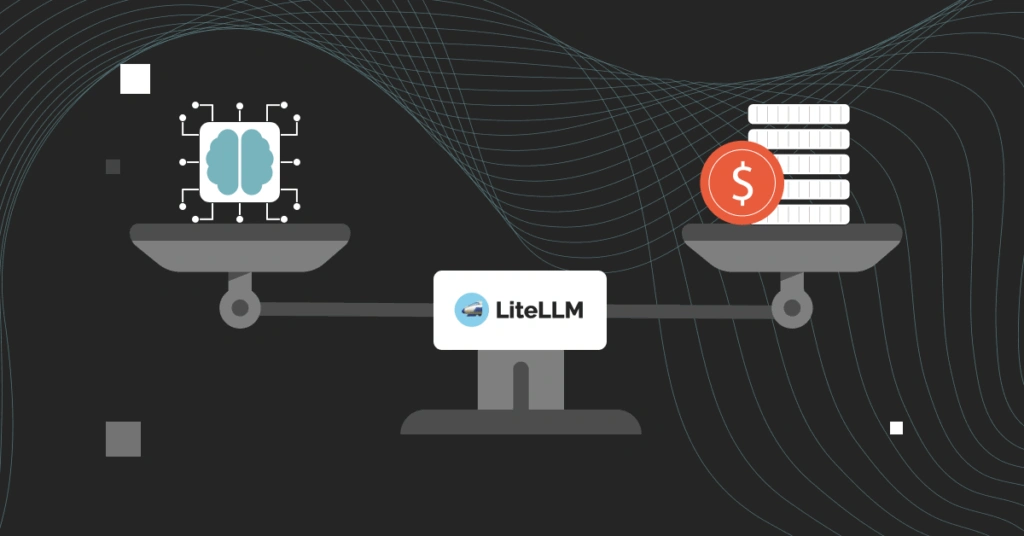
That’s why we’re excited to announce CloudZero’s new integration with LiteLLM.
If you haven’t used LiteLLM yet, here’s why it matters. LiteLLM is an open-source gateway that acts as a universal interface for more than 70 AI providers and hundreds of unique LLMs. It solves a critical problem for developers: instead of building unique integrations for every single model and provider, teams can connect once to LiteLLM and instantly gain:
- Unified access to multiple models through a single API format
- Virtual keys and fine-grained access controls.
- Rate limits and budget alerts to prevent runaway costs.
- Logging and observability hooks to track token usage, latency, and model performance.
Essentially, LiteLLM brings order to the engineering side of LLM chaos, giving teams the tools to innovate without endlessly reinventing the wheel. But while LiteLLM helps engineering manage LLM connections and usage, there’s still a huge gap: How do you tie all that usage back to business value and financial accountability?
That’s where CloudZero comes in.
With this integration, FinOps teams can now ingest, normalize, and analyze LiteLLM spend and usage directly in CloudZero, alongside all their other cloud, PaaS, and SaaS costs, allowing FinOps, finance, and engineering to have a single source of truth, bring real accountability to their R&D teams’ AI spend, and actually connect that spend to actual business value.
2026 State of AI Spend Report
Why Finance Caps What It Can’t See
Learn how finance leaders are managing AI spend, and how they’re approaching FY2027
Turning Raw LiteLLM Data Into Strategic Business Insights
With CloudZero, LiteLLM spend and usage data doesn’t live in a silo. Instead, it flows directly into the same dashboards, reports, and alerts you already use to track AWS, GCP, Kubernetes, Snowflake, and other spend. LiteLLM automatically transforms raw token usage into CloudZero Billing Format (CBF) before sending it to CloudZero, so FinOps teams receive clean, structured records instead of raw logs. Here’s what that means in practice:
- A Unified View of All Cloud And AI Spend: AI costs are a major priority for many teams right now, due to its newness and high variability. But to get the most out of AI spend data, teams need to view it within the context of the rest of their infrastructure costs so they can stop jumping between consoles and finally get the complete picture in one place.
- Anomaly Detection and Proactive Guardrails: CloudZero’s anomaly detection helps to surface cost spikes before they blow up your bill and run into budget limits earlier than expected. When a spike is detected, engineers are alerted in Slack immediately. Then, the hourly granularity provided in CloudZero helps them understand precisely what caused the spike and make the necessary changes to get it under control in a matter of minutes rather than days.
- Unit Economics That Actually Make Sense: LiteLLM logs token usage across models, teams, and virtual keys. CloudZero can take that raw, engineering-centric data and transform it into clear, actionable metrics that finance and business leaders can understand, such as cost per model family or provider, cost per feature, or cost per business unit.
See It For Yourself
AI innovation moves fast. Without a clear view of costs, it’s easy for engineering creativity to outpace financial oversight.
By integrating with LiteLLM, CloudZero helps FinOps and engineering teams stay in control, turning fragmented LLM experimentation into a cohesive, measurable, and financially responsible strategy.
Want to see it in action? Schedule a demo now and discover how to drive smarter, cost-balanced AI innovation.