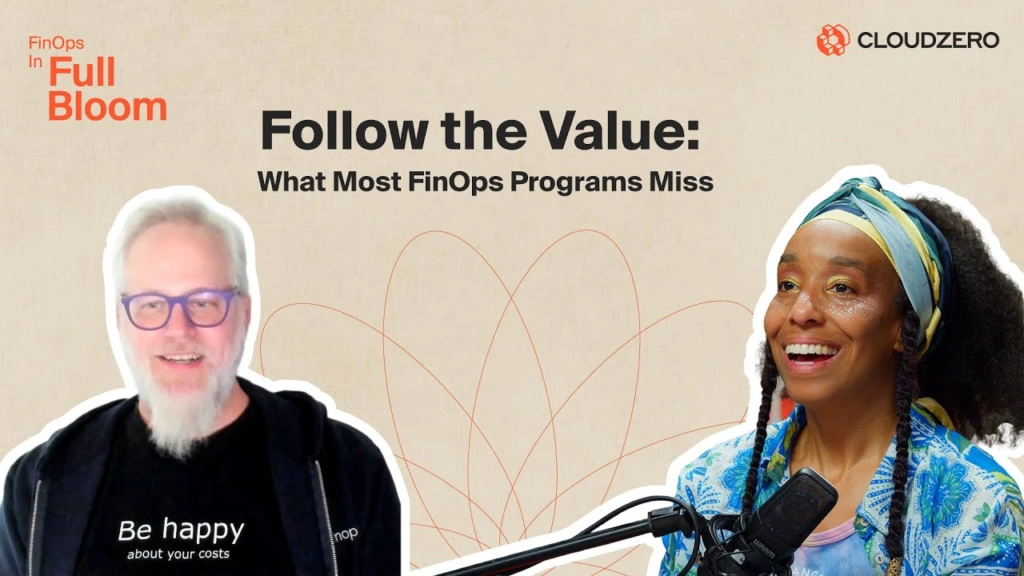
When Erik Norman joined host Thalia Elie on FinOps In Full Bloom, he didn’t hold back. The Caligo founder and FinOps veteran kicked things off with a bold statement: “I don’t believe in cost optimization.”
What followed was a clear-eyed dismantling of shallow FinOps tactics — and a compelling case for deeper thinking, better communication, and business-first engineering.
Here are the top takeaways from their conversation:
1. Context Is King: Why Cost Optimization Alone Falls Flat
Erik doesn’t reject the idea of cost optimization — he rejects how it’s usually applied. “If your goal is simply to cut costs, shut everything down. Problem solved,” he jokes.
But true optimization requires constraints: performance, reliability, availability, and business value.
“Only then cost optimization exists,” he clarifies. Without clear context, cost optimization is just cost-cutting — and that often leads to degraded services or lost revenue.
Erik’s framing echoes a growing FinOps principle: cost without value is meaningless. You have to define what success looks like before you start optimizing anything.
Related read: FinOps Is The Margin Lever SaaS CEOs Keep Ignoring

2. Tagging Isn’t A Strategy — It’s a Hygiene Practice
Erik stirred up more FinOps controversy when he declared, “I don’t believe in tagging strategies.”
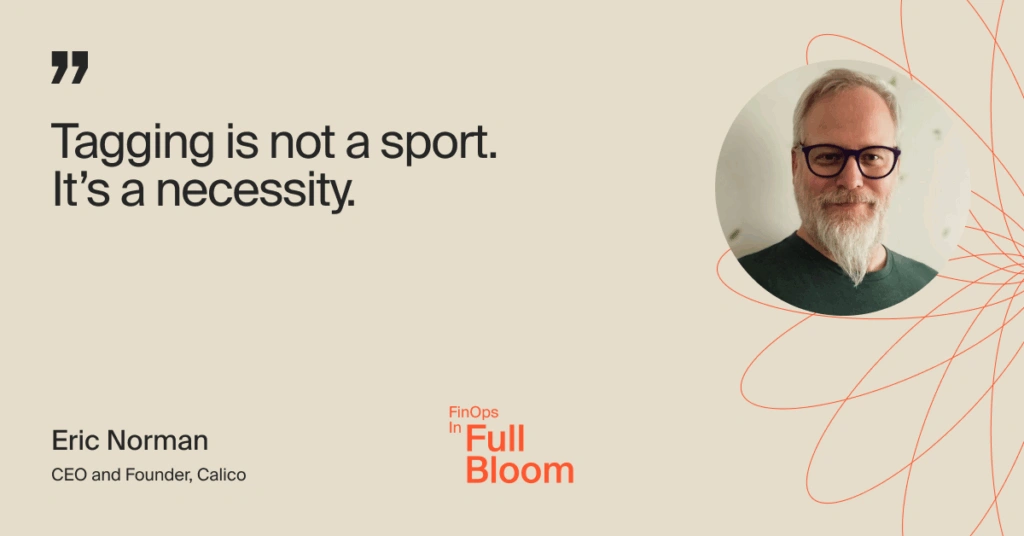
But he’s not anti-tagging — he’s anti-empty process. “Tagging is not a sport,” he says. “It’s a necessity.”
His approach? Don’t overthink it. Bake tags into infrastructure-as-code. Use naming conventions where possible. Tagging supports transparency and cost allocation — but it’s not the point in itself. It’s about scaffolding, not strategy.
This simplicity aligns with how high-performing FinOps teams treat tagging. As much as some would like to approach it differently, it’s not a hero project. Rather, it’s a quiet foundation for better decision-making.
3. Follow the Value — Not the Spend
One of the most memorable moments came when Erik recounted a transformation story: a backend cloud workload that ballooned to 1,000 times its projected cost. Engineers had followed all the rules — best practices, architecture frameworks, cloud design checklists — and still failed.
Why? Because no one asked the right questions. “I asked: what is the business value behind every specification?” he recalls.
The real issue was upstream. An on-prem desktop app was hammering the cloud backend with millions of unnecessary requests. The solution? Replace polling with push notifications. One afternoon of rework led to a 98.4% cost reduction.
The fix wasn’t about cloud efficiency. It was about understanding how value (or waste) flows across systems.
4. FinOps Starts With People — Not Tools
Asked what tools he used to uncover the problem, Erik laughed. “My brain. And Outlook.” No advanced platforms, no dashboards — just asking questions across silos.
The real barrier wasn’t technical. It was cultural. Teams weren’t talking. Product didn’t document requirements. Engineers followed assumptions. And everyone stayed in their swim lanes, proud of what they’d built.
FinOps, in Erik’s world, is a cultural practice that challenges all of that. It’s about curiosity, humility, and shared ownership of outcomes — not just spend.
Related read: Cultural ROI In FinOps: People Drive Pivots
5. Modernization Without Communication Is Just Noise
Erik draws a sharp line between tech progress and tech theatre. You can’t “bolt on” AI or cloud-native services to a 30-year-old monolith and expect it to work. Legacy tools need legacy mindsets to evolve, too.
“Many product managers say, ‘We don’t know the cloud, and we don’t want to know it.’ And they’re proud of that,” Erik says.
But that pride becomes expensive. It leads to redundant work, fragile integrations, and zero collaboration.
Like Accenture CEO Julie Sweet said in another podcast, transformation fails without cross-functional conversation. Erik just lives it daily.
6. Leadership Means Letting Others Be Right
As a CEO, Erik doesn’t dictate solutions — he listens for better ones.
“If the only reason you’re right is because you’re the boss, you’re right for the wrong reason,” he says.
That mindset defines how he leads teams. He encourages autonomy. He lets engineers own their work. And when he’s proven wrong, he celebrates — because it means the team is thinking for itself.
This is FinOps maturity in action: aligning decision-making across roles, encouraging experimentation, and using data (not ego) to guide choices.
7. FinOps Advice For Disruptors (And Their Managers)
Erik doesn’t just lead — he mentors. One of his mentees, brand new to FinOps, joined a large org and was quickly ignored. Respect didn’t come right away. By shifting from giving directions to offering support, the dynamic with the engineers changed and real collaboration began.
That shift built trust. Engineers opened up. Cost wins followed. Word spread. Influence grew. But after a year of outperforming peers, the mentee was let go — their success had stepped on the wrong toes.
“FinOps can be disruptive,” Erik notes. “But if your only power is being right, it’s not enough.”
The Metric That Matters: WTFs Per Minute
Erik measures his day in WTFs per minute. It’s a cheeky but insightful metric — a barometer of how many unexpected, preventable failures show up in daily work. When FinOps is missing, that number climbs.
But with the right conversations, those moments turn into breakthroughs.


The Cloud Cost Playbook
The step-by-step guide to cost maturity