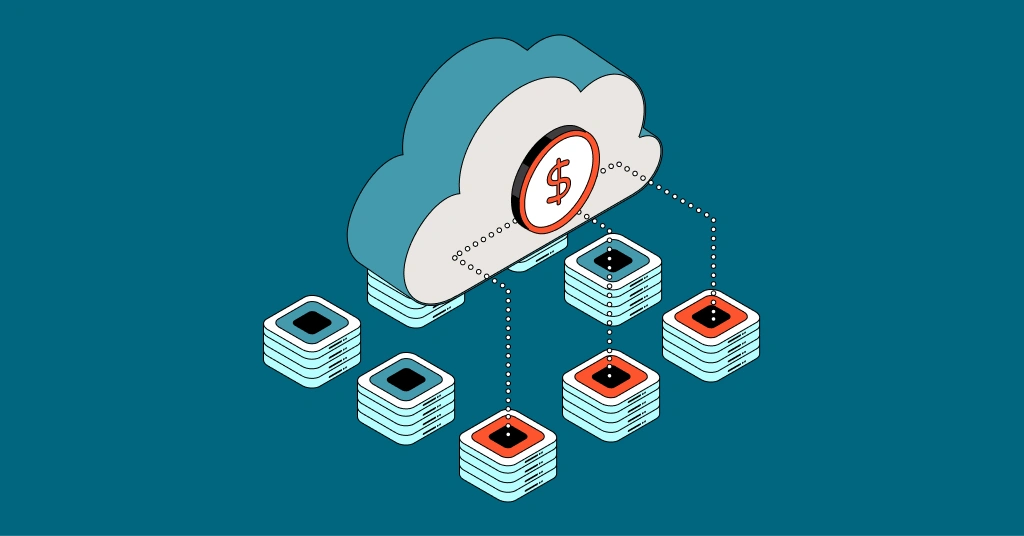
This glossary is a bookmarkable reference for cost-per-unit metrics in unit economics. It’s designed for engineering, finance, and other teams that need a shared language for understanding how cloud costs behave as usage, customers, and products scale. The terms are organized by category and include real-world context.
1. Customer And Revenue Unit Costs
Customer and revenue unit costs connect cloud spend directly to who generates value in a business. These metrics help teams understand profitability, SaaS pricing efficiency, and customer-level margins.
Cost per customer
Cost per Customer refers to the total cost of cloud resources required to serve a specific customer over a given period.
What it reveals: Whether that customer contract is profitable relative to usage, or if you need to revise your pricing and terms to protect margins. Learn More >>
Cost per customer segment
The average cost required to serve customers within a specific segment, such as SMB, mid-market, or enterprise.
What it reveals: Which customer segments scale efficiently and which consume resources disproportionate to the revenue or margin they generate. Learn More >>
Cost per tenant
Cost per Tenant refers to the total cloud and related infrastructure cost associated with operating a single tenant in a multi-tenant architecture.
What it reveals: Inefficient tenants, noisy neighbors, and tenant-level margin risk. Learn More >>
Cost per user
This refers to the average cloud cost to support a single registered user.
What it reveals: How baseline costs change as your user base grows, especially in freemium or low-usage accounts.
Cost per active user (DAU/WAU/MAU)
Cost per Active User is the cost of cloud and related infrastructure that is associated with users who actively engage with your product over a defined time window.
What it reveals: How real usage, not just signups, drives your cost. Learn More >>
Cost per account
Cost per account refers to the total cloud cost of supporting a single customer account, which may include multiple users, environments, or integrations.
What it reveals: Account-level profitability beyond contract or ARR value. Learn More >>
Cost per dollar of revenue
Cost per dollar of revenue represents the amount of cloud and related infrastructure spend required to generate one dollar of revenue.
What it reveals: Your overall gross margin efficiency and operational leverage.
Cost per subscription tier
Cost per subscription tier describes the average cloud and infrastructure cost you incur to support customers on a specific pricing or subscription tier.
What it reveals: Whether your pricing tiers are aligned with the cost to serve them.
Report
Finance needs to prove AI’s return: CloudZero report
260 senior finance leaders (more than half CFOs) told us why the speed of seeing AI spend, not the size of it, separates who pulls ahead on AI from who gets burned.
2. Application And Service Unit Costs
These unit costs show how cloud spend maps to the services, features, and product components your customers actually use. They help teams understand which parts of an application drive cost and whether that cost aligns with value.
Cost per service
Cost per service refers to the cost of running a specific application or backend service from start to finish.
What it reveals: Which services drive the most cost, and where optimization or architectural changes may have the greatest impact.
Cost per microservice
Cost per microservice is the cost associated with running an individual microservice.
What it reveals: Cost hotspots in distributed architectures and services that scale inefficiently. Learn More >>
Cost per workload
This refers to the total cost of cloud resources you spend to run a defined workload, such as a full batch job, data pipeline, or background process.
What it reveals: How specific workloads contribute to your cloud costs across environments and time.
Cost per environment
Cost per environment captures the total cost of a specific environment, such as production, staging, or development.
What it reveals: Allocation across cloud environments, enabling you to identify inefficiencies and calculate precise unit economics in a particular environment.
Cost per feature
The cost per feature describes the overall cost of delivering and maintaining a given product feature.
What it reveals: Whether a feature is economically viable based on the value it returns, and when to refactor, reprice, or retire it to protect your margins. Learn More >>
Cost per product line
Cost per product line is the total cost to serve a specific product or offering within a broader portfolio.
What it reveals: Product-level cost-to-value alignment and where your pricing, packaging, or go-to-market assumptions may be misaligned with underlying costs.
Cost per deployment
Cost per deployment refers to the cumulative costs incurred during a single deployment event.
What it reveals: The operational cost impact of each release, release frequency, and deployment practices. Learn More >>
Cost per release
Cost per release, on the other hand, refers to the total cloud and infrastructure costs associated with releasing a new version of an application or service.
What it reveals: Whether your release processes scale efficiently as your delivery velocity increases.
Cost per integration
Cost per integration is the total cost incurred to support a specific third-party or internal integration.
What it reveals: Integrations that introduce hidden costs or ongoing operational drag.
3. Usage And Request Unit Costs
The unit costs under this category measure how your cloud spend scales with activity. These are especially important for API-driven, usage-based, and event-driven systems where cost grows with demand.
Cost per request
Cost per request represents the cost incurred to process a single request.
What it reveals: How efficiently the system handles traffic as request volume increases.
Cost per API call
Cost per API call describes the cost of executing a single API invocation.
What it reveals: Which APIs drive the most cost, and how your usage patterns affect margins.
Cost per transaction
Cost per transaction refers to the cost to complete a single business or system transaction.
What it reveals: The marginal cost of your core product actions and how they scale with volume.
Cost per session
Cost per session captures the cost of supporting a single user session from start to finish.
What it reveals: How session length, behavior, and engagement patterns influence your overall costs.
Cost per minute of usage
The cost per minute of usage reflects the cost incurred for each minute your product or service is actively used.
What it reveals: How time-based usage contributes to your overall spend, especially in consumption-based models.
Cost per job
Your cost per job indicates the cumulative costs of executing a single job, such as a batch process or background task.
What it reveals: Which jobs are cost-intensive and where scheduling or optimization can reduce spend.
Cost per run
The cost per run is how much you spend on a single execution of a workflow, job, or process.
What it reveals: How execution frequency impacts overall spend.
Cost per workflow
Cost per workflow refers to how much you spend on executing an end-to-end workflow across multiple steps or services.
What it reveals: Which workflows are cost-intensive and where optimization will have the greatest impact, and how your workflows accumulate costs across systems and services.
4. Compute, Container, And Infrastructure Unit Costs
These unit costs focus on how efficiently your underlying resources are provisioned and consumed over a given time.
Cost per VM/instance
Cost per VM or instance describes the cost of running a single virtual machine or compute instance over a defined period.
What it reveals: Whether your compute resources are right-sized and scaled efficiently. Learn More >>
Cost per container
Cost per container indicates your cost to run an individual containerized workload.
What it reveals: How efficiently your containerized applications consume shared infrastructure. Learn More >>
Cost per pod
The cost per pod captures the total cost associated with running a single pod in a container orchestration environment.
What it reveals: Pod-level cost concentration and opportunities to optimize scheduling and resource requests. Learn More >>
Cost per node
The cost per node metric reflects the total cost of operating a single node within a cluster for a given period.
What it reveals: Whether you are utilizing node capacity effectively across workloads. Learn More >>
Cost per compute hour
Cost per compute hour represents the cost you incur for each hour of active compute usage.
What it reveals: The relationship between your runtime duration and infrastructure spending. Learn More >>
Cost per autoscaling event
The cost per autoscaling event measures the cost impact of a single scaling action, such as adding or removing capacity.
What it reveals: How scaling behavior contributes to your cost volatility and baseline spend. Learn More >>
5. Data, Storage, And Network Unit Costs
These unit cost metrics explain how cloud spend grows as data is stored, moved, queried, and protected.
Cost per GB stored
Cost per GB stored captures the cost of storing one gigabyte of data over a defined period.
What it reveals: How your growing storage needs affect long-term cloud spend and where you can use data lifecycle policies to reduce cost.
Cost per GB transferred
The cost per GB transferred refers to the cost you incur to move one gigabyte of data across networks, regions, or services.
What it reveals: How moving, replicating, and egressing data contribute to your overall cloud costs.
Cost per dataset
Cost per dataset surfaces the total cost of storing, maintaining, and accessing a specific dataset.
What it reveals: Which specific datasets generate the most cost relative to their business value, so you can optimize them.
Cost per query
Cost per query reflects the cost incurred to execute a single database or analytics query.
What it reveals: How your query patterns, frequency, and complexity influence your total data processing costs.
Cost per table or schema
The cost per table or schema indicates the cost associated with storing and operating a specific database table or schema.
What it reveals: The structural sources of your data costs, and opportunities for schema or optimizing your indexing.
Cost per backup
The cost per backup captures the cost you incur to create, store, and retain a single backup.
What it reveals: Whether your backup frequency, retention policies, or storage tiers align with risk and compliance needs.
6. CI/CD, Engineering, And Platform Unit Costs
These unit cost metrics connect software delivery activity to real, ongoing cloud costs. They also surface opportunities for Engineering-Led Optimization.
Cost per build
Cost per build represents the cost incurred each time a build is executed in a CI system, including its compute, storage, and supporting services.
What it reveals: Whether your build pipelines are efficient or generating unnecessary costs. Learn More >>
Cost per test suite
The cost per test suite surfaces the total cost to execute a complete set of automated tests. It captures how test scope, parallelization, and runtime contribute to overall CI costs.
What it reveals: The cost impact of testing strategies as your codebase and team scale.
Cost per pipeline run
Cost per pipeline run captures the total cost of executing an end-to-end CI/CD pipeline from build through deployment. It reflects the combined cost of all the stages involved in delivering a change.
What it reveals: How a delivery workflow scales financially as your release frequency increases.
Cost per developer seat
Cost per developer seat represents the average infrastructure and platform cost required to support a single engineer. This spans shared tooling, environments, and services used during development.
What it reveals: The baseline cost of engineering productivity and how it scales with team size.
Cost per team
Cost per team refers to the cloud and platform cost associated with supporting a specific engineering or product team. It comes from aggregating the resources consumed by that team’s services, pipelines, and environments.
What it reveals: How efficient a team is compared to other similar ones, delivery responsibilities, and improvements in cost optimization without degrading delivery quality. Learn More >>
Cost per ticket
Cost per ticket or story refers to the average cost to deliver a single unit of planned work, such as a backlog item or user story. It connects your delivery effort and infrastructure usage to output.
What it reveals: The true cost of shipping work and how process efficiency affects spend.
7. AI/ML Unit Costs
AI and ML unit costs focus on the economics of building, running, and scaling machine learning and AI-driven systems.
Cost per inference
Cost per inference is the cost incurred each time a model generates a prediction or response. It reflects how your model choice, input size, and runtime behavior affect the marginal cost of serving AI-powered features.
What it reveals: Whether an AI-driven functionality is scaling profitably as your usage increases. Learn More >>
Cost per training run
Cost per training run describes the cost of training or retraining an AI model on a given dataset. The metric captures how your compute intensity, training duration, and experimentation frequency contribute to your overall AI spend.
What it reveals: The financial impact of your model iteration and experimentation velocity.
Cost per model version
Cost per model version shows the cost of developing, deploying, and maintaining a specific version of a model. That cost includes the ongoing infrastructure required to support multiple versions in parallel.
What it reveals: Whether maintaining multiple model versions delivers enough value to justify their operational costs. Learn More >>
Cost per feature store lookup
The cost per feature store lookup captures the cost you incur each time a feature is retrieved from a feature store for training or inference. In other words, it reflects how feature access patterns and data volume affect infrastructure costs associated with AI.
What it reveals: How frequently accessed features contribute to ongoing AI costs and where optimization may be needed.