If you’re running a SaaS business today, you’ve probably noticed the alarms never really stop.
Logs. Alerts. Tickets. They pile up faster than many teams can triage them. Add multiple clouds, microservices, and AI-driven workloads, and suddenly, your “always-on” infrastructure feels like it’s always on fire.
AIOps platforms promise to connect dots that human teams struggle to see fast enough.
For engineers, these include surfacing root causes and outwitting outages. And for SaaS CFOs and FinOps leaders chasing every basis point of margin improvement, understanding how AIOps platforms actually work is mission-critical for optimizing costs without sacrificing innovation.
Here’s what it’s all about.
What Is AIOps?
AIOps is short for Artificial Intelligence for IT Operations (AIOps), and at its core, it is about applying machine learning and data science to IT and cloud operations. Think of it as an always-on control tower for your entire cloud ecosystem.
Instead of manually combing through logs or dashboards, an AIOps platform continuously ingests and analyzes massive streams of operational data (metrics, traces, events, and logs) to spot patterns, correlate signals, and surface what actually matters.
Gartner, which coined the term, defines AIOps as using “big data, analytics, and machine learning to automate IT operations processes, including event correlation, anomaly detection, and causality determination.”
In practice, that means AIOps platforms can detect early warning signs of incidents, pinpoint root causes, and even trigger automated remediation, all in real time.
2026 State of AI Spend Report
Why Finance Caps What It Can’t See
Learn how finance leaders are managing AI spend, and how they’re approaching FY2027
What Does An AIOps Platform Do Exactly? (AIOps Platform Capabilities Explained)
Picture this. A single microservice can generate thousands of alerts per minute, and by the time an engineer notices an anomaly, it might have already impacted users.
See, every metric, log, trace, or event tells part of the story. The challenge is to connect those fragments in real time and derive actionable intelligence to maintain uptime, performance, and profitability.
A strong AIOps platform can help your teams apply machine learning to detect relationships, patterns, and outliers across the massive datasets that a human team would spend forever (and a decade) to manually correlate.
How the AIOps platform lifecycle works
Each vendor approaches it differently, but most AIOps platforms follow a common lifecycle.
- Ingesting and aggregating data: The AIOps platform collects data from diverse sources, including cloud providers, observability tools, Kubernetes clusters, CI/CD pipelines, and even cost management systems.
- Normalizing and enriching data: It cleans, contextualizes, and unifies the data so that you can compare metrics, alerts, and events meaningfully across services.
- Correlating data and reducing noise: Instead of hundreds of redundant alerts, AIOps solutions group related signals into a single, actionable insight, often pinpointing which system or deployment triggered the cascade.
- Detecting anomalies and doing root-cause analysis within the AIOps platform: Using machine learning, the platform detects deviations from normal behavior, identifies their root cause, and predicts potential impact on performance, reliability, or cost.
- Automating or guiding remediation: Depending on configuration, the AIOps system can automatically trigger workflows, like scaling down idle resources, restarting services, or notifying the right on-call engineer.
- Supporting continuous learning: Each incident teaches the platform to recognize patterns faster next time, refining accuracy and reducing false positives.
Do it right, and your engineers regain time for innovation (instead of continuous firefighting) while finance folks get better visibility into operational and cost anomalies that drive unplanned spend (so they can fix it).
What Core Capabilities Of Modern AIOps Platforms Can You Expect? (Key AIOps Features)
The capabilities align with the AIOps lifecycle we’ve highlighted above. Consider these:
- Ingesting telemetry at scale and in real-time, giving your teams a single, continuous view of operations and spend across environments.
- Context and topology mapping: AIOps platforms build a dynamic map of relationships between services, workloads, environments, and cost centers. This enables your people to see how a deployment in one region affects, say, latency (or cost) elsewhere.
- Anomaly detection and predictive analytics: Instead of waiting for dashboards to turn red or bills to spike, your team gets proactive alerts tied to root causes and potential outcomes. Picture this:
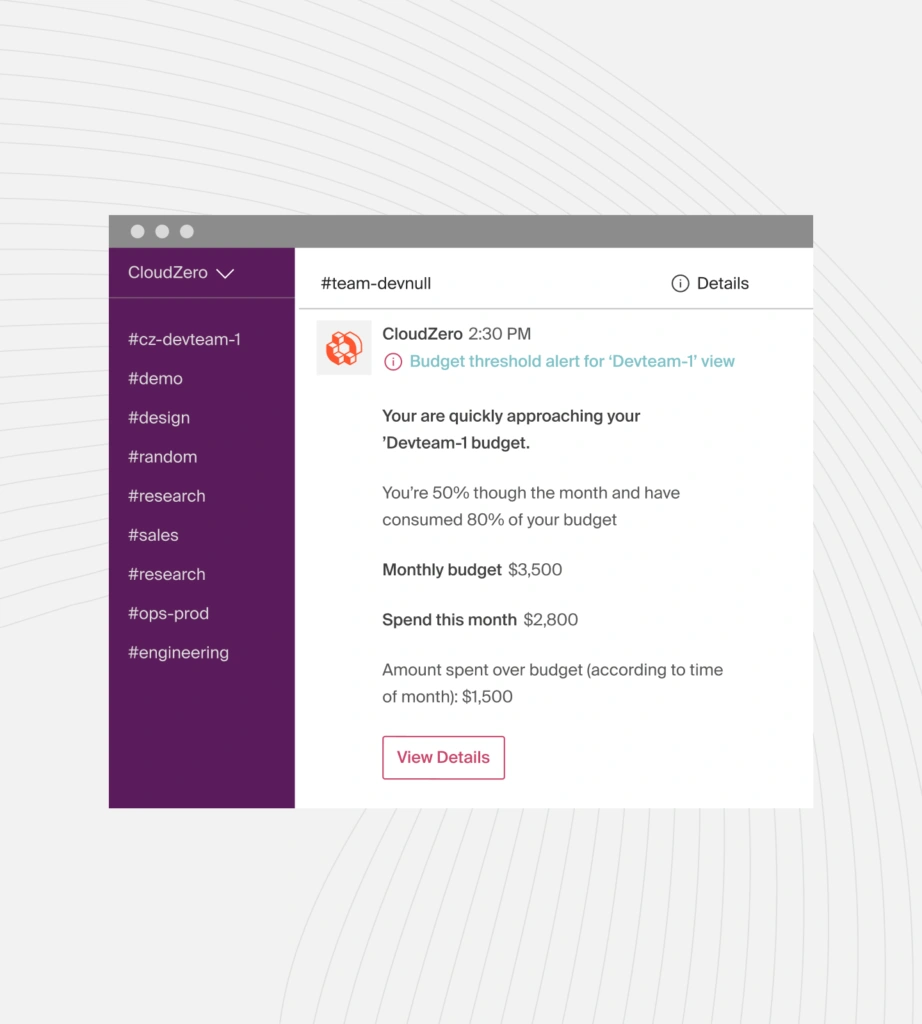
Image: CloudZero’s real-time, AI-powered cost anomaly detection engine at work
- Automated remediation and orchestration can roll back a failed deployment, scale down over-provisioned instances, or kick off a workflow in your incident response system.
- Engineering-Led Optimization CloudZero: Leading platforms integrate directly with Slack, Jira, ServiceNow, and other collaboration tools. This way, your engineers, SREs, and FinOps practitioners can all see the same signals and align efforts to optimize performance, reliability, and cloud costs across your SaaS environment.
Those traits are also why AIOps and FinOps naturally complement each other.
See: A Multidisciplinary Guide to Cloud Cost Intelligence
Let’s explore how they intersect and why their convergence is shaping the next generation of cloud efficiency.
AIOps + FinOps Is The Next Evolution In Cloud Efficiency And Cloud Cost Optimization
AIOps and FinOps used to solve different challenges. Today, one optimizes your systems for performance. The other optimizes them for value.
Together, they form a closed feedback loop between engineering and finance where technical signals have a financial meaning, and every cost anomaly points to a technical root cause.
Traditional FinOps looks backward by parsing invoices, fixing tagging gaps, and explaining spend after it happens.
AIOps solutions help you ingest and correlate operational telemetry in real time, from CPU spikes and instance scaling to storage expansion and latency changes. And that means you can detect anomalies (a.k.a. overspending) as they occur, and fix them.
Take how CloudZero’s AIOps-aligned cost intelligence works, for example. It enables you to translate those signals into real-time financial insights. You don’t just see when spending went up. You also see why it did, which system (such as a specific product feature or deployment) caused it, and even who owns it.
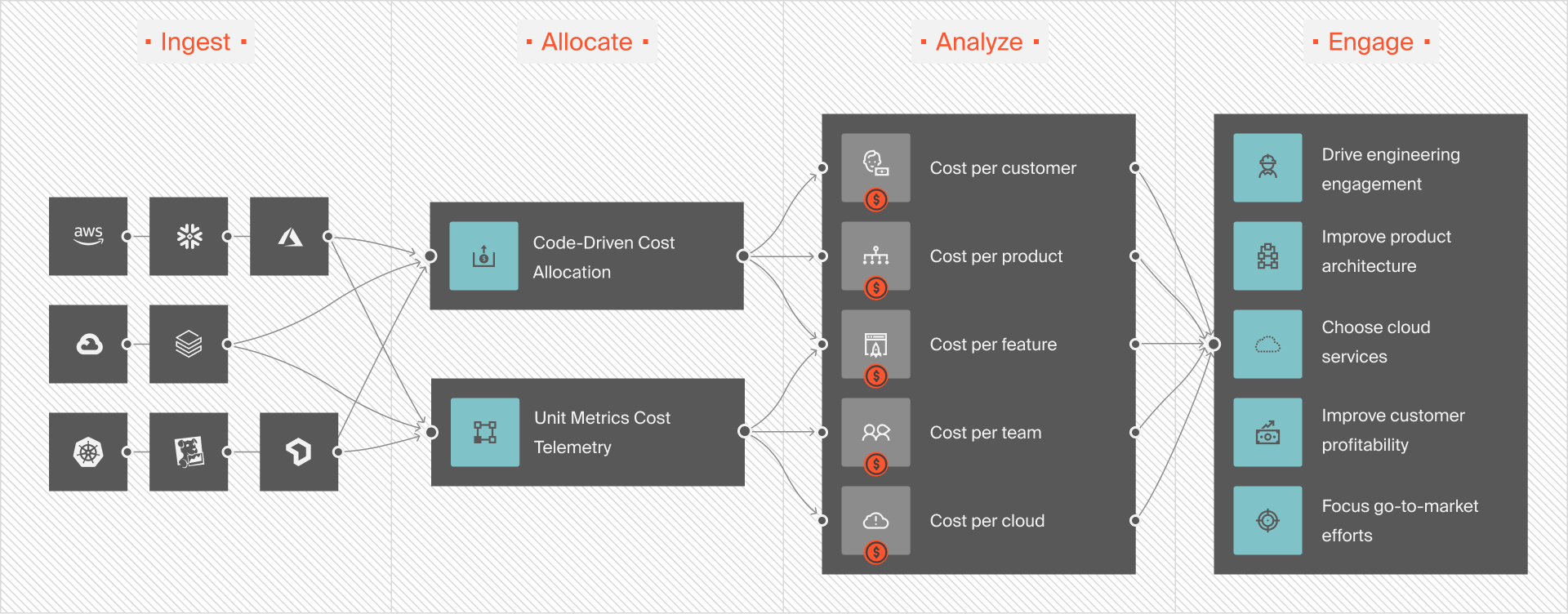
Image: CloudZero’s Cloud Cost Intelligence Approach
AIOps also brings predictive intelligence and forecasting intelligence to FinOps. Instead of waiting for budget overruns, the system learns from your historical usage patterns. This enables forecasting, including how upcoming deployments, customer growth, or model training will affect your costs and capacity, so you can prepare accordingly.
So, how do you take advantage of this combo?
How to Choose The Right AIOps Platform For Your Modern Stack And Needs (AIOps Buying Guide)
Some platforms stop at smart alerts. Others extend all the way to automated cost and performance optimization. So, the right AIOps platform for your needs will depend on how deeply you want to weave AIOps into your engineering, FinOps, and business workflows.
Consider these:
1. Breadth and depth of data ingestion
You’ll want a platform that integrates seamlessly with your observability, CI/CD, infrastructure, and cost systems. Look for support across AWS, Azure, GCP, Kubernetes, and key SaaS APIs, along with the ability to normalize both technical and financial data streams. The broader the data surface, the richer and more actionable your insights will be.
2. Real-time correlation and root-cause accuracy
Correlation is where most AIOps tools either excel or fall short. Prioritize platforms that automatically link events, metrics, and costs, not just display them side by side. A reliable AIOps platform doesn’t just tell you that something broke or spiked. It shows you why, so you can fix it ASAP.
3. Predictive and automated response capabilities
Ask whether the tool can forecast incidents or budget deviations and trigger playbooks automatically. Even partial automation, like auto-pausing idle clusters or scaling down unused instances, can save you lots of time and cash.
4. Cross-functional visibility
The best AIOps platforms provide dashboards that make sense to engineers and finance alike. So, you’ll want one that shows how performance and spend move together, without needing a separate view for each team or function. Bonus points for customizable views per team, per product, or per environment.
5. Ease of integration and Total Cost of Ownership (TCO)
AIOps isn’t valuable if it takes six months to deploy or doubles your cloud bill.
So, choose a solution that integrates with your current stack, scales with your data volume, and offers transparent pricing tied to business value, not ingestion volume. Learn more about cloud TCO.
6. Vendor reliability and extensibility
Assess roadmap maturity and its ecosystem support. Look for open APIs, active community adoption, and a proven ability to evolve with emerging tech like GenAI-assisted troubleshooting or cost forecasting.
Related read: The Anti-Zombie, Battle-Tested Guide to AI FinOps
Oh, one more thing.
Before committing, pilot the AIOps platform in one high-noise, high-spend environment, like Kubernetes or AI/ML workloads. Measure improvements in MTTR, alert volume, and correlated cost anomalies. If it doesn’t produce measurable efficiency gains in 30-60 days, you may want to keep looking.
Now, to see how these ideas play out in practice, here are the AIOps platforms setting the benchmark for intelligent, cost-aware operations today.
FinOps And Cloud Cost AIOps Platforms (AIOps Tools For Cost Optimization)
Finance, FinOps, and FP&A folks will love the following.
1. CloudZero
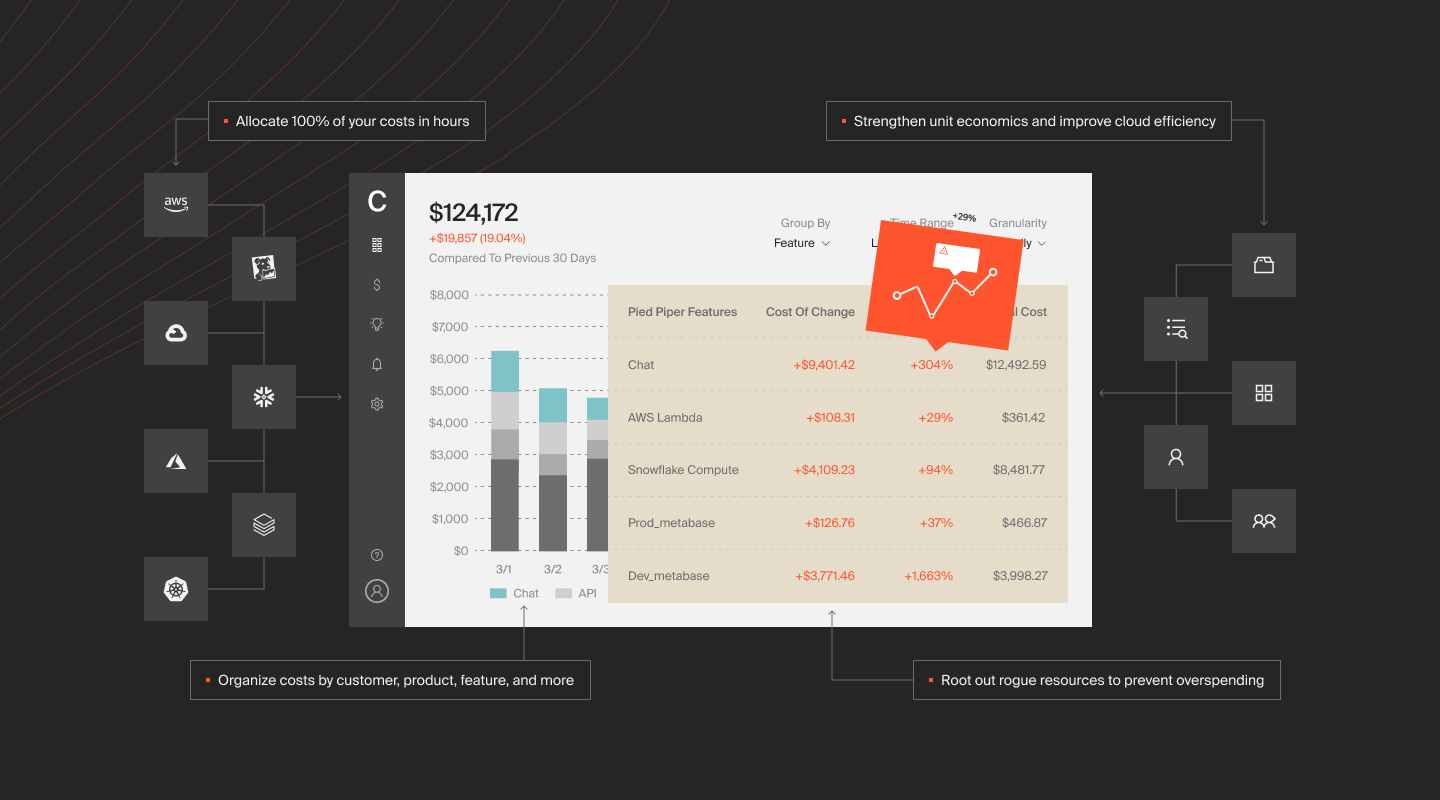
CloudZero is a cloud cost intelligence and AIOps-aligned FinOps platform built for engineering, FinOps, and finance teams in SaaS and cloud-native organizations.
It ingests and normalizes billing and usage data from multiple sources, including AWS, Azure, GCP, Kubernetes, AI services (like OpenAI and Anthropic), and SaaS platforms (Snowflake, Databricks, New Relic, and more).
- The platform then allocates tagged, untagged, and untaggable costs and maps your spend to business-relevant dimensions such as cost per product feature or per individual customer.
- CloudZero’s focus on unit economics turns cloud costs into a business metric. This helps you see what each feature or customer costs to serve so you can optimize your SaaS pricing for both efficiency and healthy margins.
- This flexible model works even in messy, multi-cloud, or untagged environments, offering real-time anomaly detection and alerting that helps your engineering teams act before cost anomalies hit the invoice.
CloudZero is best for SaaS and engineering-led companies that want to treat cloud spend as a margin lever, not a back-office concern.
CloudZero pricing follows a tiered model that is steady and predictable.
By uniting engineering telemetry with financial outcomes, CloudZero helps your team see, act, and optimize cloud spend from the same lens they use to monitor performance and reliability. Want to see why leading teams at Toyota, Moody’s, and Skyscanner trust CloudZero’s approach? Take the free tour here. Better yet,  for a hands-on experience.
Related Reads:
2. ProsperOps
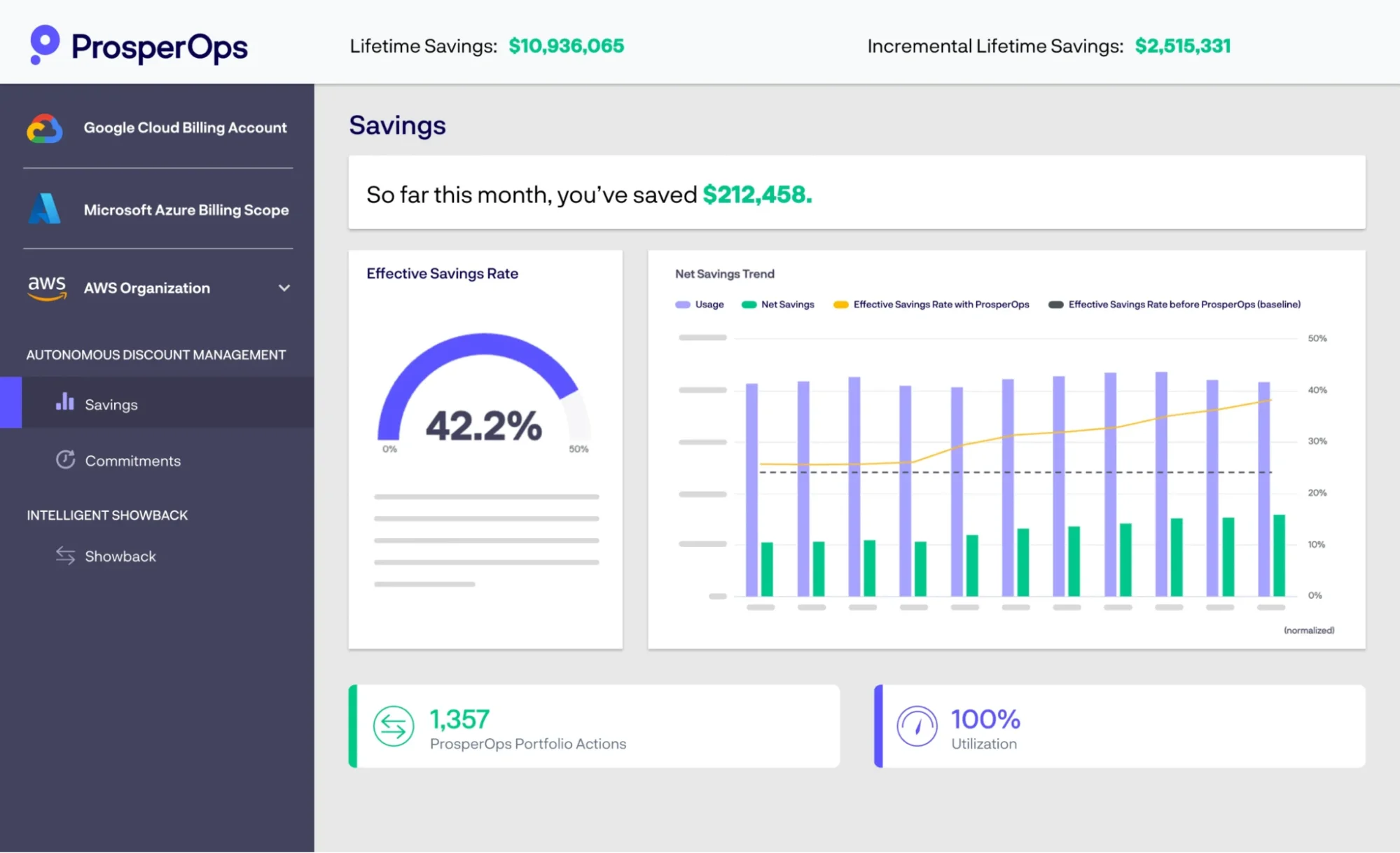
ProsperOps delivers an automated cost-optimization engine focused on cloud commitment instruments (like Reserved Instances, Savings Plans, Committed Use Discounts) across the major public clouds (Amazon Web Services, Microsoft Azure, Google Cloud).
Unlike many tools that recommend savings or highlight optimization opportunities, ProsperOps automates execution of the commitments portfolio (commit buy/resell/adjust) as a continuous process.
ProsperOps is best for teams that want to use its workload-aware AIOps to align engineering activity (usage patterns) with financial instruments (discount commitments) in real time, closing the gap between the elasticity of cloud consumption and the rigidity of commitments.
ProsperOps pricing is performance-based (you pay based on actual savings), aligning vendor incentives with customer cost savings.
AIOps-first platforms in observability
3. Dynatrace (Davis AI)
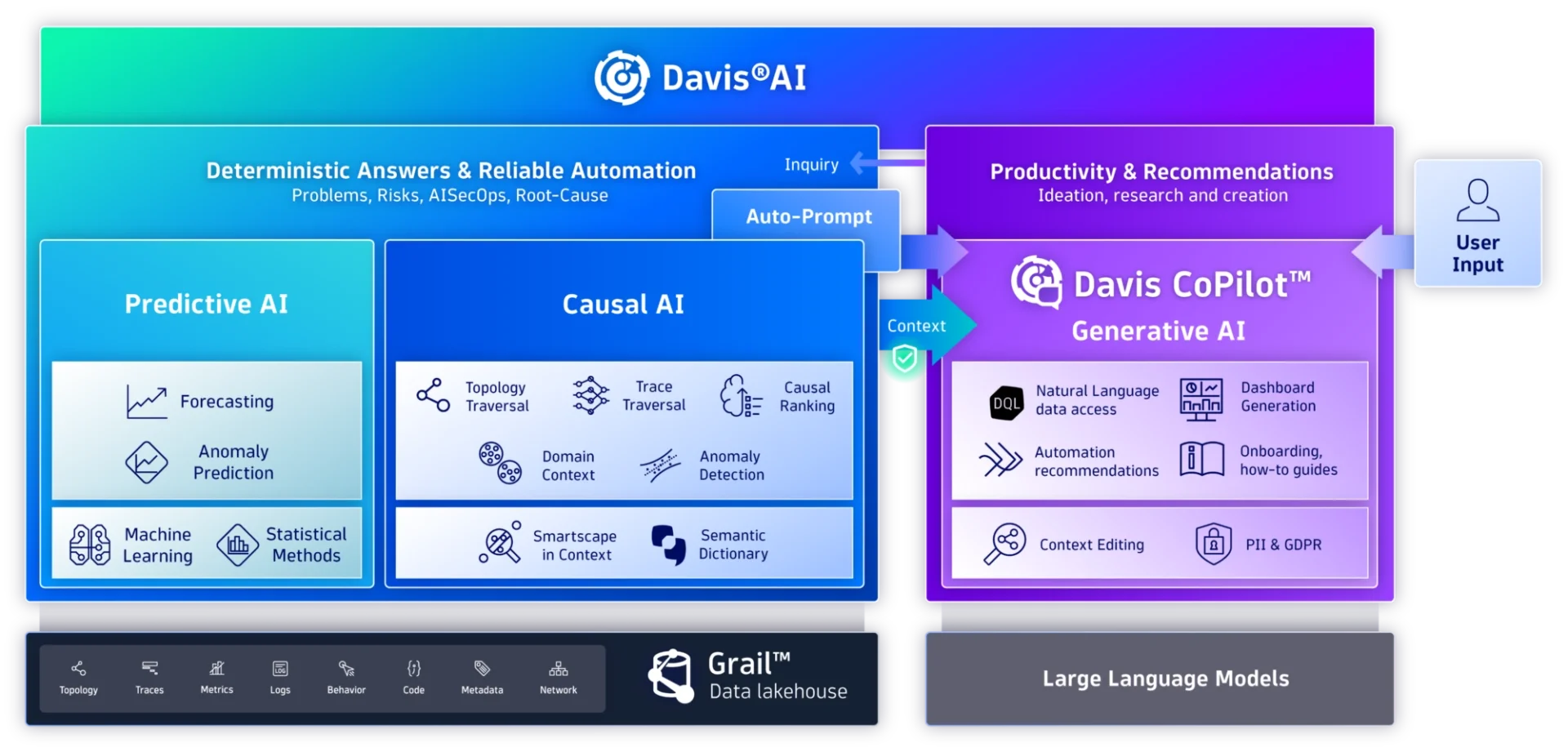
Dynatrace offers a unified observability and automation platform. It’s Davis AI engine powers precise root cause, anomaly detection, dependency/topology mapping, and workflow orchestration across clouds, containers, apps, and services.
Its tightly integrated topology model and deterministic/causal AI is designed to reduce false positives and connect code, infra, and business impact without hand-stitched rules.
The platform is best for engineering/SREs who want one platform for deep APM, infra, and security signals, as well as enterprise-grade automation.
Dynatrace pricing is usage-based with clear product pages. For example, the pricing for log ingestion is per GiB, and you can choose a subscription option (with volume discounts included).
4. Datadog (Applied Intelligence/AIOps)
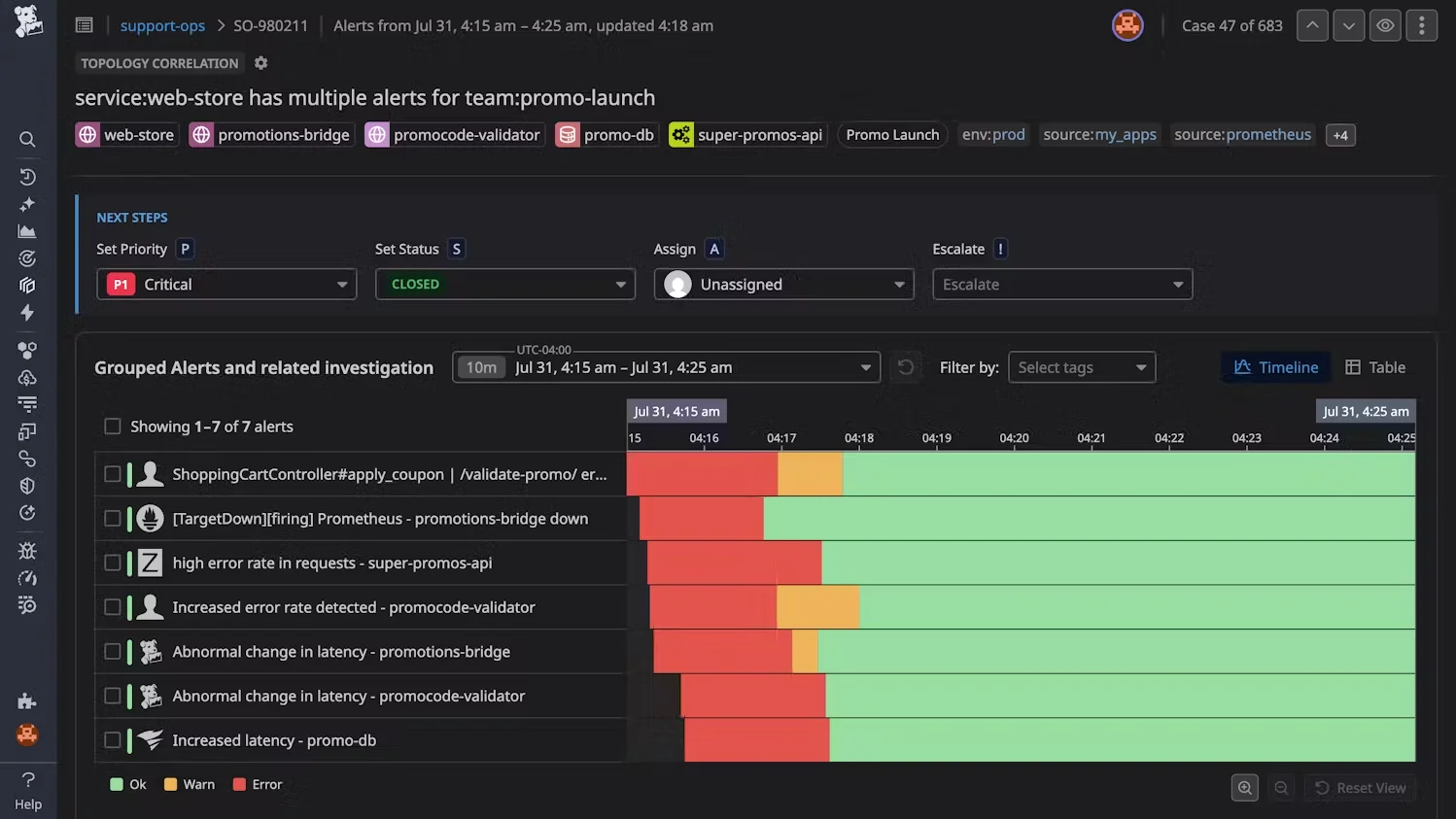
Datadog’s AIOps ingests metrics/logs/traces, correlates events, suppresses noise, and drives incident workflows with ML-powered Event Management across its observability suite.
It’s a well-advanced product, supports a good load of integrations, and was named a Leader in Forrester Wave: AIOps Platforms 2025.
Datadog’s AIOps is best for teams already standardized on Datadog for telemetry that want built-in AIOps without adding another vendor.
Datadog pricing is also usage-based, and product-by-product, including per-host infrastructure tiers, per-GB ingest, and per-user roles.
5. Splunk IT Service Intelligence (ITSI)
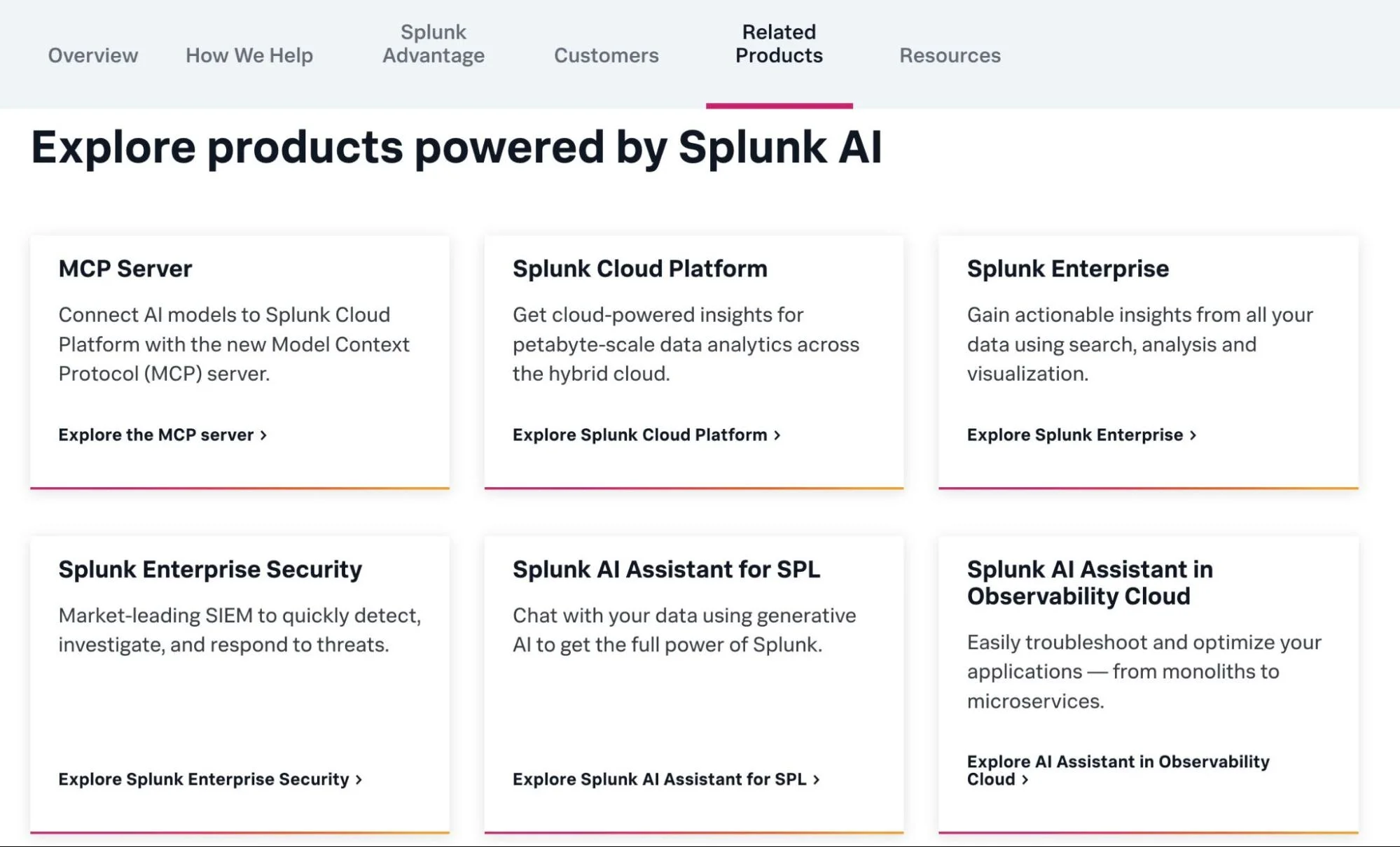
This is the service-centric AIOps on the Splunk platform. It enables you to do KPI/SLA monitoring, incident prediction/detection/resolution, and ML-based analytics.
Expect strong service models and business KPI mapping, useful when you need AIOps that speaks the language of services and SLAs. You can also build service health scores, get predictive incident signals, and tie operational events to business KPIs.
Splunk’s ITSI is best for enterprises with Splunk as a data lake/log backbone who want AIOps on top for service health and incident intelligence.
Splunk AIOps pricing includes multiple pricing options (see the up-to-date details via Splunk pricing pages).
6. PagerDuty AIOps
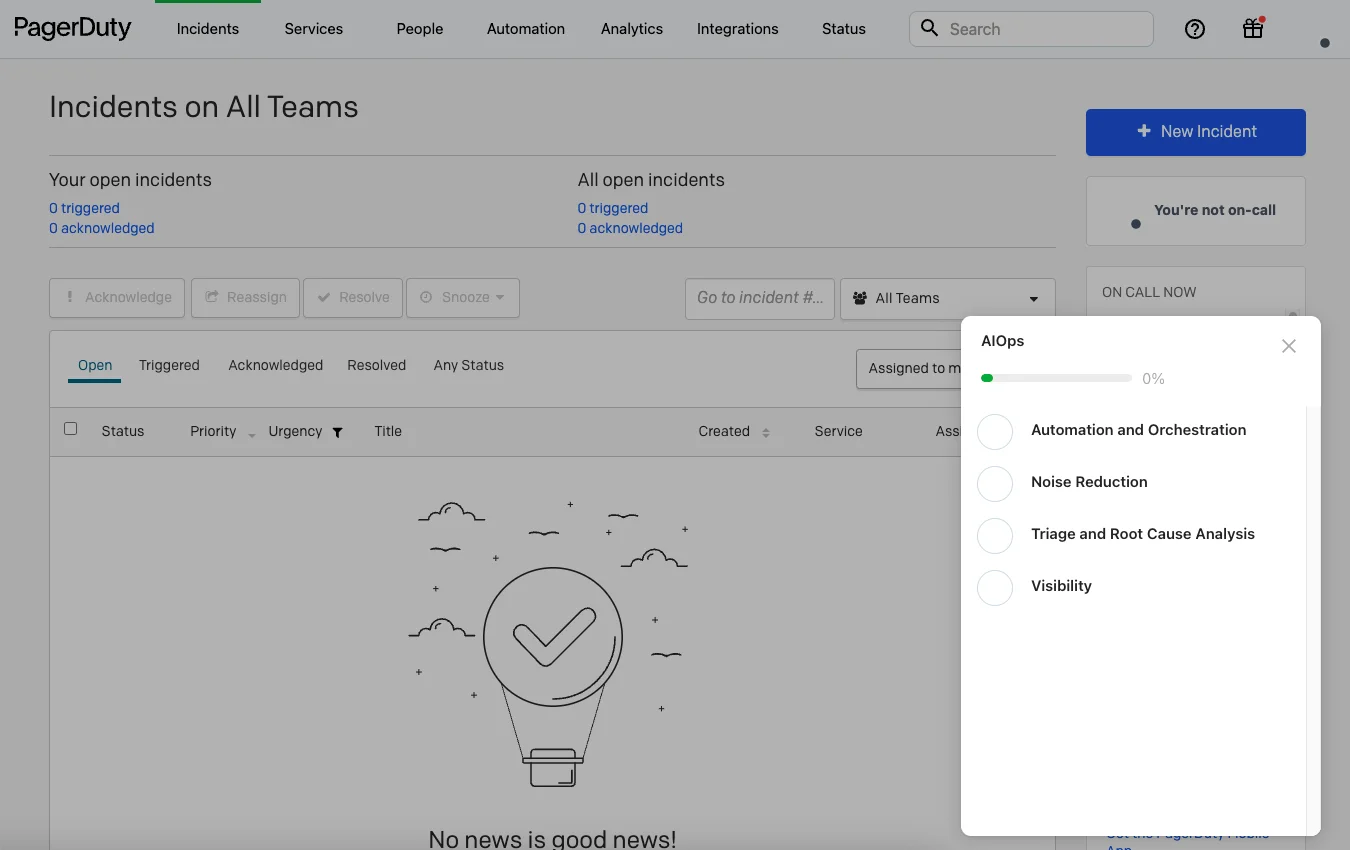
PagerDuty’s AI-powered intelligence promises to reduce alert noise by 87%, auto-triage incidents, enrich context, and automate runbooks within the PagerDuty Operations Cloud.
PagerDuty is deeply embedded in incident response and on-call management. It shows up here, too, including the ability to turn on noise suppression, event intelligence, and automation to route responders based on context.
PagerDuty’s AIOps is best for teams already using PagerDuty for incident management who want out-of-the-box AIOps to speed MTTR.
PagerDuty pricing is consumption based. The Public AIOps plan starts at $699/month (there’s an annual discount).
7. BigPanda
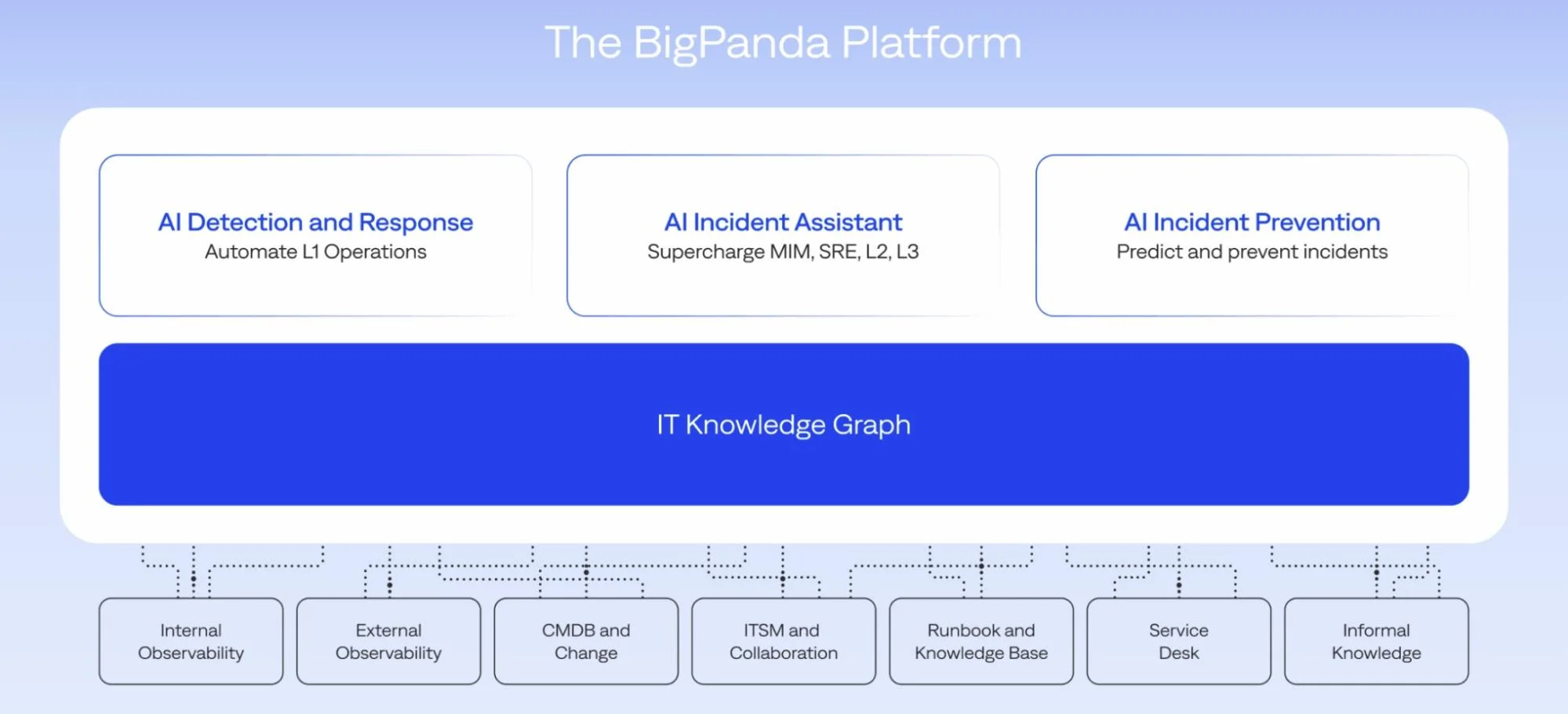
With BigPanda AIOps, you get an intelligent event-correlation and incident-automation platform at scale. It positions itself as an “Agentic IT Operations” solution to improve service reliability and incident response.
You are free to pipe in alerts/events, normalize/enrich, correlate into incidents, and automate response workflows. Its credit-based pricing (via AWS Marketplace) is unique, and the focus on change risk management can help prevent incidents.
BigPanda’s AI-powered capabilities are best for large, heterogeneous environments with many monitoring tools seeking a neutral correlation layer.
BigPanda pricing: You’ll notice that marketplace examples show 12-month credit bundles, such as the 20k credits for $231,840/year. Third-party sites sometimes cite lower “starting at” stickers, but real-world deals tend to vary.
Take The Smarter Path To Profitable Innovation
AIOps is how high-performing SaaS companies are scaling faster, solving incidents sooner, and protecting their margins along the way.
AIOps keeps your systems reliable. FinOps fuels profitable innovation at scale. Together, they create the visibility, automation, and financial context your teams need to move quickly — without losing control.
CloudZero helps you do exactly that for your cloud and SaaS environments, minus the usual complexity.
CloudZero treats cost data like operational telemetry, bringing AIOps-level intelligence to your cloud spend.
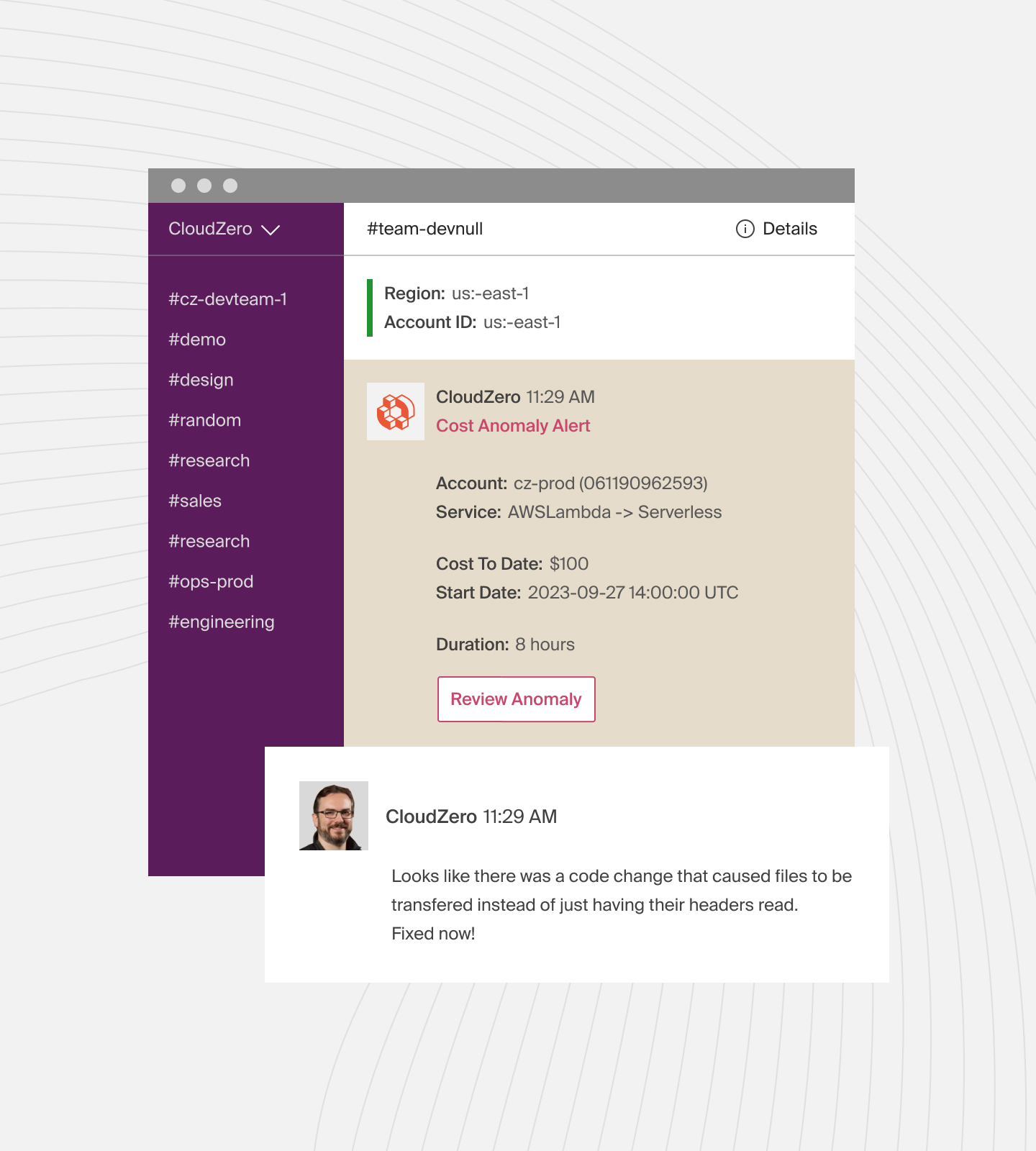
You can see who, why, and what’s driving your bill in real time, trace anomalies to their root cause, and connect every engineering decision to its financial impact. All from a single platform.
So instead of chasing invoices after the fact, you can prevent overspending before it happens without slowing down innovation.
Don’t take our word for it. With CloudZero, Drift saved $2.4 million. Upstart saved $20 million. And PicPay saved $18.6 million. You can, too. and turn your AIOps and FinOps data into fuel for measurable savings and stronger margins.
Frequently Asked Questions about AIOps Platforms