Quick answer: A cloud cost optimization framework is a structured, repeatable system for managing cloud spend across people, processes, and tools. It defines how teams gain cost visibility, allocate spend to the right owners, optimize resources and rates, and measure whether spend is generating business value. The FinOps Foundation organizes this around three phases: Inform, Optimize, and Operate — and the Crawl, Walk, Run maturity model maps directly to how organizations progress through them.
Most cloud cost problems aren’t spending problems. They’re system problems.
Engineering teams rightsize a few instances. Finance exports a billing report. Someone builds a dashboard that nobody looks at after the first month. Costs keep climbing. When the CFO asks whether the cloud bill is growing because the business is growing or because something is broken, nobody has a clean answer.
That’s what happens when you optimize tactically without a framework. Individual actions produce individual results, useful in isolation, invisible at scale. A cloud cost optimization framework changes the equation. It’s the difference between reacting to your cloud bill and running a system that continuously connects spend to business value.
This guide breaks down what a cloud cost optimization framework actually is, how to build one across the FinOps maturity model, what each stage requires, and how to tell whether it’s working.
What Is A Cloud Cost Optimization Framework?
A cloud cost optimization framework is a structured, repeatable system for managing cloud spending across people, processes, and tools — it defines how organizations gain cost visibility, allocate spend to the right owners, optimize resources and rates, and connect spend to business value.
In practice, it’s the foundation of sustainable cloud cost management, the operating layer that turns fragmented cost data into shared accountability and continuous improvement.
The framework isn’t a single tool or a one-time project. It’s an operating model, the ongoing mechanism by which engineering, finance, and product teams collaborate to make cost-informed decisions at the speed the cloud demands.
The FinOps Foundation defines this operating model around three lifecycle phases: Inform, Optimize, and Operate. These phases map directly to what a working framework looks like:
- Inform: Establish visibility. Know what you’re spending, where, and why.
- Optimize: Act on that visibility. Eliminate waste, rightsize resources, use commitment-based discounts.
- Operate: Embed the loop. Make cost management a continuous, cross-functional practice, not a quarterly fire drill.
Most organizations struggle not because they lack tools, but because they skip from visibility to optimization without ever operationalizing the loop. That’s the gap a framework is designed to close, and where CloudZero fits in.
CloudZero is a cloud cost intelligence platform that integrates infrastructure spend to business context, giving engineering, finance, and FinOps teams a shared, real-time view of what they’re spending, why it’s changing, and whether it’s worth it.
2026 State of AI Spend Report
Why Finance Caps What It Can’t See
Learn how finance leaders are managing AI spend, and how they’re approaching FY2027
Why Do Most FinOps Efforts Stall Without A Framework?
Most FinOps efforts stall because teams lack a repeatable operating system — not tools or intent — connecting visibility, accountability, and continuous improvement. Without a repeatable operating model connecting visibility, accountability, and continuous improvement, individual optimization efforts produce individual results and nothing compounds.
CloudZero’s FinOps in the AI Era: A Critical Recalibration report reveals the scale of the problem. Formal cloud cost programs have nearly doubled year-over-year, now present at 72% of organizations. Yet, mean Cloud Efficiency Rate (CER) has fallen 15% across all segments in the same period. More FinOps investment. Less efficiency. AI spending is the primary driver: it now exceeds $10M annually at 40% of companies, and it is landing in pooled cloud bills with little attribution or governance.
The data compounds further. The FinOps Foundation’s State of FinOps 2025 survey, drawing from over $69 billion in tracked cloud spend, found that 50% of practitioners still prioritize optimization above all else.
Yet, CloudZero’s own research shows that only 51% of organizations can confidently evaluate the ROI of their AI investments, and just 43% track AI costs by customer. Most teams are optimizing spend they cannot fully see or attribute.
Public cloud spending hit $723.4 billion in 2025 per Gartner, and IDC projects it will surpass $1 trillion in 2026. The pressure is structural, not cyclical. A framework is what converts that pressure into deliberate action rather than reactive firefighting.
Without a framework, three failure modes repeat:
- Visibility without accountability. The team has dashboards. Nobody owns the numbers. Costs remain a shared problem, which means they are effectively nobody’s problem.
- Optimization without context. Rightsizing happens. Reserved Instances get purchased. But there is no way to tell whether the savings freed up capacity for growth or simply delayed a bigger problem.
- Action without continuity. A FinOps initiative launches, generates a spike of savings, then quietly atrophies as teams return to other priorities. Costs drift back up.
A framework prevents all three. It makes visibility, accountability, and continuous improvement structural, not dependent on individual effort or quarterly urgency.
What Is The FinOps Maturity Model?
The FinOps maturity model provides the scaffolding for any cloud cost optimization framework. It uses a Crawl, Walk, Run progression, not as a race to the top, but as a tool for calibrating where your organization should be investing effort right now.
The FinOps Foundation is explicit on this point: the goal is never simply to achieve Run maturity in every capability. The right maturity for any given capability is the one that delivers the most business value for your environment.
A team running Walk-level anomaly detection that catches every meaningful cost spike isn’t underperforming, it’s making a smart allocation of effort.
That said, understanding where you are in the model is essential for knowing where to invest. Here’s what each stage looks like in practice — and how CloudZero supports teams at each one.
Crawl stage: How do you establish cloud cost visibility?
At the Crawl stage, the goal is foundational: understand what you’re spending, who owns it, and where costs are concentrated. Most organizations starting here share the same characteristics: inconsistent tagging, manual billing analysis, no shared cost language between engineering and finance, and optimization that happens reactively, usually after a budget surprise.
Key activities at Crawl include:
- Activate and consolidate cloud billing data across accounts and providers
- Establish a tagging strategy and begin enforcing it consistently
- Build a basic FinOps dashboard that gives engineering and finance a shared view of spend
- Identify the top five to 10 cost drivers in your environment
- Assign cost ownership to teams, services, or products — even informally
The hardest part of Crawl isn’t the tooling. It’s getting agreement on who owns what. Tagging is where this breaks down most often. According to CloudZero’s 2025 State of Cloud Cost Intelligence report, only 43% of organizations track cloud costs at the unit level — meaning the majority still can’t answer basic questions about which team, product, or customer is driving spend.
This is where most tag-dependent tools hit their ceiling. If a resource isn’t tagged, or is tagged inconsistently, the cost disappears into an unallocated pool.
CloudZero solves this differently. Instead of relying on tags as the primary source of truth, CloudZero uses a code-driven cost allocation method that captures environmental cost data and enriches it with workload metadata, account structure, and usage telemetry.
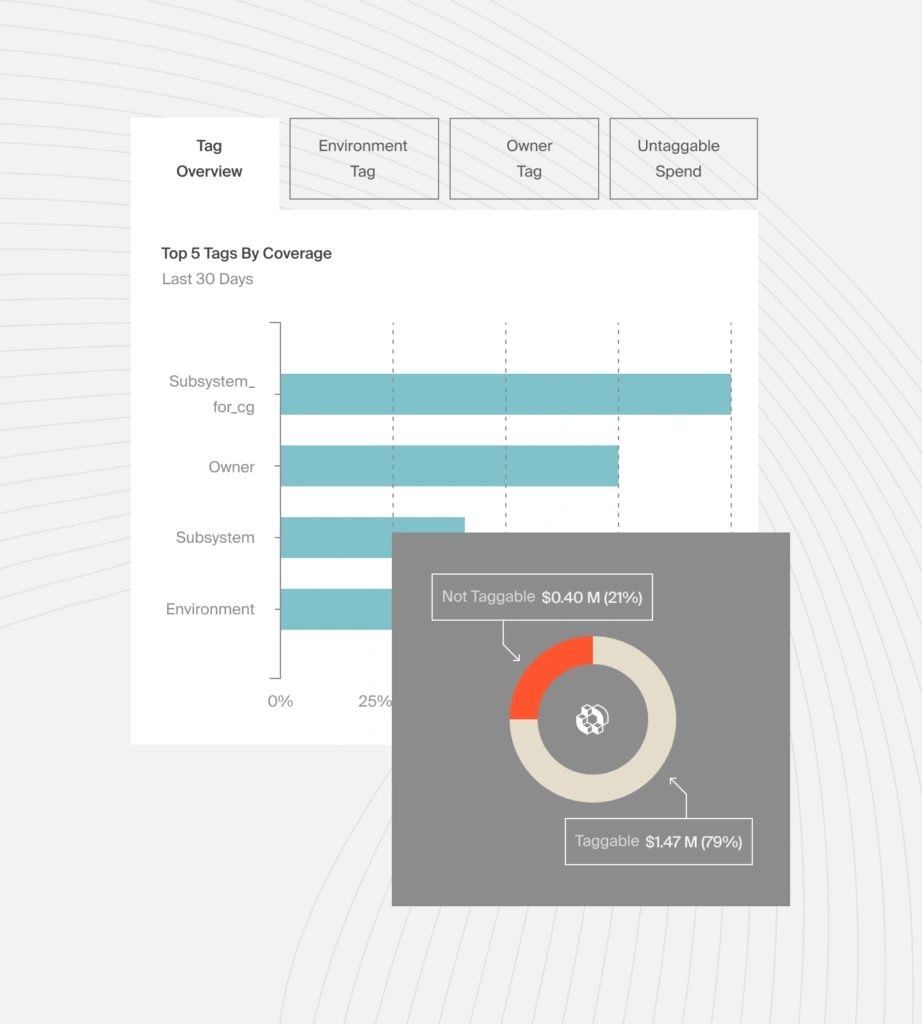
The result: accurate cost allocation across tagged, untagged, and untaggable resources, including shared services, Kubernetes clusters, and multi-tenant infrastructure. Teams routinely go from partial visibility to 100% cost allocation within days of connecting CloudZero, and that allocation accuracy is what makes cloud cost reduction possible without requiring a tagging overhaul first.
Walk stage: How do you build cost accountability and begin optimizing?
At the Walk stage, the core challenge is accountability — turning existing visibility into ownership, engineering behavior change, and scheduled optimization rather than reactive firefighting.
This is where FinOps best practices begin to operationalize: showback and chargeback models are introduced, engineering teams start receiving regular cost feedback, and optimization becomes a scheduled activity, instead of an emergency response.
According to the FinOps Foundation’s State of FinOps 2025 report, 61.8% of organizations are still at the Crawl phase — meaning reaching Walk-level maturity is itself a meaningful competitive differentiator.
Key activities at Walk include:
- Implement showback reporting so teams see their cost footprint
- Launch rightsizing efforts for compute, storage, and database resources
- Begin purchasing Reserved Instances (RIs) and Savings Plans for predictable workloads, which can reduce compute costs by up to 60%
- Set up anomaly detection and budget alerts with defined escalation paths
- Establish a regular cost review cadence, weekly for engineering leads, monthly for finance and leadership
- Introduce a cross-functional FinOps working group or Cloud Center of Excellence
The biggest unlock at Walk is engineering accountability and it’s where CloudZero becomes a direct differentiator.
Most cloud cost tools are built for FinOps analysts. CloudZero is built for the engineers, finance leads, and product managers who need to act on cost data without becoming billing experts.
Each persona gets a role-appropriate view:
- Engineers see cost by service, deployment, and environment
- Finance sees cost per customer, COGS, and margin contribution
- Leadership sees efficiency ratios and trend lines
Because everyone’s working from the same underlying data, cost conversations stop being adversarial and start being collaborative.
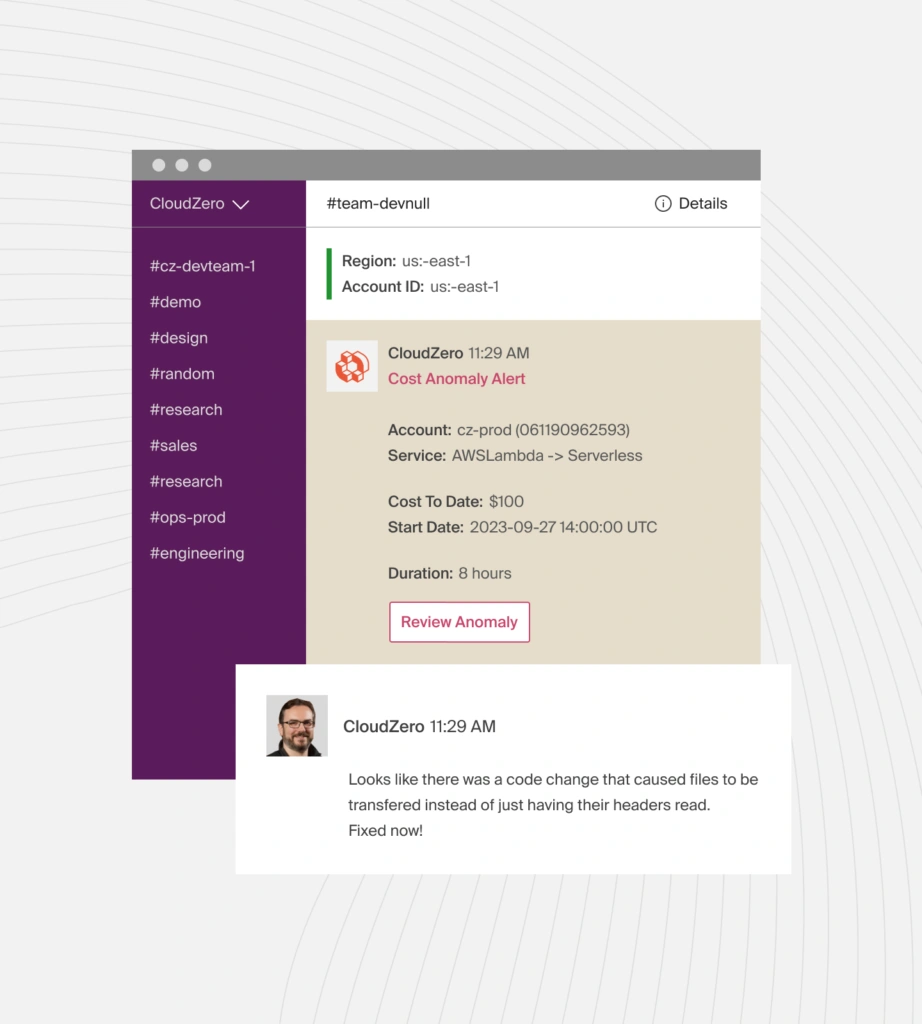
CloudZero also surfaces anomalies in real time, flagging unusual spend patterns before they hit the monthly bill. The platform has surfaced more than $20 billion in anomalous cloud spend for customers before it became a billing problem, including unexpected spikes from misconfigured resources, runaway jobs, and unplanned traffic events.
Run stage: What does continuous optimization and unit economics look like?
At the Run stage, FinOps is embedded in how the business operates — cost management happens continuously, with automation handling routine optimization and teams focused on unit economics: cost per customer, cost per inference, cost per deployment. Strategic questions arse: Is this workload efficient at scale? Is this feature worth what it costs? Are we getting value from our AI infrastructure?
The defining characteristic of Run-stage FinOps is the shift from managing raw spend to managing unit economics. These metrics answer the question that raw billing data never can: Was it worth it?
AI infrastructure is accelerating the urgency here. For organizations scaling AI-powered products, unit economics aren’t optional: they’re the only mechanism for knowing whether inference costs are scaling profitably as usage grows. See cloud cost optimization strategies for 2026 for a deeper look at how leading teams are handling this shift.
Key activities at Run include
- Track unit cost metrics that map spend to business outcomes (cost per customer, cost per daily active user, cost per deployment, cost per inference)
- Automate rightsizing, anomaly remediation, and commitment management
- Integrate cost signals into CI/CD pipelines so engineers see cost impact before deploying
- Use forecasting to model the cost impact of growth scenarios and architectural decisions
- Align cloud cost strategy with product pricing, margin targets, and investor metrics
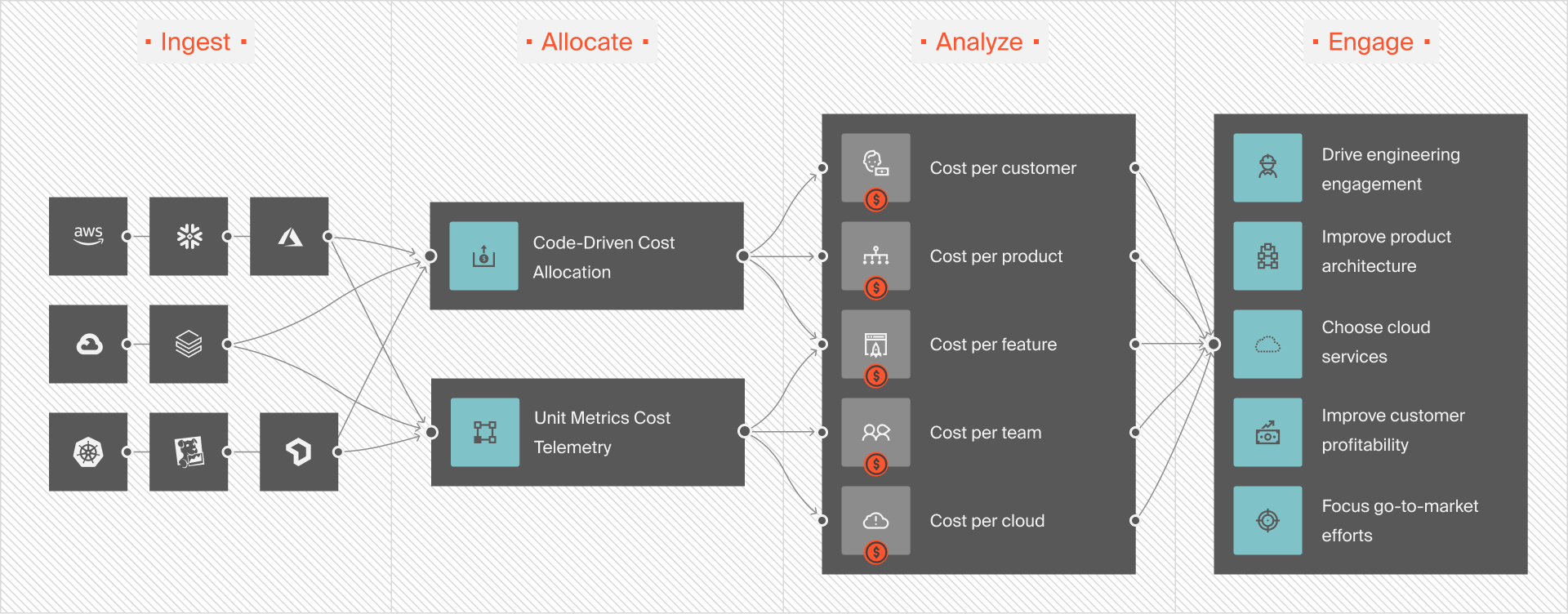
CloudZero’s unit economics capability is purpose-built for this stage. The platform calculates whatever unit cost metric is most relevant to your business, using your actual usage data, not averages or approximations.
This is a meaningful distinction: most tools spread shared costs using rough allocation rules. CloudZero integrates billing data directly to usage telemetry, so the unit cost you see reflects what actually happened in your infrastructure.
The business impact of getting this right is significant. Forcepoint used CloudZero’s unit metrics to cut cloud spend by 50% in six months while simultaneously improving service availability. The key wasn’t just finding waste. It was understanding which workloads were generating value and which weren’t, at a granularity that made action obvious. “Unless you have as much measurement as you can,” VP of Engineering Anthony Leung noted, “you can’t derive what it costs you per user or per customer at the granularity that you need.“
What Are The 5 Pillars Of A Cloud Cost Optimization Framework?
Regardless of maturity stage, every effective cloud cost optimization framework rests on five structural pillars. These are the functional components that must be in place for the framework to sustain itself over time.
1. Cost visibility and allocation
You cannot optimize what you cannot see. Cost visibility means knowing what you’re spending, broken down by team, service, product, environment, and business unit, not just by cloud provider account.
Allocation is the process of assigning that spend to the right owner with enough granularity to drive accountability.
This is where most frameworks have their weakest foundation. Tagging gaps, shared services, multi-tenant infrastructure, and Kubernetes clusters all create allocation blind spots that tag-dependent tools can’t resolve.
CloudZero addresses this at the infrastructure level ,combining billing data, workload metadata, and usage signals to map costs accurately regardless of tagging quality. The output is allocation coverage that actually holds up when engineering changes how resources are deployed.
2. Engineering accountability
FinOps works only when engineers understand the financial impact of their decisions. The goal isn’t to add bureaucracy to development, it’s to give teams the data they need to make cost-informed choices at the speed they’re already moving at.
CloudZero operationalizes this through an engineering ownership layer (EOL), a code-driven approach that shifts cloud cost management left, embedding cost context directly into engineering workflows.
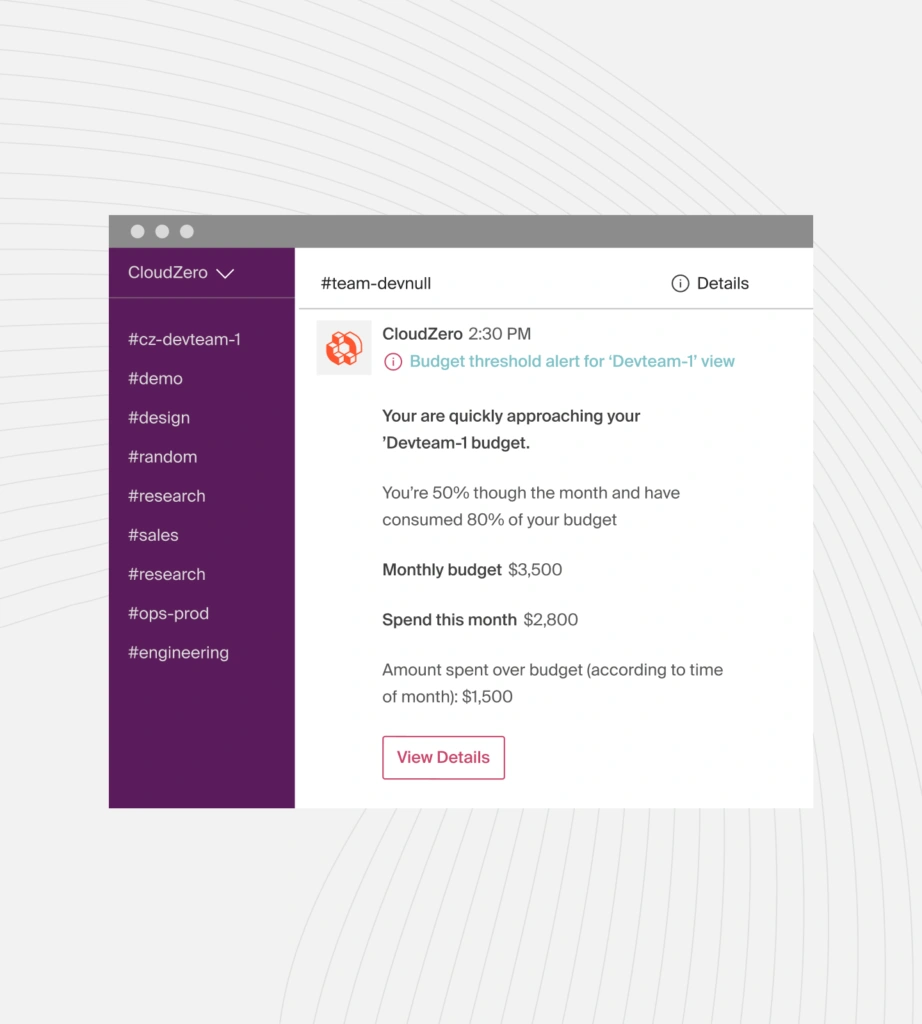
Engineers see cost per deployment, service, and cost deltas between environments without having to switch tools or wait for a monthly report. When cost awareness is built into the development loop, optimization becomes a by-product of good engineering, not a separate initiative driven by finance.
3. Cloud cost optimization strategies: rate and usage
Optimization operates on two levers: using less (usage optimization) and paying less for what you use (rate optimization). Both matter, and neither is a substitute for the other. Together, they form the two core cloud cost optimization strategies every team needs regardless of maturity stage.
Usage optimization covers rightsizing, eliminating idle and orphaned resources, autoscaling, and workload scheduling.
Rate optimization covers Reserved Instances, Savings Plans, Spot Instance usage, and negotiated pricing.
Organizations that master commitment-based discounts can achieve up to 60% savings on compute costs — but only when underlying usage is clean. The sequence matters: fix usage inefficiencies before committing to reserved capacity, or you’re locking in waste at a discount.
For a full breakdown of cloud cost management strategies, including rightsizing, autoscaling, and commitment management, see our dedicated guide.
CloudZero Advisor surfaces rightsizing recommendations tied directly to cost impact, so engineering teams can prioritize the optimizations with the highest ROI rather than working through generic recommendation lists.
4. Showback and chargeback
Showback and chargeback models create the accountability structures that sustain cost discipline over time. Showback makes teams aware of their cost footprint. Chargeback makes them financially responsible for it. Both require accurate underlying allocation data. Without it, showback generates confusion instead of clarity, and chargeback creates friction instead of accountability.
CloudZero’s allocation engine is what makes showback and chargeback operationally viable at scale. Because costs are allocated to real owners, not estimated or spread by average, the numbers teams see in their showback reports are defensible. That defensibility is what converts cost visibility into cost behavior change.
5. Continuous measurement and governance
A framework without measurement is just a plan. Effective cloud cost optimization requires defining success metrics upfront and tracking them consistently, not just raw spend, but unit economics, waste reduction rate, allocation coverage, forecast accuracy, and cost efficiency ratios.
The FinOps Foundation’s maturity model measures capability maturity per scope and per function, meaning your organization may be at Run for anomaly detection and Crawl for unit economics simultaneously.
Regular FinOps assessments help surface where the gaps are and prioritize where to invest next.
For teams managing AI workloads, this governance layer extends to FinOps for AI, a distinct discipline with different attribution, forecasting, and unit economics challenges than traditional cloud infrastructure.
CloudZero’s platform handles AI cost attribution natively, mapping GPU spend, inference costs, and token-based usage to the teams and products consuming them, a capability that standard cost tools weren’t built to handle.
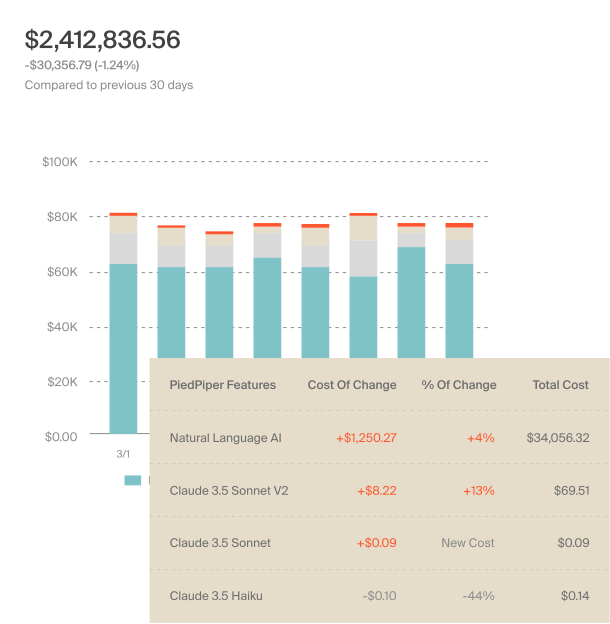
What FinOps Best Practices Actually Move The Needle?
Framework architecture matters. But the specific practices that get implemented within that architecture determine whether it delivers results. These are the FinOps best practices that consistently produce measurable outcomes across maturity stages.
- Establish cost ownership early. Assign cloud cost ownership to teams before you’ve solved every allocation challenge. Imperfect ownership beats no ownership. Teams that see their costs, even rough approximations, start making different decisions than teams that see nothing. CloudZero’s designated FinOps Account Managers (FAMs) work directly with customers to build ownership structures that fit their org, not a generic template.
- Treat every engineering decision as a buying decision. Infrastructure choices made at design time have financial consequences that compound at scale. CloudZero is built around this principle, giving engineers cost context during architecture reviews and sprint planning so expensive decisions don’t become expensive habits. Every deployment, every service, every environment carries a visible cost signal.
- Build a FinOps dashboard that teams actually use. A FinOps dashboard should provide real-time cost data at the level of granularity each stakeholder needs: unit cost metrics for finance, service-level cost data for engineering, efficiency ratios for leadership. CloudZero’s platform supports custom dimensions and persona-specific views, so a single source of truth can serve multiple audiences without requiring anyone to translate between finance and engineering languages.
- Use anomaly detection, not just budgets. Budget alerts tell you when you’ve already overspent. Anomaly detection tells you something unusual is happening before it becomes a bill problem. CloudZero surfaces real-time cost anomalies tied to specific resources, teams, and services, giving teams an actionable signal, not just a number that’s too high.
How Do You Build A Cloud Cost Optimization Framework?
Building a cloud cost optimization framework requires a sequence, not a large upfront investment or a dedicated FinOps team. Start with visibility, assign ownership, set a regular cadence, and build toward unit economics.
Start with visibility. Before you can optimize anything, you need a clear picture of what you’re spending and where. Connect your billing data, establish baseline metrics, and identify your top cost drivers. Whether you’re starting with AWS cost optimization or managing a multi-cloud environment across Azure and GCP, CloudZero connects in minutes and starts generating cost insights immediately, including across Kubernetes and AI workloads, without requiring a tagging overhaul first.
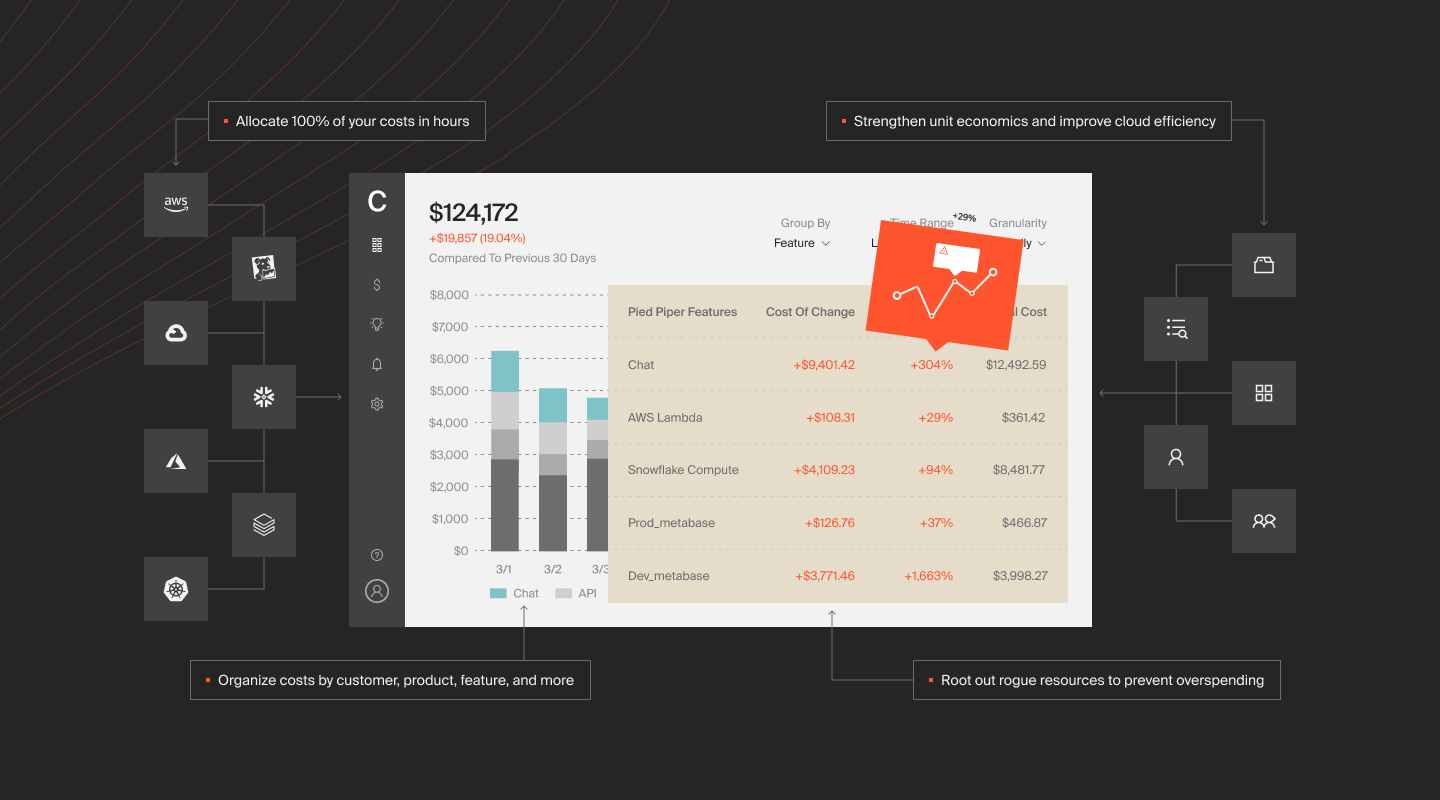
- Assign ownership. Decide who is responsible for what, which team owns which services, which product lines map to which infrastructure. CloudZero’s custom dimensions let you build cost ownership structures that reflect how your organization actually works, not how your cloud accounts happen to be structured.
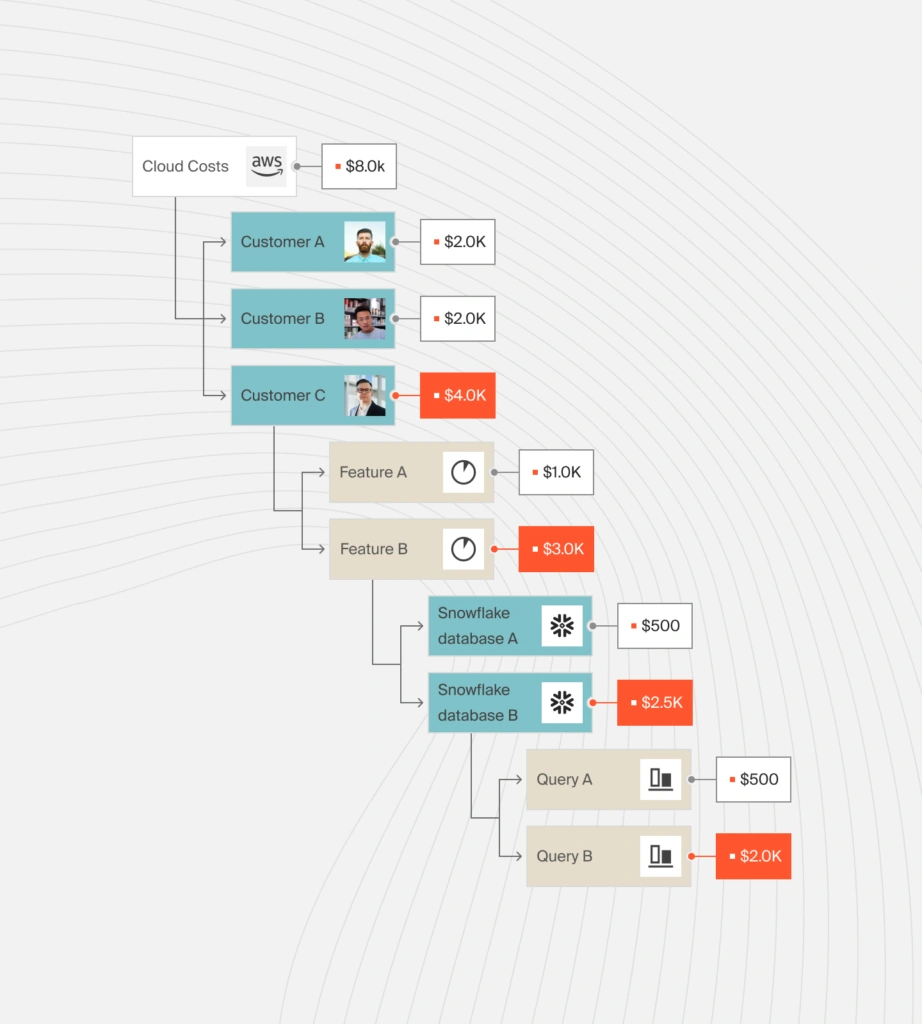
- Set a regular cadence. FinOps is not a project. It’s a practice. Weekly cost reviews for engineering, monthly reporting for finance and leadership, quarterly framework assessments. CloudZero’s FAMs support this cadence directly, running regular reviews, surfacing optimization opportunities, and providing the institutional FinOps knowledge most teams don’t have in-house.
- Build toward unit economics. As visibility and accountability mature, shift the focus from total spend to efficiency metrics. What does it cost to serve a customer today versus six months ago? Is that number improving as you scale? These are the questions CloudZero answers, and the questions that turn a cloud cost optimization framework into a genuine business advantage.
Frequently Asked Questions About Cloud Cost Optimization Frameworks
Ready to build a cloud cost optimization framework that goes beyond dashboards? CloudZero combines platform intelligence with designated FinOps expertise, so your team gets both the platform and the institutional knowledge to drive real cloud cost reduction at every stage of maturity.  to see how engineering, finance, and FinOps teams from leading organizations such as Toyota, Duolingo, Skyscanner and more use CloudZero to connect every dollar of cloud spend to the business outcomes that justify it.