Quick answer: IT cost reduction strategies target waste across three categories — cloud infrastructure, SaaS applications, and software licensing — without cutting the investments that drive business value. The highest-impact tactics are auditing unused SaaS licenses, rightsizing overprovisioned cloud resources, automating non-production environment shutdowns, extending commitment coverage on stable workloads, and building cost accountability into engineering workflows. Most organizations can reduce IT costs 20–40% by targeting waste before touching strategic spend.
IT budgets are under pressure from two directions at once. Gartner projects worldwide IT spending will reach $6.15 trillion in 2026, up 10.8% from 2025, driven almost entirely by AI infrastructure, cloud services, and software. At the same time, boards and CFOs are demanding tighter margins. The result is a familiar but increasingly urgent question: where do we cut without breaking the business?
The answer depends on where you look. Most organizations have more IT cost reduction opportunity than they realize, not in strategic investments, but in waste that has accumulated quietly across cloud environments, SaaS portfolios, and software licenses. The strategies that work are the ones targeted at that waste, not at the spend that’s actually generating value.
This guide covers the specific IT cost reduction strategies that finance and IT leaders use to reduce spend without compromising performance, along with how to measure whether cuts are producing real efficiency gains.
Where Do IT Costs Actually Hide?
Before choosing a reduction strategy, it helps to know which cost categories carry the most waste. For most organizations, three areas account for the majority of addressable IT spend.
Cloud infrastructure is the largest and fastest-growing IT cost category, and also the least visible. Costs are distributed across dozens of teams, services, and environments, and without dedicated attribution, it’s nearly impossible to tell which spend is driving business value and which is pure waste.
SaaS applications represent a second major category. The average organization now uses more than 100 SaaS applications, according to Okta, the highest level ever recorded. Research from Zylo indicates that organizations use roughly half the SaaS licenses they pay for, meaning as much as 50% of SaaS spend may be going to unused seats.
Software licensing rounds out the three. Enterprise software contracts negotiated during periods of growth often don’t reflect actual usage as organizations evolve. According to the FinOps Foundation’s State of FinOps 2025, 64% of organizations now manage software licensing costs as part of their broader financial management practice, up 15% from the prior year.
Understanding which of these three areas is your biggest opportunity is the starting point for any IT cost reduction initiative. Cutting without that clarity is where organizations eliminate spend they actually need.
2026 State of AI Spend Report
Why Finance Caps What It Can’t See
Learn how finance leaders are managing AI spend, and how they’re approaching FY2027
IT Cost Reduction Strategies
The following strategies are organized by impact speed, from those that deliver results within weeks to those that require more structural change but produce more durable savings.
1. Audit SaaS licenses and eliminate unused seats
A quarterly SaaS audit is the fastest path to IT cost reduction for most organizations. The process is straightforward: pull a complete inventory of active subscriptions, cross-reference against actual login and usage data for the past 90 days, and flag anything below a meaningful utilization threshold.
Common findings include licenses for employees who have left, seats purchased for a project that concluded, duplicate tools serving the same function across different departments, and tier upgrades that were never justified by usage. Each of these is a clean cut, spend that eliminates with no operational impact.
The discipline is in the cadence. A one-time audit captures the current waste. A quarterly process prevents it from accumulating again.
2. Renegotiate vendor contracts before renewal
Most enterprise software contracts auto-renew without either party reviewing whether the terms still reflect reality. For IT leaders, the renewal window, ideally 90 to 120 days before the contract date, is the only real leverage point in the vendor relationship.
Before entering any renewal negotiation, finance and IT leaders should establish three things: actual usage relative to licensed volume, the competitive alternatives available, and the vendor’s renewal incentives. Organizations that come to renewal conversations with usage data and credible alternatives consistently negotiate better terms than those that don’t.
This applies to cloud provider contracts too. Committed use discounts, enterprise discount programs, and private pricing agreements on AWS, Azure, and Google Cloud are all negotiable, but only for organizations that come prepared with consumption data and forward-looking projections.
3. Right-size cloud resources to actual usage
Overprovisioning is the single largest source of cloud waste for most organizations. Teams request more compute, memory, and storage than workloads actually consume, building in headroom “just in case”, and those idle resources generate cost around the clock.
Rightsizing addresses this by analyzing actual utilization data and adjusting resource allocation to match real demand. A virtual machine running at 15% CPU utilization for weeks is a candidate for downsizing. A database instance allocated for peak load that consistently runs at 20% average usage can be reconfigured without performance impact.
The critical point is that rightsizing is not a one-time exercise. As workloads evolve and products scale, resource requirements shift. Organizations that build rightsizing reviews into regular engineering workflows, instead of treating them as periodic audits, sustain the savings over time.
4. Extend cloud commitment coverage on stable workloads
On-demand pricing is the most expensive way to run predictable cloud workloads. Reserved Instances on AWS, Azure Reserved VM Instances, and committed use discounts on Google Cloud all offer significant savings on compute that runs consistently, in exchange for a one- or three-year commitment.
The discipline here is matching commitment coverage to actual stable workload patterns. Overcommitting creates its own waste, locked-in capacity that goes unused if workloads change. The goal is coverage on the predictable base load, with on-demand pricing retained for variable or experimental workloads.
For organizations already running commitments, reviewing coverage rates regularly and adjusting as workloads evolve is where the ongoing savings come from. Commitments purchased once and left unmanaged frequently drift out of alignment with actual usage.
5. Consolidate redundant tools and infrastructure
Technology sprawl is a natural consequence of decentralized procurement. Different teams adopt different tools for overlapping functions, project management, communication, analytics, data storage, and the redundancy compounds over time. Each tool carries licensing cost, integration overhead, and maintenance burden.
A consolidation audit maps active tools to business functions and identifies overlap. The goal is not always to reduce the number of vendors to a minimum, some redundancy is intentional, but to eliminate the tools that have no clear owner, no active users, and no differentiated function that couldn’t be served by an existing platform.
Infrastructure consolidation follows the same logic. Servers running at low utilization, storage volumes no longer actively written to, and cloud accounts created for projects that concluded are all candidates for decommissioning.
6. Automate non-production environment management
Development, staging, and test environments are built to support engineering work, but they don’t need to run when engineers aren’t working. Automated shutdown policies that spin down non-production resources during off-hours and weekends eliminate idle compute spend with no impact on productivity.
This is among the highest-ROI IT cost reduction ideas available: low implementation complexity, immediate impact, and no effect on production systems. For organizations with multiple development environments across multiple cloud accounts, the savings compound quickly.
The automation also removes the dependency on individual engineers to remember to shut down environments manually, which, in practice, rarely happens consistently.
7. Build cost accountability into engineering workflows
IT cost reduction that depends entirely on a central finance or FinOps function has a ceiling. The engineers and product teams making day-to-day infrastructure decisions, choosing instance types, provisioning new services, deploying new features, have the most direct influence over cloud spend. But they rarely see the cost impact of those decisions in real time.
Showback reporting makes costs visible to the teams generating them. When an engineering team can see what their services cost per week, and how that changes when they add resources or launch new features, cost becomes part of the design conversation rather than a surprise at month end. This is the most durable form of IT cost reduction: embedding cost awareness where spending decisions are actually made. See more: Value Engineering Vs. Cost Cutting: The Value Paradox.
According to the FinOps Foundation’s State of FinOps 2025, 90% of organizations now manage or plan to manage SaaS costs as part of their broader financial management practice, up from 65% the prior year, reflecting how far cost accountability has expanded beyond traditional cloud-only FinOps.
8. Govern AI spend before it scales
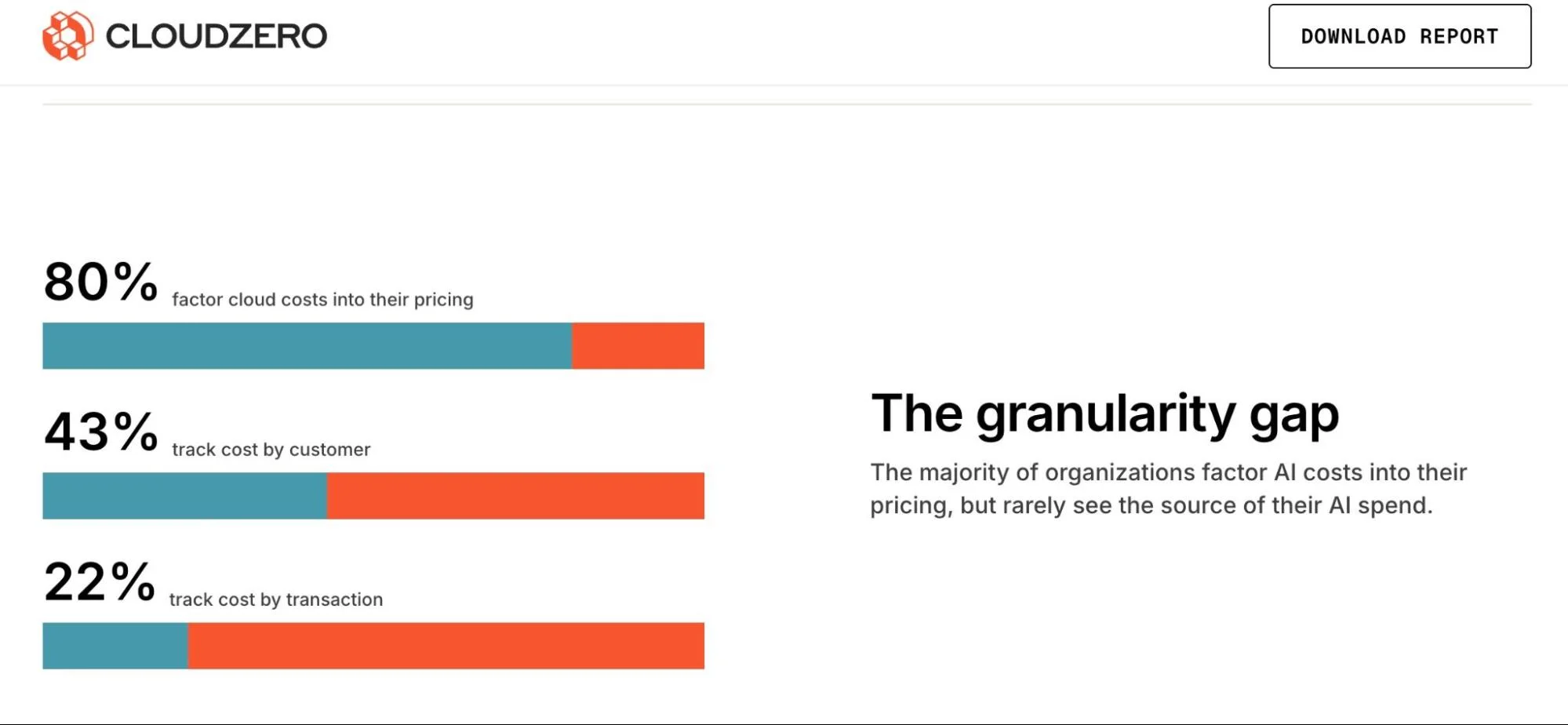
AI spend is the fastest-growing and least-visible category in most IT budgets. According to CloudZero’s FinOps in the AI Era: A Critical Recalibration report, 40% of surveyed organizations are now spending more than $10 million annually on AI, and most can’t attribute those costs at the level of detail needed to evaluate whether the investment is paying off. Only 43% track AI costs by customer, and fewer than a quarter track by transaction.
For IT leaders, governing AI spend starts with the same discipline that cloud cost management required a decade ago: establishing visibility before trying to optimize. That means tracking AI costs by workload, model, team, and, where possible, by the business outcome the AI investment is meant to drive.
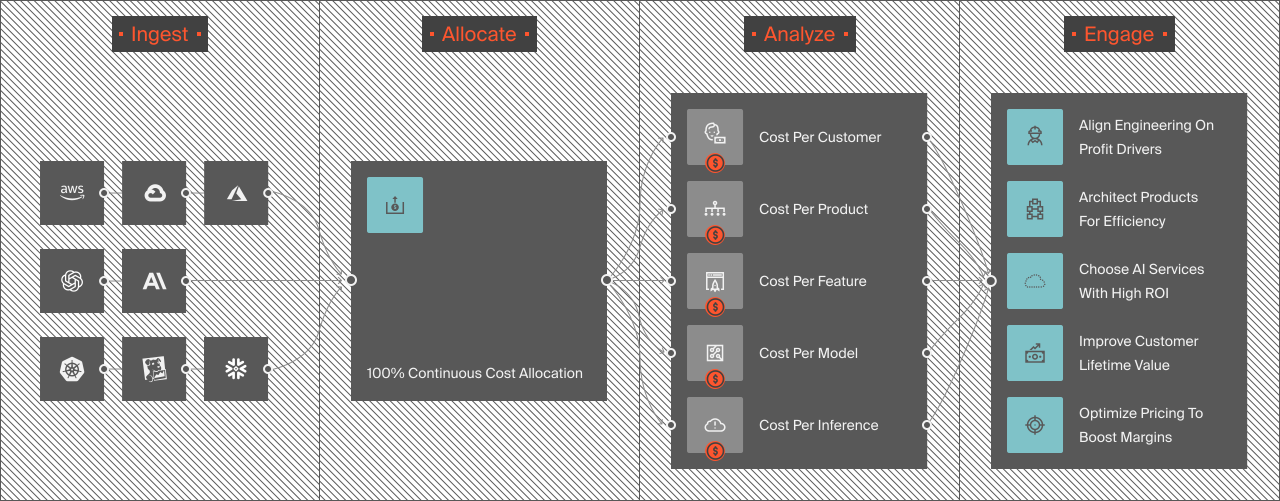
CloudZero integrates AI and cloud spend to the teams, products, and customers generating it, giving finance and IT leaders the attribution layer needed to evaluate AI investments against actual business returns.  .
.
What Are The Best IT Cost Reduction Ideas For Quick Wins?
If you’re looking for IT cost reduction ideas that deliver results in weeks instead of quarters, these are the areas with the fastest payback and lowest implementation risk.
Shut down idle cloud resources. Run a report on all cloud instances that have had zero meaningful activity in the past 30 days. Orphaned snapshots, unattached storage volumes, and instances associated with completed projects are candidates for immediate termination. This takes hours to identify and has zero operational impact.
Eliminate duplicate monitoring and observability tools. Observability tool sprawl is common. Organizations accumulate multiple APM, logging, and monitoring platforms over time. Each charges based on data volume ingested, which grows with usage. Consolidating to a single platform where possible reduces both licensing cost and data ingestion fees.
Review cloud data transfer costs. Egress costs — charges for moving data out of a cloud provider’s network — are frequently overlooked but can be substantial. Reviewing inter-region data transfer patterns and optimizing data architecture to minimize unnecessary transfers is a clean cost reduction with no performance tradeoff.
Consolidate cloud accounts. Many organizations accumulate cloud accounts created for specific projects or teams that were never decommissioned. Each account carries baseline costs. Consolidating to a rationalized account structure simplifies governance and eliminates redundant spend.
Audit third-party API usage. Third-party API calls — to mapping services, payment processors, data enrichment providers, and similar — accumulate cost quickly and are rarely monitored closely. A usage audit frequently surfaces calls that can be cached, batched, or eliminated without functional impact.
How Do You Measure IT Cost Reduction Success?
Cutting spend is easy to measure in absolute terms. Measuring whether IT cost reduction efforts are actually improving efficiency, rather than just reducing capability, demands a different set of metrics.
Cost as a percentage of revenue tracks IT spend relative to revenue growth and tells you whether the business is scaling efficiently. If IT costs are growing faster than revenue, cost reduction efforts need to focus on the highest-waste areas. If they’re growing slower, the organization may have room to invest in strategic capabilities.
Waste percentage measures the share of IT spend attributed to idle, unused, or overprovisioned resources. Tracking this over time shows whether rightsizing, consolidation, and governance efforts are taking hold.
Cost per business unit or product turns aggregate spend into actionable intelligence. When a product team can see their cloud cost per feature or per active user, they have the context to make better engineering decisions. See how CloudZero surfaces these metrics in the cloud unit economics guide.
Budget variance measures the gap between forecast and actual IT spend. Tightening this variance over time — through better attribution, more accurate forecasting, and real-time anomaly detection — is a direct indicator that IT cost management processes are maturing.
Frequently Asked Questions About IT Cost Reduction Strategies
Stop Guessing Where Your IT Costs Are Going
Most IT cost reduction efforts stall because the underlying data isn’t there. You can’t eliminate waste you can’t see. CloudZero is the only cost intelligence platform that gives finance and IT leaders the attribution layer needed to find the waste, make the cuts, and prove the savings delivered.