Finance and engineering both thrive on efficiency. So when companies realize they’re wasting cloud spend, but aren’t sure where or how, both teams become frustrated. It’s remarkable how common this scenario has become, particularly over the past five years.
Before the pandemic, Gartner reported that companies wasted over $14 billion on cloud services. During the cloud adoption surge in 2020, IDG found that 70% of US businesses overspent by as much as 62%. Cloud waste remains high — approximately 32% of cloud budgets, or $44.5 billion, lost to inefficiency as recently as 2025.
Even a small percentage of wasted spend, let alone 35%, can eat into your margins. The issue can even worsen as your company grows, as gross margins don’t improve with scale — unlike what many companies assume.
While you can usually fix a single overrun, unraveling and fixing years of architectural decisions can be complicated, time-consuming, and costly. The result can mean finance missing gross margin improvements and engineering not having the budget they need to create competitive and helpful features.
So, what can you do? Start by uprooting the disconnect between engineering and finance.
Why Engineering And Finance Teams Struggle To Align On Cloud Costs
Recent research shows the gap between engineering and finance teams continues to fuel cloud waste. A 2025 study found that enterprises estimate 21% of their cloud infrastructure spend is wasted, with 52% citing a misalignment between FinOps and developers as the primary cause. Even more concerning, 55% admitted they often ignore cost management altogether.
The disconnect is clear: while finance leaders push for predictability and efficiency, many engineers still default to over-provisioning, leaving idle instances and oversized workloads running. Developers themselves see the issue — in fact, 62% want more control and responsibility for cloud cost management — but they lack the tools and visibility they need. Only a third of developers report having automated cost-efficiency practices, and fewer than half say they have full real-time visibility into wasted or unused cloud resources.
CloudZero’s VP of Engineering, Bill Buckley, sees the disconnect, too.
“Teams often plan on different time scales — engineering is planning out in months or a quarter or two, finance often wants to plan a year or two out,” says Bill.
“Engineering teams are often not watching past spend trends closely enough to answer questions from finance about why a cloud bill wasn’t what they expected,” Bill continues.
Modeling is also challenging, particularly because cloud costs are variable and complex to predict accurately. Finance understands that it’s hard, but still wants nice models for how an input X will change the cost Y. Engineering often doesn’t know the financial relationship between X and Y, so it’s hard to give finance the cost answers they need.
Finance may also not understand the technical details of how throttling cloud budgets can negatively affect service delivery. Engineers know. But they often lack an effective cloud cost solution to clearly illustrate where, why, and how money is being spent.
Keeping systems running smoothly, minimizing downtime, and fostering continuous software improvement are the priorities for engineers.
If finance doesn’t know how much their organization spends on a product, customer, or another business unit, they have no basis for determining if they are charging enough to support the organization’s profitability.
However, there is a better way. Engineering and finance can use cloud cost intelligence to align software engineering decisions with business objectives.
Research Report
FinOps In The AI Era: A Critical Recalibration
What 475 executives told us about AI and cloud efficiency.
5 Ways To Align Engineering And Finance On Cloud Cost Management
Nothing makes finance teams’ blood turn cold faster than a sudden increase in an AWS bill. They know this could result in a potential margin loss. Thinner margins can mean the company may struggle to fund critical investments during periods of rapid growth or remain profitable when growth slows.
Likewise, engineers desire the freedom to focus on improving products and services, rather than being bogged down by concerns about overspending.
How can you ensure that engineering and finance teams collaborate effectively, particularly when it comes to cloud costs?
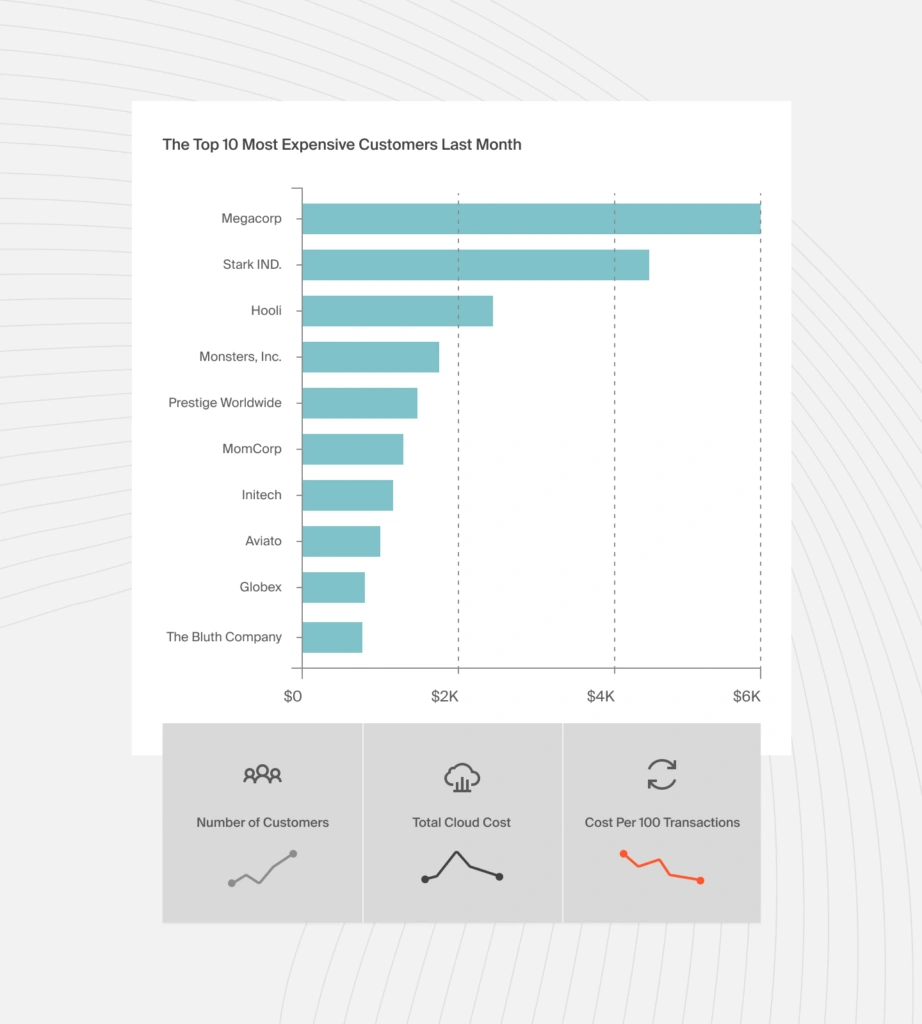
“We use our own platform to watch spend, but also better to understand how inputs to our system, such as new features and new customers, change the cost of the system,” says Bill on how CloudZero empowers its engineers and finance people to tell how their activities impact the entire company.
Several other ways can help your finance and engineering teams work together more effectively. Here are five of the best.
1. Designate a single source of truth
Establish a central resource for the most critical cost metrics that both engineers and finance need. KPIs can include SaaS cost of goods sold (COGS), research and development (R&D) spending, or testing new features. See our guide to cloud cost management tools for platforms that can help centralize these metrics.
Discuss with both teams the metrics they deem crucial to their cloud cost visibility.
Meetings may need to be held as frequently as once a week initially. Work together during this time to improve the metrics you collect, your modeling, and the steps to take when there are actual or potential cost anomalies.
Once you have clear procedures in place and an appreciation of what the other team considers important, you can meet regularly. CloudZero meets once a month, but teams can choose a timeframe that makes sense for them.
2. Treat cost as a shared metric
Bill Buckley recommends that you actively observe how your inputs change and how your outputs follow. Can this learning tell you anything about the kinds of models you’ll need to create in the future? Tracking the right DevOps metrics alongside cost data makes this modeling significantly more accurate.
Say, for example, that a large number of enterprise customers joined your company last month. How did that increase affect your unit cost?
With cost visibility, you should be able to see how this increase in customers affects your cloud spend, as well as how it impacts your cost per customer, which can help ensure that you can serve these new customers profitably.
3. Correlate costs with events
Finance wants to know where they are investing money and why. They also want to know what the potential ROI might be.
Engineers with the right tools can connect the dots between their cloud cost optimization strategy and specific products and features. When engineers know where and how to look, they can correlate costs with specific events.
Suppose you’re deploying…
The black bar above illustrates the exact moment when engineering began deployment, and the blue chart shows the cost over time. Here, we can see that costs spiked after a deployment. The fourth bar shows a deployment followed by a spike, after which costs leveled off.
With a cloud cost intelligence approach, engineers and finance professionals can easily understand how an event affects the organization’s cloud spend. An event can range from an enterprise customer onboarding to the rollout of a new feature in your software.
4. Make cloud costs easier to predict
Finance and engineering may struggle to decipher an AWS bill, especially if they rely solely on CloudWatch. A simple cost visualization tool does not show you important metrics in the context of your business.
For example, you cannot use it to estimate the cost of onboarding a single customer or creating a new feature. So, you might not be able to predict how much a similar project will cost you in the future.
Using cloud cost intelligence, you can identify historical patterns that reveal the average costs of providing a service. That way, both engineers and finance teams can track how cloud spend may change over time, determine a reasonable amount to allocate to projects, and avoid going over budget.
5. Alert the right people about potential overspending
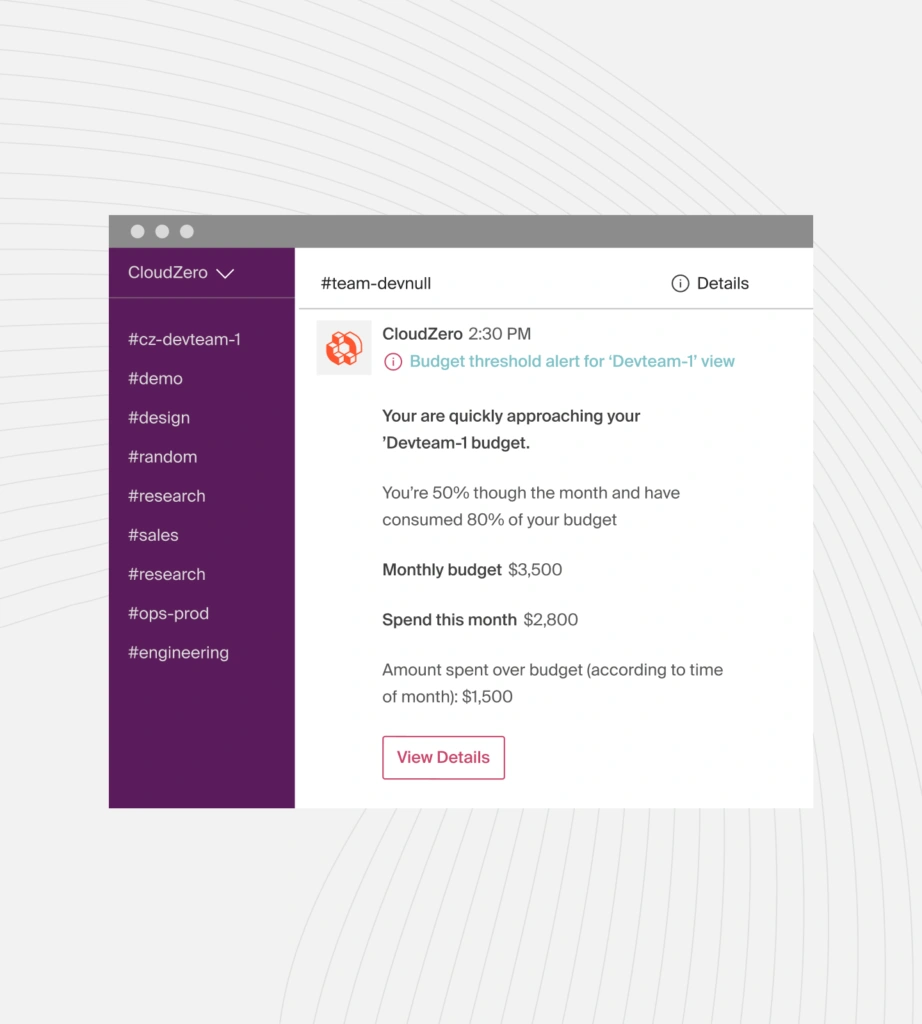
Your finance team must be aware of cost overruns before it’s too late. Otherwise, you risk wasting thousands of dollars. Using a platform that detects cost spikes and automatically notifies the teams responsible allows engineers to address the issue immediately.
Beyond reactive alerts, predictive analytics can help you model future costs for planned features, scaling workloads, or onboarding new customers. This forward-looking approach gives both engineering and finance the insights they need to budget accurately, avoid surprises, and support strategic growth.
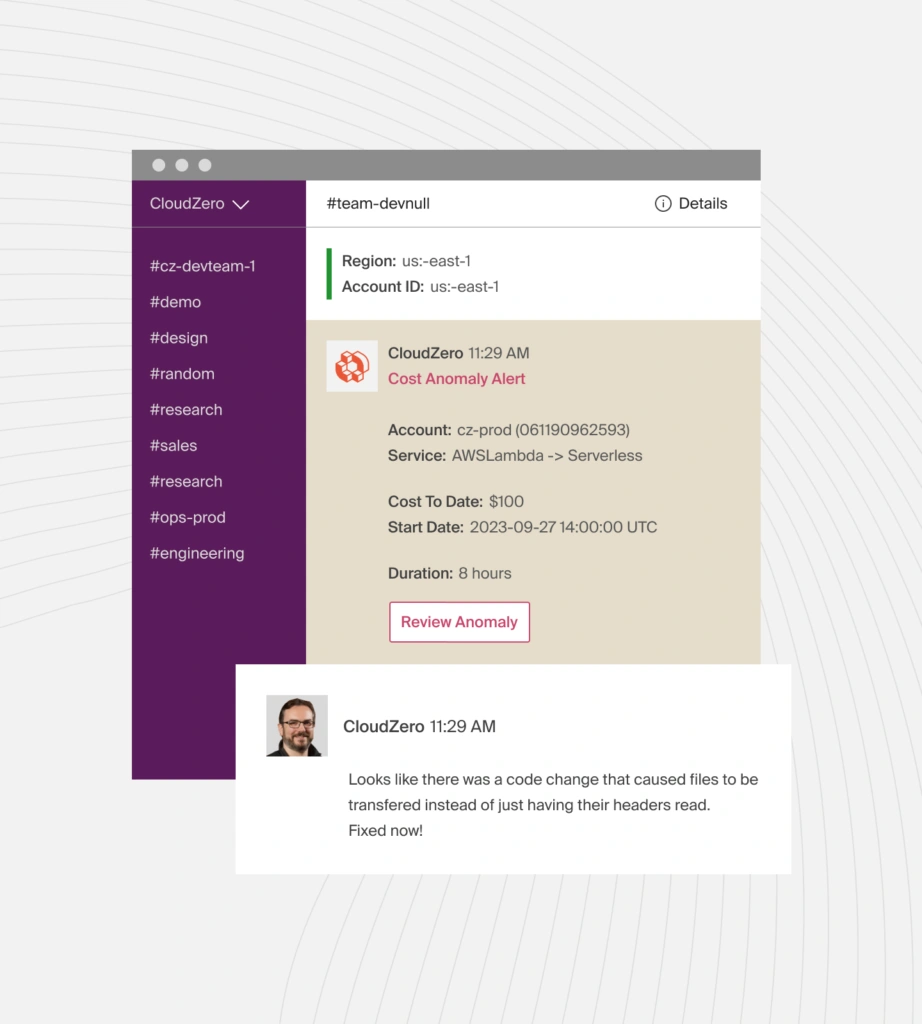
Having a tool that also sends both engineering and finance weekly reports on how costs are evolving will allow you to see where you stand and how your costs might change as you add new features, onboard new customers, and so on.
FAQs About Aligning Engineering And Finance On Cloud Costs
Why do engineering and finance teams struggle to align on cloud spend?
The core tension is time horizon. Engineering teams plan in weeks or quarters; finance plans in annual cycles. Engineers optimize for performance, reliability, and velocity — metrics that don’t always translate cleanly into the budget forecasts finance needs.
Without shared visibility into what’s driving costs, each team works from a different picture of the same bill, which makes productive conversation difficult.
What is FinOps and how does it help close the gap?
FinOps (Financial Operations) is a practice that brings financial accountability to cloud spending by aligning engineering, finance, and business teams around shared cost data.
Rather than treating cloud spend as finance’s problem or engineering’s problem, FinOps distributes ownership — giving engineers visibility into the cost impact of their decisions and giving finance the context to understand what’s driving the numbers.
The FinOps Foundation defines it as a cultural practice that enables organizations to get maximum business value from cloud investment through data-driven decision-making.
Who owns cloud cost management — engineering or finance?
Both, and that’s the point. Finance owns forecasting, budgeting, and margin accountability. Engineering owns the decisions that actually generate the costs — which services to use, how workloads are architected, when resources are spun up or down.
Effective alignment means each team takes responsibility for its part without waiting for the other to act. A shared cloud cost management platform and clear escalation paths are what make that division of ownership work in practice.
What metrics should engineering and finance share?
Start with unit economics: cost per customer, cost per feature, and cost per deployment give both teams a common language tied to business outcomes rather than raw infrastructure spend.
Layer in COGS, R&D spend as a percentage of revenue, and idle cost — the baseline spend with zero customer load — to surface efficiency and margin signals that matter to both sides of the conversation.
How do you get engineers to care about cloud costs?
Give them data that’s relevant to their work, not a line-item bill they can’t act on. When engineers can see the cost impact of a specific deployment, feature, or architectural decision in real time — in the tools they already use — cost becomes a natural part of how they build, not an afterthought imposed by finance. Autonomy and visibility tend to drive cost-consciousness more effectively than top-down pressure.
How To Build A Finance-Engineering Strategic Partnership For Better Cloud Cost Visibility
Cost visibility is often a major sticking point between engineering and finance. Both teams are fully capable of addressing cost issues. Yet, they cannot optimize cloud spend if they don’t know where and how overruns are happening.
Organizations must be able not only to see how much they spend on their AWS bill, but also how cloud spend correlates to the business metrics they care about (i.e., features, products, customers, and more).
That is why CloudZero’s cloud cost intelligence platform empowers organizations with rich cost metrics that help engineering and finance speak the same language.
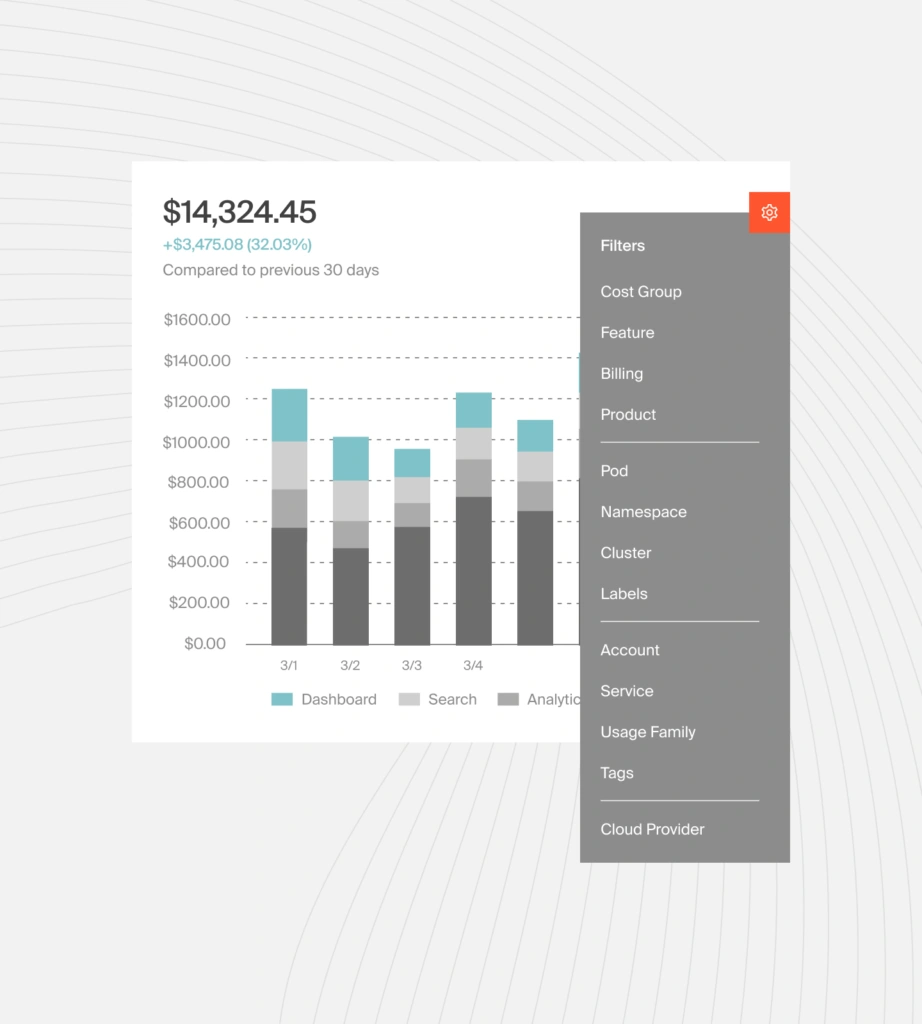
CloudZero enables teams to correlate cloud spend to metrics such as cost per customer, feature, product, dev team, environment, and more. Additionally, CloudZero’s cost anomaly alerts help engineering teams to quickly identify cost runs and address any code issues before wasting thousands of dollars — something that finance will be very happy about.
Ultimately, CloudZero enables engineering and finance teams to collaborate on cloud spend by increasing cost visibility.  to see how CloudZero can help align your finance and engineering teams.


FinOps In The AI Era: A Critical Recalibration
What 475 executives told us about AI and cloud efficiency.