
If you’re evaluating CloudZero alternatives, you’re asking a specific question: which cloud cost management platform connects spend to business outcomes, not just dashboards to a bill?
Most tools in this category offer some version of cost visibility. What separates them is how deep that visibility goes, who it’s built for, and whether it can answer what ultimately matters: was that spend worth it?
This guide covers 10 CloudZero competitors and alternatives, what each does well, where each falls short, and a head-to-head comparison across the dimensions that matter most for FinOps teams in 2026.
What Is Cloud Cost Management?
Cloud cost management is the practice of tracking, allocating, and optimizing cloud infrastructure spend, across providers, services, teams, and business units, to eliminate waste and connect spending to business value.
The market splits into three tiers. Visibility platforms show where spend is going by service, account, or environment. Allocation platforms attribute costs to business entities, products, features, customers, teams. Unit economics platforms tie cost to demand, measuring cost per customer, transaction, or cost per AI inference call, and tracking whether that ratio improves as you scale.
Most organizations need different capabilities at each stage of FinOps maturity. Knowing where each platform sits helps you match the tool to where your practice actually is.
Research Report
FinOps In The AI Era: A Critical Recalibration
What 475 executives told us about AI and cloud efficiency.
CloudZero Alternatives At A Glance
There are dozens of FinOps tools on the market. The 10 below represent the most commonly evaluated alternatives to CloudZero, spanning automation platforms, enterprise governance tools, observability-native solutions, and specialist products.
|
Tool |
Best for |
Allocation depth |
Unit economics |
AI cost visibility |
Multi-cloud + SaaS |
|
CloudZero |
Engineering-led orgs, SaaS, AI-heavy workloads |
✅ Without perfect tags |
✅ Deep |
✅ Yes |
✅ Yes |
|
nOps |
AWS-heavy shops needing automation |
✅ With tagging |
❌ |
❌ |
⚠️ AWS, GCP, Azure (commitment mgmt only) |
|
Apptio Cloudability |
Large enterprise finance teams |
✅ With tagging |
⚠️ Limited |
❌ |
✅ |
|
CloudHealth (VMware Broadcom) |
Multi-cloud governance, hybrid IT |
⚠️ Basic |
❌ |
❌ |
✅ |
|
Datadog CCM |
Teams already on Datadog observability |
⚠️ Basic |
❌ |
⚠️ Partial |
⚠️ Partial |
|
Finout |
Multi-cloud + SaaS unified view |
✅ Virtual tagging |
⚠️ Limited |
❌ |
✅ |
|
Harness |
DevOps teams in CI/CD workflows |
⚠️ Basic |
❌ |
❌ |
✅ |
|
Vantage |
Startups and SMBs |
⚠️ Basic |
❌ |
❌ |
✅ |
|
Flexera One |
Enterprise hybrid + IT asset management |
✅ With tagging |
❌ |
❌ |
✅ |
|
Kubecost |
Kubernetes-only environments |
✅ Container-level |
❌ |
❌ |
❌ K8s only |
|
AWS Cost Explorer |
AWS-only, early-stage visibility |
❌ |
❌ |
❌ |
❌ AWS only |
CloudZero Vs The Top 10 Alternatives
Here are the top 10 CloudZero alternatives:
1. CloudZero vs nOps: FinOps automation vs cost intelligence
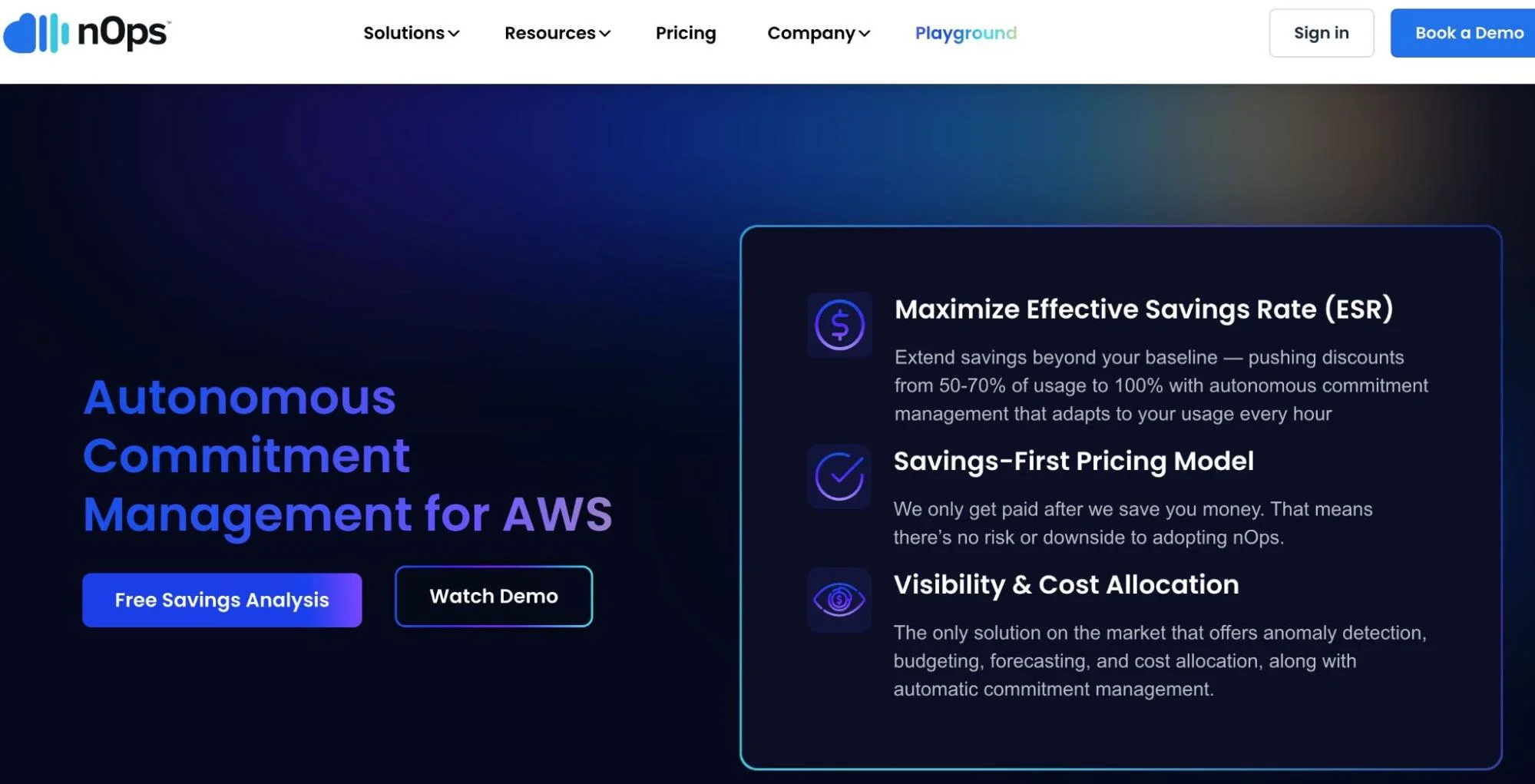
nOps is an automation-first cloud cost platform with its deepest roots in AWS. Its main suite covers cost allocation, Kubernetes visibility, commitment management, rightsizing, Spot instance optimization, and resource scheduling.
Its core strength is execution. nOps doesn’t just surface waste, it acts on it. It automatically manages Reserved Instance lifecycles, rightsizes compute, and schedules resources without manual intervention.
On multi-cloud: nOps has expanded into GCP and Azure, offering autonomous commitment management, Committed Use Discounts (CUDs) for GCP and Savings Plans and Reservations for Azure.
However, the broader feature set (Spot automation, Karpenter integration, workload rightsizing, resource scheduling) remains AWS-centric. Teams running primarily on GCP or Azure will find a thinner product outside of rate optimization.
There is no path to unit economics on any provider, no cost per customer, no cost per feature. nOps reduces infrastructure spend; it doesn’t connect that spend to product or business outcomes.
2. CloudZero vs IBM Cloudability: FinOps maturity vs enterprise legacy
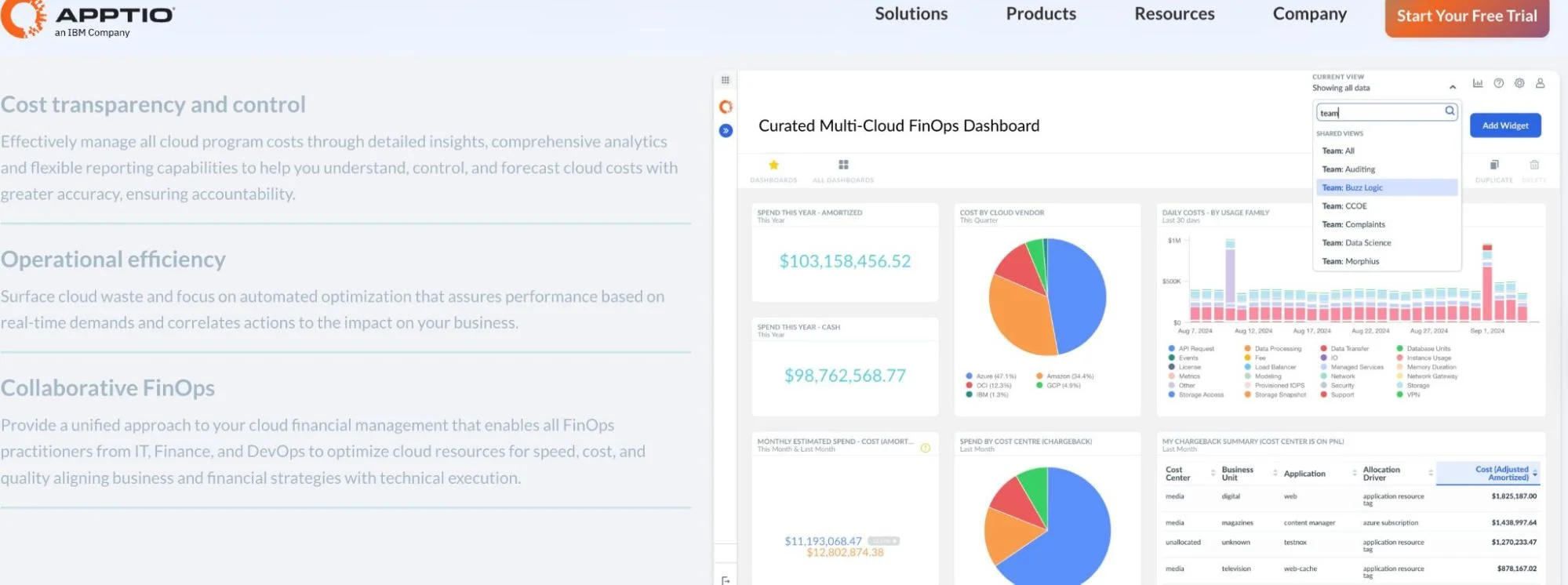
IBM Cloudability supports AWS, Azure, and GCP and is built for enterprise finance teams. It aligns closely with the FinOps framework and covers budgeting, forecasting, showback, and chargeback.
Its enterprise governance capabilities are real — for large organizations with mature tagging practices and finance-team-led FinOps functions, Cloudability delivers structured reporting and multi-cloud cost allocation. The platform has aged: users cite a dated interface, slow implementation, and heavy dependence on tag hygiene. For a contrast in approach, see CloudZero’s guide to cloud cost allocation.
Unit economics are, however, limited. Pricing runs 2–3% of cloud spend, which scales steeply at enterprise scale.
3. CloudZero vs VMware Tanzu CloudHealth: FinOps intelligence vs IT governance
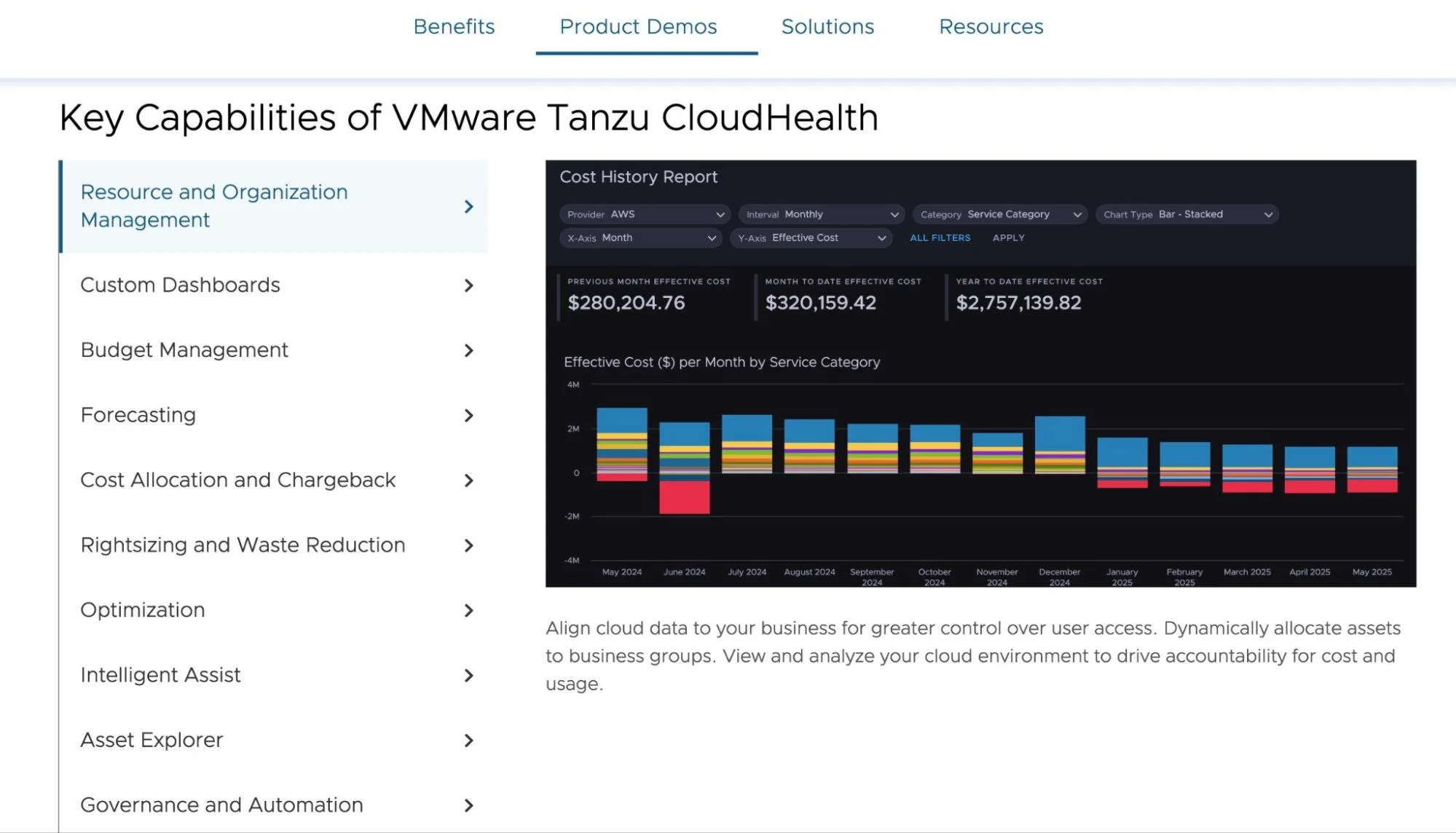
VMware Tanzu CloudHealth is an enterprise governance platform with strong multi-cloud and hybrid coverage. Its policy engine suits large IT teams enforcing cost standards across dozens of accounts, business units, and on-premises environments.
It is an IT operations tool, not a business intelligence layer. Cost allocation is functional but shallow. There is no unit economics capability. Post-Broadcom acquisition complexity is a practical procurement consideration.
4. CloudZero vs Datadog CCM: FinOps visibility vs observability integration
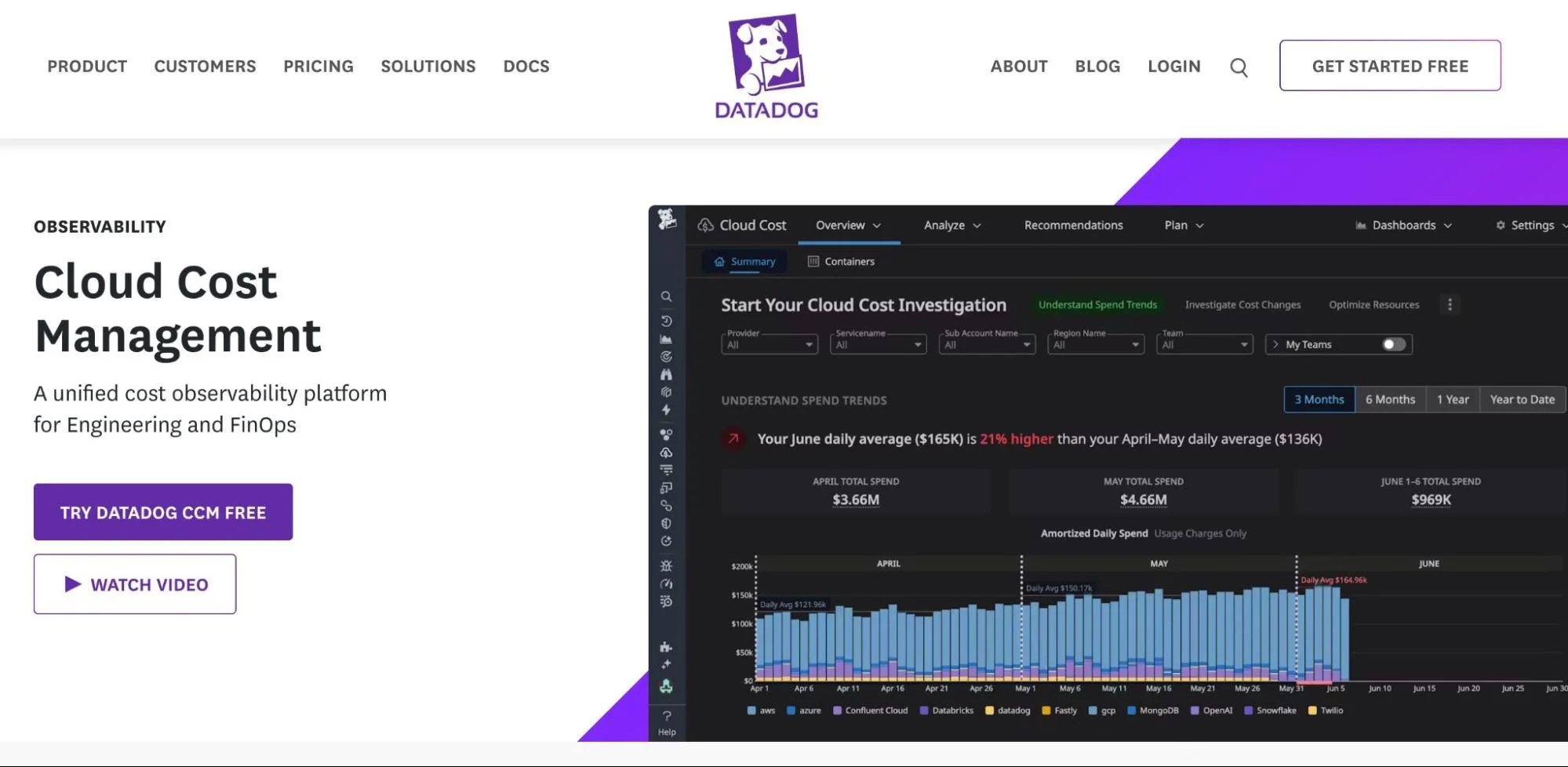
Datadog Cloud Cost Management embeds cost data into the Datadog observability platform. Engineers already monitoring infrastructure, traces, and logs can correlate cost with performance metrics in the same interface.
For organizations already living in Datadog, that context is genuinely useful. Anomaly detection and Kubernetes cost visibility benefit from the performance data Datadog already holds.
Cost management is a secondary feature, not a core product. Allocation depth is limited, and unit economics are not supported.
Related reading: A Complete Guide To Datadog Pricing.
5. CloudZero vs Finout: FinOps allocation approaches compared
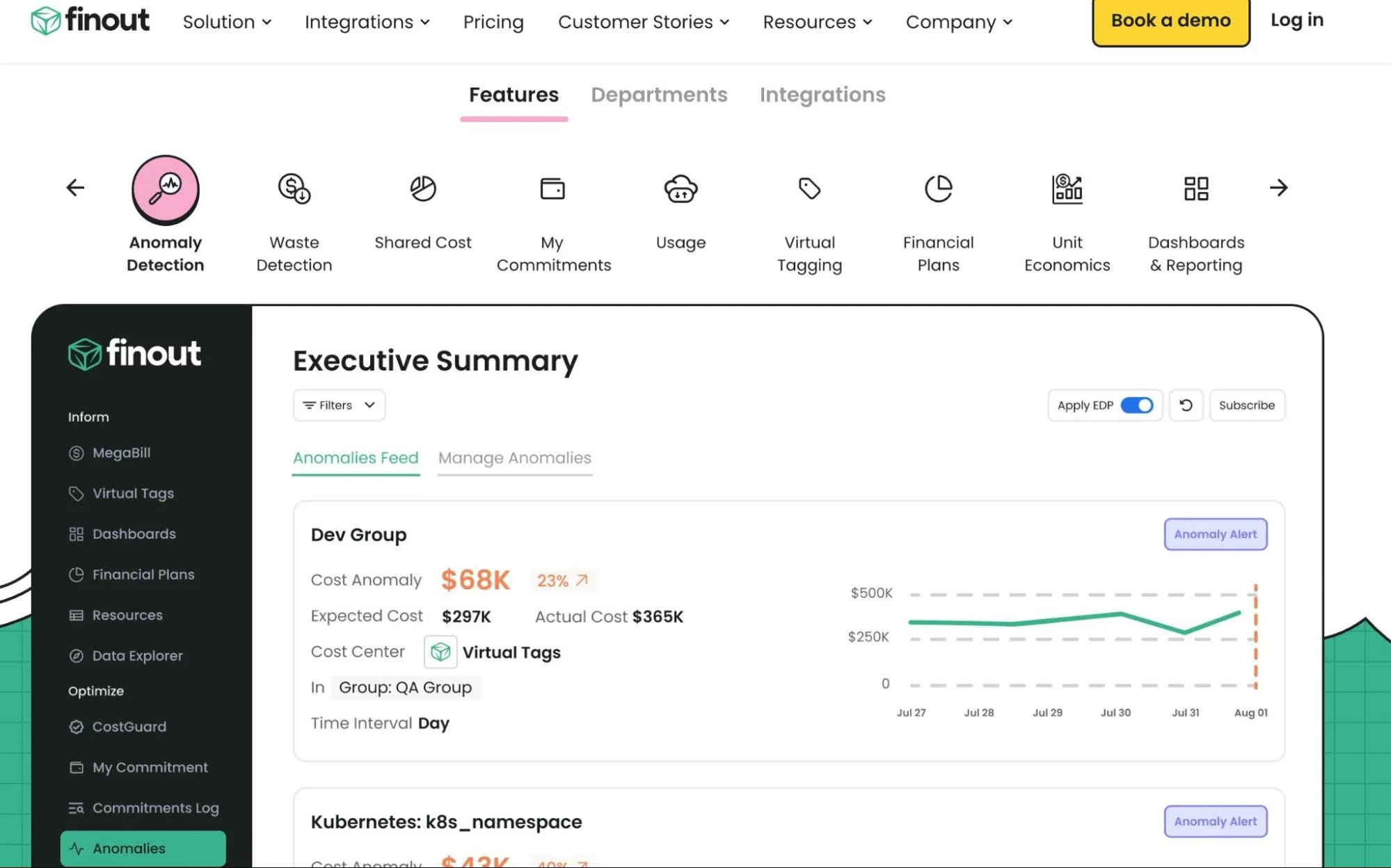
Finout’s “MegaBill” consolidates AWS, Azure, GCP, Kubernetes, and SaaS costs, including Snowflake and Datadog, into a single normalized view. Virtual tagging lets teams apply allocation logic retroactively, without waiting on engineering to fix upstream tags.
For organizations with incomplete tag coverage, virtual tagging delivers fast, no-code allocation.
The distinction worth understanding: virtual tagging applies labels in the analysis layer. It is not a structural, code-defined cost model that reflects how software is built and deployed.
Unit economics support exists but is less mature than CloudZero’s dimensional allocation approach.
Finout actively markets against CloudZero, framing it as dependent on static tags. That characterization doesn’t hold up against CostFormation’s tag-independent allocation model.
6. CloudZero vs Harness: FinOps cost management vs DevOps integration
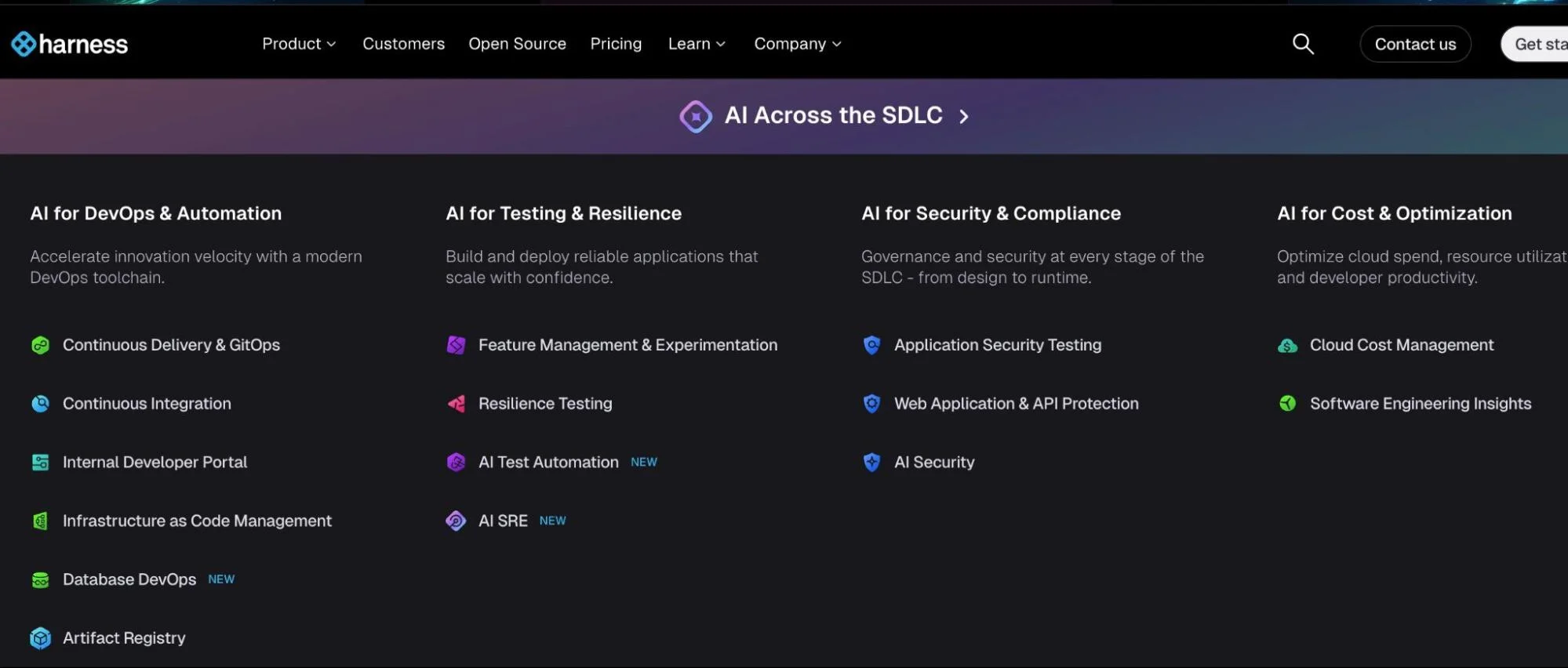
Harness is a software delivery platform, CI/CD, feature flags, infrastructure provisioning, with cloud cost management as one module. Cost anomaly detection is strong, and embedding cost data inside deployment workflows lets engineers see financial impact alongside release decisions in real time.
Cost management is a module, not a core product. Allocation depth and unit economics are limited. Teams not already on the Harness DevOps platform have little reason to adopt it for cost features alone.
7. CloudZero vs Vantage: FinOps depth vs. simplicity
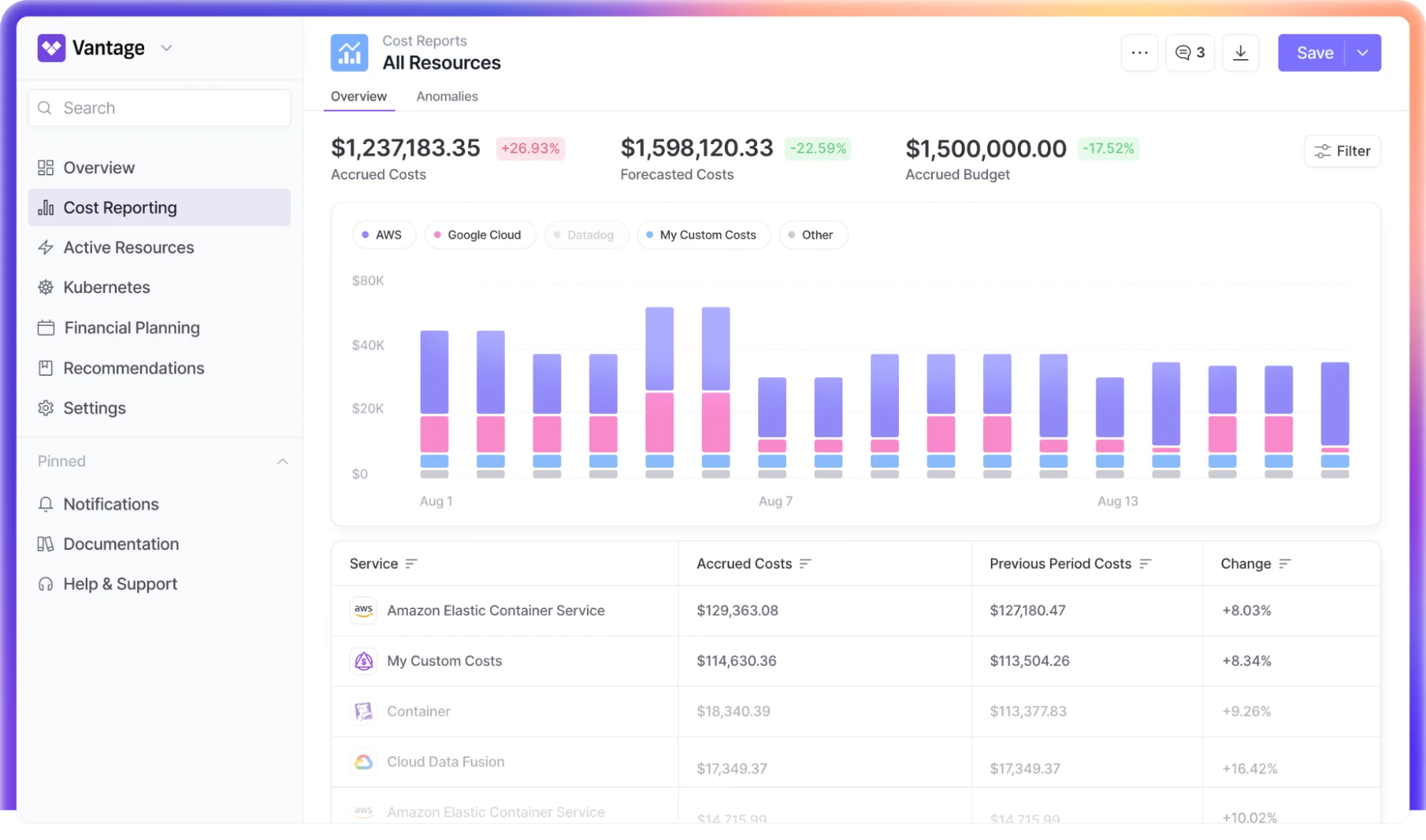
Vantage is a modern visibility platform designed for ease of use. Clean dashboards, trend analysis, anomaly detection, and Slack integration make it fast to set up and easy to navigate, a genuine advantage for teams early in their FinOps journey.
It is a visibility tool. Cost allocation depth, unit economics, and AI cost tracking are outside its current scope. It is not designed for the complex, multi-tenant environments typical of mid-market or enterprise SaaS companies.
8. CloudZero vs Flexera One: FinOps intelligence vs IT asset management
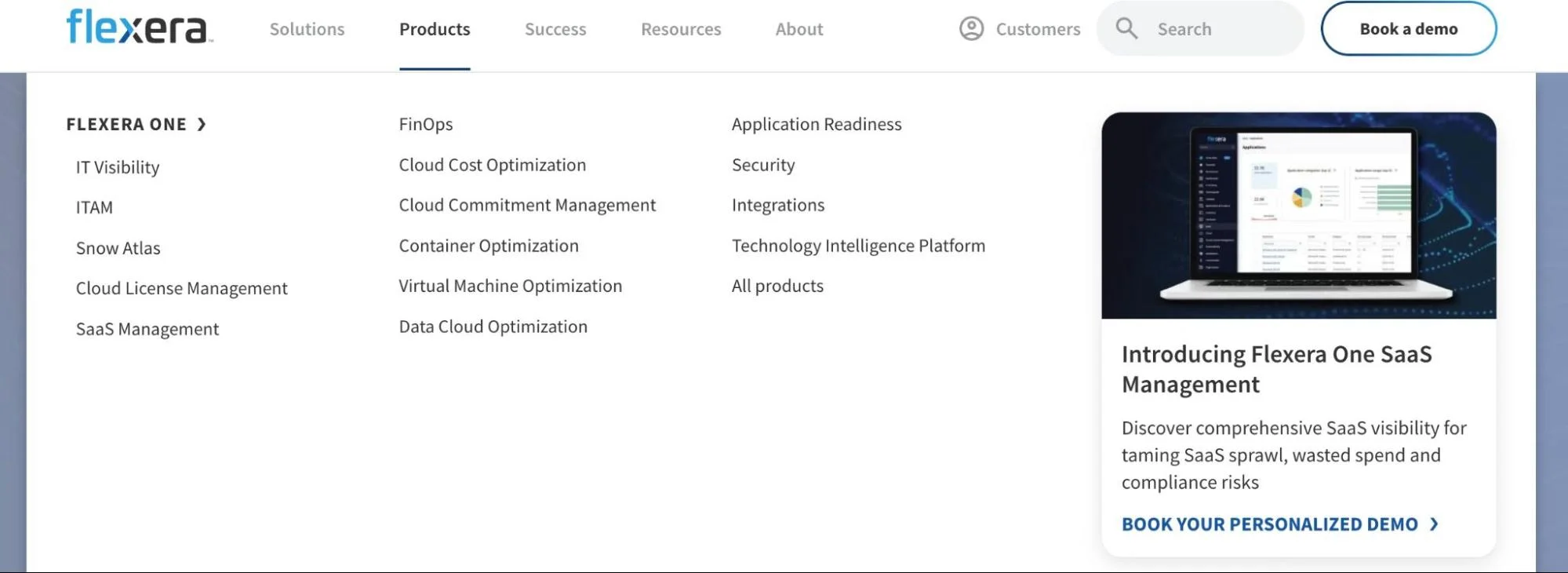
Flexera combines cloud cost management, IT asset management, and SaaS spend oversight in a single platform. Post-acquisition of CloudCheckr and Spot by NetApp, its cloud optimization capabilities are broader than they once were.
Breadth is the trade-off. Granular cost attribution, unit economics, and engineering accountability are not Flexera’s strength. It is a governance platform for IT teams.
9. CloudZero vs IBM Kubecost: FinOps platform vs Kubernetes specialist
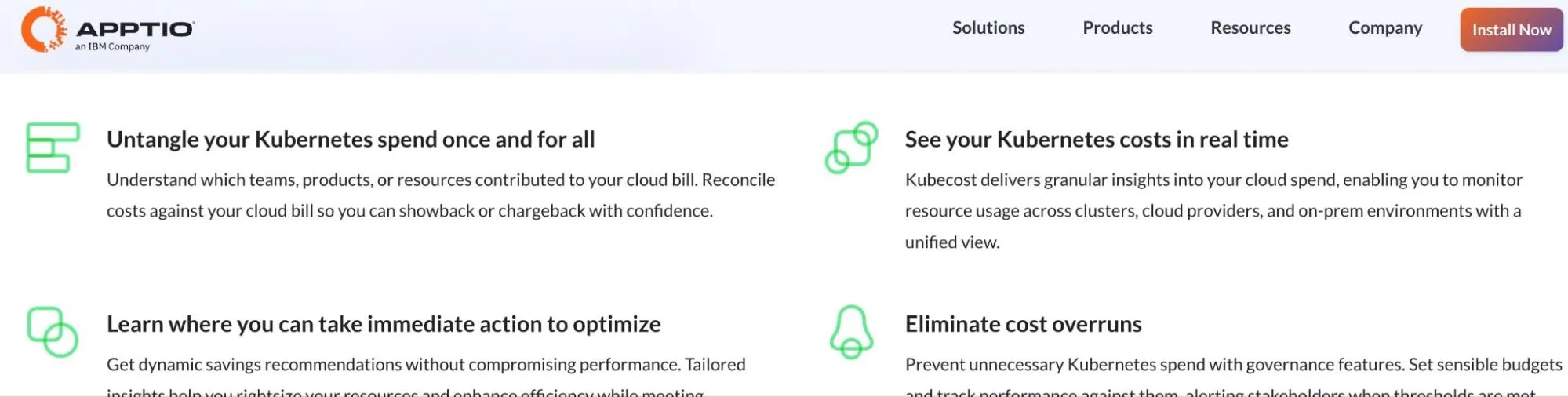
IBM Kubecost is built on OpenCost, the Cloud Native Computing Foundation (CNCF) standard for container cost allocation. It provides cost visibility by namespace, deployment, label, or microservice, without requiring perfect upstream tagging. Engineers can access cost data directly in the CLI via kubectl cost, bringing financial context to where developers actually work.
For a deeper look at how modern teams approach container cost attribution, see our guide to Kubernetes cost management and Kubernetes cost optimization.
Kubecost is a specialist tool. It does not cover non-containerized infrastructure, SaaS costs, or broader unit economics. For organizations where Kubernetes is one piece of a larger cost picture, alongside EC2, Snowflake, RDS, and others, Kubecost answers one part of the question.
10. CloudZero vs AWS Cost Explorer: FinOps intelligence vs native AWS tooling
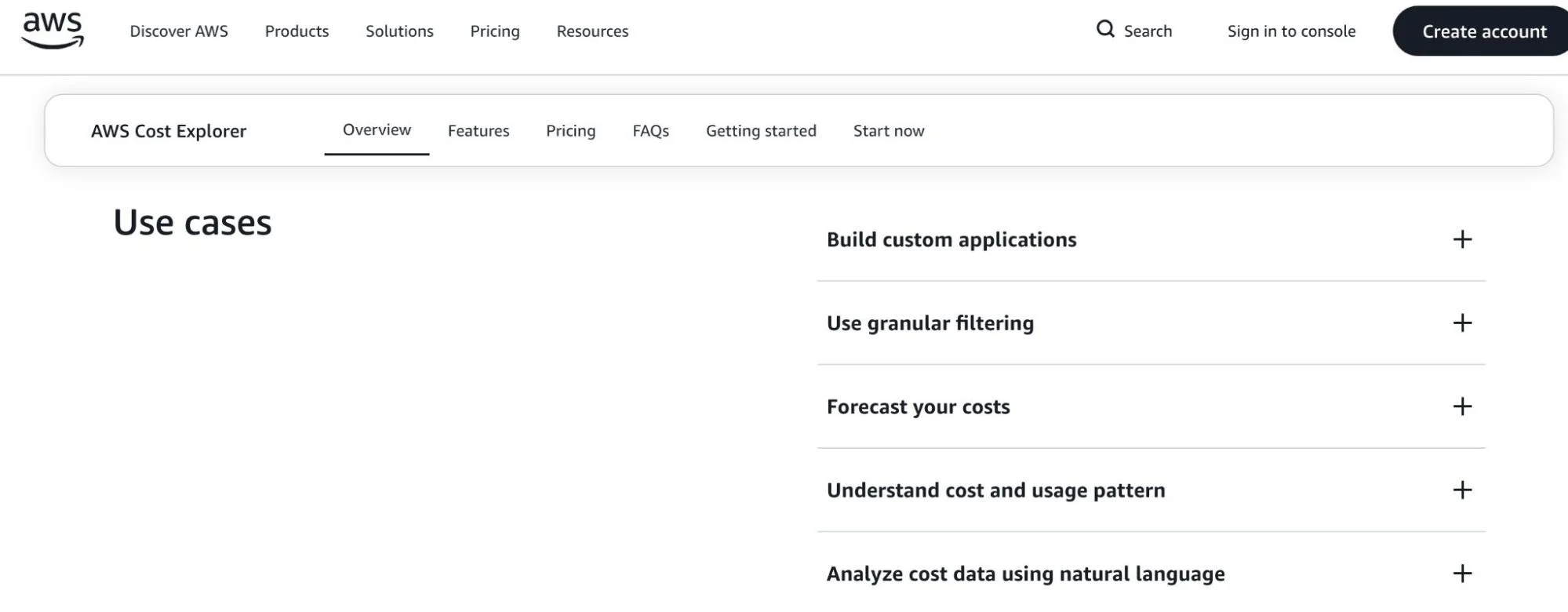
AWS Cost Explorer is Amazon’s native visibility tool, free, already connected to your AWS data, and a reasonable starting point for any team early in its cost management journey.
For a broader look at native and third-party AWS FinOps options, CloudZero’s guide covers the full landscape.
Cost Explorer shows you what the bill says. It does not explain why costs moved or connect spend to business outcomes. It is AWS-only, tag-dependent, and has no unit economics capability. Most organizations outgrow it quickly as their cloud footprint and FinOps maturity grow.
CloudZero Is Built For The Question The Others Don’t Answer
Most tools in this space are built around the bill. CloudZero is built around the business.
CloudZero is a cloud cost intelligence platform purpose-built for software-driven organizations, SaaS companies, AI-native businesses, and engineering-led teams that need to understand not just what cloud costs, but what that spend is producing.
How?
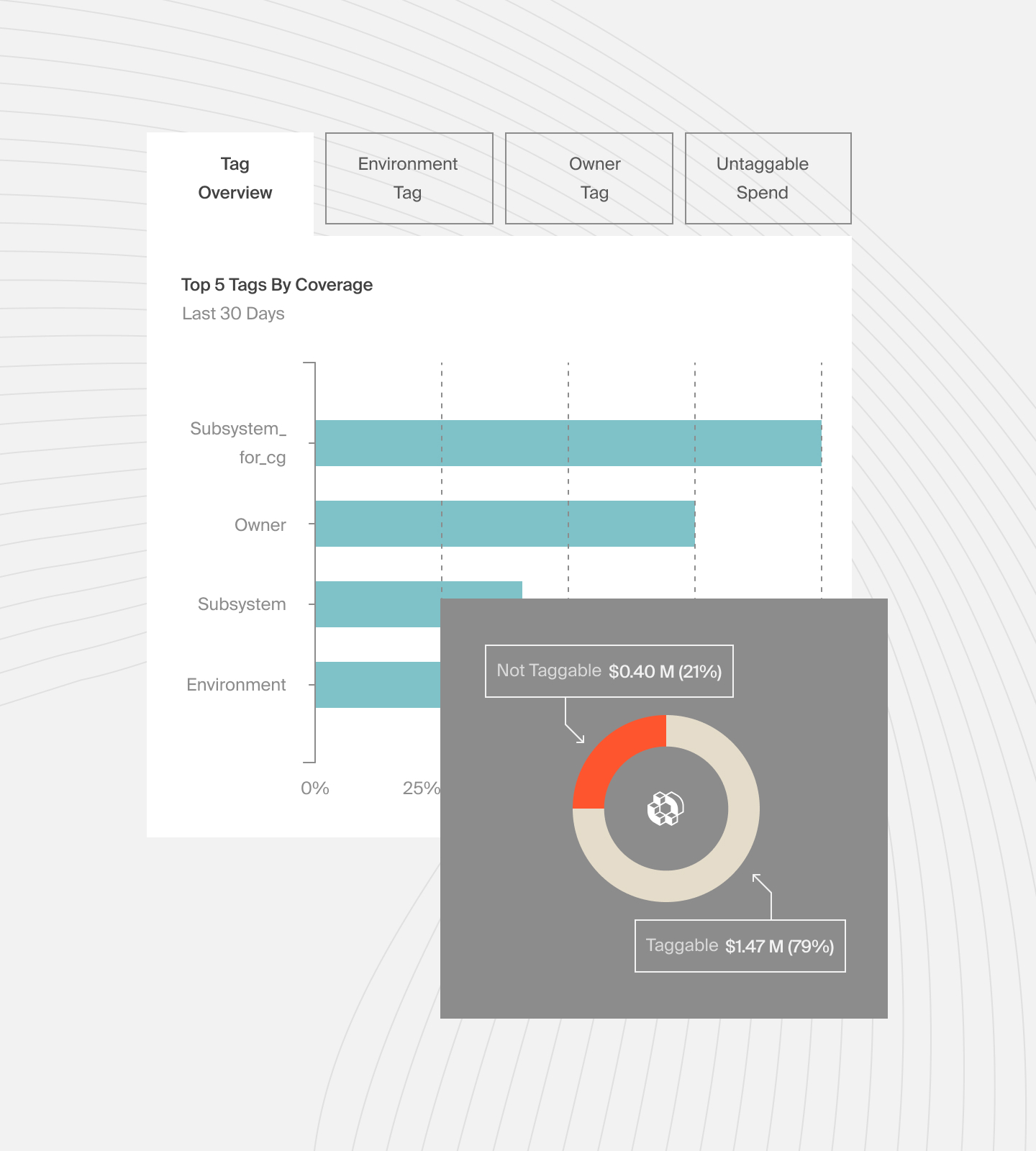
- Allocation without perfect tags. CostFormation uses a code-based model — Infrastructure as Code applied to cost — to allocate 100% of spend including shared resources, multi-tenant architecture, and Kubernetes. Tag debt doesn’t break the model.
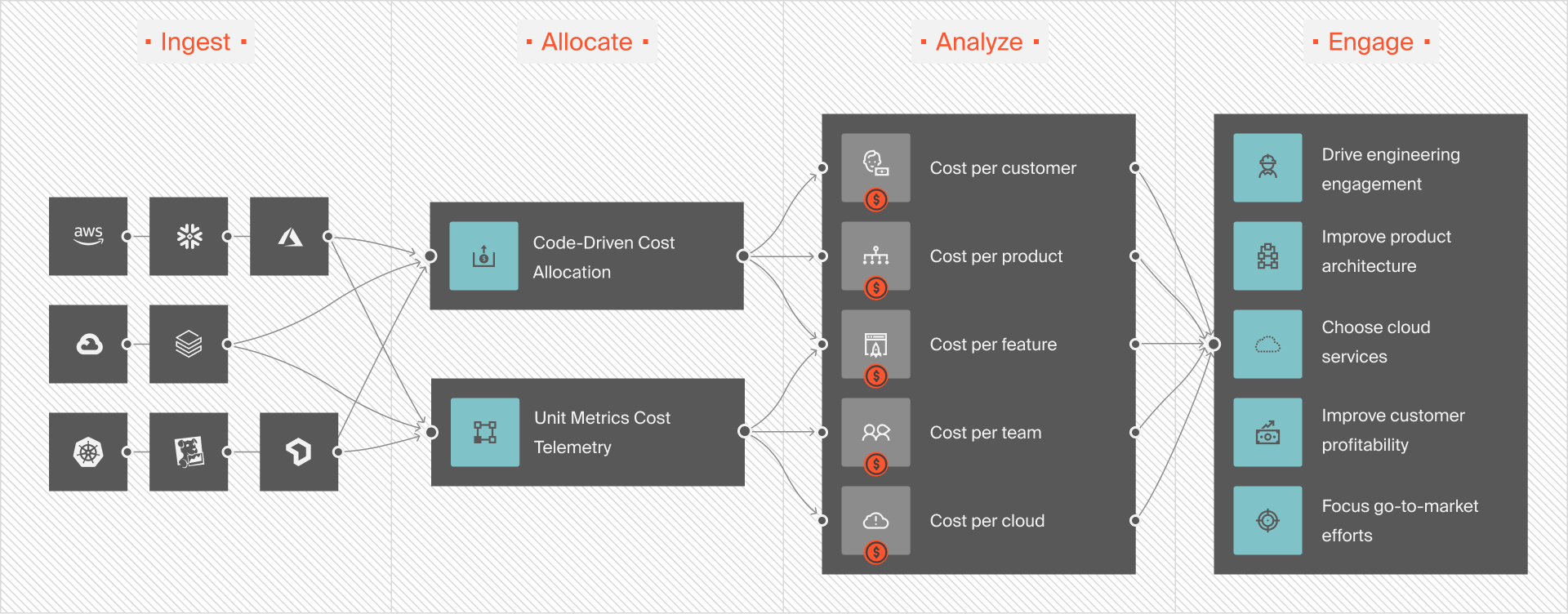
- Unit economics at depth. CloudZero’s Dimensions framework measures cost per customer, feature, team, and cost per AI inference call. Allocations can be layered on top of each other for compounding business insight. That’s the “was it worth it” question, answered in real numbers. For the full picture, see the cloud unit economics guide.
- AI cost visibility. With integrations for OpenAI, Anthropic and other AI providers, CloudZero ingests token-level spend data and allocates it alongside infrastructure and SaaS costs. According to CloudZero’s State of AI Costs research, 49% of companies lack confidence in their ability to calculate AI ROI. For a deeper look at how FinOps applies to AI infrastructure, see FinOps for AI. That visibility gap is the problem CloudZero is built to solve.
- CloudZero also includes AI-powered anomaly detection, real-time cost data, Kubernetes cost visibility, and dedicated FinOps account management. AnyCost ingests IaaS, PaaS, and SaaS costs across AWS, GCP, Azure, Snowflake, Datadog, and more — normalized into a single data model.
The cloud cost intelligence platform trusted by the world’s best engineering teams
CloudZero manages over $15 billion in cloud spend, and the results speak for themselves.
PicPay, the second-largest digital bank in Brazil, saved $18.6 million and achieved the lowest cost-to-serve among Latin American fintechs. Nubank went from 5 engineers using their cost platform to 40 active users within six months of deploying CloudZero, building a cost-ownership culture at one of the world’s fastest-growing fintechs. Across all customers, CloudZero delivers an average of 22% savings in year one.
Other organizations that trust CloudZero with their cloud intelligence include Toyota, Coinbase, DraftKings, Duolingo, Expedia, Grammarly, Klaviyo, Miro, Moody’s, Nubank, Rapid7, Skyscanner and more.
If your organization is ready to do the same,  . You can also get a free cloud cost assessment or take a self-guided product tour.
Frequently asked questions
What is the best CloudZero alternative?
The best alternative depends on your environment and maturity. nOps is strongest for AWS automation. Finout is strongest for no-code multi-cloud and SaaS unification. Vantage is simplest for early-stage visibility. None of the 10 alternatives in this guide match CloudZero’s depth on unit economics or AI cost attribution.
How does CloudZero allocate costs without perfect tags?
CloudZero uses CostFormation, a code-based allocation model that defines cost organization the way Infrastructure as Code defines infrastructure. It allocates 100% of spend, including shared resources and multi-tenant architecture, regardless of tag quality. Engineers define allocation rules in code rather than relying on manual tagging. See the full breakdown in CloudZero’s cost allocation guide.
Is CloudZero right for enterprise organizations?
Yes. CloudZero is used by mid-market and enterprise SaaS companies, AI-native businesses, and Fortune 500 engineering teams. Its dedicated FinOps account management function, effectively an embedded FinOps expert — is particularly valued at enterprise scale.
How does CloudZero handle AI infrastructure costs?
CloudZero ingests data from OpenAI and other AI providers at the token level, allocating AI spend alongside infrastructure and SaaS costs in a single view. Teams can measure cost per inference call, track AI spend by product or feature, and calculate AI ROI using the same Dimensions framework applied to the rest of their cloud costs.
What is the difference between CloudZero and Finout?
Both platforms allocate costs without requiring perfect tags. Finout uses virtual tagging, applying labels retroactively in the analysis layer. CloudZero uses CostFormation, a structural, code-defined allocation model that reflects how software is built and deployed. CloudZero also offers deeper unit economics and AI cost attribution than Finout’s current feature set.
What does CloudZero cost?
CloudZero pricing is customized based on cloud spend volume and organizational requirements. Contact CloudZero directly for a tailored quote.


FinOps In The AI Era: A Critical Recalibration
What 475 executives told us about AI and cloud efficiency.