Amazon Web Services offers cloud computing to organizations of all sizes. It provides low-cost cloud storage, nearly unlimited compute resources, and secure remote computing services. Still, many users find AWS confusing — especially when it comes to managing costs, security, and performance across an expanding cloud footprint.
Companies often struggle to understand AWS billing. Aligning cloud spend to actual operational activities for cost allocation is next to impossible without the right tooling. AWS also limits the amount of compute resources you can use based on your location, and many users struggle to rein in costs when Auto Scaling is activated.
The AWS Well-Architected Framework organizes cloud best practices into six pillars: operational excellence, security, reliability, performance efficiency, cost optimization, and sustainability. The best AWS cloud management tools map to one or more of these pillars, and choosing the right combination depends on which pillar matters most for your workload.
You’ll want to use robust management tools to run your AWS cloud without costly mistakes. AWS-native cloud management tools are a good place to start — services like AWS Control Tower, AWS Systems Manager, and AWS Trusted Advisor provide built-in governance, operational visibility, and optimization recommendations out of the box. However, consider more advanced AWS cloud management solutions if you want deeper control and oversight over the public cloud.
Below, we have categorized a dozen of the best cloud management tools for the critical aspects of cloud computing.
AWS Cost Optimization Tools
Competitive organizations treat cost as a first-class metric. Cost-conscious engineering teams create cost-effective solutions that can reduce operating costs for both the company and its customers. They can then offer competitive pricing and have sufficient funds for sales and marketing campaigns to attract more customers.
1. CloudZero
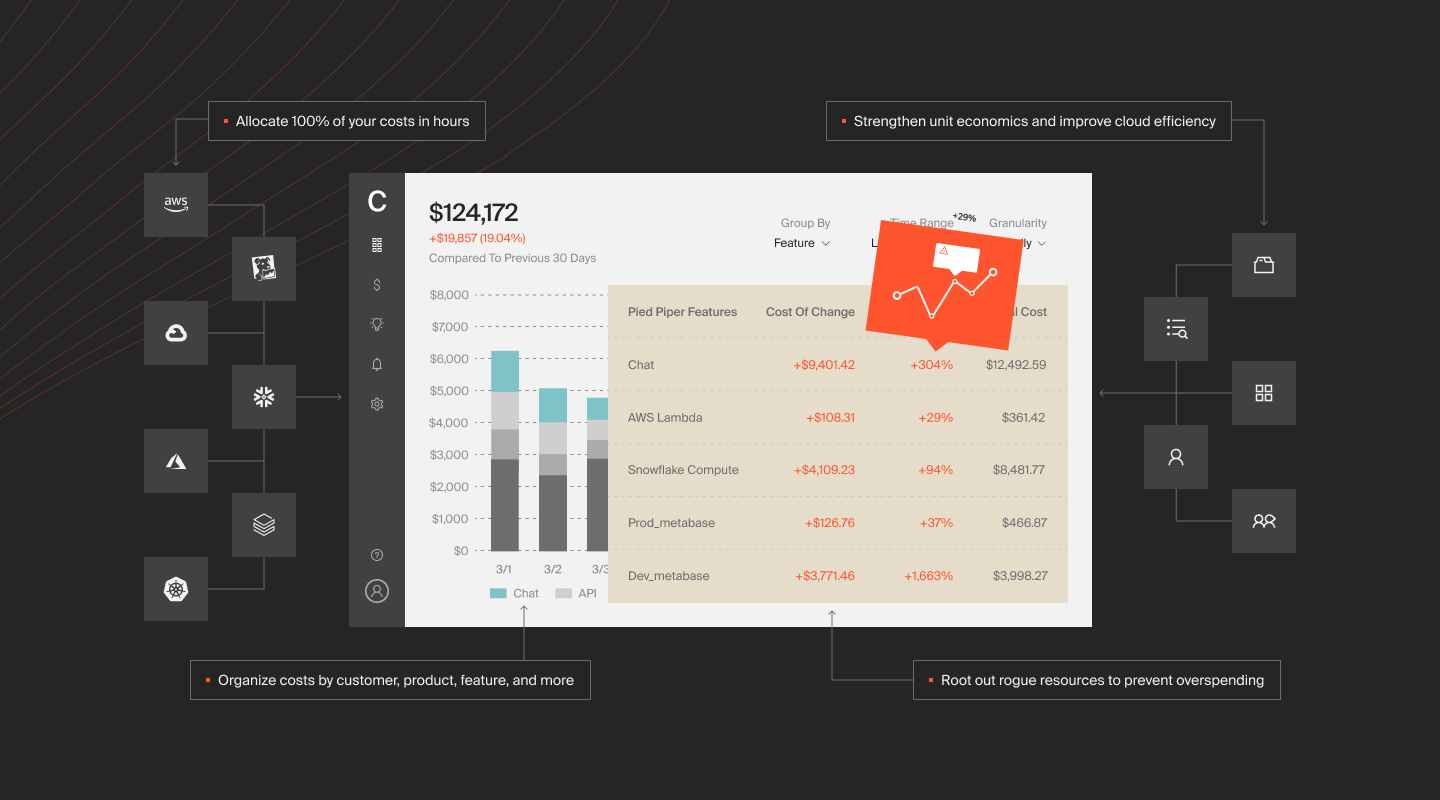
CloudZero helps companies of all sizes optimize cloud costs without sacrificing innovation. Engineering and DevOps teams love CloudZero because it enables them to see how their engineering actions affect costs, enabling them to improve customer experiences without exceeding budgets.
With CloudZero, finance teams can easily understand unit costs to inform business decisions, such as how to price different tiers or which features to include in each tier. They can also determine what and who is driving their cloud spending and why. Unlike most cloud cost management tools, CloudZero translates cloud metrics into actionable cost insights that relate to daily business activities.
For instance, CloudZero provides both high-level and granular cost data, such as average cost per customer and cost per customer, respectively.
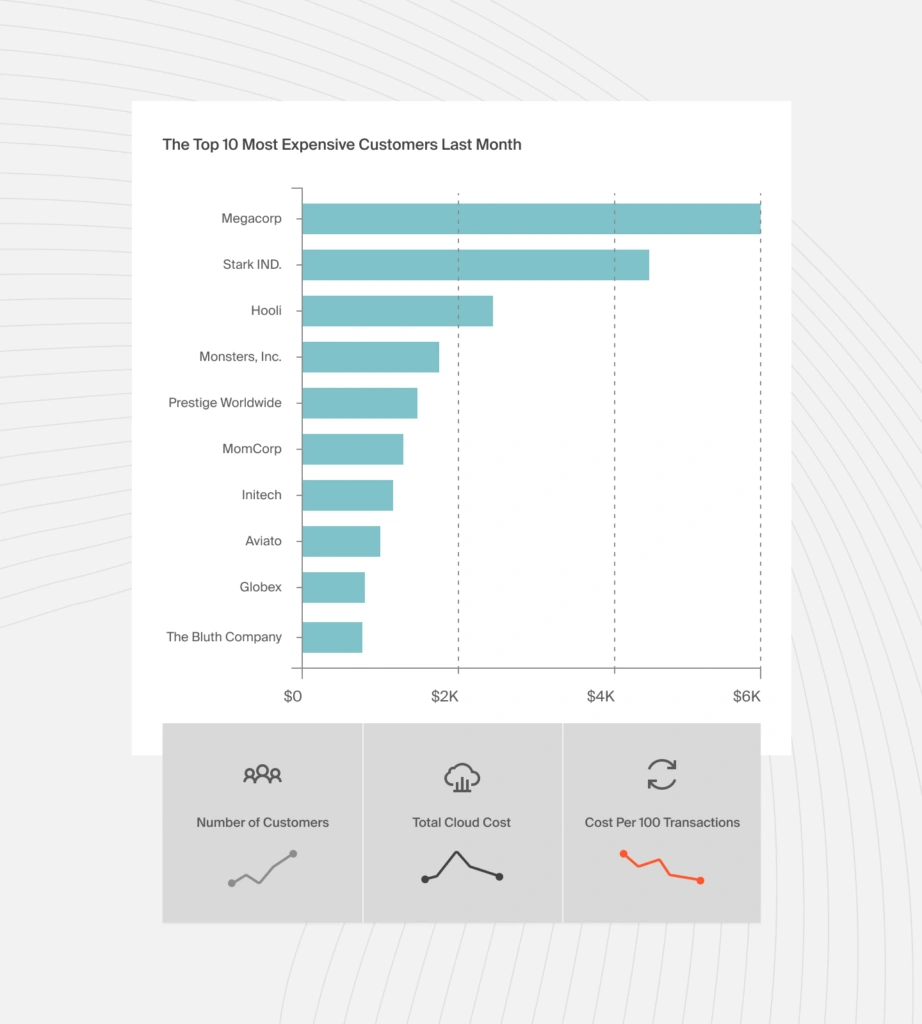
CloudZero can collect, enrich, and report accurate cost insights for tagged, untagged, and untaggable resources, even if your AWS tags aren’t perfect. Also, you can use it to improve cost visibility across shared and multitenant architecture — not to mention Kubernetes.
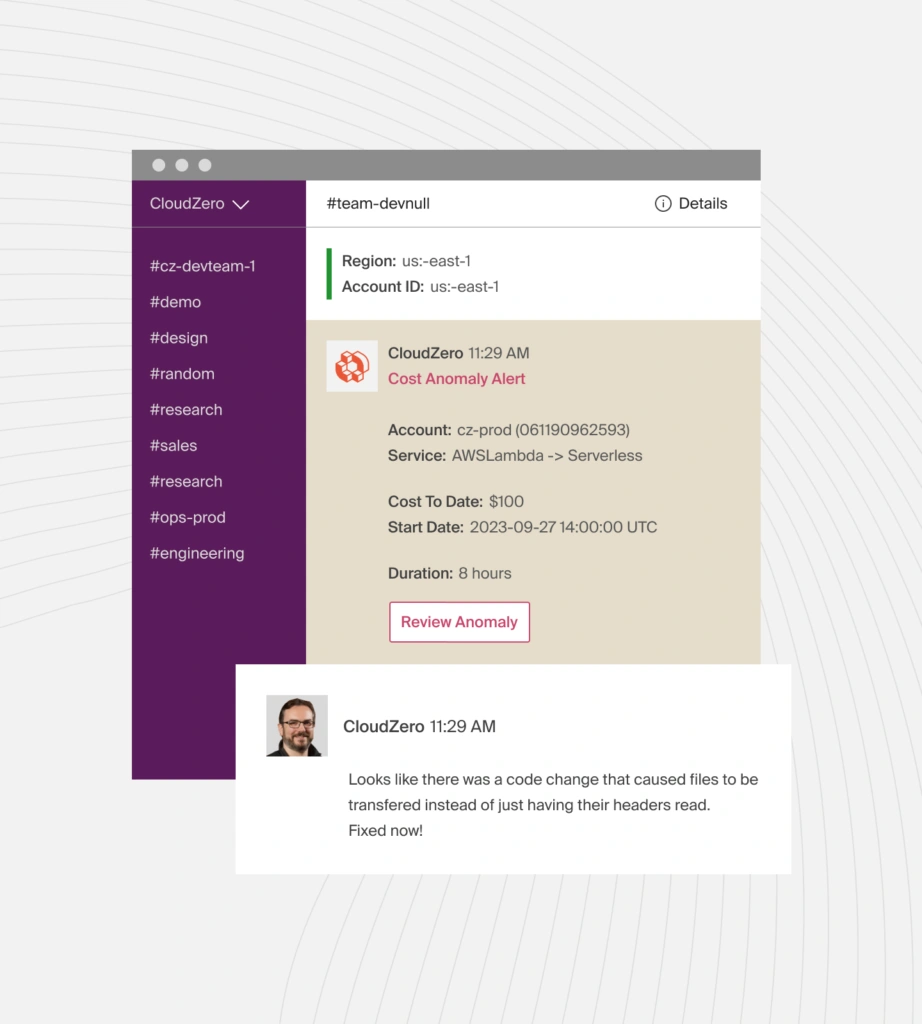
CloudZero also offers AWS cost anomaly detection and alerting. The service sends abnormal cost metrics to your most qualified staff, so they can address code issues to prevent overspending.

With CloudZero:
- Salesloft (formerly Drift) cut its annual cloud bill by $2.4 million
- Validity now spends 90% less time managing its cloud costs
 to learn how CloudZero organizes cost metrics into actionable business insights.
2. Amazon CloudWatch
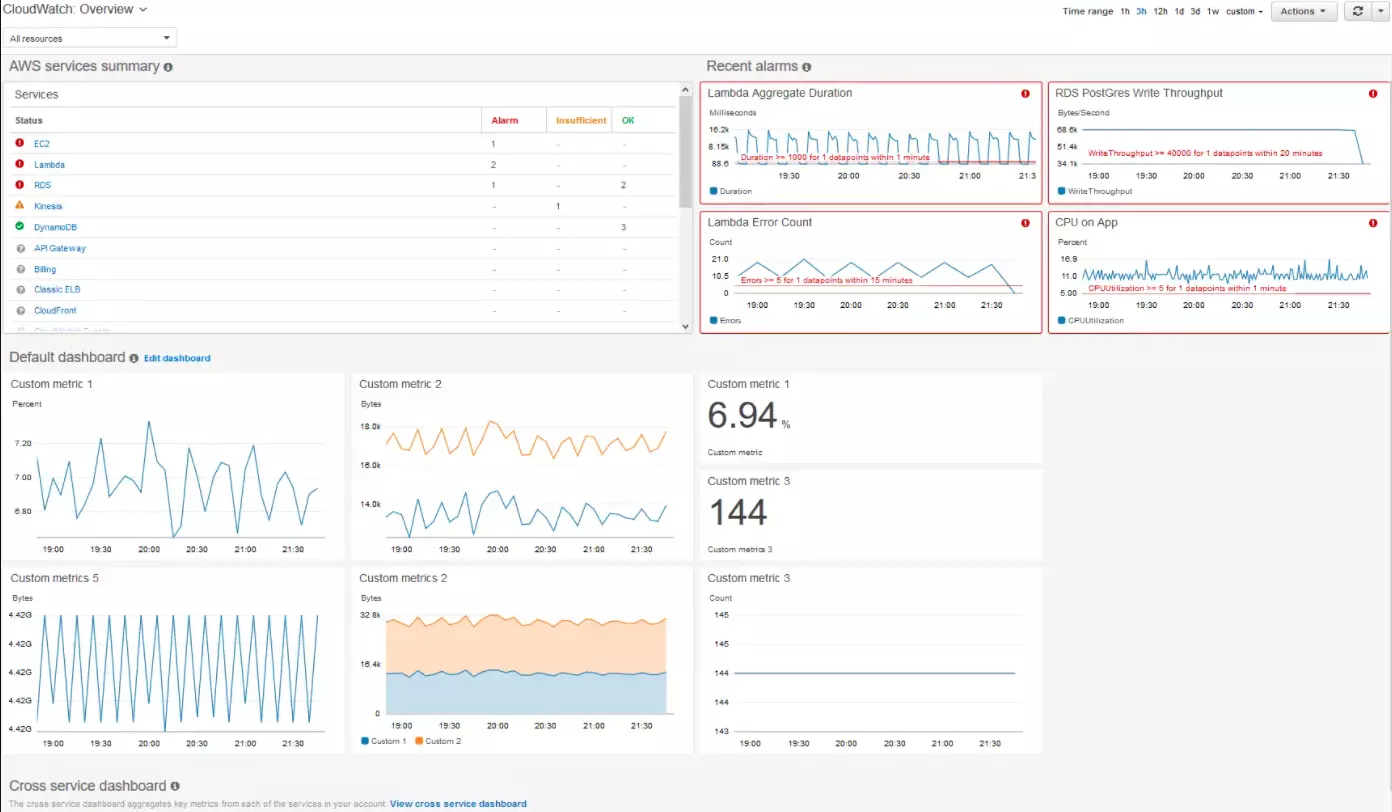
You can manage every service AWS offers by accessing it in the AWS Management Console dashboard. You can then monitor AWS resources, such as EC2 instances, with CloudWatch to understand how you use them. Also, you can receive alerts about abnormal cost activity, monitor applications’ usage, and collect custom metrics.
Research Report
FinOps In The AI Era: A Critical Recalibration
What 475 executives told us about AI and cloud efficiency.
AWS Security And Compliance Tools
Cloud computing security protects customer data, business secrets, and application and infrastructure performance. Compliance serves as a framework for risk mitigation, with controls for protecting data integrity and accessibility during processing, transmission, and storage.
AWS-native security tools include Amazon Identity and Access Management (IAM), AWS Config, AWS Security Hub, AWS CloudTrail, and AWS Shield. Here are two more advanced cloud security and compliance tools for AWS environments.
3. CloudHealth by Broadcom
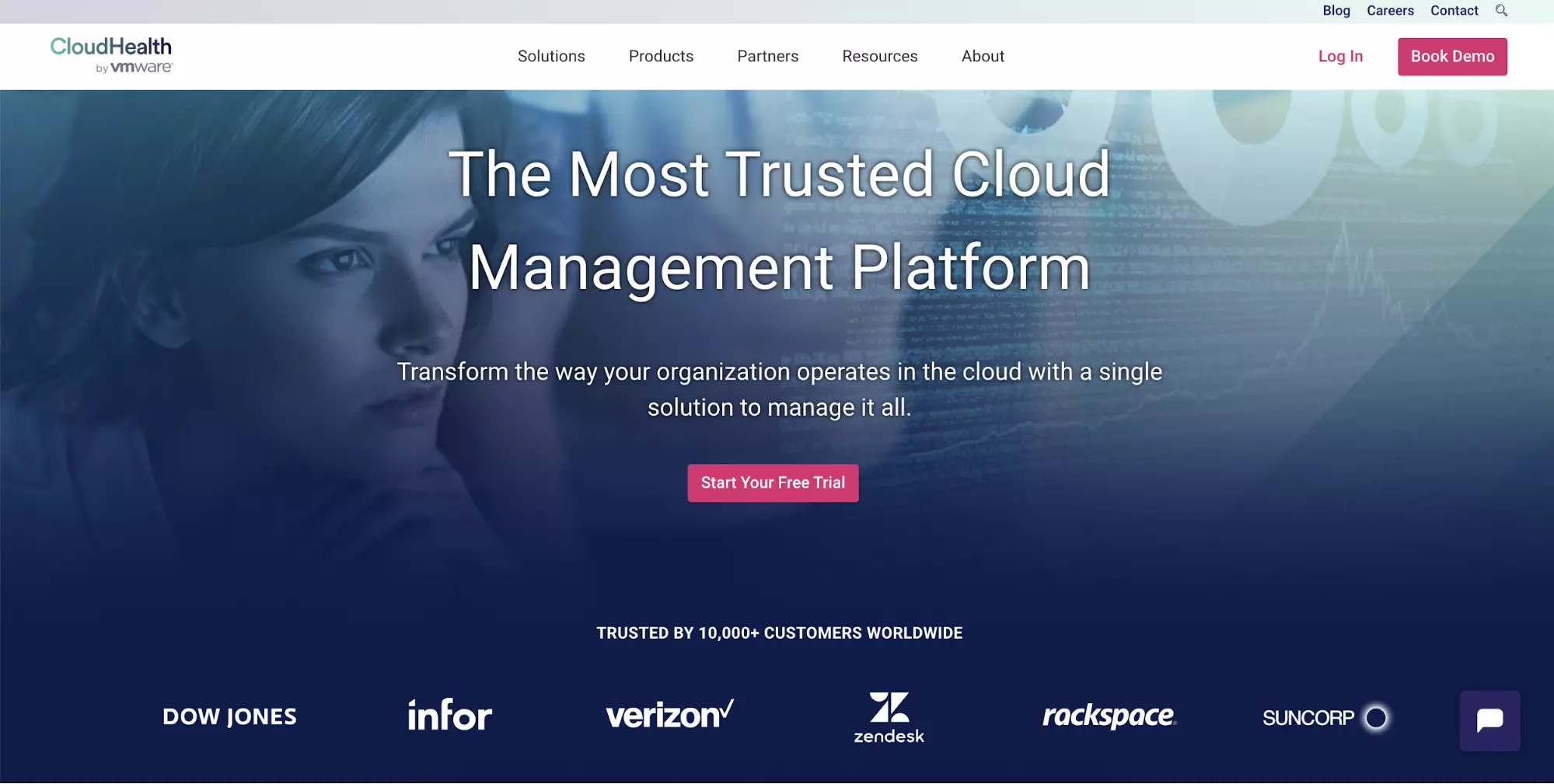
CloudHealth (now part of Broadcom following its acquisition of VMware) provides cloud security and compliance capabilities using custom policies and rules to deliver real-time security insights, even in multi-cloud environments. CloudHealth also offers visual context and quantitative risk scores, which can help prioritize threat responses.
You can also receive security alerts and collaborate with distributed teams to resolve issues before they affect customer experience. CloudHealth’s continuous compliance reporting covers HIPAA, SOC 2, NIST, PCI, and CIS frameworks.
4. Dynatrace
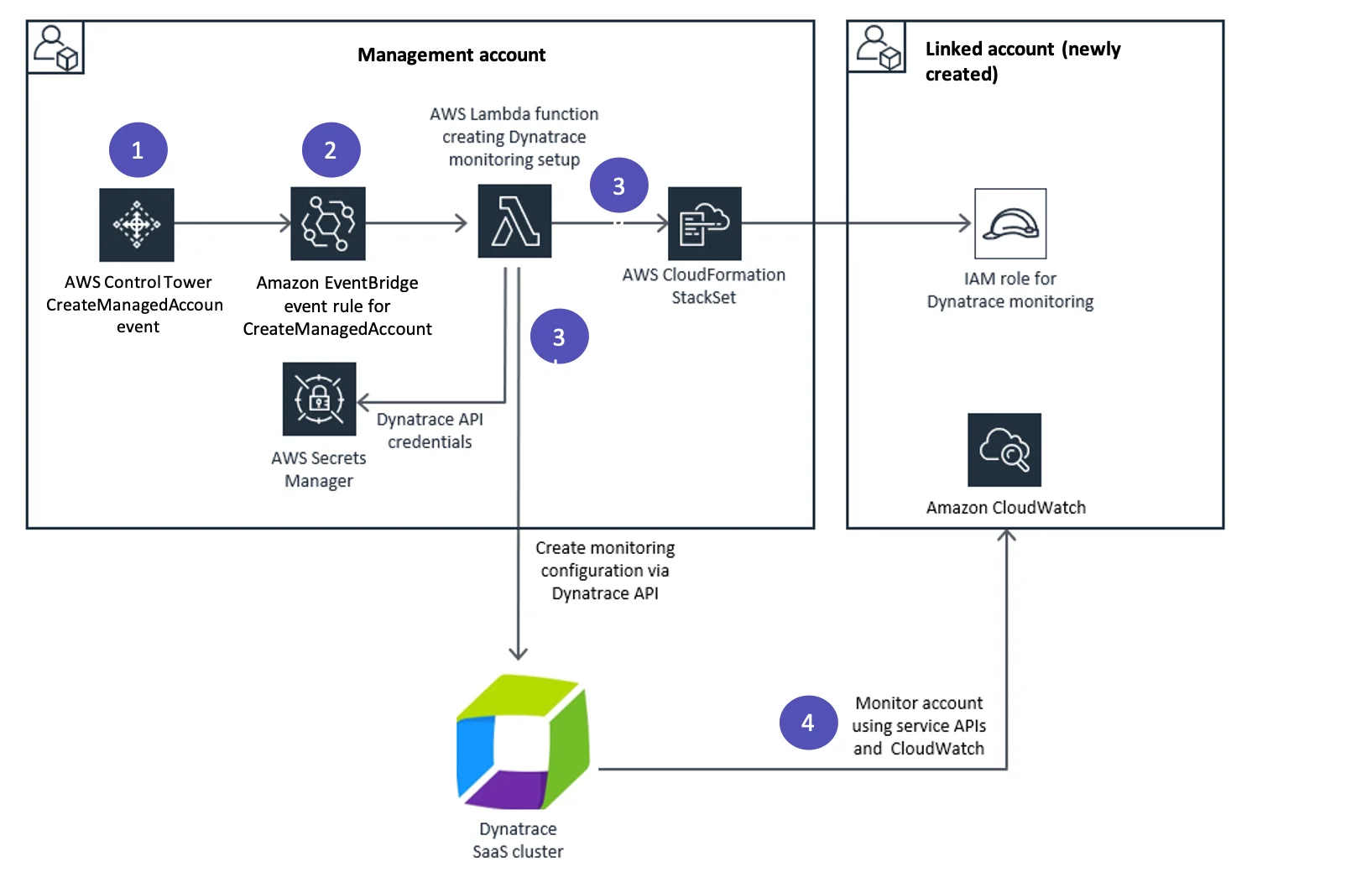
Dynatrace’s full-stack cloud management platform provides robust application security. It combines robust infrastructure, applications, and automated runtime to detect vulnerabilities in your cloud environment.
Its root-cause approach enables teams to detect, track, and remediate security issues in a Kubernetes environment. You can also aggregate security information across hybrid, multi-cloud, and containerized environments in real-time.
Enterprise Cloud Governance On AWS
Cloud governance aims to enhance efficiency while minimizing risks in a cloud environment. However, basic cloud governance tools can become ineffective when working with multiple cloud resources, teams, and technologies.
That’s why you need an AWS cloud governance solution that can scale.
AWS provides several native governance tools worth knowing before you evaluate third-party options. AWS Control Tower helps manage multiple AWS accounts with automated guardrails, while AWS Organizations simplifies billing and policy enforcement across accounts. AWS Trusted Advisor offers real-time recommendations for cost optimization, security, performance, and fault tolerance. For teams managing complex multi-account environments, these AWS-native tools provide a strong governance baseline.
For more advanced governance needs, consider the following options.
AWS provides several native governance tools worth knowing before you evaluate third-party options. AWS Control Tower helps manage multiple AWS accounts with automated guardrails, while AWS Organizations simplifies billing and policy enforcement across accounts. AWS Trusted Advisor offers real-time recommendations for cost optimization, security, performance, and fault tolerance. For teams managing complex multi-account environments, these AWS-native tools provide a strong governance baseline.
5. SolarWinds
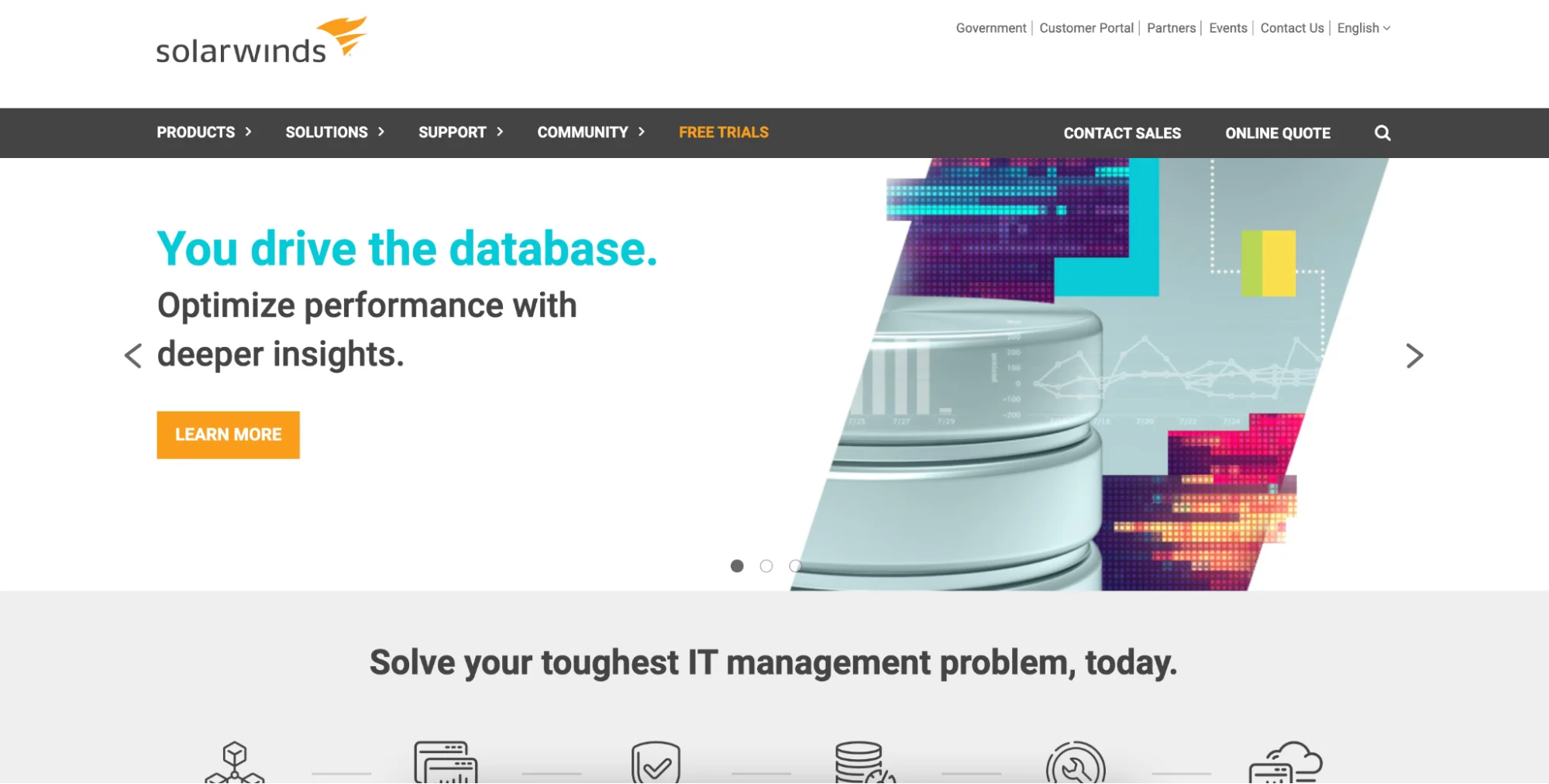
SolarWinds provides end-to-end cloud governance with a variety of tools for managing cloud environments. SolarWinds’ capabilities include application performance management, database management, and network performance monitoring.
It enables leaders to collect data across every area of their cloud and apply it to creating policies and controls that ensure high security, cost efficiency, and high performance.
6. CoreStack
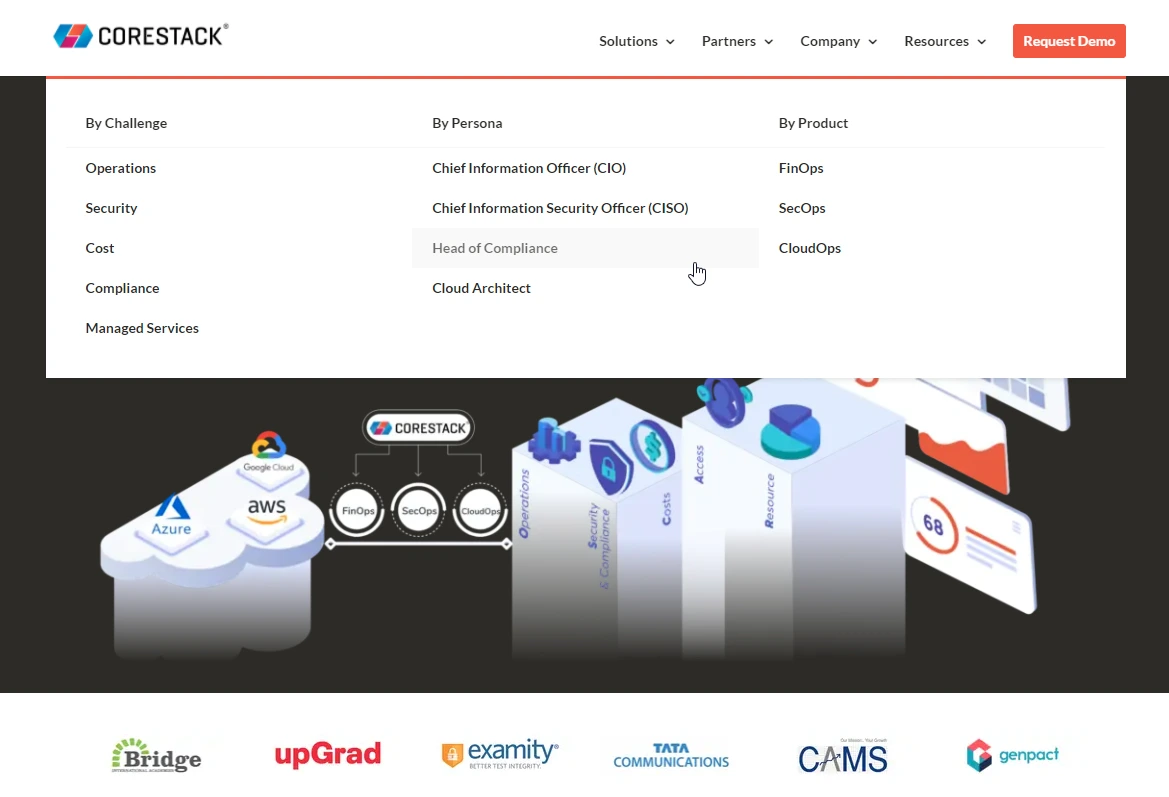
Enterprise-level organizations can harness the power of the cloud with CoreStack’s AI/ML-powered, Cloud-as-Code approach. Users can use it to plan and allocate resources, secure their environments, and achieve compliance. CoreStack provides its service across clouds in one pane of glass for easy governance if you’re considering multi-cloud computing.
Continuous Performance Optimization
Solutions in this category use AI and machine learning to iterate AWS environments. The goal is usually to optimize resource usage, infrastructure processes, and application performance with minimal effort. The following options may be helpful.
7. Densify
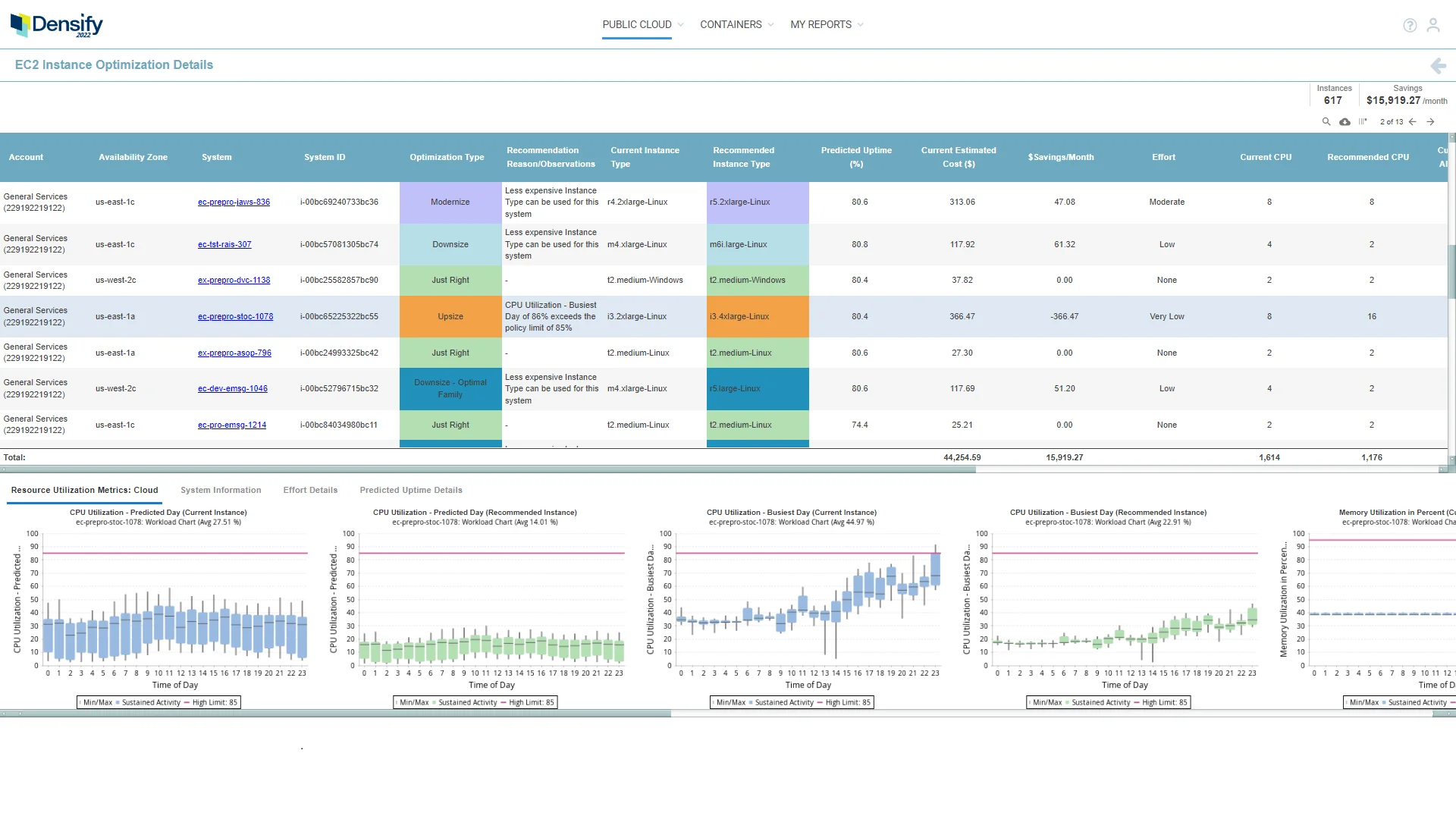
Densify optimizes AWS environments by collecting real-time CPU, memory, network, and disk I/O data. Its machine learning algorithms analyze patterns, predict resource needs, and detect inefficiencies. Then, it recommends precise adjustments, such as resizing instances or modifying scaling settings. These insights integrate into CI/CD pipelines, automating optimizations to reduce costs and improve performance with minimal manual effort.
Read our guide: 50+ CI/CD Tools to Streamline DevOps Workflows.
8. Spot.io
NetApp’s Spot uses machine learning and artificial intelligence to meet application needs. Spot helps prevent overprovisioning and cloud waste.
In AWS, Spot helps organizations of varying sizes achieve this by automatically selecting the most efficient AWS pricing models and instances for the job. Using Elastigroup, for example, companies can run mission-critical workloads on cheaper Spot Instances.
AWS Application Performance Management
Managing application performance (APM) enables companies to diagnose performance issues in productivity, revenue-generating apps, and other parts that impact user experience. Consider the following AWS APM platforms.
9. AppDynamics
Cisco’s AppDynamics is a robust APM platform for AWS-based apps, including Docker and microservices. It integrates with AWS CloudWatch to support EC2, Lambda, S3, RDS, DynamoDB, and SQS.
You can track your app’s performance changes before, during, and after a migration, letting you compare the benefits of the migration. AppDynamics offers robust root cause analysis that can reveal application issues in minutes rather than hours.
10. DataDog
The tool offers several powerful features for AWS users — and anyone else who needs a single platform to aggregate their multi-cloud or hybrid-cloud data. DataDog offers one-click access to data from over 70 Amazon Web Services.
No sampling is needed for complete distributed tracing. For more accurate root cause analysis, you can analyze all traces in real time for the last 10 minutes. You can also automatically keep high latency traces and errors for up to 15 days.
Network Management On AWS
Managing network performance begins with identifying failing and slow components such as servers, routers, and switches. Network management uses those insights to design appropriate fixes to ensure continuous high performance. Some tools to consider here are:
11. Nagios Network Analyzer
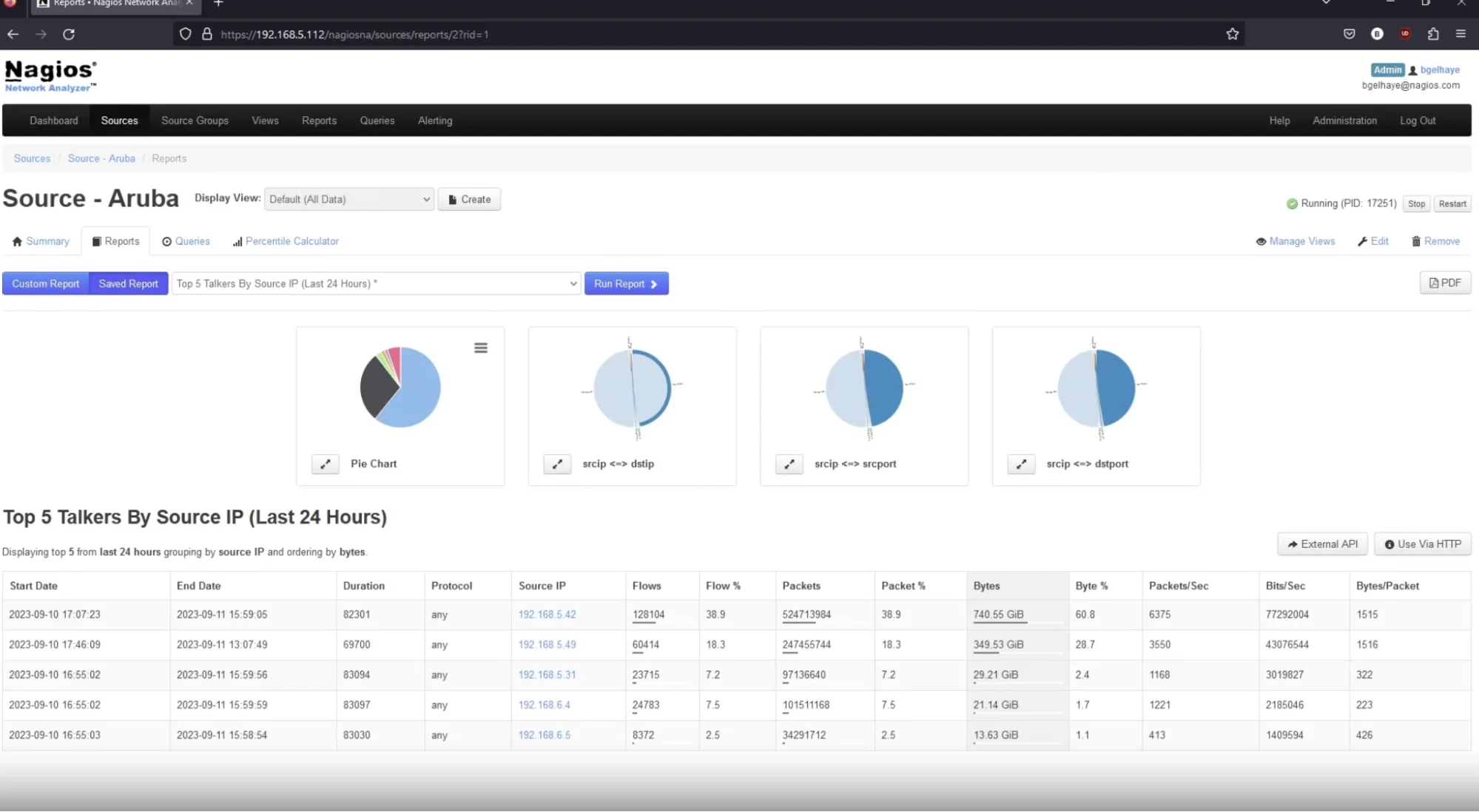
Nagios provides network monitoring and alerting capabilities for services, apps, switches, and servers.
Its in-depth, infrastructure-wide network analysis enables teams to detect problematic traffic sources, potential threats, and other network health insights in one place. Nagios also enables you to analyze bandwidth utilization based on various combinations, such as by IP or source.
12. Splunk (now part of Cisco)
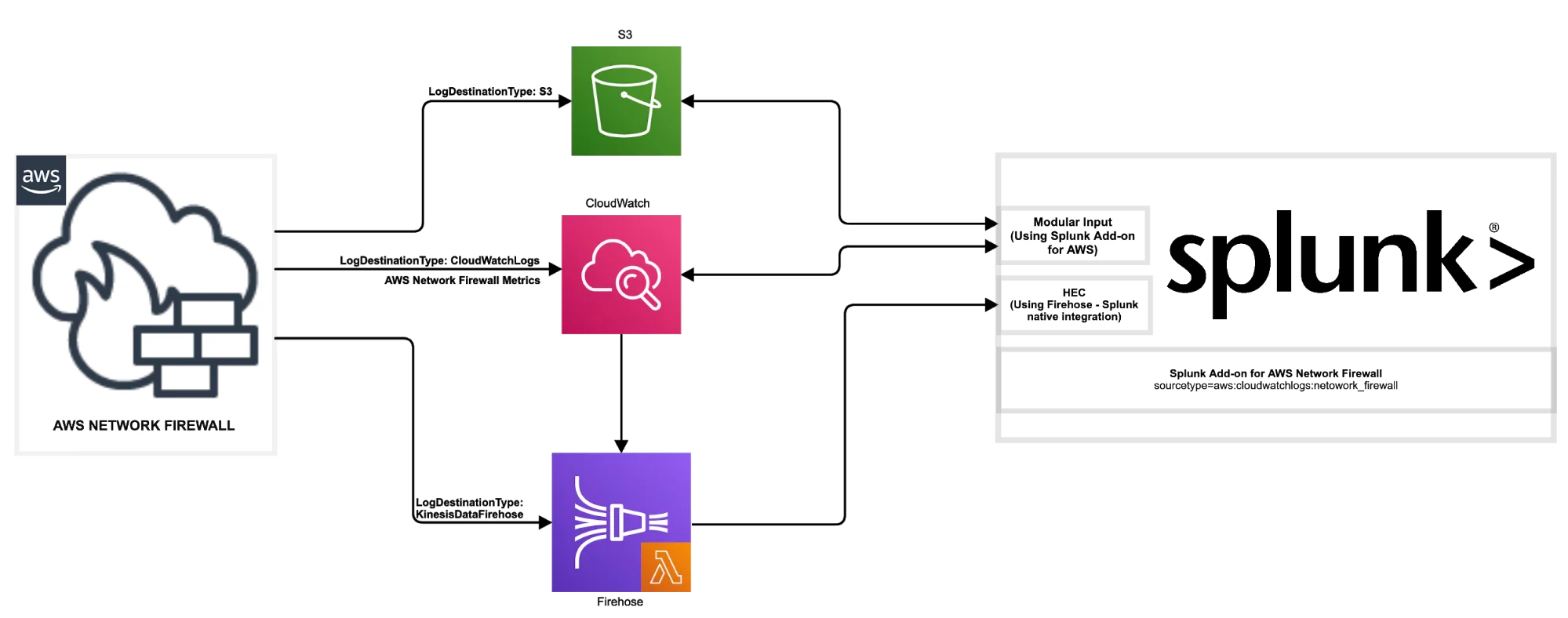
Splunk, acquired by Cisco in 2024, enhances cloud network performance and observability capabilities. Its network performance monitoring is part of the broader Cisco observability suite and integrates with Cisco’s wider security and networking portfolio.
Consider Splunk if you want network maps, real-time network performance metrics, root cause analyses, automatic discovery, scalability, and intelligent alerting on one platform.
How To Choose The Right AWS Cloud Management Tool
Selecting the right AWS cloud management platform depends on which aspect of your cloud environment needs the most attention. Start by mapping your biggest pain points to the categories above: if runaway spending is the primary concern, prioritize cost optimization tools like CloudZero; if you need to tighten security posture across multiple accounts, evaluate CloudHealth or Dynatrace alongside AWS-native options like Security Hub and AWS Config.
For teams managing complex multi-account setups, consider whether you need governance tooling (SolarWinds, CoreStack) or whether AWS Control Tower paired with Organizations covers your requirements. Performance-focused teams running Kubernetes or containerized workloads should look at Densify or Spot by NetApp for automated rightsizing.
Most mature AWS environments benefit from layering tools: AWS-native services for foundational visibility and governance, paired with a specialized third-party platform for the dimension that matters most to your business. Start with one category, measure the impact, and expand from there.
Organize Cloud Spend More Intelligently
Amazon Web Services provides many cloud computing benefits to organizations of all sizes. Yet many users find it confusing and are unsure how to reduce complexity, overwhelm, and surprise AWS bills.
These tools can detect, analyze, and manage various aspects of your AWS environment. To take advantage of the benefits of the AWS public cloud, select the tool that best matches your workload and workflows.
CloudZero enables everyone from engineering and finance to FinOps to keep track of cloud spending. Everyone receives the cost insights in their preferred cost language:
- Engineering: Cost per feature, deployment, or dev team so they can build innovative solutions without overspending.
- Finance and FinOps: Cost per customer and unit cost to help them set profitable pricing and allocate cloud costs accurately.
- FinOps: Cost anomaly alerts inform teams of abnormal cost trends via Slack so you can prevent overspending as soon as possible.
- Executives: Understand COGS and unit cost economics to power strategic decisions.
- Investors: Share rich gross margins and profit data to attract investors into funding your growth.
to see how CloudZero turns cloud metrics into meaningful cost intelligence for startups, scaleups, and enterprises.
Software and pricing information last verified May 2026. Features, pricing, and availability may have changed. Please verify current details with vendors before making decisions.


FinOps In The AI Era: A Critical Recalibration
What 475 executives told us about AI and cloud efficiency.