Companies migrate to the cloud to become more productive, respond to market changes, and be flexible — while spending less on cloud infrastructure. But there is one thing that many cloud-based organizations have learned: Cloud costs add up. Fast.
The results haven’t matched the investment. CloudZero’s own survey of 475 FinOps leaders found that formal FinOps programs have nearly doubled — from 39% to 72% of organizations — yet Cloud Efficiency Rate collapsed in the same period, dropping from 80% to 65%. More programs, more process, less efficiency. Something fundamental has changed.
Other respondents have expressed their frustration and challenges with FinOps in different polls by the FinOps Foundation, CloudZero, Last Week in AWS, and AWS’ own blog.
This guide will cover the challenges FinOps teams face in organizations just like yours. Then, we’ll share some of the simple and immediately actionable advice that’s already helped CloudZero customers optimize their cloud costs.
We’ve talked about what FinOps is already here in this guide. However, here’s a quick primer on FinOps before we dive into specific challenges you may face.
What Is Cloud FinOps?
FinOps, short for Cloud Financial Operations, is a framework of cloud financial management practices that help organizations optimize cloud spend and link it to business outcomes.
With cloud FinOps, the goal is to restrain cloud costs while promoting growth in the dynamic, scalable, and sometimes complex cloud environment. To do so, you follow cloud cost management best practices. You can also dig deeper into the roles and importance of FinOps here.
What challenges do teams working in cloud FinOps face? How do you handle those challenges like a pro to realize your cloud initiative fully?
Research Report
FinOps In The AI Era: A Critical Recalibration
What 475 executives told us about AI and cloud efficiency.
What Are The Top Challenges That FinOps Teams Face — And Some Tips To Solve Them?
Here’s the deal. If you’ve had trouble understanding a cloud bill, wondered precisely what factors are driving cloud expenses, and/or are nearly giving up on getting everyone to tag cloud resources correctly, you are not alone.
The following are some challenges you may be familiar with, along with solutions you can use to solve these challenges.
1. Cloud waste is an enormous problem already
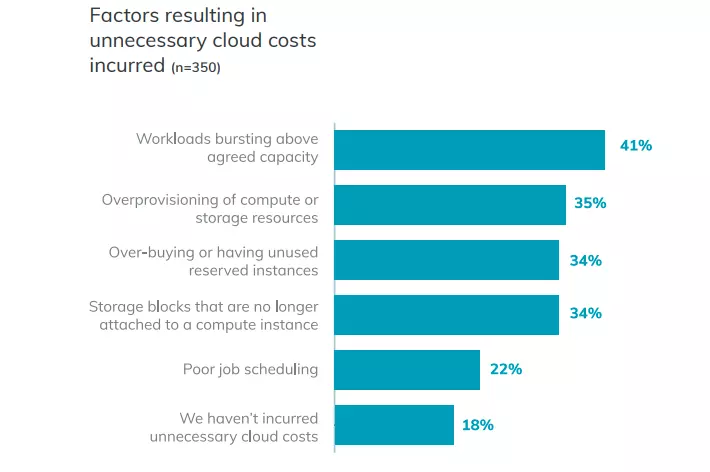
The term “cloud waste” refers to incurring unnecessary cloud costs — and it remains one of the most persistent problems in cloud operations.
Traditional waste drivers like overprovisioned compute and underutilized reserved instances are still very much alive, but AI workloads have introduced a new category of waste that’s harder to detect and faster to compound: idle GPU clusters, over-allocated model endpoints, redundant LLM API calls, and development-environment AI usage that was never intended to scale into production.
Unlike EC2 instances, AI costs are consumption-driven and demand-sensitive — they ramp fast, often without anyone noticing until the bill arrives.
Credit: Virtana
Solution:
When workloads exceed capacity, it’s not always bad; it can also be a sign of growth. Therefore, aiming to reduce cloud spend by all means, such as disabling auto-scaling, can have the detrimental effect of preventing revenue growth.
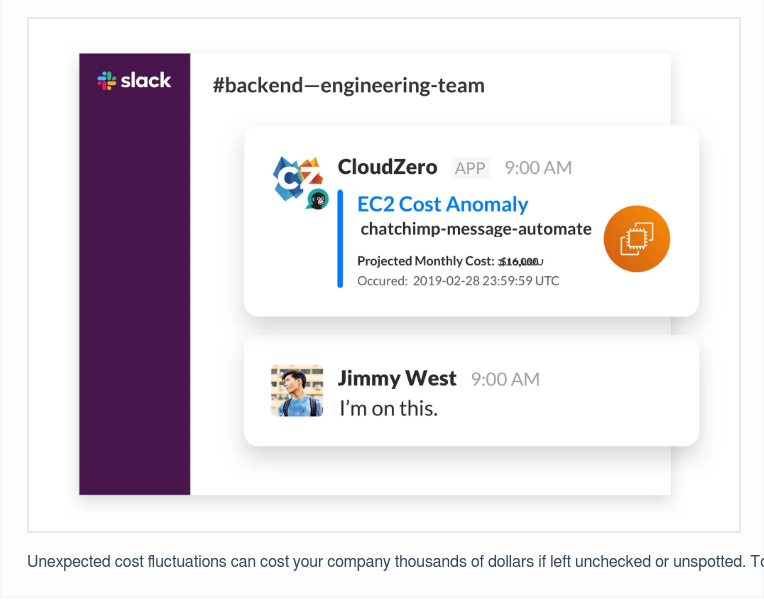
Instead, deploy a cloud cost intelligence platform that allows you to monitor cloud spending in real-time. But don’t stop there. Make sure your tool can also alert your FinOps team about trending costs (cost anomaly detection) to catch abnormal cost movements and overspending.
2. Not understanding where to begin paralyzes initiative
Getting started with a FinOps model can be overwhelming, regardless of where you are on the FinOps maturity curve. These challenges include determining which workloads to move to the cloud, how, and why and assigning responsibility for FinOps.
Solution:
Create a cross-departmental team that includes everyone who affects cloud spending. Think of developers, operations, testers, finance, and a cloud consultant if you need additional support.
As a team, analyze the case for and against utilizing the cloud so you can develop solid goals that can be used to measure your FinOps initiative’s success. You can then create a thorough strategy for managing cloud financial resources.
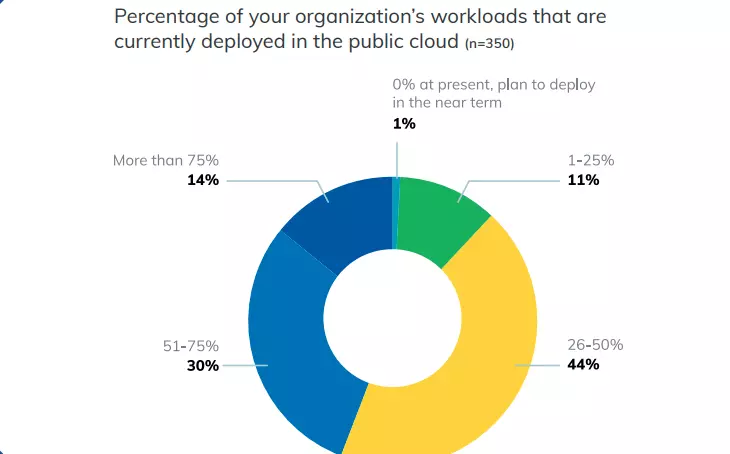
Choose which workloads to migrate and which ones not to. Some teams prefer not to move some mission-critical workloads from on-premises data centers.
Credit: Virtana
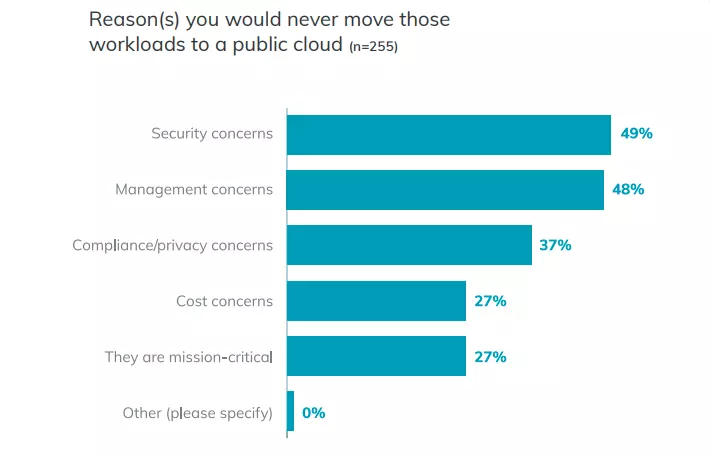
They cite security, management, and compliance concerns:
Credit: Virtana
Consider a hybrid model if you have concerns about vendor lock-in, cost savings, and other flexibility issues. Migrate data, applications, and workloads incrementally to prevent overwhelming your team and instead enable them to fix errors as they arise.
3. Understanding cloud cost is a challenge for both starters and more experienced FinOps teams
A typical cloud bill contains thousands of rows of data that are difficult to digest on spreadsheets. You may not have a clear picture of who, why, and where your cloud budget was spent.
AI has made this harder. AI costs — billed by tokens, by model, by API call — don’t map cleanly to the infrastructure metaphors most engineers and finance teams understand. A spike in Anthropic or OpenAI spend doesn’t tell you which feature drove it, which team consumed it, or whether it was worth it.
The cost-to-business-value gap that once applied only to EC2 instances now applies to every LLM call your product makes. And unlike compute, AI spend can compound in hours, not weeks.
Most SaaS companies are still under pressure to release new features, optimize the customer experience, and grow revenue — cloud cost optimization remains a constant balancing act, and that’s before accounting for AI’s unpredictable consumption patterns.
Solution:
Consider cloud cost as a first-class metric. What does that mean?
Prioritize cloud cost optimization best practices alongside engineering velocity, Monthly Recurring Revenue (MRR), Churn, and other SaaS value metrics. Introduce the stakeholders responsible for cloud spending in your organization to the impact their actions have on the bottom line.
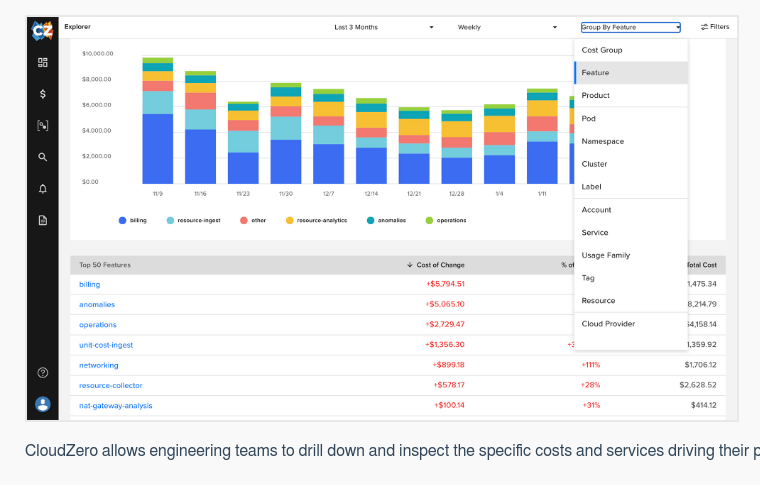
Choose a tool for tracking, monitoring, and reporting cloud costs once you have that buy-in. Also, ensure you select a platform that can break down your costs into unit costs. These are granular insights that the different stakeholders, such as engineers, will understand.
It is easier for engineers to understand numbers such as cost per feature, cost per deployment, or cost per development team than cost per customer, which is more relevant to finance, or gross margins, which investors understand better.
4. Tagging resources and labeling Kubernetes can be hit and miss
Kubernetes labeling and manual tagging are time-consuming and challenging tasks for many FinOps teams. Besides, tagging resources correctly for cost allocation involves other challenges, including inconsistent tagging. Many cost tools still rely on tagging to produce accurate reports despite this.
Solution:
Create a comprehensive tagging strategy and use tagging best practices to improve results. However, some resources cannot be tagged — and FinOps cost allocation becomes especially difficult when tagging is inconsistent or incomplete. So, how do you allocate untaggable and untagged resources?
In addition, many cost tools analyze only application data, leaving out a great deal of environmental data and metadata, which often compromises the overall accuracy of their analyses.
To overcome endless tagging, collect accurate cost data, and factor in the cost of untagged resources, you’ll need a platform that doesn’t rely entirely on the tags.
Instead, you should be able to combine infrastructure metadata and other sources to enrich and enhance the data you already have on the tagged resources. This platform should fill in inconsistencies so untagged, and untaggable resources can be allocated accurately.
5. Accurate forecasting is often elusive for many FinOps teams
A lack of accurate cloud cost forecasting can cause over-provisioning, overbuying, and paying for unused cloud resources. AI has made this fundamentally harder. Traditional cloud costs are relatively predictable — you provision resources, you pay for them.
AI costs are demand-driven: your LLM spend is a function of how many users invoke AI features, how complex their queries are, and which models your engineers selected. Historical usage data is often a poor predictor, especially for teams deploying AI features for the first time.
The result is that forecasts can be off by an order of magnitude, and finance teams are left reconciling bills that look nothing like the plan.
Solution:
Examine how your application, workload, and data work. You can analyze historical usage data on how you’ve used on-premises resources in the past. You can then use that as a baseline for your trial cloud budget.
Monitor how the cloud environment uses up the trial cloud budget once it is operational. This information can help you uncover areas where you can cut costs without compromising customer experiences or engineering work.
You can also consult an expert to get started.
6. When teams work in silos, they become disconnected
Finance and engineering can be quite disconnected, even when teams implement DevOps, especially without dedicated FinOps teams overseeing cost accountability. AI has added a third stakeholder to this equation: the AI/ML team.
Model selection, context window size, inference frequency, fine-tuning decisions — these are engineering calls with direct and significant cost implications that finance rarely has visibility into. Worse, AI ROI is still a contested metric.
Finance wants to know if the AI feature is paying off. Engineering wants to ship faster. The AI team wants to experiment.
FinOps is stuck in the middle, without the unit economics to resolve the disagreement. In fact, getting engineering to take action is still the biggest obstacle to cloud cost optimization, according to the FinOps Foundation.
Learn how companies have gamified FinOps to drive a cost-aware engineering culture.
Solution:
Engage teams in cloud cost management discussions to raise cost awareness.
You don’t want limited collaboration to hinder your cost optimization efforts. Make sure you provide them with information illustrating their cost impact — and in a language they understand. As mentioned earlier, provide engineers with the cost per product feature, cost per software testing project, or cost per deployment.
By raising their cost awareness, they can be more proactive, including collaborating with FinOps before implementing engineering decisions. As you measure and reveal the cost metrics regularly over time, it can motivate engineering to develop more cost-effective solutions.
7. Dealing with the costs of shared cloud resources is often tough
Keeping track of cost indicators in a shared environment can be challenging. This is because it may be difficult to distinguish individual clients’ metrics from each other. Companies with such a setup often leave things to chance.
Solution:
It can be impossible or highly time-consuming to determine which tenant used cloud resources in such an environment.
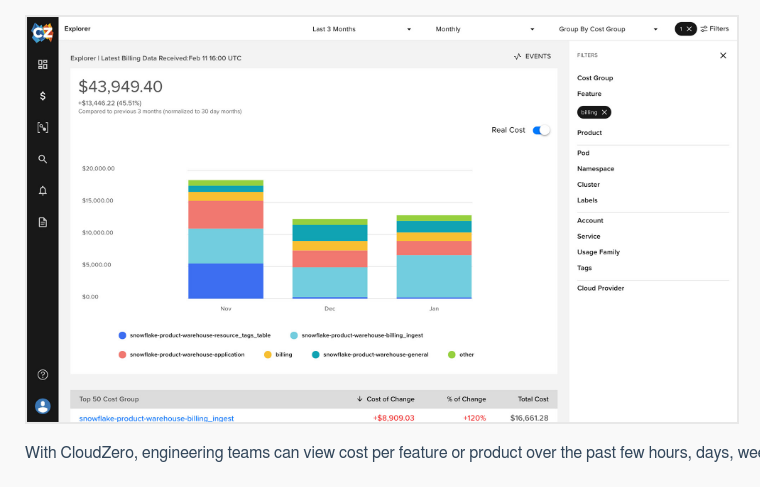
Instead, use a modern tool to automate the process and correctly assign the correct data to the right tenant. Some cloud cost services don’t do this, so you’ll need to confirm your choice provides cost per tenant pricing.
8. Adopting a multi-cloud or hybrid cloud strategy often blinds cost visibility
Here’s the thing. According to a recent HashiCorp survey, 72% of respondents use more than one cloud provider (multi-cloud strategy).
In a separate poll, 62% of respondents said they had cobbled together different tools, systems, and custom scripts to try and analyze cloud costs within a hybrid cloud model (sharing an application, data, and workload between an on-premises data center and cloud-based platform).
But this approach is similar to the shared/multi-tenancy approach in that maintaining peak cloud cost visibility is difficult.
Solution:
Often, a multi-cloud approach is not cost-effective. Rather, take up a multi-service strategy, which engages your FinOps team without blinding them to cost accountability. You can learn more about the differences between a multi-cloud and a multi-service approach here.
9. Choosing the best FinOps tool and platform is tricky
A tool that’s clunky, manual, and inexact is the last thing anyone wants. Unfortunately, most cloud cost tools are just that. In addition, you must have perfect tags for them to work correctly.
Solution:
Embrace modern cloud cost intelligence instead. Using this approach, you can break through the tag barrier and slice and dice cloud bills. FinOps teams can also better understand cloud spend by mapping cost insights to actual business activities.
10. Measuring AI ROI is the new FinOps frontier
Organizations are spending more on AI than ever — and struggling to justify it. CloudZero’s 2025 research found that 71% of organizations increased their AI spend last year, yet fewer than half have a reliable method for measuring AI’s return on that investment. The problem isn’t ambition. It’s instrumentation.
AI costs don’t arrive with business context attached. A $40,000 monthly bill for Anthropic or OpenAI doesn’t tell you whether it generated $400,000 in customer value or was largely consumed by low-value dev experimentation.
Without cost-per-feature or cost-per-AI-interaction data, FinOps teams can’t answer the question every CFO is asking: was it worth it?
Solution:
Treat AI ROI as a first-class metric alongside gross margin and Cloud Efficiency Rate. Start by establishing a unit cost for AI — cost per AI-assisted action, cost per model call, cost per customer — and track it against the business outcomes that AI feature is supposed to drive.
This requires connecting AI spend data to product telemetry, which most native cloud billing tools don’t support. A platform that can map AI costs to business dimensions — by product, by team, by customer — is essential for closing this loop. CloudZero’s AI Hub is built specifically for this.
Why FinOps Teams Love CloudZero
CloudZero maps costs to the business activities that drive them — so FinOps teams know not just what they’re spending, but why, and whether it’s working.
That includes AI spend. CloudZero’s AI Hub gives teams full visibility into AI costs across providers — OpenAI, Anthropic, AWS Bedrock, and more — mapped to the products, features, and teams consuming them.
For the first time, FinOps teams can answer the question every CFO is asking: what’s the ROI on our AI investment? Beyond AI, CloudZero delivers anomaly detection that catches cost spikes before they compound, unit economics that translate cloud spend into language every stakeholder understands (cost per customer, cost per feature, cost per team), and cost allocation that works even when tags are incomplete or missing.
CloudZero doesn’t need perfect tags or Kubernetes labeling to produce accurate insights — which means you can stop chasing tag compliance and start driving real cost accountability.
 to see how CloudZero can transform your FinOps program.


FinOps In The AI Era: A Critical Recalibration
What 475 executives told us about AI and cloud efficiency.