![Best AI Cost Management Tools [2026]](https://www.cloudzero.com/wp-content/uploads/2026/07/ai-cost-management-tools-1024x536.webp)
Quick Answer
The best AI cost management tools in 2026 are CloudZero (best overall for connecting AI and cloud spend to business outcomes), Langfuse (best open-source LLM tracker), Portkey (best LLM gateway with cost controls), Datadog LLM Observability (best for teams already on Datadog), and CAST AI (best for Kubernetes AI infrastructure). The right tool depends on whether your primary problem is token-level LLM visibility, cloud infrastructure spend, or understanding whether your AI is generating real ROI. Most teams above $50K/month need more than one.
Here is the number that started a lot of uncomfortable board meetings in 2025: average monthly AI spend at enterprises hit $85,521, a 36% year-over-year increase, according to the CloudZero State of AI Costs 2025 report. That survey covered 500 software professionals at manager level and above.
The uncomfortable part is not the number. It is that only 51% of organisations can confidently evaluate the ROI of that spend. In other words, AI cost management is growing faster than anyone’s ability to govern it.
A separate February 2026 survey of 500 finance leaders by Sapio Research found that 79% of organizations experienced AI-related cost overruns in the past 12 months.
The tools in this guide exist to fix that. This article covers 30 AI cost management tools across six categories, with honest pros, cons, and pricing for every one. CloudZero is the top pick in the AI spend intelligence category. The guide will tell you exactly why, and where it is not the right answer. Nobody is best at everything.
One framing note before the tools: AI spend management and cloud cost management are related but genuinely different disciplines. Cloud cost tools track compute, storage, and networking billed by the hour. AI spend tools handle token-based LLM API billing, GPU inference clusters, and the business question an OpenAI invoice cannot answer on its own: which product, team, or customer generated this AI cost, and is it generating enough AI ROI to justify it?
How we evaluated these 30 tools
We did not rank these tools by which ones have the most features or the best G2 score. We evaluated them on five criteria that matter to people accountable for AI budgets.
- Attribution depth: can it break down AI spend tracking by team, product, feature, or customer, not just by billing account? A tool that shows “$48K in OpenAI charges” describes your problem, not solves it.
- AI-native coverage: does it understand token-based LLM billing, or does it treat every API call as identical? Most tools built before 2024 do not handle token economics correctly.
- Honest pricing: what does the free tier actually let you do? When does pricing become punishing? What are the hidden scaling costs that do not appear in the headline number?
- Actionability: visibility without action is expensive PowerPoint. Does the tool help reduce spend, or does it generate dashboards engineers quietly ignore?
- Finance accessibility: can a VP Finance interpret the output without an engineer to translate it? Tools that only one side of the conversation can use tend to get ignored by the other half.
“The question is no longer whether to invest,” DoiT noted in its February 2026 survey of 500 finance leaders. “The question is whether anyone can prove what that investment is returning before the people who approved it start asking.”
Here is a quick glance at each tool:
| Tool | Best for |
| CloudZero | Connecting AI and cloud spend to features, teams, customers, and AI ROI |
| Langfuse | Open-source trace-level LLM cost visibility |
| Portkey | LLM gateway with production safety and cost-aware routing |
| LiteLLM | Self-hosted per-team spend limits via virtual keys |
| Helicone | Lowest-friction one-line LLM cost logging |
| Braintrust | Connecting cost to quality before deploying cheaper models |
| Bifrost by Maxim AI | High-throughput open-source gateway with budget hierarchies |
| AWS Cost Explorer | Free starting point for AWS AI workloads under $100K/month |
| CAST AI | Autonomous Kubernetes node optimization for inference clusters |
| nOps | AWS visibility, commitment management, and GenAI tracking in one |
| Vantage | Multi-cloud cost visibility for mid-market engineering teams |
| ProsperOps | Hands-off algorithmic Savings Plan and RI management |
| Finout | Virtual-tag cost aggregation without fixing tagging first |
| IBM Cloudability | Fortune 500 showback, chargeback, and compliance |
| Harness CCM | Cost accountability inside CI/CD pipelines |
2026 State of AI Spend Report
Why Finance Caps What It Can’t See
Learn how finance leaders are managing AI spend, and how they’re approaching FY2027
AI spend intelligence tools
This is the category finance leaders are actually shopping for. Not “what is my token usage this month”, but “which product feature, team, or customer drove this AI spend, and is it worth the margin it is consuming?”
Most teams discover they need this category about six months after their first AI feature ships to production and the bills start appearing on board slides. The tools in this category answer a question that observability platforms and cloud billing dashboards cannot: is this AI investment generating AI ROI?
1. CloudZero
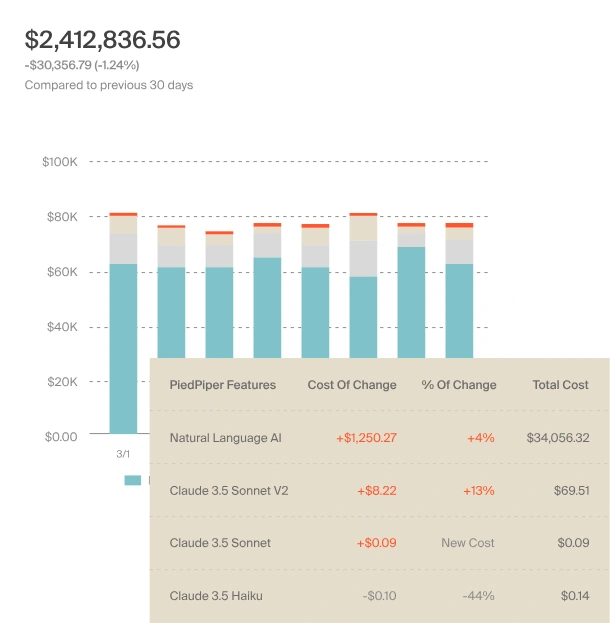
CloudZero is the only platform that connects both AI API spend and cloud infrastructure spend to the business dimensions that actually matter: product features, engineering teams, customer segments, and the unit economics that determine whether AI is contributing to or consuming margin.
When your OpenAI bill grows 3x in a quarter, CloudZero tells you it was the new AI search feature, built by the platform team, averaging 12,000 tokens per session with a measurable conversion uplift. That answer is worth more than any dashboard.
CloudZero’s anomaly detection monitors your AI spend in real time and automatically flags unusual cost spikes before they spiral.
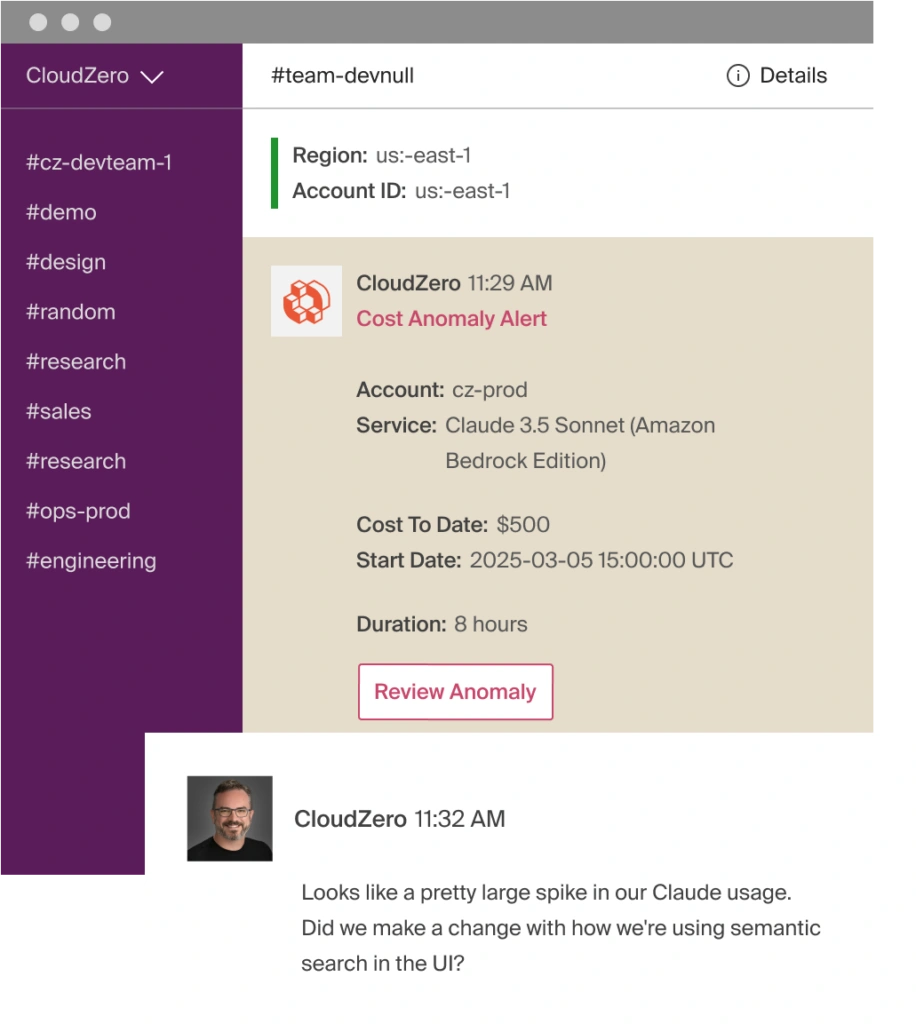
At $15B+ in managed cloud and AI spend, the platform has seen this pattern hundreds of times: teams that connect AI spend to business outcomes cut waste 22% in year one without cutting the features that drive revenue. Customers including Toyota, Skyscanner, Grammarly, Duolingo, and Upstart use CloudZero to make the board-level AI ROI conversation with real numbers, not estimates.
According to CloudZero’s own State of AI Costs 2025 research, organisations using third-party cost optimization tools report significantly higher confidence in calculating AI ROI, a direct outcome of having attribution rather than just invoices.
What it does well
- Connects AI API spend (OpenAI, Anthropic, Azure OpenAI, Bedrock) and cloud infrastructure into one unified business view, not two separate invoices on two separate platforms
- Unit economics that finance actually wants
- AnyCost API ingests any spend source including custom GPU clusters, internal tooling, and third-party AI SaaS tools like Snowflake, New Relic and Databricks
- Purpose-built for SaaS unit economics and Rule of 40 reporting that finance teams and investors expect
Where it falls short
- Intelligence platform, not an automation platform, does not buy Savings Plans or rightsize instances automatically (use ProsperOps or CAST AI alongside for that)
Pricing: custom enterprise.
Ready to see your AI spend broken down by feature, team, and customer? CloudZero customers average 22% year-one savings on cloud and AI spend.
Book a demo or get a self guided tour of CloudZero today.
LLM API spend tracking tools
These tools live closest to the LLM call itself, tracking tokens, cost, and latency at the request level. This is the LLM cost optimization layer: request-level controls that directly reduce what you pay per API call.
If your primary question is “which feature or user is consuming the most tokens,” this is your category. None of them replace a finance-grade AI spend platform, but they solve a real engineering problem and are often where teams start.
See also:
2. Langfuse
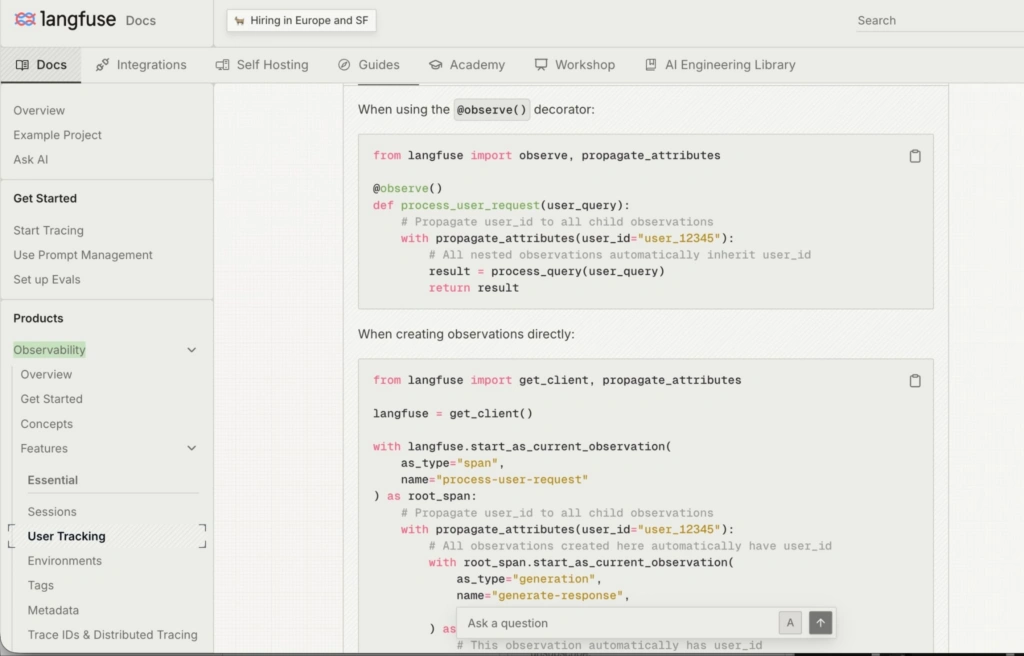
Langfuse is the default answer when an engineering team asks how to get visibility into LLM costs without building it from scratch. It instruments every call as a trace with token counts, cost, latency, and quality attached, giving attribution at the level of individual requests, users, and sessions.
It is open-source, self-hostable, actively maintained, and genuinely free at meaningful scale.
The catch is that application code must be instrumented to use it, which adds friction for teams retrofitting visibility onto existing workloads.
What it does well
- Open-source and self-hostable, prompt data and cost data never leave your infrastructure
- Trace-level attribution connects cost, latency, and output quality in the same view
- Prompt management, evaluation datasets, and A/B experimentation built in
- Strong integrations with LangChain, LlamaIndex, OpenAI SDK, and most major frameworks
- Genuinely free at meaningful scale, not a crippled trial
Where it falls short
- Requires SDK instrumentation in application code, higher friction than proxy-based tools
- Self-hosting adds operational overhead: PostgreSQL, Kubernetes scaling, ongoing maintenance
- Engineering observability tool, not a finance governance platform, no chargeback or budget approval workflows
Pricing: free tier generous. Cloud hosted from $59/month. Self-hosted: free.
See also: How much does ChatGPT cost
3. Portkey
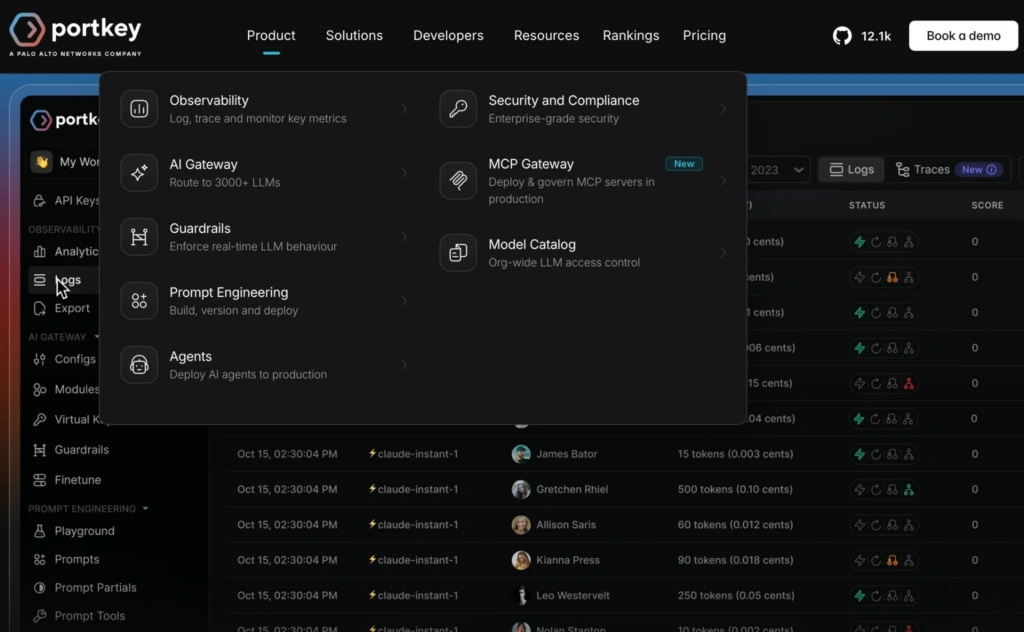
Portkey, now part of Palo Alto Networks processes over 10 billion requests monthly across 650+ organisations. Its real differentiator is production safety: guardrails, PII redaction, jailbreak detection, and audit trails baked into the API layer. In March 2026, the core gateway went open-source under Apache 2.0, so teams can self-host without the platform cost.
What it does well
- 1,600+ model integrations through one unified API, simplifying multi-provider complexity significantly
- Production safety features (guardrails, PII redaction, jailbreak detection) that most teams either build themselves or skip
- Semantic caching reduces repeat-prompt costs without any application code changes
- Cost-aware routing shifts traffic to cheaper models under budget pressure, automatically
- Open-source core since March 2026, self-hostable at no cost
Where it falls short
- Real-world deployments report 20-40ms latency overhead; Kong benchmarks show competitors 228% faster on raw throughput
- Feature breadth creates real complexity for teams with simple, single-provider setups
Pricing: free (prototyping). $49/month (production). Enterprise: custom. Gateway: open-source Apache 2.0.
4. LiteLLM
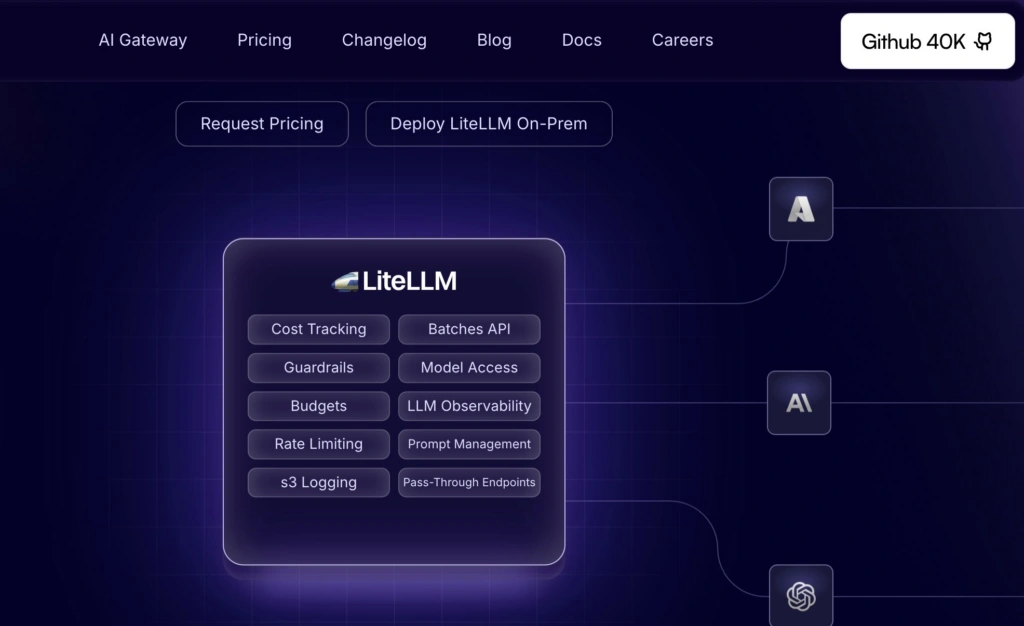
LiteLLM unifies 100+ LLM providers behind an OpenAI-compatible API and handles failover and usage tracking per virtual key. Virtual keys are the key feature for cost management: they let teams set per-project spend limits and see exactly who is consuming what, with data never leaving your infrastructure.
What it does well
- 100+ LLM providers through a single OpenAI-compatible interface
- Virtual keys enable per-team and per-project spend limits and attribution
- Self-hosted: data stays in your infrastructure, critical for regulated industries
- Free and open-source under MIT license, zero vendor dependency on your data path
Where it falls short
- Python architecture has throughput limitations, not a high-RPS production gateway at extreme scale
- Cost tracking is functional but not a polished analytics product
- You own all operational complexity: deployment, maintenance, scaling, and debugging
Pricing: free and open-source.
5. Helicone
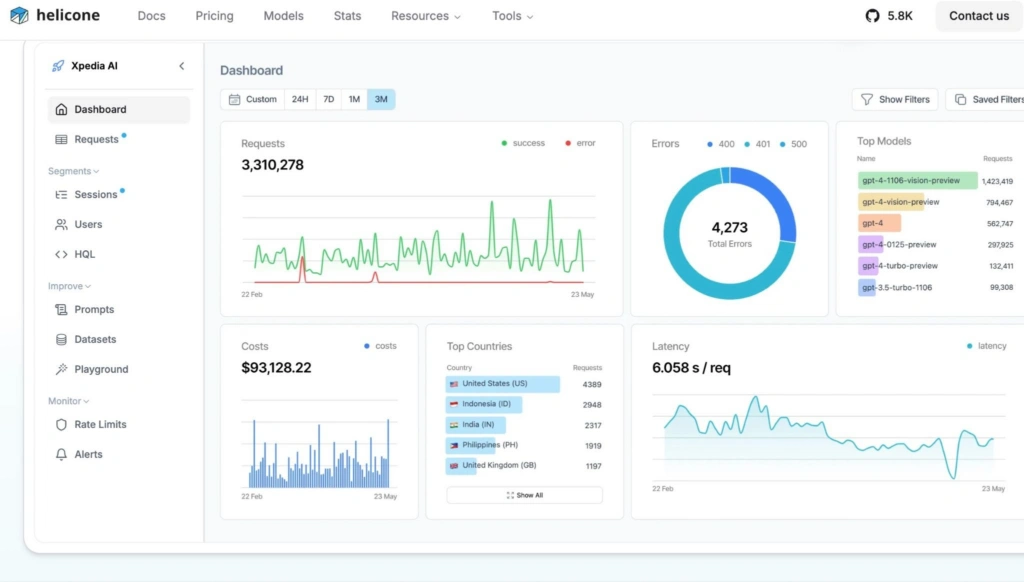
Helicone built a genuine reputation for the lowest-friction LLM observability integration available: one line of code, and requests start logging with cost, latency, and usage data. It processed 14.2 trillion tokens before the Mintlify acquisition. The platform still works, but the honest question for any team starting a new implementation is whether to build on a platform whose long-term roadmap is now uncertain.
What it does well
- One-line proxy integration, lowest-friction onboarding of any tool in this list
- Comprehensive request logging with cost, latency, and usage analytics out of the box
- Built-in caching reduces costs without any application code changes
- Open-source core allows self-hosting for teams with data residency requirements
Where it falls short
- Dropped in community observability rankings after acquisition news
- AI Gateway capabilities newer and less battle-tested than Portkey or LiteLLM
- Jump from free (10K requests/month) to Pro ($79/month) is steep at moderate production volume
Pricing: free (10K requests/month). Pro: $79/month. Enterprise: custom.
6. Braintrust
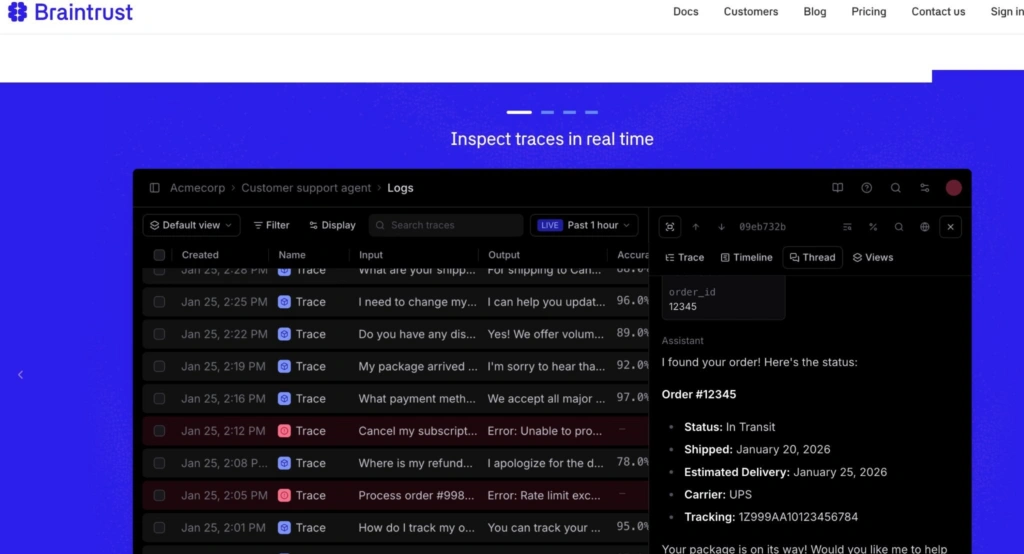
Braintrust connects cost data directly to quality evaluation. When it finds that a particular agent step is consuming 40% of the token budget for marginal quality improvement, it lets teams swap in a cheaper model and validate the quality impact before deploying. Used by Notion, Vercel, and Instacart.
What it does well
- Connects per-trace LLM cost attribution directly to quality evaluation, closing the “spend less without breaking things” loop
- CI/CD integration blocks expensive deployments that regress quality against established evals
- Per-trace and per-tool-call cost attribution without per-seat pricing
- Playground loads any expensive production trace and runs alternative models against it
Where it falls short
- Self-hosting reserved for Enterprise tier only
- More focused on quality evaluation than pure cost management
- Higher integration overhead than proxy-based tools
Pricing: free (1M trace spans). $249/month+. Enterprise: custom.
7. Bifrost by Maxim AI
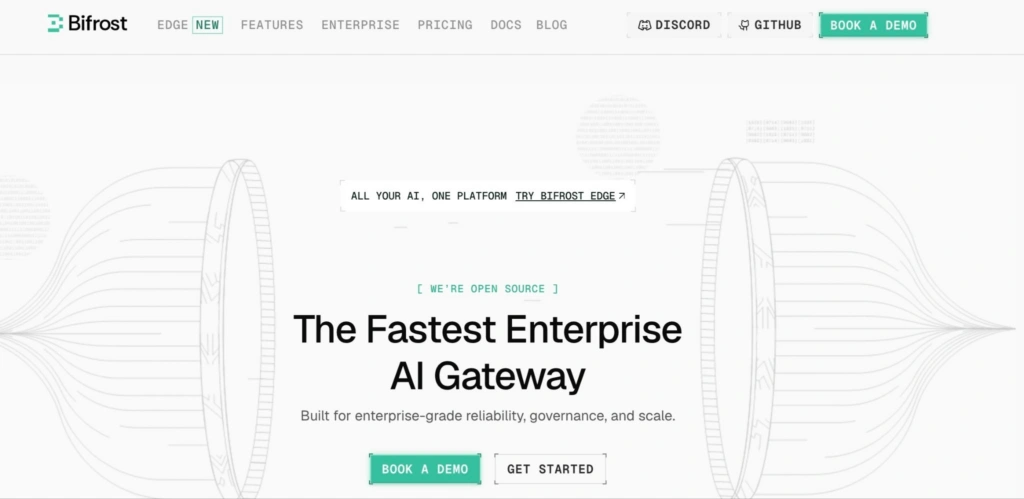
Bifrost is an open-source LLM gateway built in Go. At 5,000 requests per second, it adds only 11 microseconds of overhead per request. For platform teams building multi-tenant LLM infrastructure at genuine scale, this performance profile is meaningful compared to Python-based alternatives.
What it does well
- 11 microsecond overhead per request at 5,000 RPS, measurably faster than Python-based alternatives
- Four-tier budget hierarchy: enforce spend limits at virtual key, team, customer, and provider level
- 1,000+ model integrations out of the box
- Open-source (MIT), designed for air-gapped and on-premises deployments
Where it falls short
- Newer entrant with a smaller community and fewer third-party integrations than LiteLLM or Portkey
- Performance advantage matters most at high RPS; for most teams, LiteLLM is fast enough
- No managed cloud option, all operational complexity sits with your team
Pricing: free and open-source (MIT)
Cloud infrastructure tools for AI workloads
GPU compute, Kubernetes inference clusters, and cloud-managed AI services all show up on your cloud bill, not your OpenAI invoice. cloud cost monitoring tools and infrastructure optimization platforms handle this layer.
These tools are the right answer when your problem is “our GPU clusters are 60% idle” or “we have no idea which Kubernetes namespace is running inference.”
8. AWS Cost Explorer
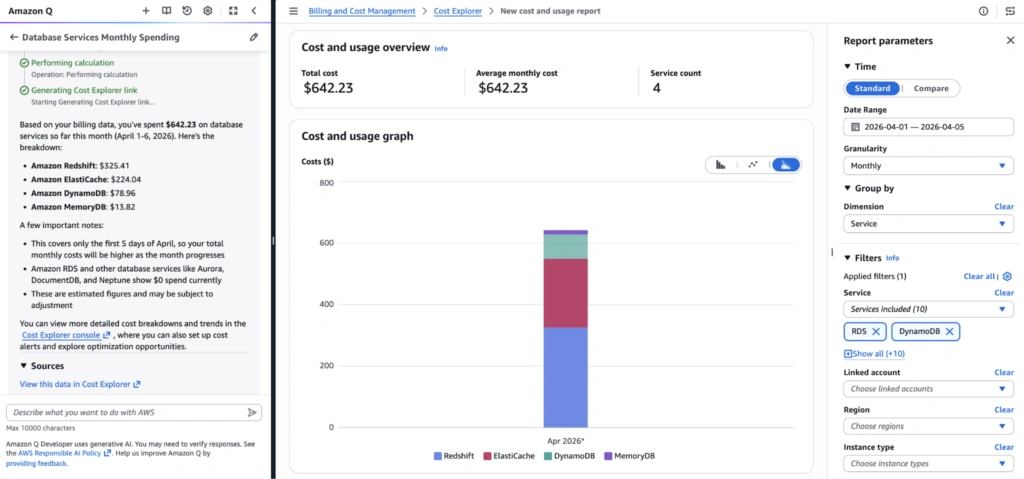
If you run AI workloads on AWS and are spending under $100K/month, AWS Cost Explorer is the right starting point because it is free, always available, and answers the basic questions well. Teams outgrow it when “Bedrock: $23,415” stops being a useful answer to any finance question.
What it does well
- Free with every AWS account, no incremental cost, no sales conversation required
- Covers all AWS AI services: Bedrock, SageMaker, EC2 GPU instances
- Hourly cost granularity, Savings Plan and RI recommendations built in
- Anomaly detection included at no extra charge
- Integrates directly with AWS Budgets for cost alerting
Where it falls short
- AWS-only, completely blind to Azure OpenAI, Anthropic, or GCP AI costs
- No business-dimension attribution: cost shows as “Bedrock,” not “the AI recommendation feature”
- UI is functional but not built for finance teams who do not live in the AWS console
Pricing: free
9. CAST AI
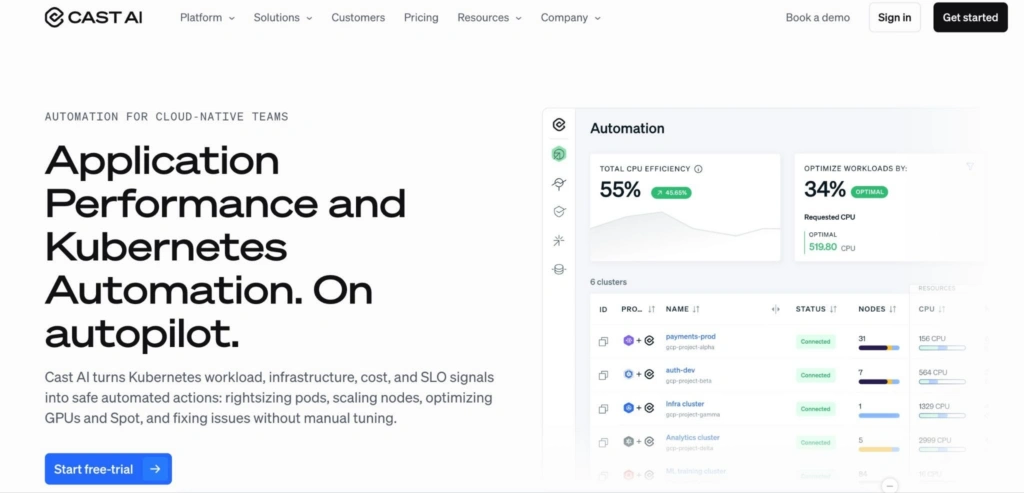
AI applications running on Kubernetes, inference servers, embedding pipelines, vector databases, rack up costs at the node level that standard billing dashboards cannot explain. CAST AI takes over the cluster autoscaler and makes node provisioning decisions autonomously. Teams report 40-60% Kubernetes infrastructure cost reduction.
What it does well
- Replaces cluster autoscaler with AI-driven node optimization, actually executing savings rather than recommending them
- Spot instance automation with intelligent fallback reduces compute cost significantly
- Multi-cloud: EKS, GKE, and AKS all supported
- Outcome-based pricing: you pay 15-20% of realised savings, zero if savings are zero
- Results within 90 days without ongoing engineering effort
Where it falls short
- Takes over cluster node provisioning entirely, requiring genuine comfort with infrastructure automation
- Not suitable for highly regulated environments requiring manual change approval on every decision
- Does not track LLM API spend, that is a completely separate problem
Pricing: 15-20% of realised savings. No savings, no cost.
10. nOps
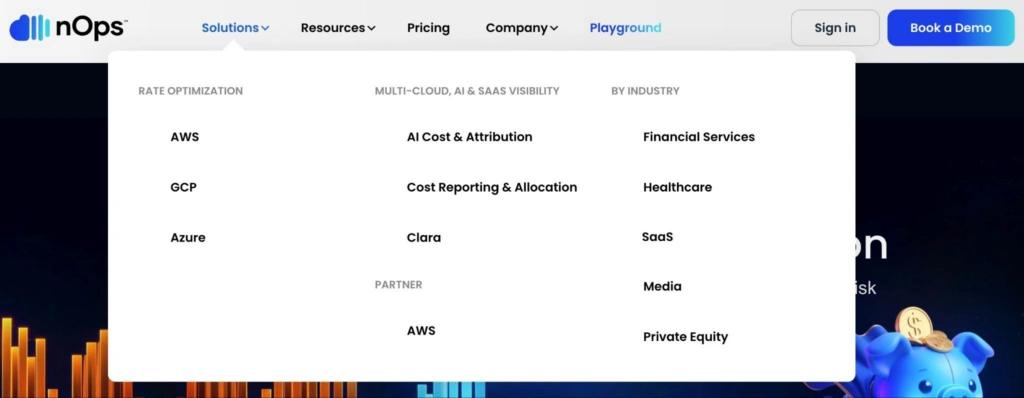
nOps combines AWS cost visibility with autonomous commitment management and a GenAI cost tracking module. Useful for teams that want AWS visibility, commitment optimization, and AI workload tracking without running three separate platforms.
What it does well
- Savings-share pricing, you only pay when it saves you money
- Autonomous commitment management covers both buying the right commitments and adjusting them as usage changes
- Kubernetes cost allocation down to the container level alongside broader AWS visibility
- GenAI cost tracking module provides AI workload visibility alongside traditional cloud costs
Where it falls short
- AWS-first; Azure and GCP coverage meaningfully less mature
- GenAI tracking module newer and less proven than core AWS features
- Savings-share model can become expensive as your optimised baseline grows
Pricing: savings-share on commitment optimization. Separate platform fee for visibility.
11. Vantage
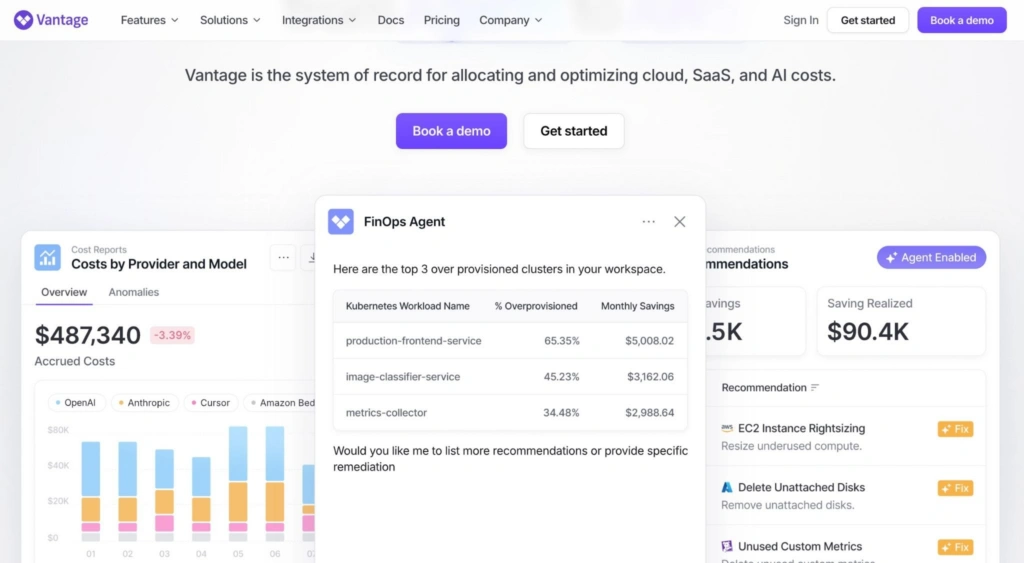
Vantage is the multi-cloud cost platform that non-enterprise teams actually enjoy using. Clean UI, strong AWS/Azure/GCP coverage, and growing AI spend visibility make it solid for mid-market engineering teams who need cost transparency without a six-month implementation project.
What it does well
- Clean, developer-friendly interface that engineers open without being told to
- Multi-cloud reporting across AWS, Azure, GCP, and growing AI provider coverage
- Unit cost analytics and forecasting without enterprise complexity
- Good at surfacing cost anomalies clearly without a dedicated analyst
Where it falls short
- Primarily a visibility tool, it tells you where to save but does not execute savings
- Limited governance and chargeback compared to enterprise platforms
Pricing: $499/month and up.
12. ProsperOps
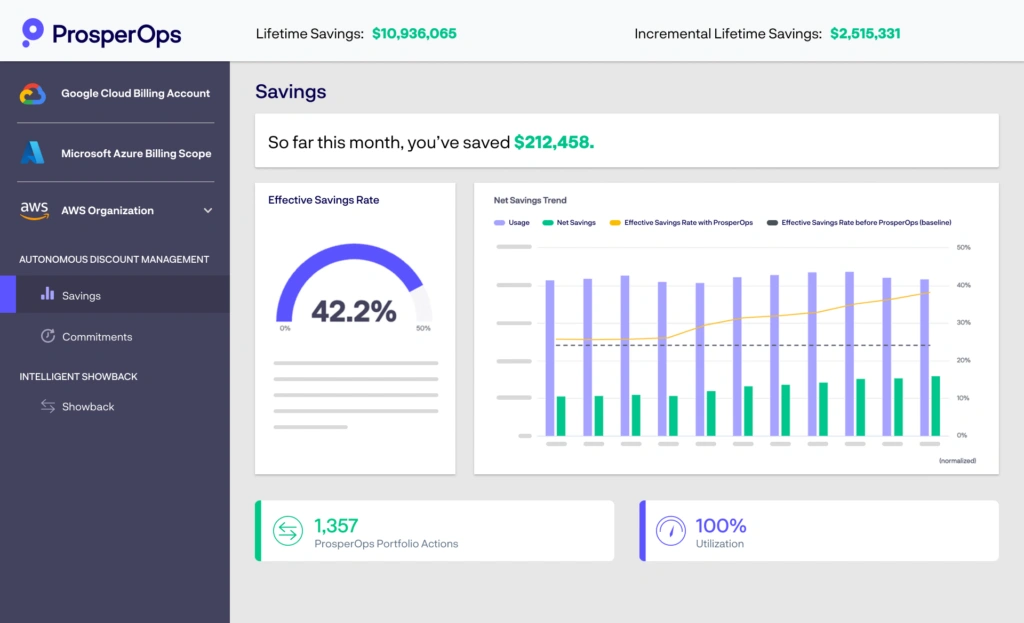
ProsperOps, now part of Flexera, manages AWS, Azure, and GCP Savings Plans and Reserved Instances algorithmically. Adaptive laddering achieves committed-instance pricing without the lock-in penalty.
What it does well
- Outcome-based pricing, you pay a percentage of realised savings, not a flat platform fee
- Multi-cloud commitment management: AWS, Azure, and GCP
- Adaptive laddering eliminates overcommitment risk
- Genuinely hands-off once configured, no ongoing engineering attention required
Where it falls short
- Does exactly one thing, no broader cost visibility, attribution, or AI spend tracking
- AWS path more mature than Azure and GCP paths
- Not useful if you are already near-optimal on commitments or spending under $50K/month
Pricing: percentage of realised savings, typically 15-20%. No flat fee.
13. Finout
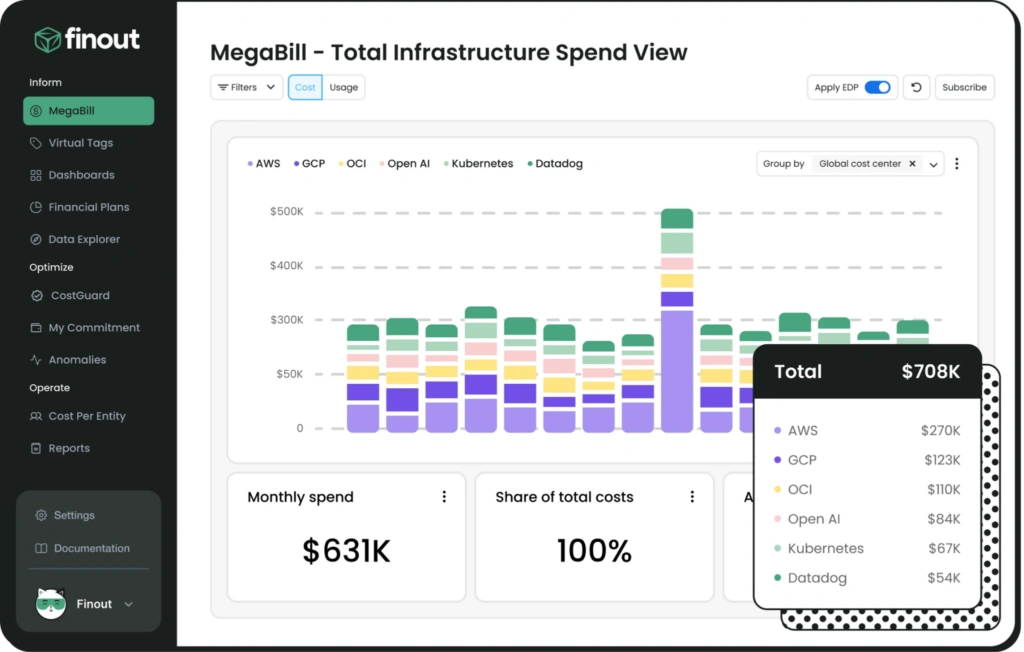
Finout’s MegaBill feature aggregates costs from AWS, GCP, Azure, OpenAI, Snowflake, and Databricks into a single view using virtual tags, with no actual tagging required. For finance-led teams who inherited a cloud environment with chaotic resource tagging, this is real value delivered quickly.
What it does well
- MegaBill unifies cloud and AI provider costs without requiring engineering to fix tagging first
- Virtual tags map costs retroactively to business dimensions
- Strong showback and chargeback reporting that finance teams can operate independently
- Covers OpenAI, Anthropic, and Azure OpenAI alongside major cloud providers
Where it falls short
- Less mature on LLM-specific attribution depth compared to dedicated LLM tools
- Percent-of-spend pricing means the tool costs more precisely when you are trying to reduce spend
Pricing: percent-of-spend. Mid-market focus. Free trial available.
AI observability platforms
These are primarily production reliability and AI cost monitoring platforms for AI systems, with AI spend tracking built in as one signal among many. They are the right choice when your engineering team needs AI observability tools to understand what their AI is doing in production, with cost as an important secondary concern.
They are not finance governance platforms.
14. Datadog LLM Observability
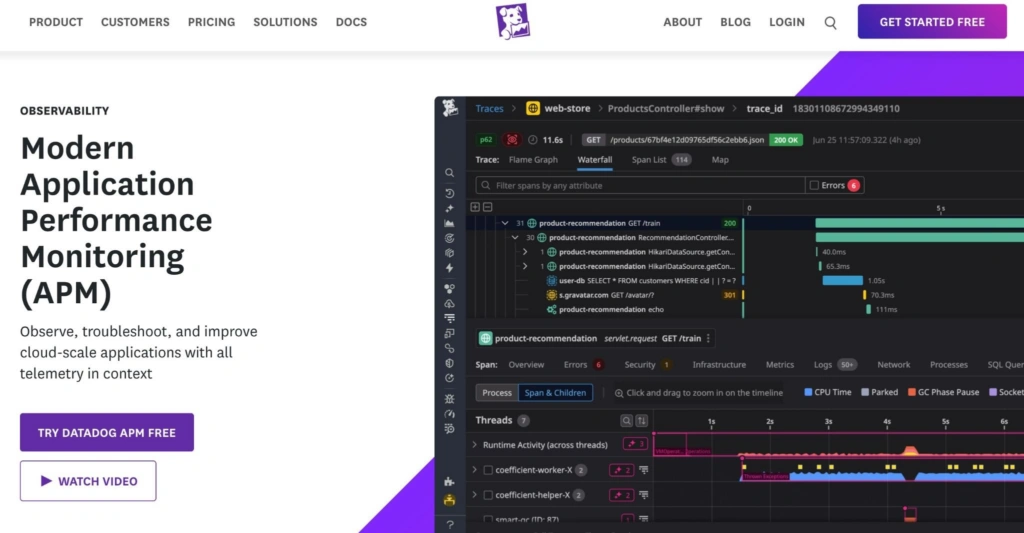
If your engineering team already lives in Datadog for APM, metrics, and logs, adding LLM Observability is the path of least operational resistance. Token usage, cost per model, latency, and error rates flow into the same dashboards where you already track application performance.
CloudZero has a native Datadog integration, so teams using both get correlated spend and performance data without extra work.
What it does well
- Zero additional tooling for teams already running Datadog, LLM cost data lives next to application performance data
- Automatic instrumentation for OpenAI, Anthropic, AWS Bedrock, and LangChain
- 800+ model support with cost estimation; pre-built dashboards for OpenAI and Anthropic spend
- Spend anomalies correlated with application performance events
- Native CloudZero integration for unified spend and performance intelligence
Where it falls short
- Expensive at Datadog scale, adding LLM Observability to a large existing contract is a significant line item
Pricing: included in Datadog contracts or as add-on. Varies significantly with existing contract.
See also: Datadog pricing
15. Arize AI
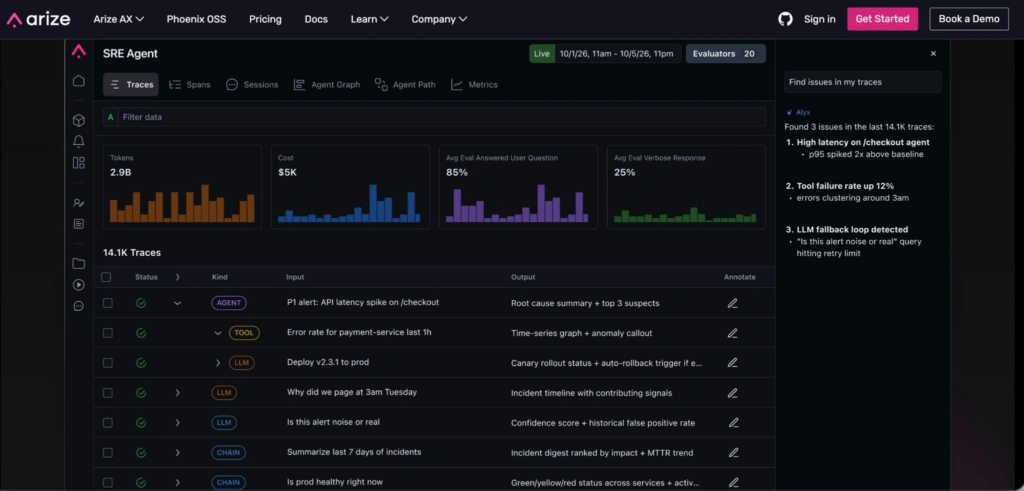
Arize handles teams running both traditional ML models and LLM workloads, a combination common in enterprise AI. Its observability covers model drift, embedding monitoring, and performance tracking alongside token spend.
What it does well
- Covers traditional ML models and LLMs in one platform, valuable for mixed-workload teams
- Strong for RAG pipelines: cost visibility alongside retrieval quality and latency
- Enterprise compliance and audit trail capabilities
- Embedding monitoring and model drift detection alongside spend
Where it falls short
- More focused on model quality and performance than pure spend management
- No budget enforcement or cost-aware routing at the request level
- Custom enterprise pricing, not transparent until deep in a sales conversation
Pricing: custom enterprise pricing.
Cloud cost governance platforms
These platforms are for large enterprises where the problem is governance, compliance, and organisational accountability, not just visibility. AI cost reduction at this scale requires systematic governance, not just better dashboards. They handle showback, chargeback, budgeting, and cross-cloud cost allocation at a level of rigor that mid-market tools do not reach.
Best cloud cost optimization tools for this tier often combine a governance platform with specialist automation tools for commitments and Kubernetes.
16. IBM Cloudability
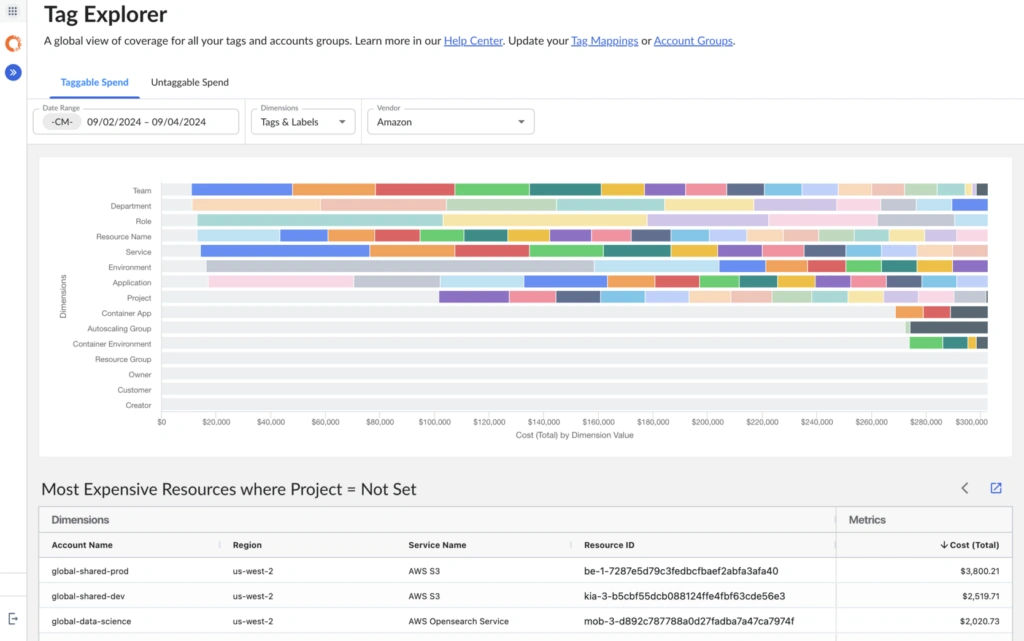
IBM Cloudability is the decade-proven choice for Fortune 500 organisations that need governance and chargeback as much as cost reduction. Not the most exciting product in this list, but it has the compliance track record that enterprise procurement teams require.
What it does well
- Decade-plus of showback and chargeback maturity, the most proven organisational governance capabilities in the market
- Now paired with Kubecost for Kubernetes cost coverage under the IBM/Apptio portfolio
- Strong for regulated industries with compliance and audit requirements
- Covers the full finance lifecycle: allocation, budgeting, forecasting, showback, and policy enforcement
Where it falls short
- UI is dated compared to newer platforms; engineers find it inaccessible
Pricing: custom, average $50K-$250K+/year.
17. Harness Cloud Cost Management
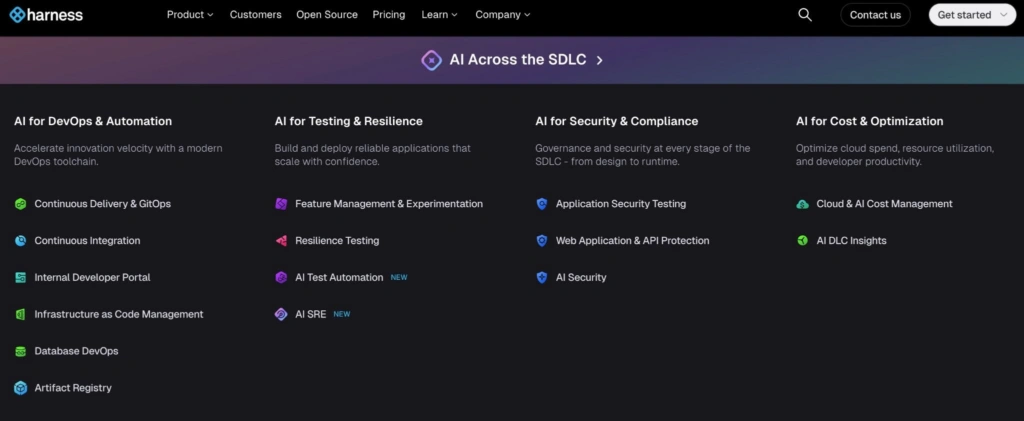
Harness CCM is the right choice for DevOps-first organisations where cost accountability needs to live inside the CI/CD pipeline rather than in a separate finance tool.
What it does well
- Cost visibility built directly into CI/CD pipelines, engineers see cost implications before deploying
- Strong integration with Harness CI/CD if already in the ecosystem
- Good Kubernetes cost attribution for DevOps teams
- Recommendations surfaced where engineers already work
Where it falls short
- Most valuable if already in the Harness ecosystem; standalone value is more limited
- Finance governance capabilities less mature than IBM Cloudability
- AI-specific spend tracking is basic, not purpose-built for LLM cost management
Pricing: as part of Harness platform. Enterprise contracts.
Open-source and native tools
The best tool is sometimes the one you already have. This category covers free and open-source options that solve specific, well-defined pieces of the AI infrastructure cost problem without requiring a budget line or a procurement process.
18. OpenCost
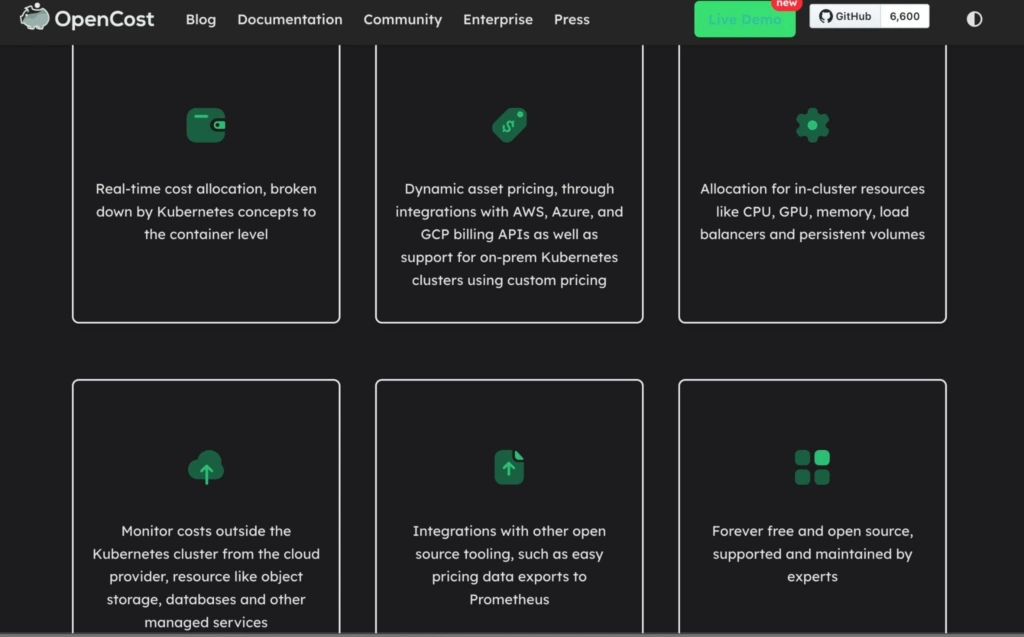
OpenCost is the CNCF open-source project for Kubernetes cost monitoring, and the engine behind Kubecost’s commercial product. If AI workloads run on Kubernetes and you want pod and namespace-level cost attribution without paying for a commercial tool, OpenCost is where to start.
What it does well
- Free and open-source (CNCF Sandbox project), genuinely free, not a crippled trial
- Real-time cost allocation at pod, namespace, and label level
- Works across AWS, Azure, and GCP with consistent cost models
- Integrates with existing Prometheus and Grafana stacks, no new observability infrastructure required
Where it falls short
- Visibility only, no automated optimization of any kind
- You own all operational complexity: deployment, maintenance, and scaling
- No AI API spend tracking, compute infrastructure only
Pricing: free and open-source
19. Kubecost
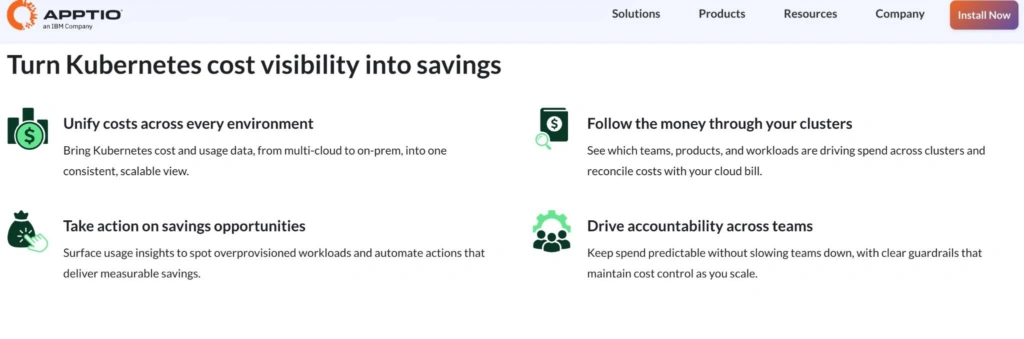
Kubecost (now under IBM after the Apptio acquisition) is the most widely deployed Kubernetes cost tool. It provides namespace, deployment, service, and pod-level cost attribution with meaningful showback and chargeback capabilities for multi-team environments.
What it does well
- Most widely deployed Kubernetes cost tool, proven at scale across diverse environments
- Genuine multi-team showback and chargeback; finance teams can generate cost reports independently
- Now paired with IBM Cloudability for broader enterprise finance governance
- Recommendations are specific and actionable at the workload level
Where it falls short
- Recommendations require manual engineering action, the tool does not optimise automatically
- Enterprise tier ($50K+/year) significant for a visibility-only tool when OpenCost provides similar function for free
Pricing: free tier (limited). Paid: usage-based. Enterprise: $50K+/year.
20. Infracost
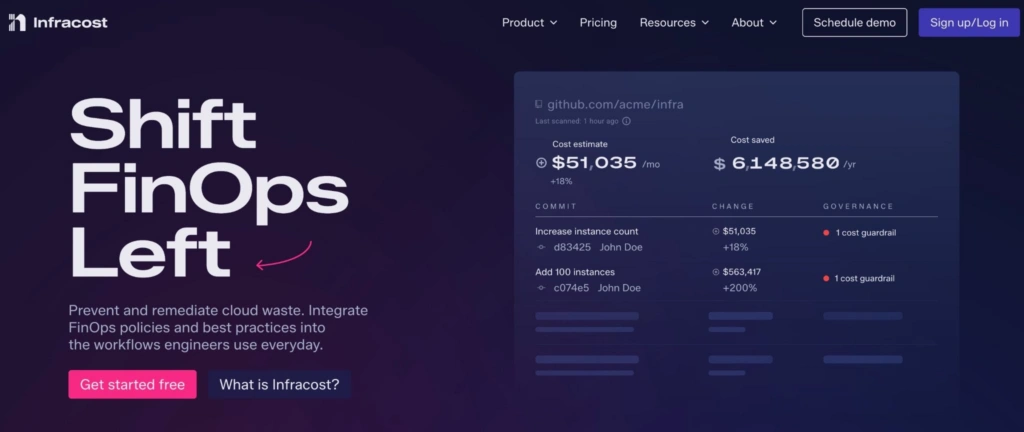
Infracost shows AI infrastructure costs before the resource exists. When an engineer opens a pull request that provisions a new GPU instance or SageMaker endpoint, Infracost adds a comment showing the monthly cost impact. The cost conversation happens at code review, not when the invoice arrives.
What it does well
- Free and open-source, it prevents problems rather than reporting them
- Catches expensive GPU and AI infrastructure provisioning in pull requests before deployment
- Works with Terraform, Pulumi, and other IaC tools
- Integrates with GitHub, GitLab, and Bitbucket CI/CD pipelines
Where it falls short
- Only covers infrastructure defined in code, no runtime AI API or token cost tracking
- Requires IaC adoption, not useful for teams with click-ops deployments
Pricing: free and open-source.
See also: SageMaker pricing
Honourable mentions: 10 more tools worth knowing
- Azure Cost Management and Billing, free with every Azure subscription. Covers Azure OpenAI Service, GPU compute, and all Azure AI services. The right starting point for Azure-primary teams before investing in a third-party platform. See also: Azure cost management tools and Azure cost optimization.
- Google Cloud Billing, free with GCP. Covers Vertex AI, Gemini API, and GCP AI services.
- Coralogix AI Observability, integrated AI spend tracking inside Coralogix’s log management platform. Useful for teams already paying for Coralogix who want AI spend data in the same view.
- AgentOps, purpose-built observability for AI agents. As agentic AI workloads become more common in 2026, request-level attribution becomes insufficient. You need visibility into individual tool calls, agent sessions, and the recursive loops that drive unexpected spend. AgentOps is the most focused tool in this specific category.
- LangSmith, the natural LLM observability choice if your team uses LangChain or LangGraph heavily. Less useful outside the LangChain ecosystem, where Langfuse or Braintrust are stronger.
- WrangleAI, token-level LLM visibility with intelligent routing and model selection. A newer entrant, growing fast. Worth evaluating for mid-market teams that want intelligent model routing alongside cost tracking without the enterprise price tag.
- ScaleOps, pod-level Kubernetes rightsizing automation, which raised $130M Series C at an $800M valuation in March 2026. CAST AI handles node-level optimization; ScaleOps handles workload-level. The two complement each other for teams that want both layers covered.
- Cloudflare AI Gateway, free at moderate volume if already on Cloudflare Workers. LLM gateway with cost tracking, rate limiting, and basic observability. See also: Cloudflare alternatives.
- IBM Turbonomic, enterprise AI-driven resource optimization across hybrid cloud and on-premises infrastructure. Right for large enterprises running complex hybrid environments where AI workloads span public cloud and private data centres.
- Amnic, multi-cloud cost optimization with four dedicated AI agents and AI spend coverage from day one, priced at 0.25-1% of cloud spend. A newer entrant positioning specifically for AI-spend-heavy teams, worth watching as the product matures.
How to choose the right AI cost management tool
The wrong way to make this decision is to read feature lists and pick the longest one. The right way is to identify your most expensive unsolved problem and match the tool to it. Whether the goal is AI cost optimization, infrastructure rightsizing, or LLM API attribution, the right tool is the one that solves the most expensive problem first.
Start with your spend threshold
- Under $50K/month total AI spend: native tools (AWS Cost Explorer, Azure Cost Management) plus OpenCost for Kubernetes. Free and sufficient. The overhead of evaluating, implementing, and maintaining a paid platform does not yet deliver enough ROI.
- $50K-$500K/month: add a dedicated tool for your biggest unsolved problem. The best cloud cost optimization tools at this tier typically pay for themselves within the first quarter. The best cloud cost optimization tools at this tier pay for themselves within the first quarter. LLM API spend growing fastest? Add Langfuse or Portkey. Kubernetes compute the problem? Add CAST AI. Finance team asking where the money is going with no good answer? Start the CloudZero or Vantage conversation.
- $500K+/month: you need a proper AI spend intelligence platform. CloudZero is the right conversation at this level. The unit economics and attribution capabilities justify the investment, and the AI ROI conversation with your board requires numbers you cannot get from dashboards alone. Most enterprise teams at this spend level run three layers: CloudZero for intelligence, a dedicated LLM gateway (Portkey or LiteLLM) for request-level control, and CAST AI for Kubernetes infrastructure savings.
Match the tool to the person asking the question
- Finance leader or VP Finance: you need attribution and unit economics. Which feature costs what and what is the AI ROI? CloudZero is built for the questions you are actually asking.
- Platform or infrastructure engineer: CAST AI, OpenCost, and Kubecost solve your problems. You care about nodes, pods, and spot instance automation, not LLM token billing.
- AI engineer or ML platform team: Langfuse, Braintrust, or Portkey. You need per-request traces with cost and quality in the same view. A cloud cost platform will not answer your 2am debugging question.
- SaaS startup under $50K/month: native tools plus Langfuse free tier. Do not over-invest in cost management tooling before you have cost management problems large enough to justify it.
- Enterprise DevOps team: Infracost prevents expensive infrastructure decisions at code review. Harness CCM keeps cost accountability inside the deployment pipeline.
The question most teams skip
Before buying any tool in this list, ask: can your team currently answer which AI feature, team, or customer generated this spend? If the answer is no, you have an attribution problem, and most of the tools in this list will not solve it.
Attribution requires connecting token-level data to business context. That is what a purpose-built AI spend intelligence platform does. Everything else solves a piece of the problem. Attribution is the piece that enables the AI ROI conversation. And in 2026, that conversation determines AI program funding, team headcount, and whether the CFO signs off on next year’s model spend.
Not sure where to start with AI spend management?
CloudZero’s free cloud and AI cost assessment shows you exactly where your spend is going, across cloud infrastructure and AI APIs, before it becomes a quarterly board surprise. Most teams find their first optimization opportunity in the first session. Book a demo today.
Frequently asked questions about AI cost management tools